Who Must Ride Alongside a Fifteen-Year-Old
A fifteen-year-old can ride an off-road machine in Washington, but on public land, riding without the right adult is a problem even if the teen has plenty of experience. The key is knowing who qualifies, what “alongside” should mean in practice, and when a separate road or land-manager rule changes the answer.
Who must accompany a fifteen-year-old
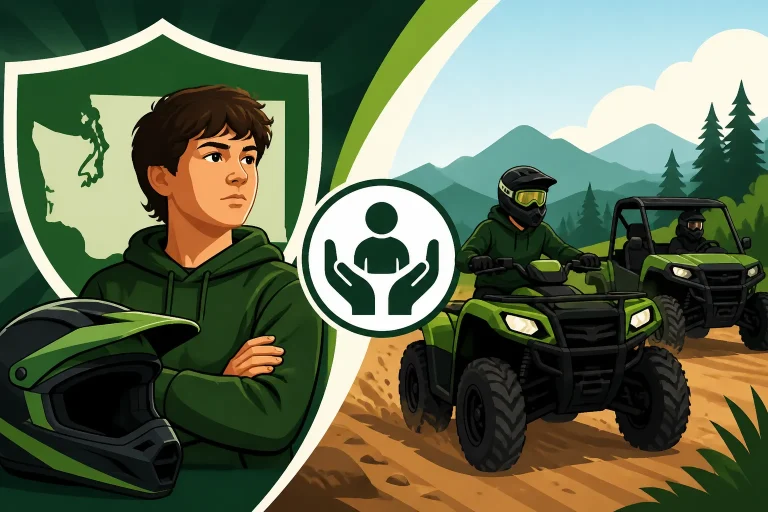
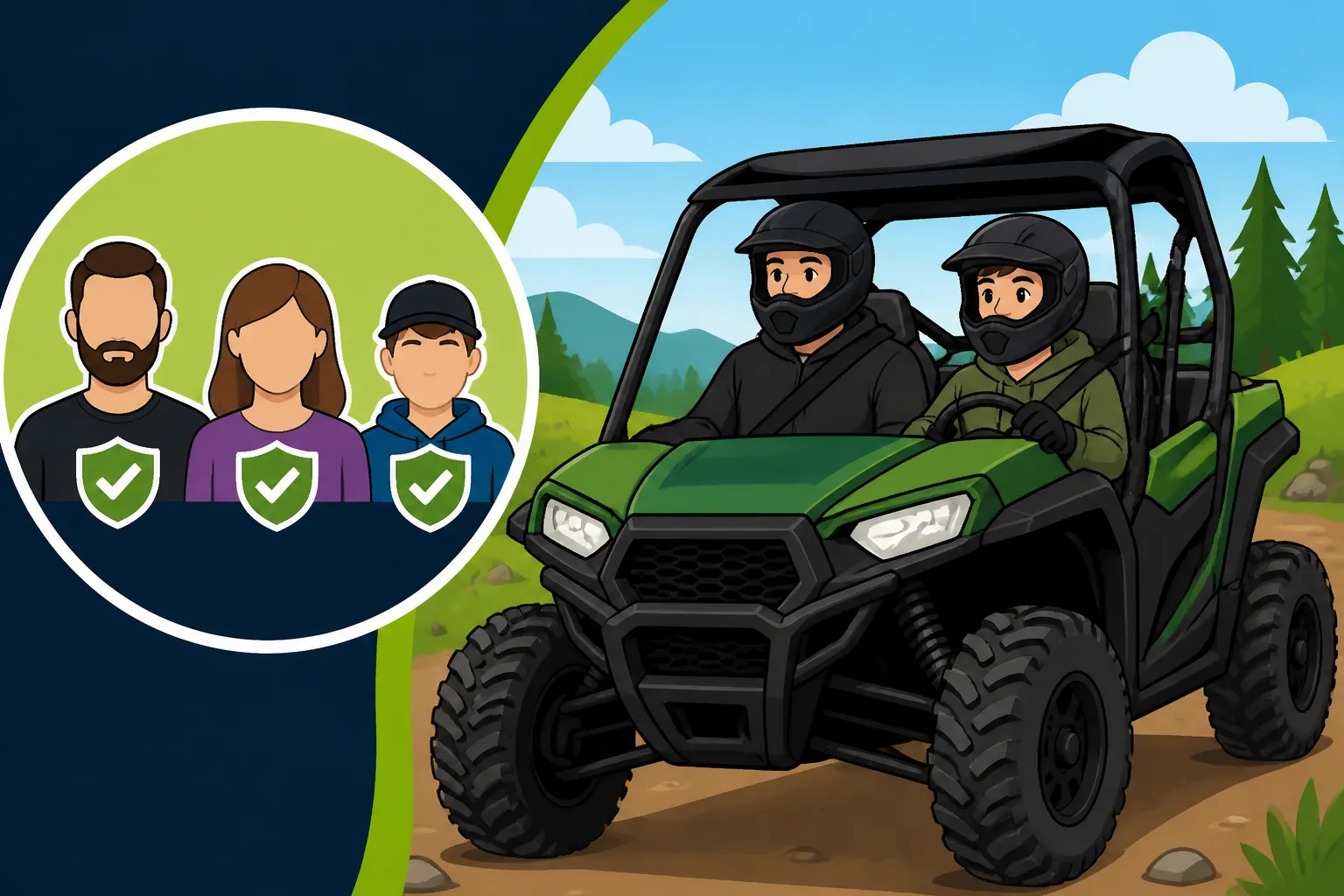
When a person under 16 operates an off-road vehicle on public land in Washington, the state supervision rule requires an accompanying adult who is at least 18 and has a valid driver’s license. The adult does not have to be the teen’s parent or guardian. A licensed relative, family friend, or other responsible adult can qualify.
The adult needs to accompany the young rider, not merely be reachable by phone or waiting back at the trailhead. A practical way to meet the rule is for the adult and teen to travel together, with the adult close enough to keep the teen in view and respond if something goes wrong. The state’s supervision requirement is more than having an adult somewhere in the riding area.
This applies to an operator of an off-road vehicle, not only to someone riding a conventional four-wheeler. Depending on the vehicle and setting, that can include a quad, side-by-side, dirt bike, or another machine classified as an ORV. Check the specific machine and location rules as well: the fact that an adult is present does not make an otherwise prohibited vehicle, trail, or riding activity legal.
The age cutoff matters. A fifteen-year-old is still under 16, so the supervision rule applies. Turning 16 changes the state age-based supervision requirement, but it does not remove other requirements, such as machine-specific restrictions, required safety equipment, trail rules, or any conditions set by the land manager. For more on the broader rule, see Washington’s Supervision Rule for Riders Under 16 and Washington Rules for a Rider Under 16.
| Situation | Does the adult need to qualify as a supervisor? | Practical takeaway |
|---|---|---|
| A fifteen-year-old operates an ORV on public land | Yes | Have an adult at least 18 with a valid driver’s license accompany the rider |
| A parent is present but is under 18 | The parent’s relationship does not replace the age requirement | Arrange for a qualifying adult to ride with the teen |
| A licensed adult waits at the parking area | The adult may not be meaningfully accompanying the rider | Keep the adult and teen together on the ride |
| A fifteen-year-old rides on private property | The public-land rule may not apply, but other rules and permission still matter | Confirm the property owner’s conditions and any applicable safety requirements |
| A fifteen-year-old operates a WATV on a public road | Road-use requirements apply separately | Do not assume off-road supervision makes the teen eligible to operate on a road |
What “alongside” means on the trail
The rule is easiest to follow when the adult rides with the fifteen-year-old rather than trying to supervise from a distance. The adult should be able to see the teen’s riding, communicate when needed, and help promptly if the teen stops, gets stuck, becomes separated, or has a mechanical problem. A check-in plan is useful, but it is not a substitute for accompanying the rider.
There is no benefit in treating the requirement as a technicality. A group can stretch out on a trail, lose sight of one another around bends, or split up at a junction. If the adult and teen become separated, pause the ride and regroup rather than continuing on the assumption that the adult is somewhere ahead or behind. An adult who cannot keep up with the teen’s pace or machine should adjust the route and riding plan.
The law’s phrase “accompanied by” can leave practical questions about distance and terrain. The safest approach is to keep the adult close and maintain direct contact throughout the ride. The details of supervision are discussed in What Direct Supervision Means. Land managers may also set operational rules for their trails, facilities, or events, so check posted information and current site guidance before riding.
A qualifying adult should be prepared to do more than satisfy the age and license conditions. They should know the route, understand the machine’s basic controls, and be able to help the teen make conservative decisions. For a longer ride, agree in advance on a regrouping point, what to do if visibility is lost, and how to respond to a breakdown. Keep the plan simple enough that the teen can follow it without confusion.
A few habits make the rule easier to meet:
- Ride in the same group. Choose a pace and route that let the adult remain with the teen.
- Agree on signals and regroup points. Use clear instructions for turns, stops, and unexpected separation.
- Reassess when conditions change. Mud, steep terrain, traffic on a shared route, or poor visibility can make a previously manageable gap unsafe.
- Do not split the group casually. If the adult needs to leave, stop the ride until another qualifying adult is with the teen.
- Follow the site’s restrictions. A trail or facility may have limits that are stricter than the general supervision rule.
The adult should also be a good match for the ride. A driver’s license alone does not make someone capable of managing a difficult trail, a fast-moving group, or a machine they do not understand. Pick routes and machines appropriate to the teen’s skill and size, and avoid relying on a more experienced rider’s speed as a measure of what a fifteen-year-old should attempt.
Where the rule applies and where other rules take over
The supervision requirement is especially important on public riding areas. That includes public land where ORV use is allowed, subject to the specific land manager’s rules and the route’s status. Public land is not a blanket invitation to ride anywhere: an open trail, authorized road, or designated riding area can have different restrictions from a closed route or protected area.
Washington’s minimum-age and supervision rules are only one part of the picture. A trail may be unsuitable for a particular machine, and a land manager may limit vehicle type, width, season, or access. Before leaving home, check whether the riding area is open, whether the route allows the teen’s machine, and whether any temporary closure or local condition applies. [Washington Minimum Age to Ride Public Land] offers related context, while Washington Rules for Riding DNR Land and [Washington Rules for Riding a National Forest] cover rules that depend on the land manager.
Private property is different, but not automatically rule-free. The state public-land supervision requirement may not apply in the same way on private land, yet the owner can set conditions for access, and other laws or safety obligations may still apply. Get permission and ask whether the owner requires an adult to accompany a minor. A private timber road, for example, should not be treated as public access simply because it is passable.
A fifteen-year-old also should not confuse permission to ride off-road with permission to operate on a public road. A WATV’s on-road registration and equipment requirements are separate from the rules for riding an off-road trail. A rider must meet the applicable driver-license and road-use requirements; an adult accompanying the teen does not replace them. Review Washington’s Road Use Declaration and Washington Road Reciprocity and Its Conditions if the question involves road access or a machine registered outside Washington.
Visitors should check the same issues rather than assuming a home-state rule applies. Washington reciprocity can depend on the visitor’s registration and the type of use. A visiting teen still needs to satisfy Washington’s applicable age and supervision rules when riding on public land. Start with Washington ORV Reciprocity With Other States and Washington ORV Permit for Visitors if the rider or machine is from outside the state.
A practical plan for a teen’s ride
Before the ride, confirm four things: the adult qualifies, the route is open to the machine, the teen is allowed to operate that type of machine at the location, and the ride can be supervised safely. Checking only one of these is not enough. A legal adult cannot make a closed trail open, and an open trail does not cancel the age rule.
It helps to make the supervision plan specific. Decide who is responsible for the teen, which machine each person will ride, and how the group will handle stops or route changes. If several adults and young riders are going, do not assume one adult’s presence automatically covers everyone. Keep the group organized so each teen remains with a qualifying adult.
For a side-by-side, think about who is driving and who is a passenger. The state supervision question concerns the young person operating an ORV. Passenger rules, seating, restraint use, and machine capacity are separate concerns. A teen who is permitted to ride as a passenger is not necessarily permitted to drive, and an adult in another vehicle does not change the machine’s passenger limits.
For a group ride, assign adults before machines start moving. A large group may naturally spread out, especially on narrow or winding trails. If an adult needs to assist someone else, make sure the fifteen-year-old remains with another qualifying adult rather than continuing alone. If no adult can stay with the teen, the sensible choice is to pause or end that part of the ride.
Carry the information needed to deal with a problem. That may include the route or trail map, a charged phone where service is available, and basic tools or recovery equipment suited to the machine and trip. Cell coverage is not guaranteed, so the plan should not depend on being able to call for help. Keeping the teen within sight and within the group remains the most reliable way to supervise.
An ORV safety course can also help a young rider build judgment and understand machine handling, even when a course is not the same thing as the adult-supervision requirement. Training does not replace the qualifying adult, and an accompanying adult does not replace good preparation. The best plan combines the required adult, an appropriate route, a suitable machine, and a teen who knows when to stop and ask for help.
If there is uncertainty about a specific trail, event, or type of vehicle, check with the responsible land manager before the ride. Ask directly whether a fifteen-year-old may operate that machine there and what the adult must do to accompany them. That small check can prevent a wasted trip and, more importantly, keep the young rider within the rules and close to someone able to help.
Disclaimer
This article is for general informational purposes only and does not constitute professional advice. Laws, prices and regulations vary by location and change over time. Consult a qualified professional for guidance on your specific situation.