Where Washington Riders Take a Safety Course
A safety course can help Washington ATV and UTV riders build skills before tackling trails, but it is not always clear who offers training or whether a class is required. The practical answer: Washington does not generally require an ORV safety certificate, so look to established training providers, dealers, and local events for voluntary instruction—and confirm exactly what each course covers.
Where to look for ATV and UTV training
Start with organizations that focus specifically on off-highway vehicle safety. The ATV Safety Institute (ASI) offers ATV safety education, while the Recreational Off-Highway Vehicle Association (ROHVA) provides resources for recreational off-highway vehicles, including side-by-sides. Their online materials can be a convenient first step, but availability, course formats, and hands-on offerings can change. Check each organization’s current course information before making plans.
For in-person instruction, ask local powersports dealers whether they know of upcoming classes or can refer you to a provider. A dealer may host training or know about manufacturer-supported programs, but don’t assume every dealership offers lessons. Ask whether instruction is available for your particular type of machine and whether the session includes actual riding practice.
Local clubs and organized riding groups can also be useful places to ask. Some host introductory events or can point new riders toward training in the area. Treat a group ride as a referral, not automatically as a formal safety course: find out who is teaching, what skills are covered, and whether riders get supervised practice.
| Where to look | What it may offer | What to confirm |
|---|---|---|
| ATV Safety Institute | ATV safety education and course information | Whether local hands-on instruction is available and suitable for your machine |
| Recreational Off-Highway Vehicle Association | Safety resources for recreational off-highway vehicles | Whether the material covers your side-by-side and riding situation |
| Powersports dealer | Training referrals, hosted events, or manufacturer programs | Who teaches, what the session includes, and whether it is open to the public |
| Local riding club or event organizer | Informal instruction, clinics, or referrals | Whether it is a structured course or simply a group ride |
| Online course provider | Convenient introductory safety material | Whether the course is recognized for any separate requirement you need to meet |
If you are trying to meet a requirement for a specific event, employer, rental company, land manager, or insurance provider, ask that organization what it accepts before enrolling. A course completion record from one provider may not satisfy another organization’s rules.
For the broader distinction between voluntary education and legal requirements, see Why Washington Issues No ORV Safety Certificate and Does Any Washington Rider Need a Safety Certificate?. A course can be useful even when the state does not require a certificate, but it should not be mistaken for a permit or registration credential.
What Washington requires—and what a course does not replace
Washington does not generally require riders to complete a statewide ORV safety course or carry an ORV safety certificate just to ride. That does not mean every ride is unrestricted. Registration, land access, machine equipment, age, supervision, and road-use rules still matter. A safety class does not replace those requirements.
This is especially important for young riders. Washington has rules that can require a rider under 16 to be accompanied by a licensed adult in certain public-land riding situations. The details depend on the setting and applicable rules, so check Washington Rules for a Rider Under 16 and Washington Supervision Rules for Minors before planning a ride. Completing a course does not cancel an age or supervision requirement.
Likewise, an ATV or UTV safety course does not make a machine legal on a road. A course may teach safe operation, but it does not provide road-use tabs, authorize access to a particular road, or confirm that a machine meets equipment rules. For road riding, check What Washington Requires of a Young Rider and the requirements that apply to the specific route and machine.
A course completion card or certificate can still be worth keeping. It may help you document training for a club, rental operator, employer, insurer, or event, if that organization accepts it. Ask the organization directly what proof it wants. Do not assume that a certificate from an online course is accepted in place of hands-on instruction, or that every provider issues the same kind of record.
Before you register, make two separate checks:
- Confirm what the course teaches and whether it is designed for your machine.
- Confirm any legal, land-access, rental, or event requirements for the ride you intend to take.
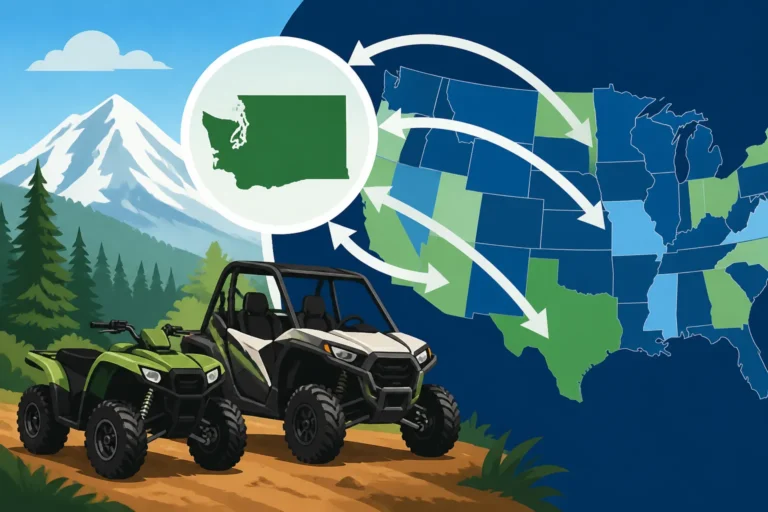
For visitors riding in Washington, course completion also does not replace applicable registration or reciprocity rules. Check Washington ORV Reciprocity With Other States if you are bringing a machine registered elsewhere.
Choose training that fits your machine and riding plans
ATVs and side-by-sides have different controls, dimensions, and handling. A course aimed at a small ATV may not give a UTV driver enough practice with seat belts, passenger safety, visibility, turning space, or the machine’s wider footprint. Before enrolling, tell the provider the make or general type of machine you ride and ask whether the instruction is relevant to it.
A useful course should explain more than how to start and steer. Look for coverage of:
- Pre-ride checks, including tires, brakes, controls, and protective equipment
- Correct riding position and control use
- Acceleration, braking, and turning at a manageable speed
- Reading terrain and choosing a safe line
- Hills, uneven ground, and other conditions appropriate to the course
- Safe spacing and communication when riding with others
- What to do if a rider or machine has a problem
- For UTVs, occupant restraints and safe passenger practices
Hands-on practice is particularly valuable for beginners. Reading or watching a lesson can explain the principles, but supervised practice lets a rider work on balance, braking, and control while an instructor can offer feedback. An online course may still be a sensible introduction, especially before a first ride, but it cannot provide the same experience as operating a machine under supervision.
A course should also be appropriate to the rider’s age and experience. A child’s class should not simply be an adult class with smaller equipment. Ask whether the provider has age-appropriate instruction and whether a parent or guardian must attend. Choose a machine the rider can control comfortably; training does not make an oversized or unsuitable machine a good fit.
If you plan to ride a rental, ask the rental operator what orientation it provides and whether it expects a separate course. Rental rules can differ from state requirements, and a short briefing is not necessarily a full safety class. See Riding a Rented WATV on Washington Public Land for related considerations.
How to check a course before signing up
Course names can sound similar while covering different material. Before you enroll, get clear answers about the format, instructor, machine, and completion record. If the provider cannot explain those points, look for another option.
Use this checklist:
- Identify the machine category. Ask whether the session is intended for ATVs, UTVs, or both. Confirm that it fits the kind of machine you will ride.
- Ask how much is hands-on. Find out whether students operate a machine or receive classroom or online instruction only. Ask what equipment is supplied and what you must bring.
- Check the instructor and setting. Ask who teaches the class, where riding practice takes place, and whether the practice area is appropriate for beginners.
- Confirm age and participation rules. Ask about minimum ages, adult attendance, rider-to-instructor supervision, and any restrictions on passengers.
- Ask what proof you receive. Confirm whether you get a completion record and whether it is accepted by the organization that requested training.
- Check the current schedule and cost directly. Course availability, fees, and enrollment conditions can change. Get current details from the provider instead of relying on an old listing.
- Prepare the right gear. Ask what protective equipment is required. If you are bringing your own machine, confirm that it must be registered, mechanically sound, and appropriate for the practice area.
A good course should welcome questions and explain its limits. Be cautious if an organizer presents a voluntary class as a substitute for required registration, permission to ride, or adult supervision. Those are separate matters.
If a nearby hands-on course is not available, an online safety course can help you prepare, but take the time to practice in a permitted, appropriate setting before riding difficult terrain. Start with familiar controls and easy conditions, ride within your ability, and keep a more experienced person nearby when practical. Check local rules and land access before using any practice area.
The most useful course is one that matches the rider, machine, and type of riding ahead. For many Washington riders, that means using an established provider for the fundamentals, then confirming the rules for the particular trail, road, rental, or event separately.
Disclaimer
This article is for general informational purposes only and does not constitute professional advice. Laws, prices and regulations vary by location and change over time. Consult a qualified professional for guidance on your specific situation.