Washington Rules for Getting Across a Road
There's nothing quite like the freedom of exploring Washington's incredible landscapes on your ATV or UTV, but let's be real: sometimes, a paved road pops up right when you're in the middle of a fantastic trail system. That moment of "Can I cross this? What are the rules?" can totally interrupt your flow and cause a lot of stress. This guide is here to untangle those specific Washington State regulations, so you can confidently and legally navigate those necessary road crossings, keeping your adventure going without a hitch.
Understanding Washington's Road Crossing Basics
Navigating the great outdoors on your quad or side-by-side in Washington often means encountering a paved road that divides one section of trail from another. It's a common scenario, and frankly, it can be a little intimidating trying to figure out the letter of the law in the moment. The key here is understanding that crossing a road is fundamentally different from actually riding on a road. They have distinct rules, and mixing them up can lead to trouble.
Why Road Crossings are Different from Road Riding
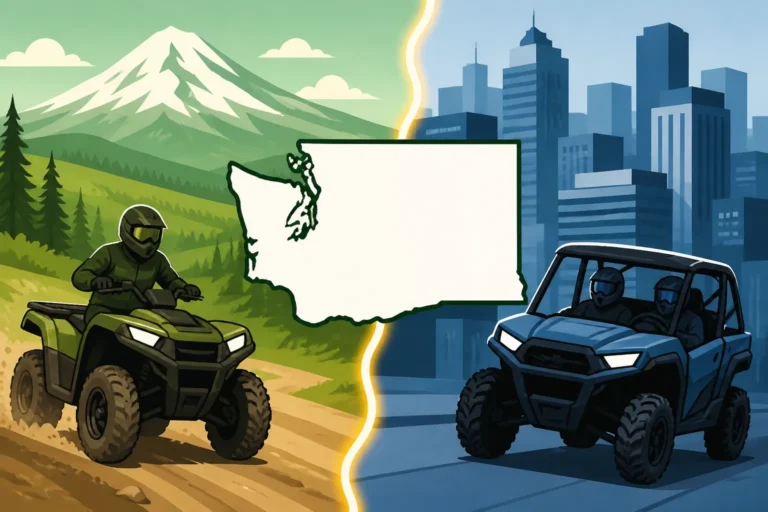
Imagine you're tearing up a fantastic section of trail in the Capitol State Forest, enjoying the mud and the twists, when suddenly, you hit a paved county road. On the other side? More glorious trail. Your first instinct might be to just zoom across, but hold on a moment. Washington State law makes a very clear distinction between merely crossing a highway, county road, or city street and actually operating your off-road vehicle (ORV) on its paved surface as a street-legal machine. Riding on a road usually requires your machine to be fully street-legal, with specific tabs, equipment, and often, only in designated areas. A crossing, on the other hand, is a quick, direct traverse from one shoulder to the other, aimed at connecting trail segments. It's designed to minimize the ORV's presence on the pavement and to allow riders to continue their off-road journey. This distinction is crucial because the requirements and potential penalties are vastly different. Trying to travel even a short distance along a paved road when you only intend to cross it can land you in a difficult situation.
The Importance of a Legal WATV Registration
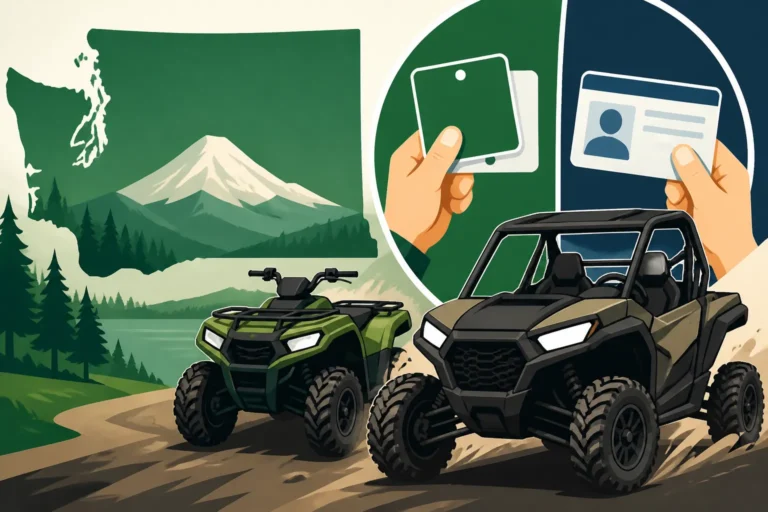
Before you even think about putting a tire on a paved surface, even for a quick hop across, your Washington All-Terrain Vehicle (WATV) needs to be properly registered. This isn't just a suggestion; it's a fundamental requirement. You'll need to have your current off-road tab displayed. While you might not need the additional "on-road" tab just for crossing, having your machine legally registered for off-road use is the baseline. The Department of Licensing wants to ensure that every machine operating on public lands, or even momentarily crossing public roads, is accounted for. This also ties into funding for trail maintenance and public safety efforts. Make sure your registration is current and visible. You can read more about [Washington's Off-Road Tab Explained] and [Washington's On-Road Tab Explained] if you're curious about the different types of registration.
The General Speed Limit for Crossings
When it comes to actually making the crossing, Washington State has a very specific rule regarding your speed: you must cross at an angle of approximately 90 degrees to the roadway and at a speed not greater than is reasonable and prudent under the conditions, but never exceeding thirty-five miles per hour. This speed limit is in place for a few very good reasons. First and foremost, it's about safety. Paved roads are designed for faster, heavier traffic, and an ORV can be harder to see and reacts differently to pavement. A lower speed ensures you have maximum control and can react quickly to any unexpected traffic. Secondly, it reinforces the idea that this is a crossing, not a joyride on the asphalt. The goal is to get from one side to the other as efficiently and safely as possible, minimizing your time on the paved surface. This means you shouldn't be leisurely cruising across; it should be a deliberate, controlled, and brief maneuver.
Specific Rules for Navigating Road Crossings
Okay, so we know that crossing is different from riding, your machine needs to be registered, and there's a speed limit. Now let's dig into the nitty-gritty of how to execute a legal and safe road crossing in Washington. It's not just about slamming the throttle and hoping for the best; there's a method to it.
When and Where You Can Cross
Washington law permits ORVs to cross public highways, roads, and streets, but there are some important caveats. The general rule is that you can cross any public road that is not specifically designated as "not open" to ORV crossings. This means most county roads and smaller state highways are fair game for a straight-across crossing. However, you cannot cross a fully controlled limited-access highway, like an interstate, under any circumstances. These highways are designed for high-speed traffic with no shoulder access for crossings. For other state highways, the Department of Transportation (WSDOT) might have specific restrictions, but generally, if the posted speed limit is 35 MPH or less, a crossing is usually permitted. If the road's posted speed is between 35 MPH and 60 MPH, WSDOT must have authorized that specific segment for ORV crossings. This authorization is often limited to certain areas, like those near popular trailheads, to facilitate trail access. It's vital to remember that just because a road is open for crossing doesn't mean you can ride on it. Many local governments in Washington have passed ordinances regarding ORV use on their roads, and these ordinances often address crossings as well. It’s always a good idea to check with the specific county or city you plan to ride in, especially if you're unsure. You can find more detail on [Washington Rules for Crossing a State Highway].
Required Equipment for a Road Crossing
Even for a brief crossing, your machine and you, the rider, need to meet certain safety standards. First off, a helmet is absolutely non-negotiable. Washington's helmet law applies to all ORV riders and passengers, regardless of whether you're on a trail, private land, or making a road crossing. This is for your own safety, plain and simple. Secondly, your machine needs to have adequate lighting, especially if there's any chance you'll be riding or crossing roads during dusk, dawn, or nighttime hours. This means a functional headlight and taillight are essential for visibility. While full street-legal equipment like turn signals, mirrors, and a horn might not be explicitly required just for a quick crossing, having them significantly enhances your visibility and ability to communicate with other traffic, making the crossing safer. Some riders also opt for aftermarket accessories from companies like SuperATV, such as brighter LED lighting or whips with flags, to increase their visibility even during daylight hours. This is especially true if you frequently ride in areas with mixed terrain and anticipate crossing roads. For more on helmets, check out [Washington Helmet Law for WATV Riders].
The Crossing Maneuver Itself
Alright, you've spotted the paved road, you know it's permissible to cross, and your machine is ready. Here's how to execute a safe and legal crossing:
- Stop Completely: Before entering the paved surface, bring your ORV to a complete stop on the shoulder or dirt approach. This isn't just a rolling stop; it's a full halt.
- Look Both Ways (Multiple Times!): Just like when you were a kid learning to cross the street, look left, then right, then left again. Check for oncoming traffic in both directions. Remember that other vehicles on the paved road have the right-of-way. Do not proceed until the road is clear or you have a safe, ample gap in traffic.
- Yield to Traffic: Always, always yield to any traffic already on the roadway. They don't expect an ORV to suddenly appear, so assume they haven't seen you.
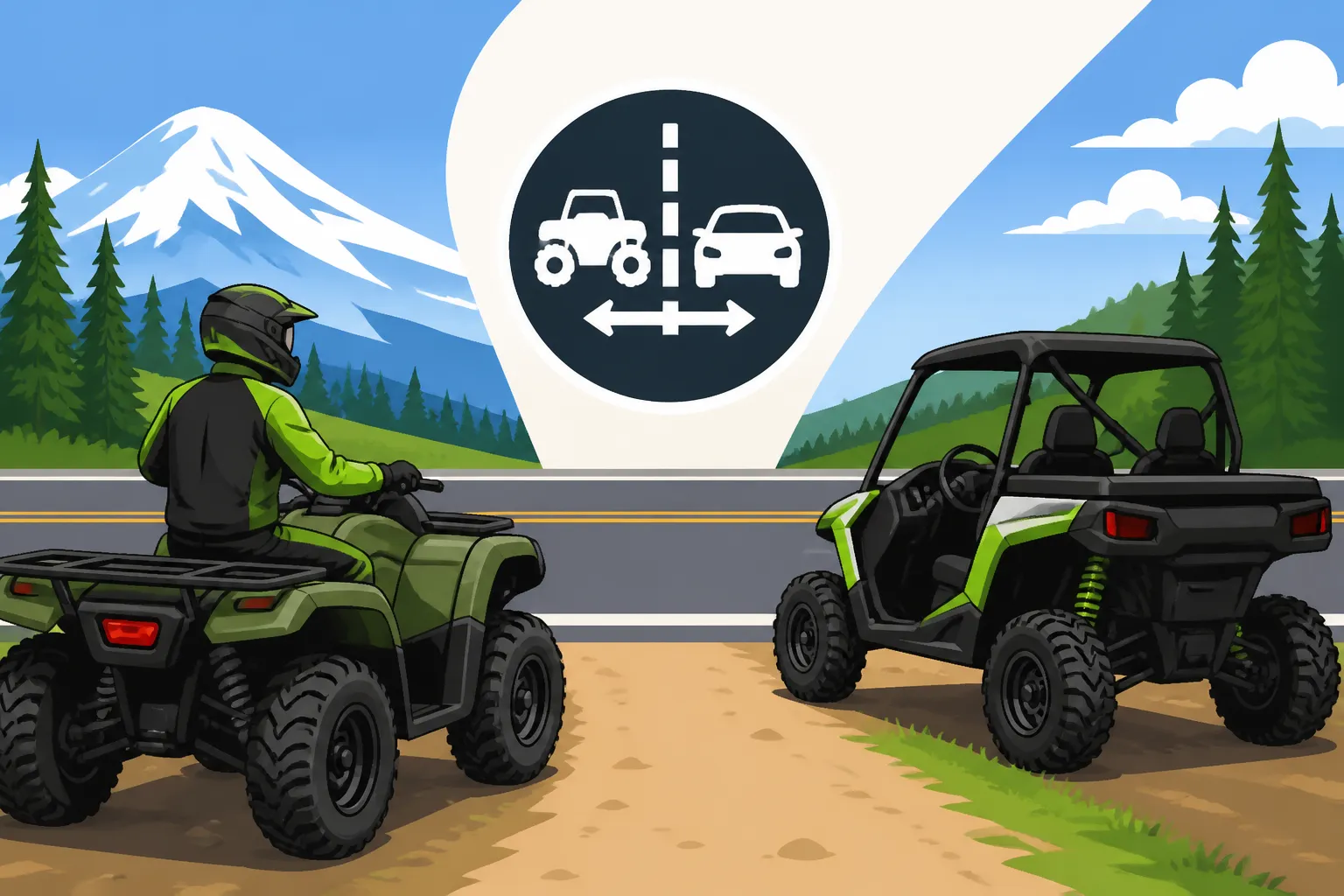
- Cross at a Near 90-Degree Angle: Once clear, proceed directly across the roadway, aiming for the shortest possible distance. This means going straight across, not diagonally, and certainly not turning to travel along the road for any distance. The goal is to minimize your time on the pavement.
- Maintain Control and Speed: Keep your speed under 35 MPH, as discussed earlier, but make sure you have enough momentum to clear the road safely and efficiently. Be aware that tires designed for off-road use will handle differently on pavement, especially if wet.
- Exit Promptly: Once you've safely reached the opposite shoulder, continue directly onto the trail or staging area. Do not linger on the shoulder or begin riding along it.
This precise, deliberate approach is key to staying safe and legal. Remember, the statute specifically allows for crossing only for the purpose of continuing on an ORV trail or returning to an ORV recreation area.
Common Pitfalls and Misconceptions About Crossings
Even with clear rules, it's easy to fall into traps or misunderstand the nuances of road crossings. These common mistakes can not only put your safety at risk but also lead to citations and fines. Understanding these pitfalls is just as important as knowing the rules themselves.
Confusing "Crossing" with "Riding On"
This is perhaps the biggest and most frequent mistake riders make. Many people see a paved road and think, "Well, I'm almost across, what's a few more yards down the shoulder?" or "I'll just take this paved road for a quarter-mile to the next turn-off, it's basically a crossing, right?" Absolutely not. The moment you deviate from a direct, 90-degree traverse and start traveling along the paved surface, even for a very short distance, you are no longer making a legal crossing. You are now operating your ORV on a public road, which typically requires a full street-legal setup, including the on-road tab, appropriate lighting, mirrors, a horn, and often a valid driver's license. The penalties for illegal road riding are significantly higher than for an improperly executed crossing, and it can also jeopardize the future of ORV access on other roads and trails. This is why the distinction is so vital. If you only have your off-road tab, hitting the pavement for anything more than a direct crossing can lead to a citation for riding an unregistered or non-street-legal vehicle on the road. For more details, consider [Riding Pavement With Only the Off-Road Tab].
The Role of County and City Ordinances
Washington State law provides the general framework for ORV use, including road crossings. However, counties and cities have the authority to enact their own ordinances that can further restrict or, in some cases, open up roads for ORV use within their jurisdictions. This means that while state law might permit crossing a certain type of road, a local ordinance could specifically prohibit it in that particular area. For example, a county might have a list of approved roads for ORV use, and any road not on that list might be off-limits even for crossings, or require additional steps. Conversely, some towns have embraced ORV use and created specific crossing points or limited street access. The key takeaway here is that you cannot rely solely on the statewide rules; you must also be aware of any local regulations. Before you embark on a ride that involves road crossings in an unfamiliar area, it's always a good idea to check the website of the relevant county or city's public works or sheriff's department. Local ORV clubs are also fantastic resources for up-to-date information on local rules. Understanding [Washington Rules for Riding a County Road] and [Washington Rules for Riding a City Street] is a great start.
What to Do if Stopped by Law Enforcement
It's a scenario no one wants, but it's always best to be prepared: you're making a road crossing, and you see flashing lights behind you. The most important thing is to remain calm and cooperate fully.
- Pull Over Safely: As soon as you can do so, pull your ORV completely off the paved road onto the shoulder or dirt area, ensuring you're not obstructing traffic. Turn off your engine.
- Keep Hands Visible: Place your hands on the handlebars or helmet so the officer can see them.
- Listen and Respond: The officer will explain why they stopped you. Listen carefully to their instructions and respond politely. Avoid arguing or becoming defensive.
- Present Documents: They will likely ask for your driver's license (if you have one, and if you're riding a road-legal machine) and your ORV registration. Have these readily accessible. Remember, you should always be [Carrying the Registration in the Machine] while riding.
- Explain Your Intent: If you believe you were making a legal crossing, calmly explain your actions and your intent to connect trail segments.
- Accept the Outcome: If you receive a citation, accept it without further argument. You can always address the issue in court later if you believe it was issued in error.
Law enforcement officers are primarily concerned with safety and compliance. By being respectful and cooperative, you make the interaction smoother for everyone involved. What a Washington Trooper Checks Roadside can provide more insight into typical roadside stops.
Ensuring You're Prepared for Washington Road Crossings
Preparation is everything when it comes to enjoying Washington's trails responsibly and legally. A little foresight before you load up your machine can save you a lot of headaches out on the trail, especially when it comes to those inevitable road crossings.
Pre-Ride Checks for Equipment and Documentation
Before you even leave your driveway, perform a thorough check of both your machine and your paperwork. For your WATV, ensure all lights (headlight, taillight, brake light) are fully functional. Check your brakes for proper operation, and confirm your tires are in good condition and at the correct pressure for the terrain you'll be covering, especially if you're running aggressive off-road tires that might feel squirmy on pavement. Ensure your spark arrester is installed and in good working order, as this is a requirement for riding on public lands.
On the documentation side, make sure your ORV registration is current and the decals are properly displayed. Crucially, have your physical registration card with you, stored in a waterproof bag or compartment on your machine. For those running SuperATV storage bags, this is an excellent place to keep important documents safe from the elements. If you have a driver's license, carry that too, even if you don't intend to ride on the road. It's always a good idea to have identification. A quick pre-ride checklist can prevent a minor oversight from turning into a major problem when you encounter a road crossing or, worse, a law enforcement officer.
Mapping Your Route for Minimal Pavement Interaction
Smart planning of your route can significantly reduce your need for complex road navigation. Before your ride, consult detailed maps of your chosen riding area. Many state forests and public lands offer downloadable maps (often in PDF or KML formats) that clearly delineate motorized trails and public roads. Your goal should be to identify routes that minimize the number of road crossings and, when crossings are necessary, choose the most direct path.
Look for designated staging areas and how they connect to the trail system. Are there any marked ORV crossing points? Can you find a route that keeps you off pavement entirely, or at least reduces your time on it to the bare minimum required for a straight-across crossing? Modern GPS units or smartphone apps with trail overlays can be invaluable tools for this kind of pre-ride planning, helping you visualize your route and anticipate any road intersections. Remember, the less time you spend on pavement, the less chance you have of encountering issues.
Staying Informed About Changing Regulations
Washington's ORV laws and local ordinances can, and do, change. What was permissible last year might have new restrictions this year, or conversely, new opportunities for road access might open up. It's your responsibility as a rider to stay current with these regulations.
Here are a few ways to stay informed:
- Washington State Department of Licensing (DOL) and Department of Natural Resources (DNR) Websites: These are official sources for state-level regulations and updates on trail access, closures, and permit requirements.
- Local County and City Websites: Regularly check the public works, sheriff's office, or county commissioner websites for any specific ordinances or changes to road access for ORVs in areas you plan to ride.
- Join ORV Clubs and Associations: Local clubs, such as the Washington ATV Association or regional groups, are often the first to know about proposed changes, public hearings, and new regulations. They also advocate for rider rights and trail access, making them invaluable resources. They often share updates on social media or in newsletters.
- Attend Public Meetings: If a specific area you ride in is discussing ORV access, attending public meetings or providing feedback can help shape future policies.
By actively staying informed, you not only ensure your own compliance but also contribute to the responsible image of the ORV community, which helps preserve and expand riding opportunities for everyone.
Disclaimer
This article is for general informational purposes only and does not constitute professional advice. Laws, prices and regulations vary by location and change over time. Consult a qualified professional for guidance on your specific situation.