The 15,000 Population Line in Washington’s WATV Law
Trying to figure out where you can legally ride your wheeled all-terrain vehicle (WATV) on Washington's public roads can feel like navigating a dense thicket without a map. It’s frustrating when you just want to connect trails or access a store, only to be met with confusing laws that seem to change from one county line to the next. This guide will shine a light on one of the most pivotal, yet often misunderstood, aspects of Washington's WATV road access laws: the 15,000 population line, explaining exactly what it means for your riding adventures and how to avoid an unwanted citation.
Understanding Washington's WATV Road Access Laws
Washington State has a unique approach to allowing WATVs on public roads, and it's definitely not a "one size fits all" situation. Unlike some states where ATVs are either blanket-legal or strictly prohibited on pavement, Washington empowers its local jurisdictions—counties and cities—to make specific decisions about their roads. This means that just because you can legally ride a county road in one part of the state doesn't automatically mean you can do the same a hundred miles down the highway. This localized control is designed to balance the recreational desires of riders with the safety concerns and traffic patterns of individual communities, but it can create a real headache for those who just want to understand the rules.
The State Statute's Intent
The core idea behind Washington's WATV road laws, specifically Chapter 46.09.310 RCW, was to create a framework that allows for increased access while maintaining public safety and local autonomy. Lawmakers recognized that WATVs are a legitimate form of recreation and transportation for many, especially in rural areas where gravel roads and trails are plentiful. However, they also understood that these machines, with their unique handling characteristics, aren't always suited for high-speed, high-traffic environments. So, instead of a blanket rule, they delegated the decision-making power to county and city governments. This decentralized approach means that while the state sets the overarching guidelines, the specific roads that are open or closed are determined at the local level. It's an attempt to be flexible, but often, that flexibility translates into a lot of homework for riders.
The Different Types of Roads and Their Rules
When we talk about WATV road access in Washington, it's crucial to distinguish between various types of roads, as the rules can differ significantly. Generally, there are three main categories:
- County Roads: These are the roads managed by individual county governments, and they are the primary focus of the 15,000 population rule. Whether a county road is open by default or requires an "opt-in" ordinance hinges entirely on the county's population. This is where most WATV road riding happens, connecting rural properties, trail systems, or small towns.
- City Streets: Roads within incorporated cities and towns are governed by city ordinances. Even if a county has open roads, a city within that county might have its own rules, often much stricter, or may ban WATVs entirely. Always check city ordinances if your route takes you through an urban area. [Washington Rules for Riding a City Street]
- State Highways: These are roads maintained by the Washington State Department of Transportation (WSDOT), identified by state route numbers (e.g., SR 20, SR 12). WATVs are generally not permitted on state highways, except for specific, short segments explicitly authorized by WSDOT, usually for crossing purposes or very limited access where other options don't exist. There are very few exceptions, and you should never assume a state highway is open.
Understanding these distinctions is your first step to planning a legal ride. Most of the time, the frustrations and questions about road access revolve around county roads, which is exactly where the 15,000 population line comes into play.
The Crucial 15,000 Population Divide: How It Works
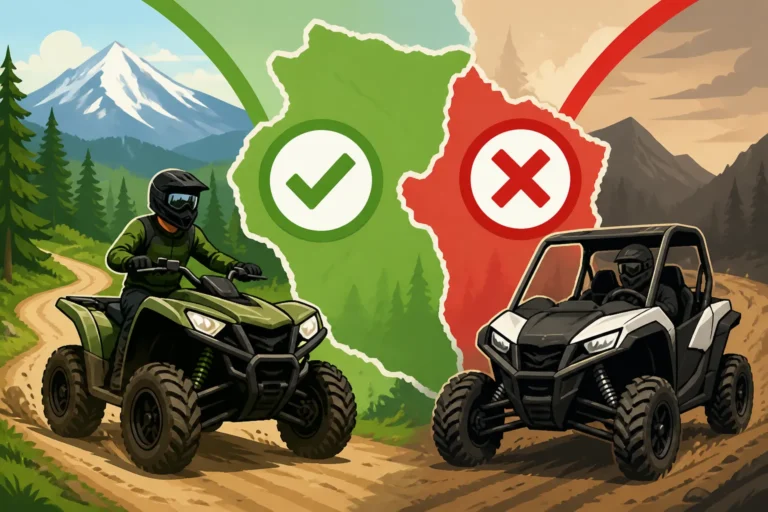
At the heart of Washington's WATV road access law is a very specific population threshold: 15,000 residents. This number, determined by the most recent federal decennial census, acts as a fundamental dividing line for how counties manage WATV access on their roads. It's not just a suggestion; it's a statutory directive that flips the default status of county roads from "open" to "closed" (or vice versa) depending on which side of that line a county falls. For riders, this distinction is paramount because it dictates whether you can assume you can ride a particular road or if you absolutely must verify its legality before you even turn the key.
"Open by Default" for Smaller Counties
If a Washington county has a population of less than 15,000 people according to the last federal census, its county roads are considered "open by default" for WATV use. This means you can generally ride your WATV on most county roads within that jurisdiction, provided they meet the other criteria for road-legal use (like speed limits, equipment, and rider licensing). The burden of proof, in this case, falls on the county to explicitly close a road if they deem it unsuitable for WATV traffic. They must do so through a formal ordinance or resolution, and then clearly mark the closed roads with appropriate signage.
For riders in these smaller counties, this "open by default" status often feels like a breath of fresh air. It offers a greater degree of freedom and simplifies route planning, as you don't need to chase down a specific list of open roads. However, it's not a license to ride anywhere. You are still responsible for knowing which roads, if any, have been specifically designated as closed by the county. Typically, these might be roads with very high traffic, steep grades, or specific safety concerns. This particular aspect of the law is covered in detail in [Washington Counties Under 15,000 Open by Default].
"Opt-In Required" for Larger Counties
Now, let's look at the other side of the coin. If a Washington county has a population of 15,000 people or more, its county roads are considered "closed by default" for WATV use. This is a critical distinction and often the source of much confusion and frustration for riders. In these larger, often more urban or suburban, counties, you cannot assume any county road is open. Instead, the county must take proactive steps to explicitly open specific roads or road segments through a formal ordinance or resolution. They then typically publish a list or map of these approved roads.
This "opt-in" requirement places a much heavier burden on the rider to do their homework. If a road isn't on an official "open" list published by the county, then it's considered illegal to ride your WATV on it. This system is designed to give more populous counties, which typically have higher traffic volumes and greater potential for conflicts between WATVs and other vehicles, more control over where WATVs can operate. It's easy to get caught out by this rule if you're not meticulous in your planning, leading to potential fines and unnecessary hassle. The specifics of this are well-defined in [Washington Counties Over Fifteen Thousand Must Opt In].
Riding in Counties Under 15,000 Population: Open by Default
For riders exploring Washington's more rural and less populated areas, the "open by default" rule in counties with fewer than 15,000 residents offers a sense of freedom. It paints a picture where most county roads are fair game for WATV travel, provided you're operating your machine legally and safely. This structure acknowledges that in many of these communities, WATVs are an integral part of life, used for everything from farm work to accessing remote cabins or simply enjoying the vast natural beauty. However, "open by default" doesn't mean "open absolutely everywhere," and understanding the nuances is key to staying out of trouble.
What "Open by Default" Truly Means
In a county under the 15,000 population threshold, the state law presumes that county roads are open to WATV use. This means you generally do not need to seek out an explicit list of roads that are open. Instead, your primary task is to be aware of any roads that have been specifically closed by the county. Imagine you're riding through a scenic, sparsely populated county in eastern Washington; you're likely to find that the majority of gravel and paved county roads are accessible. This greatly simplifies route planning for connecting trail systems or getting to a gas station in a small town.
However, the "open by default" rule comes with important caveats. All other aspects of Washington's WATV laws still apply. Your machine must be properly registered with both off-road and the [$12 On-Road Tab on Top] if you intend to ride on pavement. You must meet all equipment requirements for street-legal use, such as proper lighting, mirrors, a horn, and turn signals. Riders must possess a valid driver's license. Furthermore, the 35 mph speed limit on most WATV-accessible roads is strictly enforced. It's not a free-for-all; it's a conditional freedom that requires responsible riding and adherence to all the rules.
Finding Out Which Roads are Closed
Even in "open by default" counties, there will inevitably be some roads that are deemed unsuitable or unsafe for WATV operation. These might include roads with extremely high traffic volumes, those leading to sensitive areas, or specific stretches where the county commissioners have determined a risk to public safety outweighs the benefit of WATV access. The responsibility then falls on the county to enact an ordinance or resolution to close these specific roads and, crucially, to post clear signage indicating the closure.
To find out which roads might be closed in these counties, your best bet is to check the county's official website. Many counties will publish a list or map of prohibited roads. You can also look for public notices or contact the county public works or sheriff's department. While the assumption is "open," always be on the lookout for signs explicitly stating "No ORV Access," "Road Closed to WATVs," or similar warnings. Ignoring such signage can lead to a citation for [Washington Fines for an Unregistered WATV] or for riding on a closed road, even if the county is generally "open by default." This diligent checking of local information is elaborated further in [How a Small County Lists Its Unsuitable Roads].
Navigating Roads in Counties Over 15,000 Population: Opting In
For WATV riders whose adventures take them through Washington's more populous counties—those with 15,000 residents or more—the landscape of road access dramatically shifts. Here, the default status for county roads is "closed." This means that unless a specific road segment has been explicitly opened by the county government through a formal process, it is illegal to operate your WATV on it. This "opt-in" requirement is a critical difference that often catches riders off guard, especially if they are accustomed to the more lenient rules of smaller counties or have come from states with different regulations. It's a system designed to give more control to areas with higher traffic and population density, but it undeniably adds a layer of complexity for riders.
The Challenge of "Closed by Default"
The "closed by default" rule in larger counties means you cannot make any assumptions about where you can ride your WATV. Every single road or road segment you wish to travel on must be verified as "open" through an official county ordinance. This can be a significant hurdle for riders, as it demands proactive research and a keen understanding of local regulations. Imagine trying to connect two trailheads in a county near one of Washington's major metropolitan areas; you might find that the county roads between them are strictly off-limits unless specifically designated otherwise. This can be incredibly frustrating, effectively landlocking potential riding areas or forcing you to trailer your machine for short distances that would otherwise be easily connected by road.
This requirement means that just seeing other vehicles on a road doesn't make it open to WATVs, and the absence of a "no ORV" sign doesn't mean it's permitted. The lack of an "open" sign or an inclusion on an official county list means it's closed. This is why thorough preparation is absolutely non-negotiable when riding in these areas. The detailed implications of this rule for larger counties are important, as explained in [Washington Counties Over Fifteen Thousand Must Opt In].
How a County Opts In and Publishes Its List
For a county with a population over 15,000 to open its roads to WATVs, it must follow a formal, public process. Typically, this involves the county commissioners (or equivalent legislative body) holding public hearings, gathering input from residents and law enforcement, and then passing an ordinance or resolution that specifically designates certain roads or road segments as open for WATV use. This process is designed to ensure community input and address potential safety concerns before roads are opened.
Once an ordinance is passed, the county is generally required to publish a list or map of the approved roads. This is your go-to resource for planning rides in these jurisdictions. You might find this information on the county's official website, often under departments like public works, sheriff, or parks and recreation. If you can't find it, contacting the county clerk's office or the public works department is a good starting point. Some counties might even have interactive maps. Riders frequently have to engage with this process, attending meetings to advocate for [Asking a County to Open a Road] or [Speaking at a Council Hearing on a WATV Ordinance] to expand access. Without an official, published list, the roads remain closed.
Practical Implications for Riders: What This Means for Your Ride
Understanding the 15,000 population line isn't just about avoiding a ticket; it's about fundamentally changing how you plan and execute your WATV rides in Washington. The rules, whether "open by default" or "closed by default," deeply influence everything from your route selection to the essential gear you need to carry. Failing to grasp these implications can lead to frustrating dead ends, unnecessary detours, or worse, legal trouble. It demands a shift in mindset from simply "going for a ride" to "strategically navigating the legal landscape."
Planning Your Route: The Absolute Necessity of Checking
Regardless of whether you're in an "open by default" or "closed by default" county, thorough route planning and verification are absolutely essential. This isn't just a suggestion; it's a critical step that can make or break your ride.
- For "Open by Default" Counties (Under 15,000): While you have more general freedom, you still need to actively look for explicit road closures. Check the county's public works website or call their office to inquire about any specific roads that have been deemed unsuitable or unsafe for WATV use. Don't rely on old maps or assumptions. Roads can be closed for various reasons, including environmental concerns, active logging, or residential complaints. Always be on the lookout for physical signage on the road itself.
- For "Closed by Default" Counties (Over 15,000): This is where your research must be meticulous. You must obtain and consult the county's official list or map of specifically opened roads. If a road isn't on that list, consider it off-limits. Many counties will publish these documents online, often under their public works or county commissioner sections. Some counties, like Snohomish County, have specific ordinances (e.g., [Snohomish County Ordinance 17-032]) that list approved roads, such as [Riding Old Owen Road], [Riding Mann Road to the River], or [Riding Ben Howard Road], which are crucial to know. Print out or save a digital copy of the approved roads list for the county you plan to ride in, as cell service can be spotty in many rural areas.
This diligent checking, detailed in [Finding a County's Approved Road List], will prevent you from inadvertently trespassing or violating local ordinances, saving you both time and potential fines.
Essential Equipment for Road Use
Even if you find a road that is legally open to WATVs, your machine itself must meet specific state requirements to be considered "street legal" in Washington. Simply having an off-road tab is not enough; if you plan to touch pavement, you need the [$12 On-Road Tab on Top], which signifies your machine has passed a safety inspection and meets critical equipment standards.
Here's a quick rundown of the essential equipment you'll need:
| Requirement | Description |
|---|---|
| Headlights | At least one, but usually two, working headlights. They need to illuminate the road ahead for a specified distance. |
| Taillights/Brake Lights | At least one, but often two, working taillights that are visible from the rear, and functional brake lights that illuminate when the brakes are applied. |
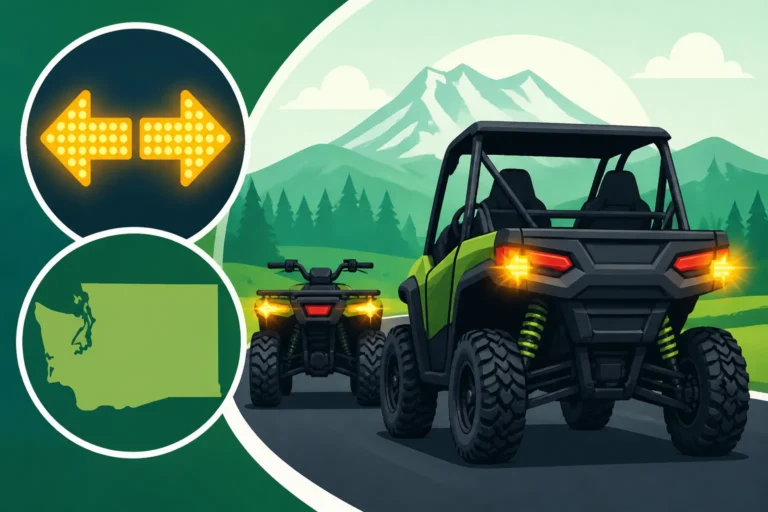
| Turn Signals | Front and rear turn signals are mandatory for indicating lane changes or turns. Many stock ATVs and UTVs do not come with these, requiring aftermarket installation. Companies like SuperATV offer comprehensive, easy-to-install turn signal kits specifically designed for various UTV and ATV models, ensuring you meet the [Turn Signals on a Washington Road Machine] requirement without a custom fabrication headache. |
| Mirrors | At least one rearview mirror, typically on the left side, providing a clear view of the road behind. Two mirrors (left and right) are recommended for better visibility. You can find robust mirrors, including break-away options for trail riding, from accessory providers like SuperATV, which will hold up to rough terrain while keeping you legal on the road. [Mirrors and a Horn for Washington Road Use] |
| Horn | A working horn audible from at least 200 feet is required. This is for warning other motorists and pedestrians. |
| Windshield or Eye Protection | If your WATV does not have a windshield, you and any passengers must wear eye protection (goggles or a face shield). Many side-by-sides now come with factory windshields, but ensure yours is free of cracks or obstructions. |
| Muffler/Spark Arrester | While primarily for off-road use, it's critical your exhaust system includes a spark arrester (to prevent wildfires) and a muffler that keeps noise within legal limits, which generally apply whether on or off road. |
| Seat Belts | If your WATV is equipped with seat belts (common in UTVs), they must be used by the driver and all passengers. |
| Driver's License | The operator must possess a valid driver's license. |
| Insurance | While not explicitly required for off-road only WATVs, if you add the on-road tab, you need to have liability insurance that meets Washington's minimum requirements, just like any other motor vehicle. [Washington WATV Insurance Requirements] |
Ensuring your WATV is properly equipped is not just about compliance; it's about safety, especially when sharing roads with larger, faster vehicles. Neglecting these requirements, even on an officially "open" road, can lead to [Washington Fines for Illegal WATV Road Use]. For riders with UTVs, [Washington WATV Road Requirements] go into even greater detail about these specific needs.
Overcoming the Confusion: Tips for Washington WATV Riders
The maze of Washington's WATV road access laws, particularly the 15,000 population line, can be daunting. It’s easy to feel overwhelmed by the need to check ordinances, verify lists, and ensure your machine is up to snuff. Many riders express frustration with the sheer amount of research required just to go for a ride. But don’t let that deter you! With a methodical approach and the right mindset, you can navigate these rules confidently and safely enjoy Washington's diverse riding opportunities. The key is to embrace proactive planning and prepare for both the trails and the connecting roads.
Always Do Your Homework
This cannot be stressed enough: always do your homework before you load up your machine. This means more than just looking at a general map.
- Identify Your County: First, know which county you'll be riding in. This is the absolute starting point for understanding whether their roads are "open by default" or "closed by default." A quick search for "Washington State county populations" will give you the data based on the latest census.
- Consult County Resources:
- For counties under 15,000 (Open by Default): Check the county's public works department website or contact them directly to ask if any roads have been specifically closed to WATVs. Look for "unsuitable roads" lists or ordinances. [How a Small County Lists Its Unsuitable Roads] is a good resource for this.
- For counties over 15,000 (Closed by Default): This is where you must find the official "open roads" list or ordinance. Search the county's website (often under public works, sheriff, or county commissioners) for "WATV ordinance" or "ORV road access." Print or screenshot this list for reference, especially in areas with no cell service. [Finding a County's Approved Road List] offers guidance.
- Check City Ordinances: If your route takes you through any incorporated city or town, assume city streets are closed unless you find a specific city ordinance that states otherwise. Cities often have much stricter rules than counties. [Washington Rules for Riding a City Street] can help here.
- Review State Highway Rules: Remember, state highways (numbered routes like SR 20 or US 12) are generally off-limits. Only WSDOT can open specific short segments for crossings or limited use. Do not assume.
This upfront research, while time-consuming, is your best defense against fines and ensures a smooth, legal ride.
Gear Up for Safety and Legality
Once you know where you can ride, ensure your machine is properly equipped for any road sections. This isn't just about meeting the law; it's about your safety and the safety of others.
- Ensure Proper Registration: Make sure your WATV has both the regular off-road tab and the [$12 On-Road Tab on Top] if you plan to touch any public pavement. Without it, even an open road is off-limits.
- Install Required Equipment: Confirm you have working headlights, taillights, brake lights, a horn, mirrors, and turn signals. For many stock ATVs and UTVs, these items require aftermarket installation. This is where quality aftermarket parts come in handy. For instance, SuperATV provides a wide range of durable accessories, from complete wiring kits with turn signals to sturdy mirrors and windshields, all designed to make your machine road-ready and resilient enough for Washington's rugged trails. Their products are often designed for easy installation, saving you time and hassle.
- Wear a Helmet: Washington's helmet law requires all riders and passengers of WATVs to wear a DOT-compliant helmet, even on county roads. [Washington Helmet Law for WATV Riders] explains this in detail.
- Carry Your Paperwork: Always have your driver's license, WATV registration, and proof of insurance (if required for road use) on your person or securely stored in your machine.
Being prepared with both the knowledge of the law and the right equipment ensures that your WATV adventures in Washington are enjoyable and stress-free.
What Happens If You Get It Wrong
Ignoring Washington's WATV road laws, whether out of ignorance or intentional disregard, can lead to serious consequences. A common scenario is encountering a Washington State Patrol trooper or county sheriff's deputy on a road you assumed was open but actually falls under the "closed by default" rule in a higher-population county, or a specifically closed road in a smaller county.
- Citations and Fines: The most immediate consequence is a citation. Fines for illegally operating a WATV on a closed road can vary, but they are generally significant enough to make you wish you'd done your homework. These fines can quickly add up, especially if combined with other violations like not having the correct tabs or lacking required equipment. [Washington Fines for Illegal WATV Road Use] elaborates on the costs.
- Machine Impoundment: In some cases, particularly for repeat offenses or egregious violations, your WATV could be impounded, adding towing and storage fees to your woes.
- Safety Risks: Beyond legal ramifications, riding illegally on roads, especially those with higher speed limits or traffic volumes, poses significant safety risks. WATVs are designed for off-road conditions and often handle differently on pavement, making them less predictable in traffic. Encountering a logging truck on a gravel road that's open to WATVs is one thing, but merging into 50 mph traffic on an illegal road is another entirely.
- Negative Public Perception: Every illegal ride also contributes to a negative public perception of WATV riders as a whole. This can lead to tighter restrictions, fewer open roads, and make it harder for advocacy groups to expand access in the future.
Ultimately, understanding and respecting the 15,000 population line, along with all other WATV laws, is crucial not just for your own legal protection and safety, but for the future of WATV riding access throughout Washington State.
Disclaimer
This article is for general informational purposes only and does not constitute professional advice. Laws, prices and regulations vary by location and change over time. Consult a qualified professional for guidance on your specific situation.