Riding Ione in the Pend Oreille
It can be incredibly confusing to figure out exactly where you’re allowed to ride your wheels in Washington, especially when you’re venturing into a charming, smaller town like Ione, nestled in the beautiful Pend Oreille region. You might be dreaming of cruising into town for a bite or linking up different trail systems, but the rules for riding your All-Terrain Vehicle (ATV) or Utility Terrain Vehicle (UTV), which Washington calls a Wheeled All-Terrain Vehicle (WATV), on public roads can feel like a tangled mess. This guide aims to untangle that mess, giving you a clear picture of what it takes to legally ride your WATV on the roads in and around Ione.
Understanding Washington's WATV Road Access Laws
Before we dive into the specifics of Ione and Pend Oreille County, it’s essential to grasp the overarching laws that govern WATV use on public roads throughout Washington State. These aren't just suggestions; they are the bedrock of what's allowed and what could land you a hefty fine. Many riders get frustrated because the laws aren't uniform across the state, and what's permissible in one county might be strictly forbidden just across the county line.
The Statewide Framework for Road Use
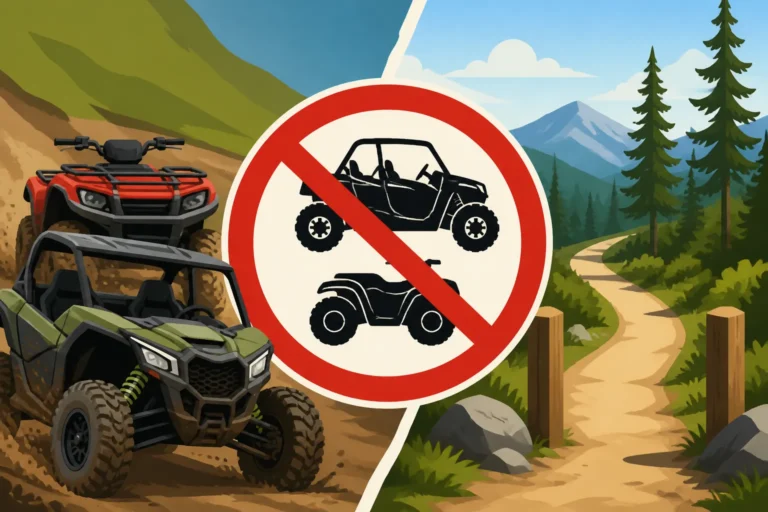
Washington law generally permits counties and cities to open certain public roads to WATVs, but it comes with a lot of caveats. The state sets a maximum speed limit of 35 mph for WATV use on approved roads, and these roads cannot be state highways unless specifically authorized by the Washington State Department of Transportation (WSDOT) or part of a city's open streets ordinance that crosses a state highway at a specific point. For many riders, the challenge isn't just knowing if a road is open, but which specific roads are open. It's not a free-for-all, and simply having an ORV tab doesn't grant you carte blanche on every paved surface. This system aims to balance recreational access with public safety, but it often leaves riders scratching their heads about the nuances. You might be accustomed to riding your machine on forest roads or designated trails, and the jump to public pavement involves a whole new set of rules and equipment.
The state also has different rules for counties based on their population. Those with fewer than 15,000 residents are generally "open by default" on their county roads, meaning WATVs are allowed unless the county specifically closes a road. Larger counties, however, must explicitly "opt-in" by passing ordinances to open specific roads. This distinction is crucial for understanding how Pend Oreille County operates. Cities, regardless of county population, must always pass an ordinance to open their streets to WATVs. So, while a county road might be open, driving into an incorporated city like Ione requires its own municipal approval. It's a patchwork that demands vigilance from riders, as ignorance of a local ordinance isn't usually an excuse for breaking the law.
Differentiating County and City Ordinances
The distinction between county and city ordinances is where many riders get tripped up. Imagine you're riding a beautiful gravel county road, enjoying the scenery. You approach the city limits sign for Ione, and suddenly, the rules might change. While Pend Oreille County might have an ordinance (or lack thereof, given its population) allowing WATVs on many of its roads, the city of Ione has its own jurisdiction over its internal streets. This means you need to check both the county and city regulations before planning your ride.
For instance, Pend Oreille County, being one of Washington’s smaller counties, generally falls under the "open by default" rule for its county roads. This means that if the county hasn't specifically designated a road as closed to WATVs, you might be able to ride it, assuming it meets all other state criteria (like the 35 mph limit and not being a state highway). However, when you enter the incorporated limits of Ione, the city council has the final say on which streets are open. They could have an ordinance that opens certain streets to connect to trails or allow passage through town, or they could have an ordinance that closes all city streets. It's vital to research both levels of government before you saddle up. [Washington Rules for Riding a City Street] and [Washington Rules for Riding a County Road] cover this distinction in more detail.
Specifics for Riding in Ione and Pend Oreille County
Now, let's zoom in on the Ione area. This is where your dreams of riding to the general store or finding a quick route to the next trail system meet the practical realities of local governance. The Pend Oreille Valley is a beautiful area, and it's understandable why riders would want to explore it on their WATVs, but knowing the local rules is paramount to a hassle-free experience.
Pend Oreille County's Approach to WATV Roads
As we touched on, Pend Oreille County generally operates under the "open by default" provision for counties with populations under 15,000. This is fantastic news for riders, as it means many of the county's unposted roads that fit the state criteria (like being under 35 mph speed limits and not state highways) are potentially open for WATV use. This can provide excellent connectivity between trailheads, private lands, and small communities. Imagine being able to ride from your cabin down a county road to access a logging road or a forest trail system – this is the kind of freedom the "open by default" rule can offer. You still need to ensure your machine is properly equipped and registered with both the [Washington's Off-Road Tab Explained] and, if riding pavement, the [Washington's On-Road Tab Explained].
However, "open by default" doesn't mean "everywhere, always." Counties still have the authority to specifically close roads if they deem it necessary for safety or other reasons. So, while the general rule is favorable, it's always wise to look for signs or consult the county's public works department or website for any specific closure lists. These lists are usually published to inform the public about exceptions to the general rule. For example, some heavily trafficked arterial roads or those with specific safety concerns might be designated as off-limits. The responsibility falls on you, the rider, to do your homework and be aware of any local caveats. [Washington Counties Under 15,000 Open by Default] offers more context here.
Navigating Ione's City Streets
The town of Ione, despite its small size, is an incorporated municipality, and that means it has the right to set its own rules for WATV use within its city limits. While Pend Oreille County roads outside of Ione might be open, Ione itself needs an ordinance to allow WATVs on its streets. Without such an ordinance, riding your WATV on Ione's streets would be considered illegal, even if you’re fully compliant with state law and county rules. This is a common point of confusion for riders moving from county roads into a town.
Typically, towns that open their streets to WATVs do so with specific intent – perhaps to allow access to local businesses, connect to adjacent trail systems, or permit residents to ride from their homes to the edge of town. These ordinances often specify which streets are open, the hours of operation, and any additional local requirements. As of my last check, it's essential for any rider looking to cruise [Riding Ione in the Pend Oreille] to actively seek out the official city ordinance from the Town of Ione's clerk or website. Don't rely on word-of-mouth or assume that because a county road leads into town, the town itself is open. This due diligence ensures you're riding legally and responsibly, protecting both your recreational experience and the community.
Table: Key Differences – County vs. City Rules in Pend Oreille County (Ione Area)
Understanding the different layers of regulation can be tricky. Here’s a quick overview of how county and city rules typically interact for WATV use in an area like Pend Oreille County and the town of Ione:
| Feature | Pend Oreille County (Outside Ione) | Town of Ione (Within City Limits) |
|---|---|---|
| Default Status | Open by default (for roads under 15k pop rule) unless specifically closed. | Closed by default unless an ordinance specifically opens streets. |
| Speed Limit | State max 35 mph on approved roads. | State max 35 mph on approved roads; local limits may apply. |
| Governing Authority | Pend Oreille County Commissioners | Ione City Council |
| Where to Check Rules | County Public Works website, official county documents. | Ione City Clerk, official city website/ordinances. |
| Purpose of Access | Connecting trails, accessing rural properties, general transit. | Accessing businesses, connecting to county roads/trails. |
| Risk of Non-Compliance | Citation for riding a closed county road. | Citation for riding city streets without an ordinance. |
Equipment and Rider Requirements for Street Legal Use
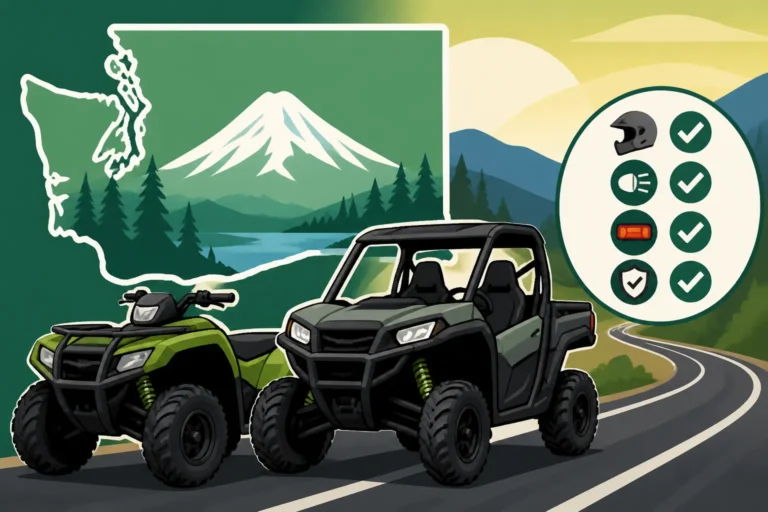
Even if you find that a road in Pend Oreille County or Ione is open for WATV use, that’s only half the battle. Your machine and you, the rider, must meet a specific set of requirements to be considered "street legal" in Washington. These aren't just minor suggestions; they are critical safety and legal mandates designed to ensure that WATVs can share the road safely with other vehicles. Ignoring these can lead to fines, citations, and even impoundment of your machine.
Mandatory Machine Upgrades
For your WATV to be legally ridden on open public roads in Washington, it needs to be equipped with several items that might not be standard on an off-road-only model. This is where companies like SuperATV come in handy, offering kits and individual components to get your machine compliant. These upgrades are about making your WATV visible and controllable in a mixed-traffic environment.
Here’s what you generally need:
- Headlights: Your WATV must have at least one headlight that meets state requirements for brightness and aiming, necessary for visibility, especially during dawn, dusk, or in inclement weather.
- Taillights and Brake Lights: Essential for rearward visibility, ensuring drivers behind you know your presence and when you’re slowing down.
- Turn Signals: Both front and rear turn signals are mandatory, allowing you to clearly signal your intentions to other drivers. This is a common aftermarket add-on for many off-road machines, and you can find comprehensive kits from suppliers like SuperATV that integrate seamlessly.
- Mirrors: You need at least one rearview mirror, providing a clear view of traffic approaching from behind. Many riders opt for two mirrors for better situational awareness.
- Horn: A working horn is required to alert pedestrians or other drivers to your presence when necessary. It's a small but crucial piece of safety equipment.
- Windshield or Eye Protection: You must have either a windshield or wear appropriate eye protection (goggles or a face shield) while riding. This protects you from debris, wind, and insects.
- Seat Belts (for UTVs): If your machine is designed with seat belts (like most side-by-sides), they must be in good working order and worn by all occupants.
- Spark Arrester: A U.S. Forest Service-approved spark arrester is required for any ORV operating on public lands, including many roads that lead to trails.
These requirements ensure that your WATV operates at a similar safety and visibility standard to other vehicles on the road. Don’t cut corners here; a quick inspection by law enforcement will likely uncover any missing components. [Washington Lighting Requirements for WATVs] and [Washington Turn Signal Requirements] provide more detail on these specific items.
Rider Responsibilities and Licensing
It’s not just about the machine; the person operating it also has specific legal obligations when riding on public roads. These rules are in place to ensure that all drivers on the road, including WATV operators, have a basic level of competence and responsibility.
- Valid Driver's License: Any person operating a WATV on a public road in Washington must possess a valid driver’s license. This means you can’t be a minor without a license, nor can you be operating with a suspended or revoked license. It’s the same requirement as driving a car. [Washington Driver License Rules for WATVs] are clear on this.
- Helmet Law: While many states have helmet laws only for younger riders, Washington State requires all WATV operators and passengers to wear a U.S. DOT-compliant helmet when riding on public roads open to WATVs. This is a critical safety measure, even for experienced adult riders. [Washington Helmet Law for WATV Riders] explains this in full.
- Insurance: Although not always required for off-road-only use, if you plan to operate your WATV on public roads, you must carry liability insurance. This protects you and others in case of an accident. The minimum coverage amounts are similar to those required for cars. It's always a good idea to check with your insurance provider to ensure your specific policy covers on-road WATV use.
- Registration and Tabs: Of course, your WATV must be properly registered with the Washington State Department of Licensing (DOL). This means having both the off-road ORV tab and, crucially, the specific on-road WATV tab, which indicates your machine has met the street-legal requirements. These tabs must be properly affixed to your machine. Additionally, you must carry your registration document with you while riding. [Paying for Both Tabs in Washington] and [Carrying the Registration in the Machine] are essential reads.
Meeting these rider requirements ensures that you are legally authorized and prepared to share the roads with other traffic. It’s about being a responsible motorist, not just an off-road enthusiast.
Navigating Roads and Trails in the Ione Area
Once you’ve got your machine street-legal and your paperwork in order, the real fun begins: exploring the beautiful Pend Oreille region. Ione is a gateway to vast stretches of forest, logging roads, and recreational opportunities. Knowing how to use the open roads to your advantage, and how they connect to the off-road trails, is key to an enjoyable and legal riding experience.
Connecting to Forest and Logging Roads
One of the primary benefits of having a street-legal WATV in a region like Pend Oreille County is the ability to legally use county roads to connect to various forest and logging road systems. These systems often provide access to more remote areas, scenic viewpoints, and a network of designated trails. Instead of trailering your machine everywhere, you can potentially ride from your accommodation directly to the next gravel adventure.
When transitioning from a paved county road to a forest or logging road, remember that these typically fall under different jurisdictions (e.g., Department of Natural Resources, U.S. Forest Service, private timber companies). While the county road might be open to WATVs, the rules for the forest or logging road might have additional requirements or restrictions. Always look for signage, check land management agency websites for maps and alerts (like fire closures or timber harvesting operations), and be aware of private property boundaries. Many of these roads are actively used by logging trucks and other heavy equipment, especially on weekdays, so always ride defensively and be prepared to encounter large vehicles. [Riding a Forest Road] and [Riding a Logging Road] are valuable resources here.
Planning Your Route and Staying Informed
Successful WATV riding in the Ione area, especially when combining road and trail use, hinges on good planning and staying informed about current conditions. Don't just head out with a vague idea of where you're going.
- Get Good Maps: Invest in detailed maps of the area, including forest service maps, DNR maps, and even GPS apps designed for off-road use. These can show designated trails, open roads, and restricted areas. Plot your route, noting where you'll transition between different road types (city, county, forest).
- Check for Closures: Before heading out, always check for current closures due to fire danger, timber operations, or seasonal restrictions. Many forest roads and trails, especially at higher elevations, are subject to winter closures or seasonal opening dates. A quick call to the local ranger district or a check of their online resources can save you a wasted trip. [Washington Trail Closures to Check First] is a good starting point.
- Respect Private Property: The Pend Oreille area has a mix of public and private land, including extensive timber company holdings. While some private timber companies may allow recreational access, many do not, or they require permits. Always respect "No Trespassing" signs and closed gates. Riding on private land without permission can lead to serious legal consequences. [Washington Trespass Rules for Riders] covers this crucial aspect.
- Be Prepared: Carry essential tools, a first-aid kit, extra fuel, and plenty of water. Cell service can be spotty in remote parts of the Pend Oreille, so don't rely solely on your phone for navigation or emergencies. Inform someone of your route and expected return time.
By diligently following Washington's WATV laws, preparing your machine with necessary upgrades (perhaps from SuperATV), obtaining the correct registrations, and planning your routes carefully, you can fully enjoy the incredible riding opportunities that Ione and the beautiful Pend Oreille Valley have to offer. It's about being responsible, respectful, and ready for adventure!
Disclaimer
This article is for general informational purposes only and does not constitute professional advice. Laws, prices and regulations vary by location and change over time. Consult a qualified professional for guidance on your specific situation.