Bears in the Cascade Foothills
Bears are a real part of riding Washington’s Cascade foothills, and an unexpected sighting can turn a relaxing trail day into a stressful one. This guide explains how to lower the chance of surprising a bear, what to do if one appears near your ATV or UTV, and how to handle food, camp, and trail choices more safely.
Why bear awareness matters on Cascade foothill rides
Where riders may encounter bears
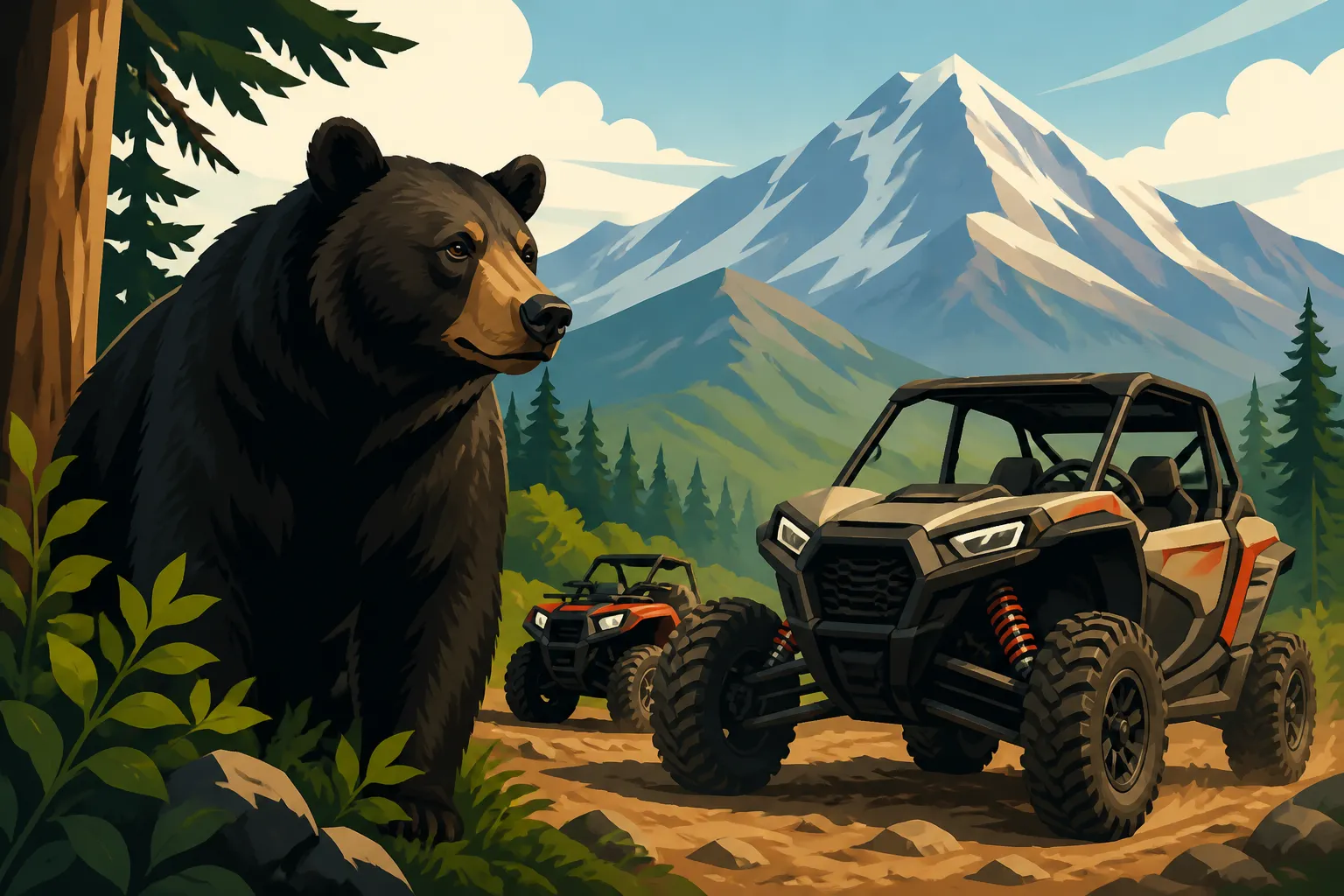
Black bears live across much of Washington, including forested foothill country. Riders may see one on a trail, near a creek, at a campsite, or crossing a gravel road. A bear might be feeding, traveling between areas, or simply using the same forest corridor as you. Seeing one does not automatically mean it is aggressive, but it is a reason to give it room and avoid changing its behavior.
Bear activity can happen at any time of day. Early and late hours may feel especially quiet, and visibility can be limited by thick brush, sharp bends, or uneven terrain. A rider traveling around a blind corner may have little time to react. That is one reason to moderate your speed where sight lines are short, rather than assuming engine noise will always warn wildlife away.
The foothills are working landscapes as well as recreation areas. You may share access roads with other riders, hikers, vehicles, and people working in the forest. Bears can also be attracted to human food and garbage around busy staging areas or campsites. Read local notices before a ride and plan to keep food and waste secured, whether you are out for an afternoon or staying overnight. For broader trip planning, see Camping Near Washington ORV Areas.
How to lower the chance of surprising a bear
Ride at a speed that lets you stop safely when the trail is narrow, brushy, or winding. Be particularly alert near creeks, berry patches, dense vegetation, and places where the trail curves out of view. If you stop for a break, talk normally with your riding group rather than moving silently through thick cover. Ordinary conversation and steady awareness are more useful than relying on a horn or repeatedly revving an engine.
Keep the group together, but leave enough space between machines to avoid a sudden pile-up if someone spots wildlife. Agree on a simple signal before you start: the lead rider should be able to alert the group without everyone accelerating toward the sighting. If someone calls out a bear, reduce speed, stop where you have room, and let the lead rider communicate what is happening.
A map can help with route planning and keeping your group oriented, especially when trails branch or visibility is poor. Some riders use onX Offroad to plan a route and save map information for areas with weak service. Treat any app as a navigation aid, not as confirmation that a route is open or that wildlife is absent. Check official land-manager alerts before loading up; Checking Alerts Before You Load Up is a useful part of that routine.
Bear sightings and changing conditions
A bear sighting does not necessarily mean the whole riding area is unsafe, but it should change how you behave nearby. Give the animal space, keep your group together, and do not follow it to get a better look. If the bear is near the route, consider turning back or waiting at a safe distance rather than trying to squeeze past it.
Conditions on foothill trails can also affect how easily you notice wildlife. Rain, wind, dense vegetation, and the sound of multiple machines can make it harder to hear or see what is ahead. On a wet or slick trail, stopping distance may increase too. Use extra caution when the trail is muddy or visibility is reduced; Washington Riding in the Wet Season and Riding a Wet Forest Trail cover related conditions that can affect a ride.
What to do if you see a bear
Give the bear room and a way out
If you see a bear ahead, slow down and stop at a safe distance. Do not ride toward it, surround it, or block the direction it appears to be traveling. If the bear has an open path away from people, let it use that path. A bear that feels trapped or crowded may react defensively, so avoid placing your group between the animal and its escape route.
Keep the group calm and together. Speak in a calm, clear voice so the bear can identify you as people, and avoid sudden movements. If the bear does not move away, back off slowly when you can do so safely. Do not run, chase it, or make a fast maneuver that could startle it. If you need to turn around, do so only when there is room to maneuver without approaching the bear.
An ATV or UTV is not a reason to close the distance. Do not try to drive between a bear and its cubs, food, or route away. If the animal is close to the trail, waiting or choosing another route is often the safer, less dramatic option. It can be frustrating to abandon a planned loop, especially after hauling your machine to the trailhead, but avoiding a close encounter is more important than finishing a route.
Keep children and passengers close
Before the ride, tell children and passengers what to do if anyone spots a bear: stay with the group, follow the lead rider’s directions, and do not get off the machine to take a photo. A child may be excited or frightened and move toward the animal without thinking. A short conversation at the trailhead can prevent confusion when everyone is reacting quickly.
For a family ride, assign an adult to keep track of the younger riders and agree on a stopping point where the group can regroup. Avoid letting children ride ahead around blind corners or out of sight. Review age and supervision requirements before going; [Washington’s Supervision Rule for Riders Under 16] explains a separate but important part of planning a ride with young riders.
Passengers should remain seated and secured as the machine’s design requires. Do not have someone lean out to take a picture, wave at the bear, or step off into brush. The safest photo is one taken from a distance without changing the bear’s behavior. If the animal is close enough that a photo feels urgent, it is close enough that your attention should be on creating space and moving away safely.
Bear spray and other immediate precautions
Carry bear spray in a place you can reach quickly, rather than buried in a backpack, cargo box, or storage compartment. Learn how the specific canister works before the ride, follow its label, and make sure it is in usable condition. A canister that is inaccessible when you need it is little help. Practice reaching for it while wearing your riding gear so you know where it is without fumbling.
Bear spray is a precaution, not a reason to approach wildlife. Use it only if a bear comes close enough to present an immediate threat, and follow the product directions. Wind can affect where the spray travels, so be aware of its direction and avoid spraying casually. If an encounter happens, prioritize creating distance and following the canister’s instructions rather than trying to film or manage the situation for others.
Do not rely on climbing a tree, outrunning a bear, or getting onto a machine as a guaranteed escape plan. The right response depends on what the bear is doing and how close it is. Give the animal space before the situation becomes urgent, and use bear spray as directed if a threatening close encounter develops.
Food, camp, and trailhead habits that reduce conflict
Keep food and garbage from attracting bears
Food smells can draw wildlife toward people, even when the food is packaged. Keep snacks, coolers, cooking supplies, and garbage secured rather than leaving them out at a staging area or campsite. Clean up promptly after eating, pack out wrappers, and do not leave food scraps behind. A small spill or discarded snack can create a problem for the next group as well as for the bear.
At camp, follow the site’s rules for food storage and waste. Do not assume a vehicle, tent, or soft-sided cargo area is a bear-proof container. If the area provides specific instructions, use them. Where secure storage is not available, minimize what you bring, keep food contained, and remove it when you leave.
Riders who stop for lunch on the trail should avoid leaving food unattended on a machine while they wander away. Pack out every wrapper and leftover. A tidy stop is not just courtesy; it helps avoid teaching wildlife that people and machines are a dependable source of food. These habits matter at popular areas as much as at quieter sites, where one careless food stash can affect a bear’s behavior over time.
Make a practical plan for riding and camping
Before leaving home, decide where you will stop, how you will carry food, and what you will do if a bear is near the route. Check for land-manager notices and trail changes, and share your plan with everyone in the group. If your route is unfamiliar, save a map for offline use and carry a backup way to navigate. onX Offroad can be one planning tool, but confirm current access and closures through the responsible land manager.
If you are camping, set up in the permitted area and keep cooking and food storage consistent with posted rules. Store waste securely and take it with you when required. Do not feed wildlife or leave food behind because you expect another camper to clean it up. A pleasant campsite is not worth the risk of drawing a bear toward people.
When planning a route, remember that a map line alone does not show every on-the-ground condition. Gates, work activity, temporary closures, and local restrictions can affect access. Use onX Offroad to help orient yourself, then check official updates and posted signs as you travel. Reading a DNR Recreation Map can help you understand the difference between planning information and the conditions you find on the ground.
Keep the machine and stopping area clean
Food residue, drink spills, and rubbish can remain around a machine after a break. Before you leave a stop, check the ground, cargo area, and any place where someone opened a snack. Take wrappers and food waste with you rather than tossing them in a brush pile or leaving them beside the trail.
At the end of a ride, clear out food and garbage instead of leaving them in a trailer or vehicle overnight at a trailhead. If you have been riding in a forested area, clean mud and debris from your machine before heading elsewhere, following local rules for washing and runoff. Washing a Machine Before You Leave offers more on keeping your equipment and travel plans in good shape.
| Situation | Safer choice | Avoid |
|---|---|---|
| Bear seen on the trail | Stop at a safe distance and give it an open route away | Riding closer for a photo or squeezing past |
| Bear does not move away | Stay together and back off slowly when safe | Running, chasing, or surrounding it |
| Food break | Keep food attended and pack out all waste | Leaving snacks or wrappers on the machine or ground |
| Family ride | Explain the plan and keep younger riders with the group | Letting children approach or wander toward a sighting |
| Route planning | Check official notices and carry reliable navigation | Assuming a map or phone signal guarantees access |
When to change plans or report a problem
Turn back when the encounter feels too close
There is no benefit in pressing forward when a bear is occupying a narrow trail or the group cannot pass without getting close. Turn around if you can do so safely, choose another route, or wait at a distance while the bear moves away. If you cannot create space without moving closer, stay together and reassess rather than making a sudden maneuver.
Also consider changing your plan if food or garbage has attracted a bear to a staging area or campsite. Do not try to scare the animal off by approaching it, throwing objects, or using a vehicle to push it away. Move people back, keep the area calm, and follow posted instructions or contact the land manager when appropriate.
On a busy weekend, another rider may not know why you have stopped. Signal clearly and ask them to hold back rather than crowding the encounter. If the sighting causes a temporary delay, use that time to keep the group organized and decide on a safe route. A few minutes of patience is preferable to creating a more dangerous situation.
Report concerning behavior through the right channel
A bear passing through the area is not automatically an emergency. But a bear that repeatedly approaches people, enters a campsite for food, or behaves aggressively should be reported to the appropriate land manager or wildlife authority. Provide a clear location, time, and description of what happened. Do not follow the bear to get more information.
If someone is injured or there is an immediate threat to life, seek emergency help. Once the situation is safe, let authorities know what occurred and where. Accurate reporting can help officials respond appropriately and warn other visitors without encouraging people to seek out the animal.
For day-to-day planning, keep an eye on official trail notices and closures, not just reports from social media or other riders. A reported wildlife encounter may prompt additional guidance, but conditions can change quickly. If your route depends on a specific road or trail being open, check before you go; Washington Trail Closures to Check First and Washington Rules for Riding a Forest Road are helpful related reads.
A calmer ride starts before the trailhead
Bear safety is mostly about giving wildlife space, keeping food secured, and making deliberate choices when visibility is limited. Decide in advance how your group will react, carry bear spray where it is accessible, and be willing to reroute if a bear is too close to pass safely. Those steps make an unexpected sighting easier to manage and help protect both riders and wildlife.
Disclaimer
This article is for general informational purposes only and does not constitute professional advice. Laws, prices and regulations vary by location and change over time. Consult a qualified professional for guidance on your specific situation.