Camping Near Washington ORV Areas
Camping near a Washington ORV area can turn a quick ride into a relaxed weekend, but a trailhead parking lot is not automatically a campsite. The tricky part is matching your riding area with legal overnight options, vehicle access, permits, and current closures. This guide explains how to plan a comfortable base camp near Washington’s ATV and UTV riding areas without assuming you can camp wherever you park.
Start by Matching Your Campsite to the Riding Area
Decide whether you need to camp at the trailhead
Camping right beside the riding area is convenient: you can unload, settle in, and start riding without towing the machines somewhere else in the morning. But “near the trails” and “allowed to camp here” are different things. A staging lot may be intended for parking and day use, with no overnight camping. Some public-land campgrounds have designated sites, while other areas may allow camping only in specific locations or under certain conditions.
Before choosing a spot, identify the land manager and check its camping rules, not just the riding rules. Washington ORV areas can involve state forests, state parks, national forests, private timberland, and other public or private property. An open road or trail does not mean every nearby pullout is open for overnight use. If you’re considering a site visible on a map, confirm that camping is permitted there and that your vehicle can reach it legally.
Think through the whole setup, too. A campsite that looks close on a map might be separated from the trailhead by a rough road, a gate, or a route that isn’t suitable for a loaded trailer. For an overview of how camping and riding fit together, see [Camping at a Washington ORV Area]. If a campground’s amenities matter to your trip, compare options in advance using [Washington ORV Camping With Hookups].
Choose a base camp around your riding style
A family with young riders may value a predictable campground, a relatively simple approach road, and room to rest between rides more than immediate access to a long trail network. A group with a trailer full of machines may need a spacious site and a turning area that doesn’t require complicated reversing. If you’re riding a wide side-by-side, confirm that the campground access roads, parking areas, and routes you plan to use can accommodate its width.
Your preferred terrain matters as well. Capitol State Forest, near Olympia, offers a very different kind of forest ride from the open dunes around Moses Lake or Juniper Dunes. A wet weekend in the western Cascades can mean muddy access roads and damp gear, while an eastern Washington trip can require more attention to sun, wind, and water. Pick a campsite that makes sense for the conditions you expect, rather than choosing a place solely because it is close to a favorite trail.
If you are splitting the trip between riding and sightseeing, consider whether the campsite is a workable base for both. A spot near Tahuya or Green Mountain may suit a weekend focused on the southern Kitsap Peninsula, while a trip to Evans Creek near Buckley may call for a plan that keeps your campsite, trail access, and trailer route together. Use [Washington's DNR Forests Compared] to think about differences among riding settings, then verify the specific site and access details with the relevant land manager.
Compare Camping Options Before You Reserve or Load Up
Public campgrounds and designated sites
A designated campground gives you a clearer starting point than an informal roadside pullout. Depending on the location, you may find marked sites, a defined parking area, and basic facilities. Those features can make a big difference after a muddy ride, especially if your group includes children or anyone who would rather not improvise a place to sleep in the dark.
Do not assume every campground has the same services. Some have limited facilities, seasonal access, or no reliable cell service. Others may require a reservation or have restrictions on vehicle size and the number of vehicles at a site. Read the campground information carefully, and make sure it describes overnight camping—not just day use or a staging area. If you need a reserved site, review [Washington ORV Campground Reservations] early enough to have a backup plan.
Public campgrounds can also be affected by closures unrelated to riding. A campground may be closed because of maintenance, hazard trees, timber activity, or other land-management work even when nearby roads appear open. Check the current notices for both the camping area and the route to it. If you’re headed to Capitol Forest, for example, don’t treat an old trip report or a familiar entrance as proof that every campground and road is currently accessible.
Private campgrounds and other nearby lodging
A private campground can be a practical choice when public sites are full, when you need amenities, or when you want a more predictable overnight setup. The tradeoff is that you may have to trailer your machines to the riding area each day. Ask about trailer parking, machine storage, noise expectations, and whether the road between the campground and trailhead works for your tow vehicle.
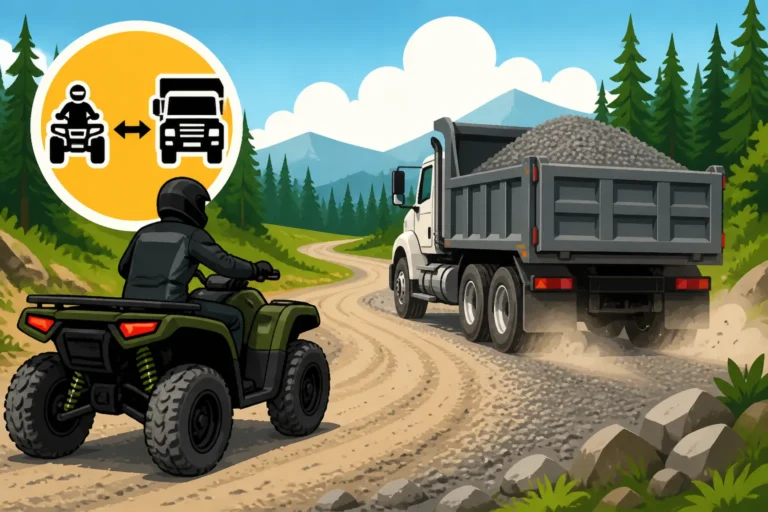
Nearby lodging can make sense for a short trip or for riders who do not want to camp in wet weather. It may also help when a riding area has few legal overnight options nearby. But don’t assume you can ride a machine from a hotel or campground to the trails on public roads. Road access for WATVs depends on local rules and route approvals, so plan to trailer unless you’ve confirmed that a particular route is legally open to your machine.
A simple comparison can help you decide where to start:
| Camping option | Often works well for | Confirm before you go |
|---|---|---|
| Designated public campground | Riders who want to stay near public riding land | Reservations, seasonal access, facilities, and site rules |
| Private campground | Groups needing amenities or a backup when public sites are full | Trailer parking, machine storage, and road access |
| Nearby lodging | Short trips or riders who prefer not to camp | Trailer parking and the daily drive to the riding area |
| Informal roadside spot | Only where the land manager explicitly allows overnight camping | Permission, boundaries, fire rules, and vehicle access |
Plan Around Real Washington Riding Areas
Capitol Forest, Tahuya, and Walker Valley
Capitol State Forest near Olympia is a popular base for forest riding, and the Porter Creek area is a familiar camping reference for many visitors. Still, availability, access, and campground conditions can change. Check current information before you count on a particular site, and have another legal overnight option in mind. A plan that depends on arriving late and finding an open spot can quickly become stressful when the campground is full or an access road is closed.
Tahuya State Forest and nearby Green Mountain offer another western Washington riding option, but don’t assume the staging area is also a campground. Confirm where overnight camping is allowed and whether your chosen site is suitable for a trailer. Forest roads can be narrow, uneven, or affected by seasonal conditions, so a route that is manageable in a passenger vehicle may feel very different when you’re towing a loaded rig.
Walker Valley, in Skagit County, is often treated as a ride destination rather than an all-in-one camping destination. Make a separate plan for where you’ll sleep and how you’ll get between that site and the riding area. That small bit of planning can prevent the frustrating end-of-day scramble of searching for a campsite while everyone is tired, muddy, and ready to eat.
Evans Creek, Ahtanum, and the eastern Washington dunes
Evans Creek near Buckley offers a mountain-forest setting, but camping access and site rules should be checked alongside trail conditions. Pay attention to access requirements as well; [Why Evans Creek Takes a Forest Pass] is useful background when you’re sorting out what your trip may require. A campground pass or access pass does not, by itself, confirm that a specific campsite is open or that a nearby road is rideable.
Ahtanum State Forest, west of Yakima, is known for a different landscape and a network of Green Dot roads. If you plan to camp nearby, confirm that your selected location is permitted and that you understand the route between camp and your intended riding area. In dry weather, dust and fire restrictions can shape the trip. In shoulder seasons, weather can affect road conditions and access. Check local notices rather than assuming conditions will match a previous visit.
Juniper Dunes and Beverly Sand Dunes call for particularly careful campsite planning. Open-looking land is not necessarily open for camping, and boundaries can matter. At Juniper Dunes, be mindful of the wilderness area next to the riding area; at any dunes destination, confirm where vehicles may travel, where overnight camping is allowed, and what access roads are suitable for your trailer. Sand can make a short-looking drive more demanding than expected, so keep your campsite and unloading plan realistic.
Check Access, Passes, Closures, and Camping Rules
Don’t treat a riding pass as permission to camp
A pass or permit for a recreation area generally answers a specific access question; it should not be treated as blanket permission for every activity nearby. Depending on where you park and camp, different rules may apply to riding, parking, camping, and access to the land. Check the requirements for each part of your itinerary. [The Discover Pass and Washington Riders] can help you understand one common state-land access question, while federal recreation areas may have separate requirements.
It also helps to separate three questions before leaving home: Is the riding area open? Is the route to it open to my machine? Is overnight camping allowed at my chosen site? Each can have a different answer. A valid pass does not open a closed trail, and a trail being open does not mean a nearby gate or campground is accessible. Keep your registration and permits organized, and know what paperwork you may need to carry while riding.
For route planning, mapping tools such as onX Offroad can help you visualize roads, trail networks, and nearby destinations. Treat a map as a planning aid rather than final permission: compare it with land-manager notices and posted signs, especially when boundaries, gates, or current closures are involved. That extra check is worthwhile when a tempting shortcut could put you on private land or a route not open to your machine.
Check for closures and changing conditions
Closures can affect a trip even when the campground itself remains open. Timber work, storm damage, fire restrictions, maintenance, and hazardous trees may change access to roads or trails. Review [Washington Trail Closures to Check First] before loading the trailer, and look for current notices from the land manager responsible for the area. For state forest trips, [Reading a DNR Recreation Map] can help you understand the map information, but it does not replace checking current alerts.
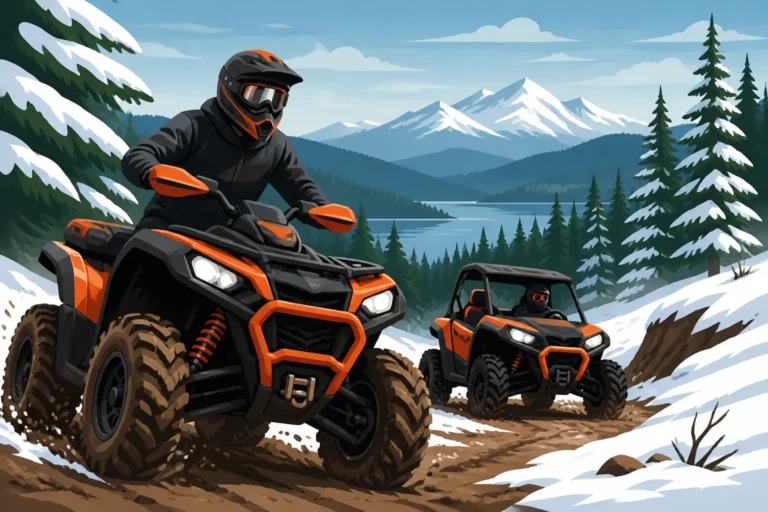
Weather can change the experience quickly. Rain may make forest roads slick or muddy, while dry, hot conditions can bring fire restrictions and dusty routes. A campsite that is comfortable in summer might feel exposed during a windy spell. Pack with the expected conditions in mind, and keep a flexible plan in case a road, trail, or campground becomes unavailable.
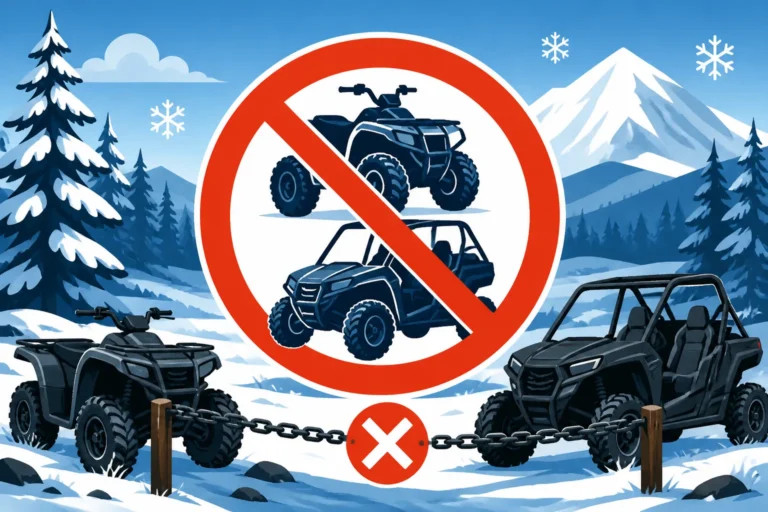
When you arrive, obey signs and barriers even if an online map shows a route as open. Conditions and closures can change after a map was published, and a locked gate is not an invitation to find another way around. If you’re unsure whether a site or road is open, ask the managing agency or choose a clearly permitted alternative. It’s far easier to change plans before unloading than to discover an access problem after setting up camp.
Make Camp Work for Your Group and Your Equipment
Plan for trailers, food, water, and basic comfort
Start with the tow vehicle and trailer, not just the campsite name. Check whether your route includes narrow roads, tight turns, steep sections, or surfaces that could be difficult with a heavy load. If you’re bringing multiple machines, think about unloading and parking space as well as sleeping space. A campsite that technically fits everyone may still be awkward if there is nowhere safe to maneuver the trailer.
Bring enough water and food for the conditions you expect, and know whether the campground has potable water or other services. Don’t count on a convenience store being close or open when you arrive. For a family weekend, it can help to have an easy first meal ready so nobody is trying to cook an elaborate dinner after a long tow and a late setup.
Keep gear organized and weather-ready. Western Washington rain can find its way into sleeping bags, riding clothes, and paper registration documents if they’re left exposed. Use dry storage for essentials and plan where muddy boots and wet gear will go. A little separation between camp equipment and riding gear keeps the tent or sleeping area more comfortable, especially on a multi-day trip.
Set clear expectations for kids, pets, and quiet hours
A camp-and-ride weekend can be a lot for children: early starts, long stretches in helmets, and unfamiliar routines. Plan breaks and avoid treating every day as a race to cover more trail. Match the ride to the least experienced person in the group, and set a clear meeting plan in case riders become separated. Before the trip, review [Washington's Supervision Rule for Riders Under 16] if children will be riding on public land.
If you’re bringing a dog, confirm that the campground and riding area allow pets and understand any leash or wildlife precautions. A busy staging area, hot weather, and loud machines may be uncomfortable for a dog even where pets are permitted. Give the dog a cool, secure place away from traffic, and never leave an animal unattended in a vehicle.
Respect quiet hours and your neighbors. People may be camping for a quiet weekend even if they’re near an ORV area, and late-night unloading, idling, or testing machines can quickly sour the atmosphere. Keep machines off where they’re not permitted, follow campground rules, and pack out your waste. A considerate camp helps preserve access and makes the next family’s weekend better, too.
A Practical Planning Checklist for a Smoother Weekend
Confirm the essentials before departure
A few days before you leave, verify your campground plan, riding-area access, pass requirements, and route. Recheck just before departure for alerts or closures. If your first choice is unavailable, know where you can legally camp instead. This matters particularly on popular weekends, when full campgrounds and busy staging lots can turn an otherwise simple trip into a last-minute search.
Make sure the campsite suits your actual group and equipment. Check the number of vehicles allowed, whether reservations are needed, and whether your trailer can reach and fit the site. If you plan to bring a side-by-side, confirm that the access route and intended riding routes fit its dimensions. Keep essential paperwork somewhere it can stay dry, and make sure each rider knows the meeting point and the day’s plan.
Use a map to build a realistic route, but leave room for the unexpected. onX Offroad can be one useful part of that preparation when you want to visualize possible routes and nearby access points. Cross-check routes against official information, posted signs, and land ownership boundaries. If a route looks uncertain, choose the longer confirmed route rather than risking a closed road or unauthorized crossing.
Have a backup plan and leave the area in good shape
Your backup should be a real option, not simply “we’ll find something.” Identify another legal campsite, a nearby campground, or a lodging option where your trailer can be accommodated. If access changes or the weather turns, a second plan helps you make a calm decision instead of pushing ahead because the first option took too long to arrange.
Once you arrive, follow the site rules and keep your setup within the permitted area. Store food responsibly, manage fires only where and when they’re allowed, and check for local fire restrictions. Keep the machines and trailer out of areas reserved for other users. When it’s time to leave, pack out trash, secure loose items, and check the campsite for small gear that can be easy to overlook after a muddy weekend.
A successful Washington ORV camping trip is not necessarily the one with the campsite closest to the trail. It’s the one where you know the overnight rules, have a workable route, and can adapt if conditions change. Taking time to verify those details makes it easier to spend the weekend riding and relaxing instead of troubleshooting access at the last minute.
Disclaimer
This article is for general informational purposes only and does not constitute professional advice. Laws, prices and regulations vary by location and change over time. Consult a qualified professional for guidance on your specific situation.