Washington Riding Areas Good for Kids
Taking a child ATV riding in Washington can feel like a guessing game: a trail marked “easy” may still have steep drop-offs, deep mud, or traffic from larger machines. This guide compares family-friendly riding areas, explains what makes a route suitable for younger riders, and offers a practical checklist for choosing a safer first trip.
What makes a Washington riding area good for kids
Look beyond the trail name
A “beginner” label is a useful starting point, not a promise that every stretch will suit every child. A young rider may feel comfortable on a wide, relatively level trail but struggle when it narrows, gets rutted, or meets a steep side slope. Conditions can also change after heavy rain, logging activity, or a closure.
For a family outing, look for a riding area where you can choose a short route, turn around when needed, and take breaks without blocking other riders. A staging area with room to unload and check equipment helps too. Kids can be nervous before their first ride, and a rushed start in a crowded lot rarely makes that better.
Think about your child’s actual experience, not just age. A child who has ridden often on private land may still need time to adjust to public trails, other machines, and changing terrain. On the other hand, a first-time rider might be more comfortable on a short, open route than on a long loop described as easy.
Use [Washington Trail Difficulty Ratings] and [Washington Trails for Beginners] as starting points for planning. Then compare the route with your child’s ability, machine size, and confidence. If a trail map does not make the terrain clear, pick a different route or ask the land manager for current guidance.
Choose a short, forgiving first ride
A successful first trip does not need to cover a lot of ground. Plan a short outing with an easy way to return to the staging area. That gives a child the chance to learn how the machine responds without pressure to finish a long loop. If everyone is having fun, you can decide whether to keep riding.
A family can also make a ride easier by agreeing on a simple turnaround rule before leaving. For example, if the trail becomes narrower than expected, the surface gets too slick, or the child stops feeling comfortable, the group turns back. That keeps the decision calm and predictable rather than turning it into a debate on a steep or muddy section.
Check what facilities are available before you go. Restrooms, picnic space, or a nearby place to stop can make a big difference on a day with younger children. Some trailheads have limited amenities, and conditions or access can vary. [Washington Riding Areas With Vault Toilets] and [Washington Riding Areas With Cell Signal] can help you think through those practical details, but confirm what is available for your chosen destination.
Washington riding areas to consider with children
The areas below are options to investigate, not guarantees that every trail will suit every child. Always check the current access rules, trail map, closures, and conditions before loading the machines.
| Riding area | Why families may consider it | What to watch for |
|---|---|---|
| Tahuya State Forest | A large riding area with a range of routes to evaluate for a short family outing | Mud, roots, changing conditions, and the need to choose a child-appropriate route |
| Walker Valley ORV Area | A well-known motorized riding destination in Skagit County | Some routes can be challenging; assess the specific trail rather than assuming the whole area is beginner-friendly |
| Capitol State Forest | Extensive forest roads and trails offer route-planning options | Long distances, changing surface conditions, and possible conflicts with other forest users |
| Beverly Sand Dunes | Open sand can be appealing to riders who are ready for dune terrain | Sand riding can be tiring, visibility and traffic matter, and open terrain still has hazards |
Tahuya State Forest near Belfair
Tahuya State Forest is often worth considering for a family ride because the area has multiple routes to assess rather than one single trail experience. That flexibility can help a parent plan a shorter outing and adjust the day if the chosen route feels too difficult. Start by reviewing the area map and identifying a conservative route instead of following other riders onto an unfamiliar trail.
The surface can change with weather and use. A child who handles a dry, firm trail comfortably may find wet roots, muddy corners, or uneven ground much harder. Keep enough distance between riders to avoid dust, roost, and sudden stops, and make sure the child understands that it is okay to slow down or pull over in a safe place.
Before you go, check the route information and any access notices. [Washington Trail Maps From DNR] is a useful planning topic, and onX Offroad can help you review possible routes and orient yourself. Use map tools as planning aids, not as a substitute for current land-manager notices, posted signs, or permission to ride.
Walker Valley and Capitol State Forest
Walker Valley ORV Area, near Mount Vernon, is a popular place to investigate, but families should be especially deliberate about route choice. The area includes terrain that may be too demanding for a new or smaller rider. Choose a route based on current trail information and your child’s demonstrated skills, not simply on the fact that the family has reached a designated riding area.
Capitol State Forest, west of Olympia, has a broad network of forest roads and recreation routes. That can make it possible to plan a modest ride, but distance matters: a route that looks manageable on a map can become a tiring outing for a child. Establish a turnaround point before you start, and keep in mind that forestry activity, closures, and road use can affect access.
For either destination, check official maps and posted information before departure. onX Offroad may help you compare route options, but map lines do not necessarily show current closures or tell you whether a route is appropriate for a particular child. [Washington Trail Closures to Check First] is a useful reminder to verify access close to your trip.
Beverly Sand Dunes and other open terrain
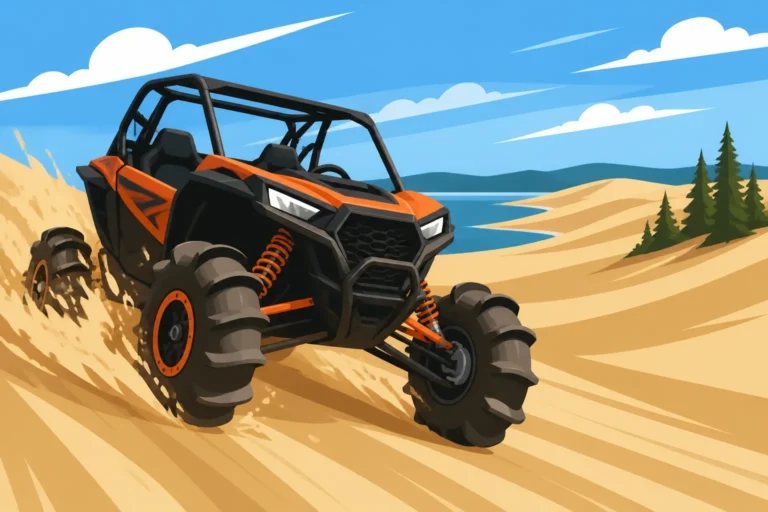
Beverly Sand Dunes in Central Washington may appeal to families whose children already have experience and are comfortable riding in sand. Open terrain can look simple, but soft sand takes energy and can make steering more demanding. Other riders may be moving quickly, and hills or changing visibility can make it harder to keep the group together.
Set clear boundaries before children ride in an open area. Choose a visible meeting point, make sure everyone knows where they may ride, and keep younger riders within close sight. Avoid letting a child follow an unfamiliar group or disappear over a dune where you cannot see what lies beyond.
Sand and forest trails call for different preparation. On dunes, consider heat, water, and fatigue. In forest areas, think about mud, roots, shade, and sudden changes in footing. No single location is automatically “kid-friendly” for every family; the best choice is the one where the child’s skills and the terrain are a reasonable match.
How to plan a safer ride with kids
Match the machine and route to the child
A child needs a machine they can control comfortably, not one they will “grow into” on a public trail. They should be able to reach and operate the controls, understand how to stop, and manage the machine at the speeds and on the terrain they will encounter. A machine that is too large, too powerful, or too heavy can make a minor mistake much harder to handle.
Before a public ride, practice the basics in a permitted, controlled setting. A child should know how to start and stop safely, use the controls smoothly, maintain space from other riders, and signal that they need help. If they are nervous or struggling during practice, an unfamiliar public trail is not the place to push through it.
Route choice should reflect the least experienced rider in the group. A confident adult may be comfortable with a narrow, rocky section, while a child may find it intimidating. Decide ahead of time that the group will stay together and that the adult will not pressure a child to continue through terrain they cannot manage safely.
Review age, supervision, gear, and access rules
Washington has rules that affect young riders on public land. Before your trip, check the requirements for a child’s age, machine, and riding location, including supervision obligations. [Washington Supervision Rule for Riders Under 16] and [What a Fifteen-Year-Old Needs to Ride in Washington] are helpful topics to review. Rules can depend on the kind of riding and the place, so verify the details that apply to your outing.
Everyone should have a properly fitted helmet and suitable riding gear. For children, fit matters: a helmet that shifts, gloves that interfere with the controls, or boots that make it hard to operate the machine can create avoidable problems. Dress for the weather and bring layers, water, and basic supplies. A child who is cold, overheated, hungry, or exhausted may have a harder time making safe decisions.
Also confirm what the riding area requires for registration, permits, and passes. Carry required documents, follow posted rules, and do not assume that a trailhead pass covers every access requirement. Give children a simple explanation of the rules before the ride: stay on designated routes, follow adult instructions, and stop when directed.
Make a family ride plan before leaving home
A little planning can keep a fun day from becoming stressful. Share the destination and intended route with someone who is not riding with you. Check access notices, weather, and the route map; then decide on a meeting point and a turnaround time. If you use onX Offroad or another mapping app, download or prepare what you need before entering an area where phone service may be unreliable.
Pack for the route rather than assuming the trip will be quick. Bring water, snacks, basic first-aid supplies, tools appropriate to your machines, and a way to communicate if the group becomes separated. Keep the child’s riding documents and required equipment secure, and make sure every rider knows what to do if they stop or lose sight of the group.
Keep the first outing flexible. If the parking area is crowded, the trail is muddier than expected, or your child is tired, shorten the ride or call it a day. A child who ends the outing feeling capable and listened to is more likely to enjoy the next one. [Washington Riding Seasons by Forest] can help with seasonal planning, while [Checking Alerts Before You Load Up] is a good reminder to check for closures and changing access before the drive.
A simple checklist for choosing the right outing
Before choosing a Washington ATV or UTV area for kids, ask these questions:
- Does the route match the child’s current ability? Choose a specific route, not just a riding area. Avoid terrain the child has not practiced.
- Can you keep the ride short? Look for an easy turnaround or a route that does not commit the group to a long loop.
- Are the machine and safety gear a good fit? The child should be able to control the machine and wear gear that fits properly.
- Have you checked current access information? Review official maps, closures, posted signs, and relevant permit or pass requirements.
- Can the group stay together? Set spacing, meeting points, and clear rules before the machines start.
- Is there a backup plan? Be ready to turn around or stop if the surface, weather, traffic, or a child’s confidence changes.
For many families, the best first ride is not the most famous destination or the longest trail. It is a short, well-planned outing where the child can ride at their own pace, the adult can supervise closely, and everyone can stop before fatigue turns a good day into a difficult one.
Disclaimer
This article is for general informational purposes only and does not constitute professional advice. Laws, prices and regulations vary by location and change over time. Consult a qualified professional for guidance on your specific situation.