Finding a Staging Lot With Room
A Washington riding trip can go sideways before you even reach the trail if the staging lot is too tight for your truck, trailer, or side-by-side. Narrow turns, soft shoulders, and crowded holiday parking are real headaches. This guide explains how to assess a lot before leaving home, plan for your rig, and avoid blocking other riders when you arrive.
Check the Lot Before You Load Up
Confirm the lot is open and intended for your ride
A map pin can show where a parking area is, but it does not tell you everything you need to know. A staging lot may be closed for timber work, seasonal restrictions, maintenance, or a temporary trail closure. It may also serve a different type of recreation than the one you have planned. Before packing, check the land manager’s current alerts and the rules for the specific trail system.
This matters around Washington riding areas such as Capitol State Forest, Walker Valley, Tahuya State Forest, and Reiter Foothills. A familiar trailhead may have a different access arrangement than you remember, and a nearby pullout is not automatically an approved place to unload. Look for the designated staging area, its access road, and any posted restrictions.
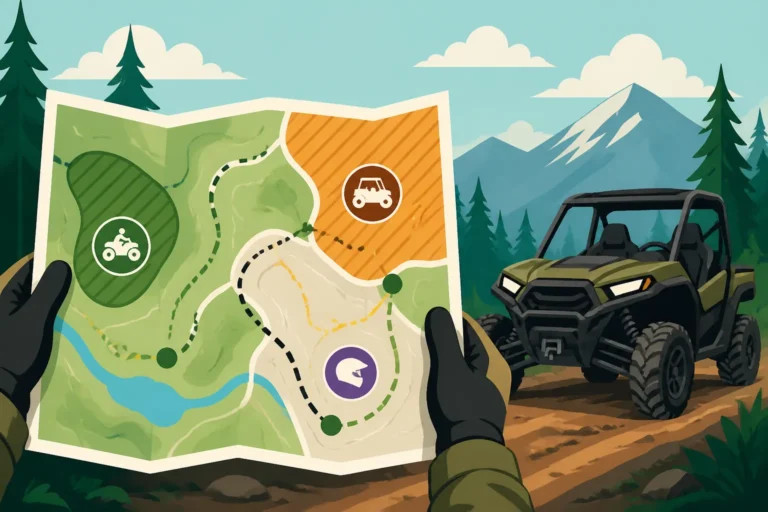
If you are using a mapping app such as onX Offroad to scout roads and trail access, treat it as a planning aid rather than the final word on closures or parking rules. Confirm details with the relevant land manager before you go. For a broader overview of places to ride, see Where to Ride an ATV in Washington.
Look beyond the pin on the map
The final approach can matter as much as the lot itself. A staging area might be easy to spot but reached by a narrow gravel road, a steep grade, or a turn where a long trailer needs extra room. Satellite imagery can help you understand the general layout, but it may not show recent changes, potholes, washouts, gates, or vehicles parked along the access road.
Check whether the approach includes tight turns or a dead end that would make turning around difficult. If you are towing a wide side-by-side or a long trailer, think about the entire route from the highway to the parking space. A turn that looks manageable in a pickup without a trailer can feel very different with a loaded rig behind it.
When available, use land-manager maps, posted notices, and current closure information together. If a map shows a road but you cannot confirm it is open to public vehicle access, do not assume it is a shortcut to the lot. Washington Trail Maps From DNR can help with trip planning on DNR-managed land, but posted signs and current land-manager updates should guide your decisions on site.
Judge Whether the Space Fits Your Rig
Measure the full setup, not just the truck
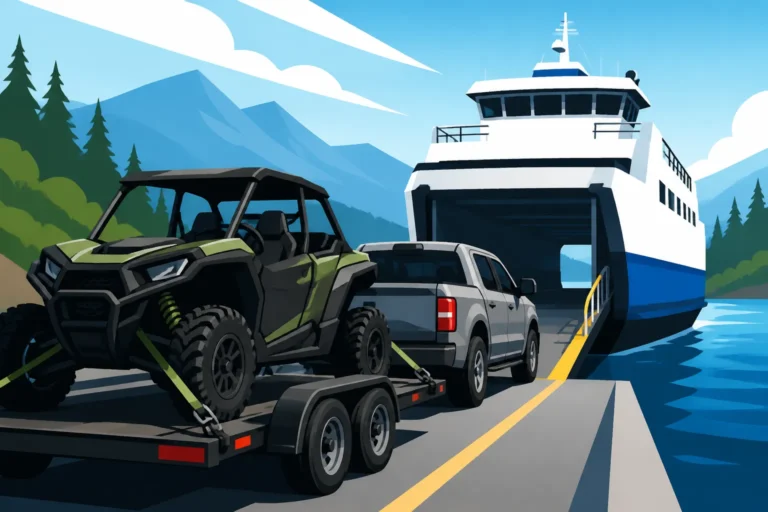
It is easy to picture your truck fitting into a parking spot and forget that the trailer changes everything. Before a busy weekend, consider the full length and width of your setup, including the trailer tongue, ramps, tie-down access, and room to open doors. A trailer that technically fits may still leave you unable to unload safely without blocking traffic.
A useful habit is to write down the approximate overall length of your truck and trailer together. Then consider the space needed to maneuver, not only the final parked footprint. If you have a two-machine trailer, a wide side-by-side, or a toy hauler, the extra room needed for turning and unloading can be substantial.
Also consider whether you need to turn around after unloading. Some lots have a simple loop, while others require backing into a space or carefully turning around in a limited area. If reversing a loaded trailer is stressful, choose a destination with a layout you can assess in advance or travel with someone who can guide you safely.
Check the surface, slope, and turning room
A roomy-looking lot is not necessarily a comfortable place to park. Uneven ground can make it harder to unload a machine, and a soft shoulder can be risky for a heavy truck or trailer. After rain, packed dirt can turn slick or muddy. In forested areas, gravel and natural surfaces may also have ruts, loose rock, or drainage channels.
Before committing to a space, look for a stable, reasonably level place to park and unload. Keep all wheels on the designated surface, especially if the edge of the lot drops into a ditch or soft ground. Avoid using vegetation, trail entrances, or road shoulders as overflow parking unless signs or land managers clearly allow it.
A quick on-the-ground assessment can prevent a frustrating recovery. If the lot is crowded, pause before driving into a space that leaves no way out. A spot that requires a difficult reverse through foot traffic may not be worth squeezing into, even if it appears large enough at first glance.
| What to assess | Why it matters | What to do before or after arrival |
|---|---|---|
| Overall length and width | Your truck and trailer need more room than the truck alone | Estimate the full setup and allow room to maneuver |
| Turning space | A tight turn can trap a long trailer or block other vehicles | Look for a loop, turn-around area, or safe reversing option |
| Surface and slope | Soft, steep, or uneven ground can make parking and unloading risky | Favor stable, level ground within the marked lot |
| Access road | Narrow roads, gates, and sharp bends may limit trailer access | Check the route and posted restrictions before towing in |
| Crowd level | Congestion can block unloading, emergency access, and traffic flow | Arrive early when possible and keep equipment organized |
| Rules and closures | A visible lot may still be restricted or temporarily closed | Check land-manager updates and follow signs on site |
Plan for Busy Days and Tight Parking
Time your arrival and have a backup
On a sunny weekend or holiday, the difference between an easy arrival and a stressful one may be when you get there. A lot that has plenty of room early in the morning can fill as riders arrive. If you expect crowds, leave earlier than you think you need to, especially when you have a long trailer or several machines to unload.
Have a backup plan before you leave home. That does not mean choosing an unapproved roadside pullout if the lot is full. It means knowing whether there is another official access point, whether the destination has multiple designated staging areas, or whether you should switch to a different riding area. Confirm that the alternate location is open and appropriate for your vehicle and machine.
Tools such as onX Offroad can help you review the general route and identify nearby access points while you plan. Still, a nearby point on a map is not necessarily an authorized parking area. Check access rules and closures rather than treating the closest visible clearing as a substitute staging lot.
Keep the lot usable for everyone
Once you park, unload efficiently and keep your equipment within your space. Do not leave ramps, gear, or machines spread across the driving lane while you take a long break. If you are traveling with a group, agree on a staging routine before arrival: who parks first, who guides trailers, and where people wait while machines are unloaded.
Leave room for other vehicles to pass and for emergency or maintenance access. Do not block gates, trail entrances, signs, or roads—even briefly. If you need extra space to unload, choose a spot where the process will not prevent other riders from moving through the lot.
The same courtesy applies when leaving. Secure loose gear, check the area for trash, and drive slowly around people and machines. At a busy staging area, the smallest thoughtful choices—like moving a truck after unloading or keeping children clear of backing trailers—can make the lot safer for everyone.
Use a Simple Arrival Checklist
Before you leave home
A short checklist can catch problems that are easy to miss when you are focused on the ride. Confirm that your destination is open, that the staging area is intended for your type of vehicle, and that the route is suitable for your truck and trailer. Check for relevant alerts, posted restrictions, and any pass or permit requirements that apply to the land.
It also helps to check machine width and trailer dimensions against the access you expect to use. If you are taking a side-by-side, do not assume every trail system or road is suitable for its width. For more on that planning question, see Washington Trails for a Wide Side-by-Side. If you are unsure whether the route or staging area can handle your setup, contact the land manager before towing there.
Pack tie-downs, ramps, wheel chocks, and basic recovery equipment where you can reach them without unloading everything else. Keep registration and other required documents protected from rain; Keeping Paperwork Dry in the Rain offers practical ideas for wet-weather trips. A little preparation at home is much easier than searching through a packed trailer in a crowded lot.
When you arrive
Slow down before entering. Look for signs, gates, pedestrians, parked trailers, and vehicles backing out. If the entrance is narrow or the lot appears full, stop somewhere safe before committing to a maneuver. Do not block the entrance while deciding what to do.
After parking, walk around the rig and check that it is stable and out of the travel lane. Unload in an orderly way, then move your truck or trailer if doing so would free up room for other riders. If the lot is full, follow posted directions or leave for an approved alternate area; do not create overflow parking on a shoulder, vegetation, or private land.
A useful final check is to look at the lot from another rider’s perspective. Can they get through without squeezing past your trailer? Is the trail entrance still clear? Could an emergency vehicle access the area? If the answer is no, adjust your setup before heading out.
Disclaimer
This article is for general informational purposes only and does not constitute professional advice. Laws, prices and regulations vary by location and change over time. Consult a qualified professional for guidance on your specific situation.