Washington Rules for a Passenger Under 16
A child riding as a passenger on a Washington ATV or UTV raises two separate questions: whether the machine is built to carry that passenger, and which rules apply where it is being ridden. Age alone does not answer either one. Here’s how to assess the machine, the passenger’s seat and restraints, and the difference between road use and off-road riding.
Does Washington Have a Special Passenger Rule for Riders Under 16?
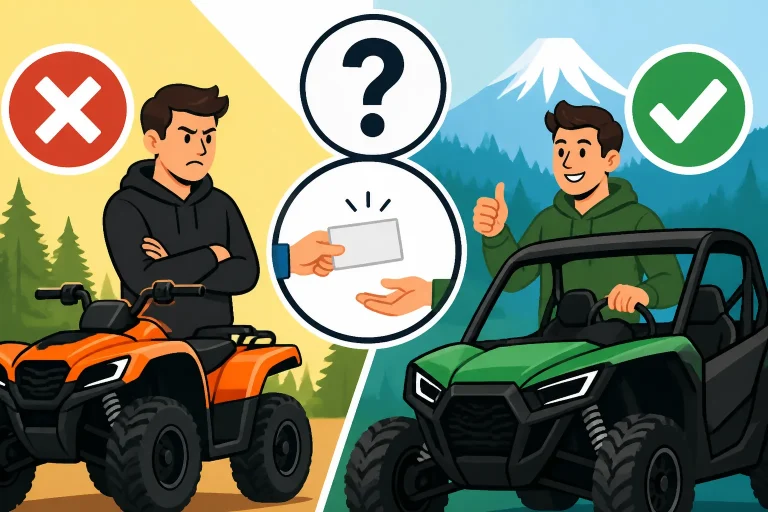
The first thing to check is not the passenger’s age but the machine’s design. A WATV operator may not carry a passenger unless the machine is designed by its manufacturer to carry one. An extra seat added after purchase, a cargo rack, or a spot where a child can hold on does not necessarily make the machine a legal two-person vehicle.
That distinction matters especially with single-seat ATVs. A child should not ride on the rack, tank, fender, or the operator’s lap. Those positions can interfere with the operator’s control and leave the passenger without a proper place to sit or hold on. If the manufacturer identifies the machine as a single-rider model, treat it that way.
A UTV or side-by-side may have passenger seating, but check the owner’s manual and the labels on the machine rather than relying on its size or appearance. Confirm the passenger capacity and which seats are intended for riders. For an overview of road-use equipment and requirements, see Washington Road Requirements.
| Situation | What to check | Practical takeaway |
|---|---|---|
| Child riding on an ATV | Is the ATV designed by the manufacturer to carry a passenger? | Do not carry a passenger on a single-rider machine. |
| Child riding in a UTV | Is there a designated passenger seat, and is the passenger capacity being followed? | Use only intended seats; do not let a child ride in the cargo area. |
| Off-road riding | Are the riding area’s rules, helmet requirements, and youth supervision rules being followed? | A legal passenger seat does not make every trail or riding area suitable. |
| Road use | Is the road open to WATVs, and are the machine and occupants meeting applicable road rules? | A road-ready machine still cannot use a road that is closed to WATVs. |
| A child seems too small for the seat or restraints | Can the child sit securely and use the required equipment as intended? | If not, choose another activity or machine rather than improvising. |
There is no safe shortcut from “the child is under 16” to “the child can ride in any passenger seat.” A passenger’s age may affect restraint rules or the adult’s safety decisions, while the machine’s passenger capacity and the location’s rules determine whether the ride is allowed. Check both.
The operator’s age is a separate issue. Rules that apply to a young person operating an ORV do not automatically answer whether that person may be a passenger. For the operator-side requirements, see Washington Rules for Riders Under 16 and Washington Supervision Rules for Minors. Do not use a passenger’s age to assume that a young operator is allowed to drive.
Seats, Helmets, and Restraints for a Child Passenger
A passenger seat is only a starting point. The child also needs to fit the seat and be able to use the equipment provided for that seating position. Before riding, check whether the child can sit upright with their back against the seat, remain within the seat area, and reach the intended handholds or other controls for passengers without leaning dangerously.
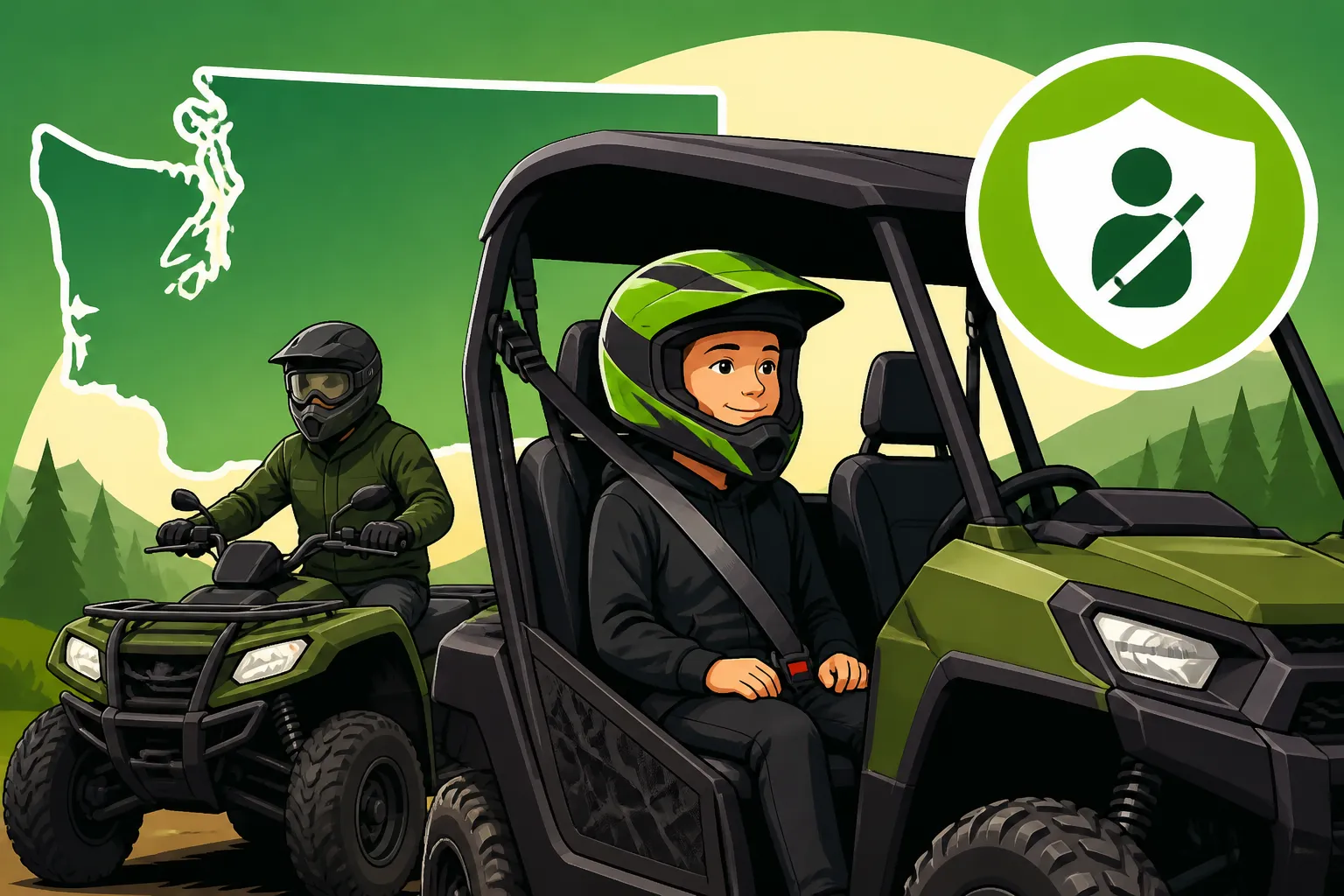
For a UTV, use the seat belt for each passenger whenever the machine is equipped with one and the applicable rules require it. Follow the owner’s manual for belt adjustment and seating positions. A belt that rides across a child’s neck or abdomen, or that cannot be positioned properly because the child is too small, may not protect them as intended. Do not add cushions, belt extensions, or other modifications unless the manufacturer approves them for that model.
A passenger should stay seated while the machine is moving. Explain that the child must not lean far outside the vehicle, stand up, reach toward the tires, or unbuckle while the operator is driving. The operator should stop in a safe place before a passenger gets in or out. In a UTV with a roll cage, keep arms and legs inside the vehicle and follow the manufacturer’s instructions about doors, nets, and other occupant protections.
Washington’s off-road helmet requirements apply to riders and passengers where those rules cover the ride. Use a properly fitted helmet that is approved for the type of riding, and secure its chin strap. A helmet that is loose, too large, damaged, or unfastened can shift during a crash. For more on the state requirement, see Washington Helmet Law for Passengers. Do not assume that a passenger is exempt because an adult is driving or because the machine has a roof or roll cage.
The right helmet is not a substitute for a suitable passenger seat, restraint, or safe riding decision. Nor does protective equipment make it acceptable to carry someone on a machine that is not designed for passengers. A short ride around a property can still involve a sudden stop, a rollover, or an unexpected obstacle.
Before setting out with a child, go through a simple check:
- Confirm the manufacturer allows a passenger in that seat.
- Check the passenger capacity and any age, size, or seating instructions in the owner’s manual.
- Make sure the child can sit securely and use the seat belt or other equipment as intended.
- Fit and fasten a suitable helmet.
- Explain what the passenger must do while the machine is moving.
- Choose a route and pace that match the child’s ability to stay seated and follow instructions.
If any part of the setup does not fit the child, do not try to solve the problem by holding the child in place or asking them to grip the operator. Wait until the child can ride safely in a seat designed for them, or use a different activity.
Road Riding and Off-Road Riding Are Different
Washington’s road rules are not the same as its off-road rules. A WATV that can carry a passenger may still be prohibited from using a particular road. The road must be open to WATVs under the applicable state, county, or city rules, and the machine must meet the requirements for that use. A valid registration or road-use setup does not create permission to ride on every paved road.
Before a ride that includes pavement, check the specific route. County and city access can differ, and road access may depend on posted speed limits, local decisions, or an approved road list. Do not rely only on a map, an old trail description, or the fact that another rider used the road. Washington Counties That Allow WATVs on Roads explains why road access needs to be checked locally.
Road use also brings additional responsibilities for the operator and occupants. Follow the requirements for equipment, registration, and the driver’s qualifications, as well as any applicable passenger restraint rules. If the machine is a UTV, check its seat-belt provisions and the manufacturer’s directions before putting a child in the passenger seat. For broader rules about the machine and operator, see What Washington Requires for On-Road ORV Use.
Off-road riding has its own limits. Public land may have designated routes, age-related supervision requirements, and equipment rules. Private land requires permission from the landowner, and a trail or forest road may close for safety, maintenance, fire conditions, or other reasons. A passenger seat does not give the operator permission to leave a designated route or enter a closed area. See Washington Off-Road Vehicle Rules Explained for the wider set of riding considerations.
Young riders’ supervision rules are particularly easy to confuse with passenger rules. A requirement for an adult to supervise a young operator concerns the person controlling the machine. It does not by itself make a child eligible to ride as a passenger on a single-seat ATV, and it does not remove the need to use an appropriate seat and required protective equipment. If a young person will operate rather than ride as a passenger, check the rules for that rider’s age and the specific riding area before the trip.
For visitors, do not assume that a home-state registration or riding permission settles every Washington requirement. The machine, route, rider, and passenger still need to meet the rules that apply in Washington. Washington ORV Reciprocity Rules can help distinguish out-of-state registration issues from local riding restrictions.
How to Decide Whether to Take a Child Along
A child’s age is only one part of the decision. Consider the machine, the child’s size and ability, the route, and whether the operator can keep attention on driving rather than managing a restless passenger. A long, rough ride with frequent obstacles may be a poor first outing even when the machine has an approved passenger seat.
Start with the owner’s manual. Look for the passenger capacity, approved seating positions, helmet guidance, restraint instructions, and warnings about children or minimum passenger size. If the manual is unclear, ask the manufacturer or an authorized dealer about that specific model. Do not rely on another machine’s capacity just because it looks similar.
Then consider the ride itself. A slow, familiar route with room to stop is easier to manage than narrow trails, steep terrain, deep mud, heavy traffic, or a route with frequent crossings. Keep the first ride short enough that the child can remain attentive and seated. Stop if the passenger becomes tired, frightened, cold, or unable to follow the instructions.
The operator has to be able to control the machine without distraction. That means choosing a speed and line that leave room to respond to changing terrain, keeping a suitable distance from other riders, and stopping before adjusting a helmet or restraint. A passenger should not be asked to help steer, shift weight in an unfamiliar way, or hold onto an unsafe part of the vehicle.
Use this final checklist before leaving:
- The manufacturer designed the machine to carry a passenger.
- The child has a proper passenger seat and can use its restraint or other equipment.
- The child has a correctly fitted, fastened helmet where required.
- The route is open to that type of machine and lawful for the planned use.
- The operator meets the applicable age, license, and supervision requirements.
- The passenger understands the rules for staying seated and keeping arms and legs inside.
- The operator can stop promptly if the passenger or conditions make the ride unsafe.
If a requirement is uncertain, pause and confirm it with the relevant official source or land manager before riding. If the machine does not fit the passenger, the safest answer is not to carry the child.
Disclaimer
This article is for general informational purposes only and does not constitute professional advice. Laws, prices and regulations vary by location and change over time. Consult a qualified professional for guidance on your specific situation.