Washington Counties That Allow WATVs on Roads
Trying to figure out where you can legally ride your Wide Area Transport Vehicle (WATV) on public roads in Washington can feel like navigating a maze blindfolded. State laws set the framework, but then individual counties have their own say, leading to a patchwork of rules that often leaves riders scratching their heads. This guide is here to untangle that confusion, walking you through the statewide regulations and showing you how to pinpoint exactly which Washington counties welcome WATVs on their local roads.
Understanding Washington's WATV Road Access Law
The journey to riding your WATV on a county road in Washington begins with understanding the state law itself. It's not a simple "yes" or "no" for the entire state, which is often the biggest source of frustration for riders. Instead, Washington's statute creates a framework that empowers—or in some cases, defaults—counties to make their own decisions about their local road networks. This means your eligibility to ride on a particular road depends heavily on where that road is located and what the local county has decided.
The 15,000 Population Threshold
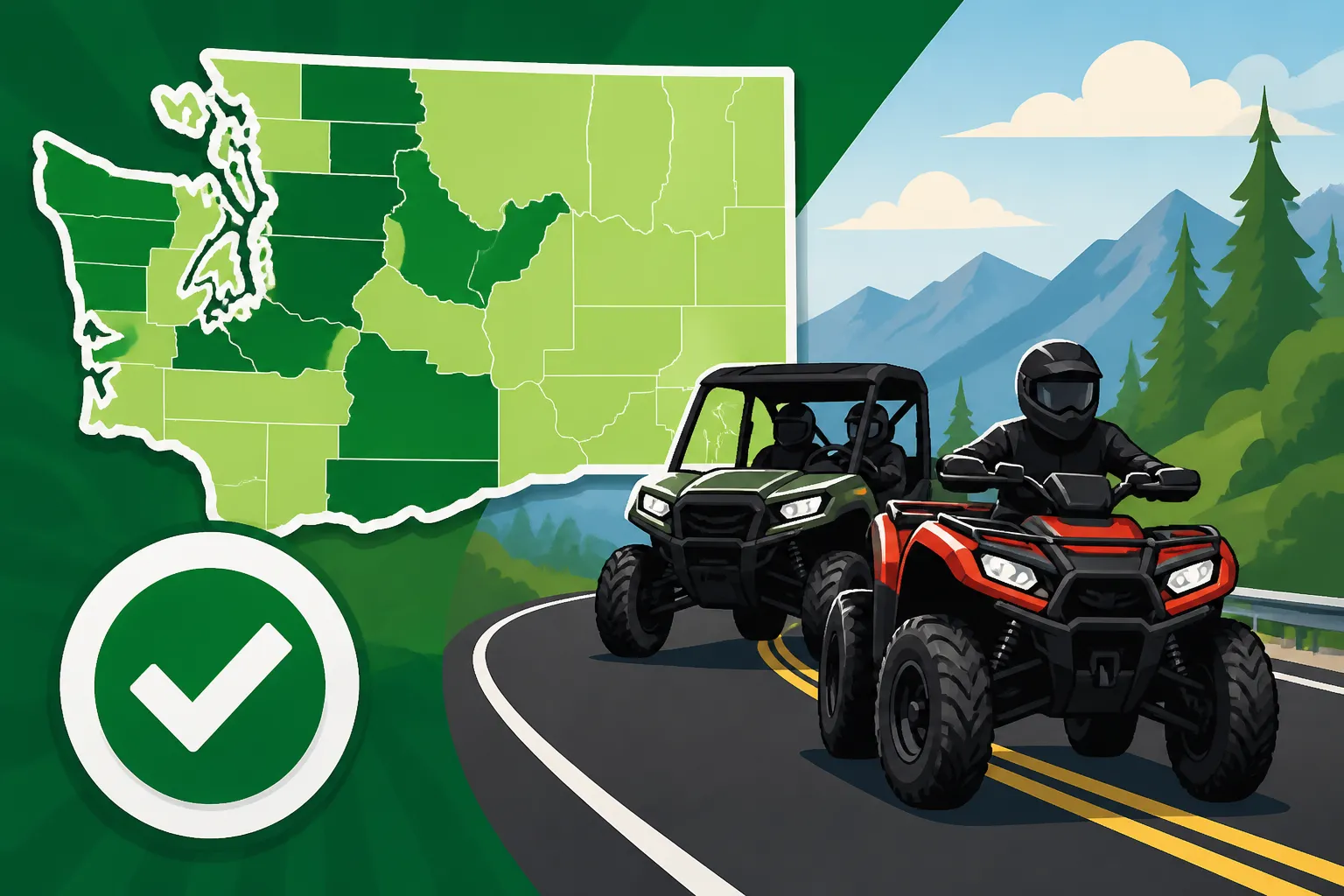
At the heart of Washington's WATV road access law is a critical population threshold: 15,000 residents. This number dictates whether a county must actively "opt-in" to allow WATV use on its roads or if it's "open by default" and must instead actively "opt-out" of specific roads. This distinction is crucial and often misunderstood. For many riders, learning this threshold is the first step in decoding the local rules. It's not about the size of the county in square miles, but rather the number of people living there, which directly impacts how the county manages its road system.
Think of it like this: larger, more populated counties (those with over 15,000 residents) are generally presumed to not allow WATVs on their roads unless they pass a specific ordinance saying they do. These counties have to take a positive, affirmative step to open their roads. They need to go through a public process, hold hearings, and officially designate which roads are suitable for WATV use. Conversely, smaller, less populated counties (those under 15,000 residents) are generally presumed to allow WATVs on their roads by default, unless they specifically pass an ordinance to close certain roads. This often means they publish a list of roads where WATVs are not allowed, rather than a list of where they are. This subtle difference can save you a lot of headache if you're riding in one of these smaller areas. You can read more about this framework in [The 15,000 Population Line in Washington's WATV Law].
Opt-In Versus Open by Default
This "opt-in" versus "open by default" mechanism is the core concept you need to grasp. For the larger counties, the burden is on them to designate. They're essentially starting from a "no" position and have to publicly declare "yes" for specific routes. These are the counties where you'll often hear about city councils or county commissioners deliberating on ordinances. They might decide to open certain roads to connect trailheads, allow access to businesses, or enable rural residents to travel short distances. When such a county opts in, they'll usually publish a comprehensive list of these approved routes, often with specific speed limits and other restrictions.
For smaller counties, the scenario is almost reversed. They are generally considered "open" unless they've identified specific roads as unsuitable. This means that if a road isn't explicitly on their "no WATV" list, it's likely fair game, assuming you're adhering to state-mandated [Washington's 35 mph Road Rule] and other requirements. This is a huge benefit for riders in these areas, as it minimizes the red tape. However, it's still absolutely critical to check with the local county for their current list of unsuitable roads, because a default open status doesn't mean all roads are open. They often restrict major arterials, highways, or roads with high traffic volumes for safety reasons. Understanding [Why Small Washington Counties Are Open by Default] is key here.
Counties That Have Officially Opened Their Roads
For counties with populations exceeding 15,000, you need to look for specific ordinances that have been passed. This isn't always easy, as there's no single statewide database. You'll often need to visit county websites or contact their public works or sheriff's departments. When a larger county opts in, they typically do so with careful consideration of public safety, road design, and local traffic patterns. They are essentially carving out specific pathways within their existing road infrastructure for WATV use.
Examples of Opt-In Counties
Several larger counties in Washington have taken the step to open certain roads to WATVs, recognizing the recreational and practical benefits for their residents. For instance, Snohomish County, a highly populated area, passed Ordinance 17-032, opening certain roads like Old Owen Road, Mann Road, and Ben Howard Road. These specific routes were chosen due to their rural nature and ability to connect riders to trail systems or provide access for local residents. It wasn't a blanket opening, but a targeted one, aimed at integrating WATVs into specific parts of their road network where it made the most sense.
Similarly, Lewis County, another county over the 15,000 threshold, enacted Ordinance 1286, designating a list of county roads for WATV use. These ordinances often come with specific provisions, such as speed limits, times of day when riding is allowed, and requirements for riders to adhere to all state-mandated equipment rules. Before you ride in any of these counties, it is imperative to check their specific ordinance for the precise roads and any local restrictions. It's not enough to know the county has "opened" its roads; you need to know which roads and under what conditions. [Where a Washington County Posts Its Road List] will be your best friend in this research.
How to Verify Road Status in Opt-In Areas
Verifying road status in opt-in counties requires a proactive approach. You can't just assume. The first place to check is the county's official website, typically under their Public Works, Sheriff's Office, or Commissioner's/Council's section. Look for terms like "WATV Ordinance," "ORV Road Use," or "Street Legal ATV." Many counties will publish a map or a detailed list of approved roads. If you can't find it online, a phone call to the county clerk or public works department can often point you in the right direction. Remember, the rules can change, so even if you've ridden a road before, it's wise to do a quick check for updates, especially if a lot of time has passed.
It's also crucial to distinguish between county roads and state highways. Even if a county opens its roads, state highways (often marked with a shield symbol, like I-5, US-101, or SR-2) generally remain off-limits, with very few exceptions for specific crossings or short segments authorized by the Washington State Department of Transportation (WSDOT). A WATV riding on a county road might need to cross a state highway to continue its journey, but that crossing itself is subject to strict rules. [Washington Rules for Getting Across a Road] explains this in more detail. Always have your [Washington WATV Road Requirements] in order before you even consider hitting pavement.
Smaller Counties Open by Default (and How to Check for Exceptions)
The "open by default" rule for counties under 15,000 residents is a game-changer for many riders. It simplifies access significantly, but it doesn't eliminate the need for due diligence. These counties don't need to pass an ordinance to allow WATVs; they only need to pass one to prohibit them on certain roads. This means that if they haven't explicitly closed a road, you're generally permitted to ride it, provided your WATV is properly registered and equipped for road use, and you're adhering to all other state laws.
Identifying "Unsuitable Roads"
Even in a county that's open by default, you'll still encounter roads that are deemed unsuitable for WATV use. These are typically high-speed routes, roads with heavy traffic, or those with specific safety concerns that prompted the county to restrict WATV access. The county will publish a list of these "unsuitable roads," and it's your responsibility to know which ones they are. This list is essentially their "opt-out" mechanism. If a road isn't on this list, it's generally considered open.
Finding this list is similar to how you'd find an "opt-in" list in a larger county: check the county's official website, specifically sections related to ordinances, traffic, or public safety. Sometimes, these lists are part of a broader resolution or administrative rule. If you're planning a trip to a smaller county you're unfamiliar with, a quick online search or a call to the county clerk's office is always a good idea. This proactive step ensures you don't inadvertently ride on a prohibited road, potentially leading to a citation. [Counting 15 Days From a Weekend Purchase] is important when considering buying a machine for such riding.
Navigating Local Nuances and Signage
Even with a list in hand, local nuances can sometimes be confusing. Some counties might have specific signage indicating whether a road is open or closed to WATVs, though this isn't universally consistent. Always prioritize official county publications over informal signs or local rumors. It's not uncommon to find areas where residents have put up unofficial "no ATV" signs, but these don't hold legal weight unless backed by a county ordinance or state law. If you encounter a situation where you're unsure, it's always safer to err on the side of caution and find an alternative route.
Remember that while a county might allow WATV use, the roads themselves are still shared with cars, trucks, and other vehicles. Riding defensively and being highly visible are paramount. Aftermarket accessories from companies like SuperATV can help with visibility, such as brighter LED lighting or turn signal kits, making sure you are seen by other motorists. Always assume other drivers might not see you, especially on winding rural roads. A properly equipped machine and a clear understanding of the rules are your best defense.
Key Considerations Before Riding on Any County Road
Regardless of whether you're in an "opt-in" or "open by default" county, there are fundamental responsibilities every WATV rider must uphold to ensure safety and legal compliance. These considerations are not just good practice; they are legally mandated and crucial for the continued privilege of riding WATVs on Washington's roads.
Equipment and Licensing Requirements
Before you even think about hitting a county road, your WATV must be properly equipped and registered for road use in Washington. This means you need a current on-road tab in addition to your off-road tab. The machine itself needs to have specific safety equipment, including at least one rearview mirror, a headlight, a taillight, brake lights, turn signals, and a horn. Many riders opt for accessory kits from providers like SuperATV to ensure their machines meet these requirements. For a deep dive into what your machine needs, consult [Washington WATV Road Requirements].
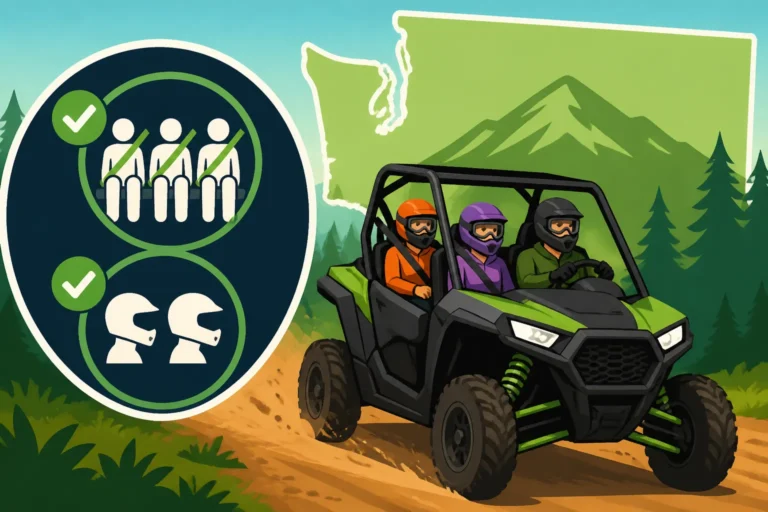
Beyond the machine, the rider also has requirements. Anyone operating a WATV on a public road must possess a valid driver's license. This isn't just a suggestion; it's the law. Additionally, all riders and passengers, regardless of age, must wear a USDOT-compliant helmet. This is a critical safety measure and a non-negotiable legal requirement. Don't forget, [Washington Helmet Law for WATV Riders] applies to everyone on a WATV, even adults.
| Feature | Counties > 15,000 (Opt-In) | Counties < 15,000 (Open by Default) |
|---|---|---|
| Default Status | WATVs NOT allowed | WATVs ARE allowed |
| Action Needed | Must pass ordinance to allow | Must pass ordinance to prohibit |
| What to Look For | List/map of approved roads | List/map of unsuitable roads |
| Ease of Access | Generally more restrictive, specific routes | Generally more open, few prohibited routes |
| Verification | Check county council/commissioner minutes & ordinances | Check county public works/sheriff for "unsuitable" lists |
| Common Frustration | Hard to find where you can go | Easy to accidentally go where you can't |
Staying Informed and Respecting Local Rules
The landscape of WATV road access can evolve. County ordinances can be amended, new roads might be opened or closed, and community sentiments can shift. Therefore, it's not enough to check the rules once and consider yourself permanently informed. Regular checks of county websites, local news, and community forums can help you stay current. Attending local meetings or speaking at a council hearing on a WATV ordinance is also a great way to stay engaged and help shape policy. [Asking a County to Open a Road] describes how you can make your voice heard.
Most importantly, ride with respect. Adhere to speed limits, especially [Washington's 35 mph Road Rule]. Yield to other traffic. Don't ride on private property without permission. Keep noise to a minimum. Every time you ride responsibly on a public road, you reinforce the positive image of WATV enthusiasts and help secure future access for everyone. Conversely, irresponsible riding can quickly lead to public backlash and stricter regulations, potentially closing off access for all. A Washington Trooper will be checking your compliance roadside, so know [What a Washington Trooper Checks Roadside] before you head out.
Planning Your Route
Effective trip planning is vital for a smooth and legal WATV ride on county roads. Start by clearly defining your route. Are you using the county roads to connect to a trailhead, access a local business, or simply enjoy a scenic rural drive? Once you know your purpose, you can research the specific counties and their rules. If your route crosses multiple counties, you'll need to check the regulations for each one. This might mean starting in an "open by default" county and transitioning into an "opt-in" county, requiring you to understand both sets of rules.
Always carry physical or digital copies of relevant maps and ordinances with you, especially if you're exploring new areas. Cell service can be spotty in rural Washington, so relying solely on your phone for navigation or rule lookups might leave you stranded. Being prepared means you can confidently navigate unfamiliar territories and quickly resolve any questions about legal access. Planning your route helps you focus on the enjoyment of the ride, whether you are [Riding From a Campground to a Trailhead] or simply exploring the backroads.
Disclaimer
This article is for general informational purposes only and does not constitute professional advice. Laws, prices and regulations vary by location and change over time. Consult a qualified professional for guidance on your specific situation.