Riding a Rented WATV on Washington Public Land
Renting a WATV can make a Washington ride simple, but paying for the machine does not automatically authorize you to ride every public road or trail. Before unloading, check that the rental is properly registered, that the land allows the machine, and that you have any required access pass. This article explains what to confirm with the rental company and what remains your responsibility.
Confirm the rental machine is legal to ride
Start by asking the rental company what kind of machine you are getting and where it is registered. In Washington, “WATV” refers to a wheeled all-terrain vehicle that meets the state’s definition. The rules can differ between a quad, a side-by-side, and a dirt bike, so do not assume that a rental described simply as an “ATV” has the same permissions as every other machine.
For a ride on public land, the machine generally needs the right Washington ORV registration, or qualifying registration from another state under Washington’s reciprocity rules. Ask the rental company to show you the registration and explain what land or routes the machine is approved for. A rental agreement is not a substitute for vehicle registration, and a machine’s registration does not give you permission to ride on every trail or road.
If the machine has Washington tabs, check what they authorize. An off-road tab is for off-road riding where the machine is allowed; it does not make pavement legal. A road-use tab may allow use on certain roads, but only where local rules and the road’s status permit it. For a quick explanation of the distinction, see Washington’s Two-Tab System and Washington’s Off-Road Tab Explained.
| Before you ride | What to confirm |
|---|---|
| Registration | The machine has current registration or qualifying out-of-state credentials for the intended use |
| Trail access | The specific trail or riding area allows the machine’s type and size |
| Road access | Any road you plan to use is open to WATVs and the machine has the required road-use authorization |
| Passes | You have the separate land-access pass required at the staging area or trailhead |
| Rental terms | The company permits your planned route, rider, passenger, and type of use |
Get a clear answer about registration before leaving the rental location. If the company cannot show you the paperwork or cannot explain whether the machine is set up for off-road use, pause and resolve that before riding. The rental company may be responsible for keeping its fleet properly registered, but you are the person operating the machine and should not rely on an assumption.
A nonresident does not necessarily need to buy a separate temporary permit for a machine that already has valid credentials accepted in Washington. Conversely, a rental agreement alone does not create reciprocity or replace required registration. Ask the rental company whether the machine’s existing credentials cover your trip. For background, see Washington ORV Reciprocity With Other States and Riding Washington With an Out-of-State Registration.
Check land access separately from vehicle registration
A registered machine can still be barred from a particular trail, road, or property. Public land is managed by different agencies, and access rules vary with the site, route, vehicle type, season, closures, and local restrictions. Use a current agency map or notice for the exact area you plan to visit; a map in a rental office or an old online route description may not reflect a recent closure.
On Washington Department of Natural Resources land, ride only on designated routes open to your type of machine. A road shown as open to regular vehicles is not automatically open to ORVs, and a trail that allows a quad may not be suitable or open to a wider side-by-side. Check the agency’s recreation information and closure notices before setting out. The same care applies on federal land: national forest roads and trails have their own designations and restrictions.
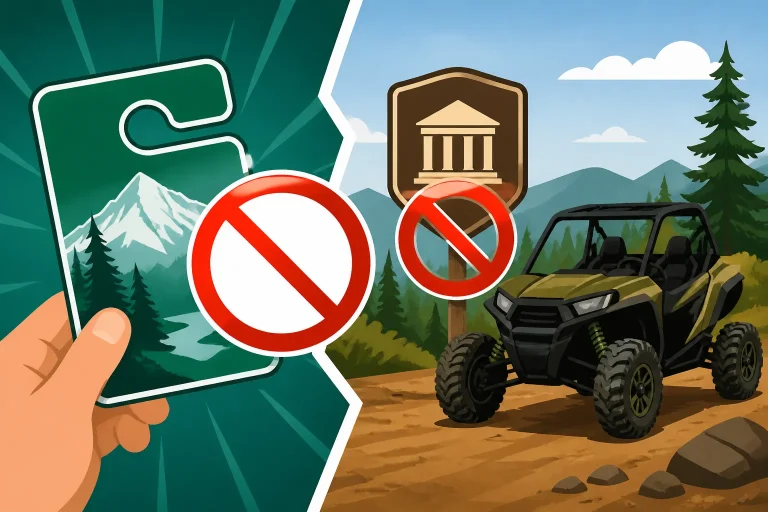
A Discover Pass or other site-access pass is a separate question from the machine’s ORV tabs. A pass may be required to park at a state recreation site, but it does not register the WATV or make a closed route legal to ride. Some federal trailheads require a federal pass rather than a Washington state pass. Check the specific staging area’s rules, including what vehicle the pass must be displayed in and whether the rental company provides one. See The Discover Pass and Washington Riders for the state-pass distinction.
| Where you plan to ride | Questions to answer before leaving |
|---|---|
| DNR-managed land | Is the route designated for this machine, and are there current closures or seasonal restrictions? |
| National forest land | Is the road or trail open to motorized use, and is a federal recreation pass required at the trailhead? |
| State park or other state recreation site | Is motorized riding allowed at this site, and is a state access pass required? |
| County or city road | Has the local government opened this specific road to WATVs, and does the machine have road-use authorization? |
| Private timberland or tribal land | Do you have explicit permission or a required access permit? |
Do not treat “public land” as a single access category. A WATV route can pass close to private property, tribal land, a protected area, or a closed segment. Gates, signs, and posted notices matter. If a route changes ownership or enters land with separate rules, stop and verify access rather than following tracks made by other riders. For land-specific details, see Washington Rules for Riding DNR Land and Washington Rules for Riding a National Forest.
Understand what the renter and rider each need to do
The rental company should explain how to operate its machine, identify any route restrictions, and make clear what is included in the rental. Ask whether the company supplies required registration paperwork, trail maps, safety equipment, and any access passes. Also confirm whether the rental is allowed to leave the company’s designated area. Some rentals are restricted to a particular property or route, even if the machine could otherwise be registered for broader use.
You remain responsible for operating legally and safely. That means following posted closures, staying on designated routes, obeying speed and road-access rules, and using the machine only within the rental agreement. A company’s statement that a machine is “street legal” does not prove that every road is open to it. Washington road use depends on the particular road and local authorization. If your trip includes pavement, check Washington’s Road Use Declaration and Washington Counties That Allow WATVs on Roads before planning a route.
Ask specifically whether the machine has the equipment needed for the use you have in mind. Road use can call for equipment beyond what is needed on a trail, and equipment requirements can differ for a side-by-side and a quad. A horn, mirrors, turn signals, lighting, or other equipment may matter for road operation. Do not use pavement as a shortcut between trails unless that road is legally open and the machine meets the applicable requirements.
Passengers and young riders need extra attention. A machine may have seats for multiple people, but that does not mean every passenger is allowed or that the machine is safe for a particular rider. Follow the manufacturer’s seating limits and the rental company’s rules. Check Washington’s age and supervision requirements for the rider, and do not assume a parent’s presence or a rental waiver replaces them. Washington’s Supervision Rule for Riders Under 16 explains the state rule to check before booking for a younger rider.
Before signing, read the rental agreement for limits on who may operate the machine, where it can be ridden, whether passengers are permitted, and what happens after damage or a breakdown. Confirm how to contact the company if the machine fails, gets stuck, or encounters a closure. Ask whether recovery assistance is included or whether you are expected to arrange it yourself. These details can affect your route choice, especially in remote areas with limited cell service.
Make a pre-ride check part of the rental
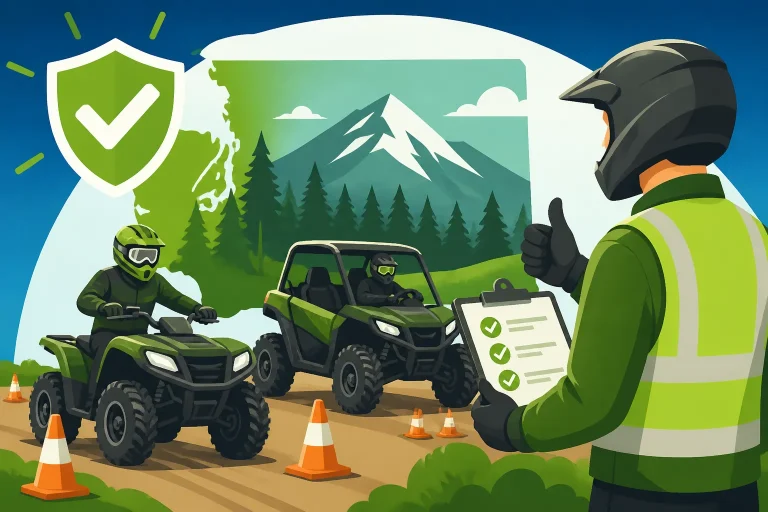
A brief check at pickup can prevent a paperwork problem from becoming a roadside problem. Ask the company to walk you through the controls and show you the registration information. Confirm where the registration must be carried and keep it protected from rain and mud. Washington riders should know what paperwork they are expected to have with them; see Which Paperwork You Must Carry While Riding.
Use this checklist before you leave:
- Match the machine to the trip. Confirm whether it is a quad or side-by-side, its width, and whether the planned trail allows it.
- Check its registration. Ask what the tabs or out-of-state credentials authorize and make sure the paperwork is available.
- Confirm route access. Use the current map or agency notice for the exact road and trail, and check for closures.
- Ask about access passes. Find out whether a pass is needed at the staging area and whether the rental company supplies it.
- Review rider and passenger rules. Confirm who may operate the machine, whether passengers are allowed, and what age or supervision rules apply.
- Inspect basic safety items. Check the brakes, tires, lights, controls, and any required protective equipment before starting.
- Save the rental company’s contact information. Know what to do if the route is blocked or the machine develops a problem.
If the plan includes a county road or city street, verify that the exact route is approved for WATV use. A map app may route you onto pavement without indicating whether that segment is legal. A road’s speed limit alone does not tell you whether WATVs are allowed there. Do not assume that a road connection between two trails is open just because it is the shortest way through.
If the rental company cannot confirm a key detail, choose a simpler plan: ride only on a clearly designated route that the company approves, or delay the trip until you can verify access. That is especially sensible for visitors unfamiliar with Washington’s registration system and for riders using a machine rented outside the area.
The safest rule is to treat three things as separate checks: the machine’s registration, the land manager’s permission, and any pass required for parking or site access. When all three match your planned ride—and the rental agreement allows it—you can set out with a much clearer understanding of what you may do and where.
Disclaimer
This article is for general informational purposes only and does not constitute professional advice. Laws, prices and regulations vary by location and change over time. Consult a qualified professional for guidance on your specific situation.