Blaze Orange in Washington Woods
Riding an ATV or UTV during hunting season can put you on the same roads and trails as hunters, but it is not always clear whether blaze orange is required or simply a sensible precaution. The answer depends on what you are doing, where you are riding, and the current rules. Here’s how to think about visibility, hunting-season etiquette, and the checks to make before you unload.
When blaze orange matters in Washington
Blaze orange, often called hunter orange, is bright fluorescent clothing intended to help people recognize one another in wooded terrain. Its strongest use is during hunting activity, when people may be moving through brush or watching for game. It can also be a practical visibility aid for recreational riders sharing a forest with hunters.
That does not mean every ATV or UTV rider in Washington is automatically subject to a hunter’s clothing rule. Hunting regulations apply according to the activity, species, season, weapon, and other conditions. Someone riding for recreation is not necessarily hunting just because a modern firearm season is underway. But a rider who is hunting from a machine, or otherwise participating in a hunt, should check the current hunting regulations for the applicable requirements.
Do not rely on a general statement about “hunting season” to decide what you must wear. Seasons can differ by game and method, and the relevant rules may change. Check the current Washington hunting regulations and any rules set by the land manager before you go. If your trip includes hunting as well as riding, review Washington Rules for Hunting From a Machine before planning the route or loading your gear.
| Situation | What to consider |
|---|---|
| Recreational ride during an open hunting season | Orange is a useful visibility precaution, but check whether the land manager has additional rules. |
| Riding while participating in a hunt | Follow the current regulations for the specific season and activity, including any clothing requirements. |
| Riding on a road near active hunting areas | Be visible, slow down, and expect people on foot or near the roadway. |
| Riding on a closed or restricted route | Orange does not authorize access. Follow signs, closures, and land-use rules. |
| Carrying orange clothing in the machine | Keep it accessible and dry so riders can put it on before entering an area where visibility matters. |
If you are not sure whether a particular rule applies to you, ask the agency or land manager responsible for the area rather than treating another rider’s clothing choice as proof of the law. Requirements for hunters and recommendations for recreational riders are not the same thing.
Riding near hunters without creating extra risk
A forest can feel quiet and empty from the seat of a machine, but a hunter may be nearby and difficult to see. A trail can cross a hunting area, a forest road can pass a pullout, and a rider may encounter people walking away from a vehicle. A little planning and predictable riding help reduce the chance of surprising someone.
Make yourself easy to see
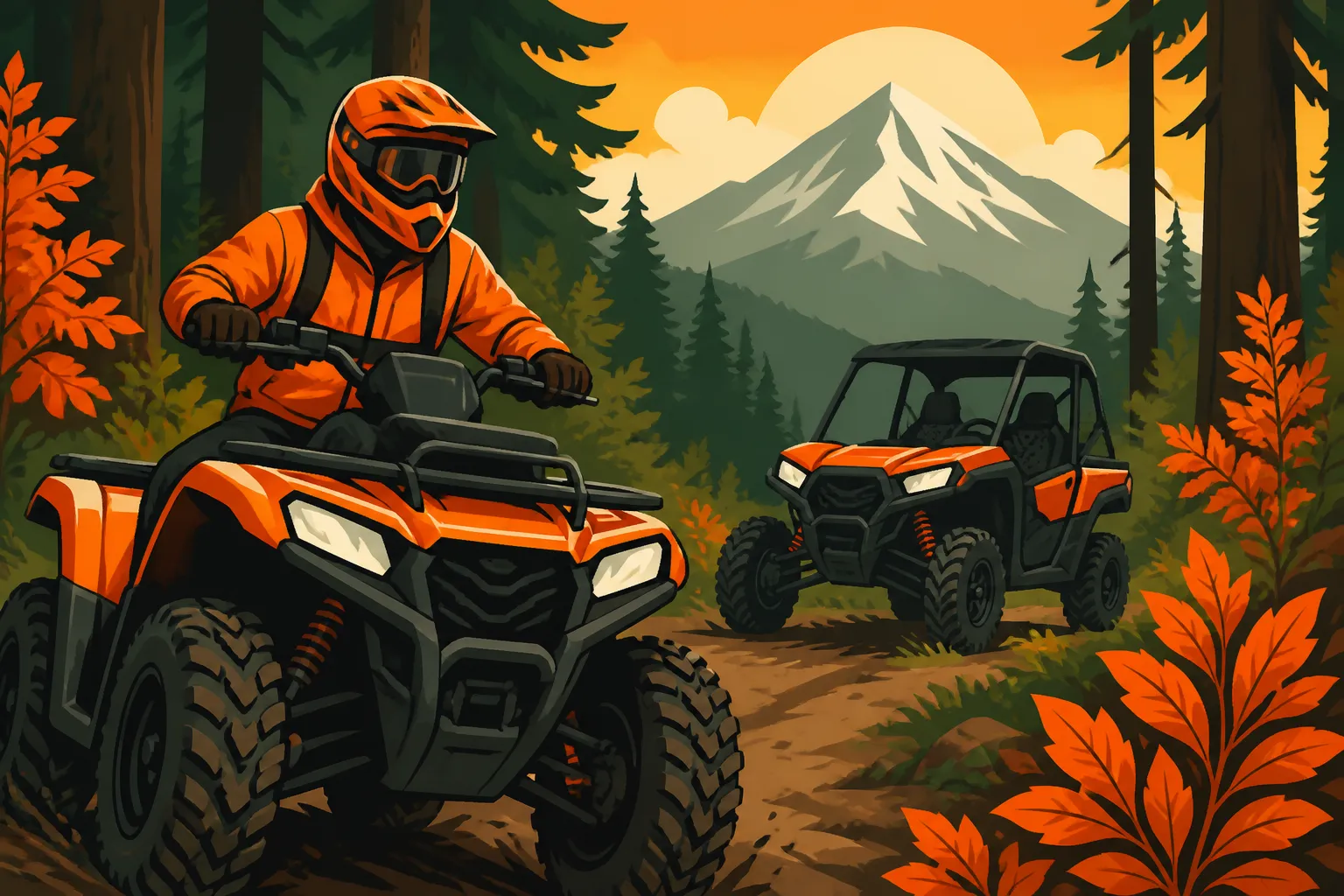
A bright orange vest, jacket, or outer layer can make a rider more noticeable in daylight. A hat or helmet cover may add color above the shoulders, where it is easier to spot through vegetation. For a group, it helps if everyone—not just the person leading—has a visible layer.
In a UTV, a vest hidden behind a door or under a dark jacket does little to improve visibility. Choose clothing that can be seen from outside the cab. At the same time, do not wear anything that interferes with a helmet, seat belt, steering, or safe movement. Make sure a seat belt fits as intended; do not add bulky material in a way that prevents it from sitting correctly.
Orange is not a substitute for riding at a safe speed, using lights as required, or yielding when appropriate. At dusk, in rain, or in dense shade, fluorescent clothing may be less effective than it is in daylight. Reflective material can help when headlights reach it, but it serves a different purpose from bright daytime orange.
Slow down and give people room
When you see a person, a parked vehicle, or signs of hunting activity, ease off the throttle and be ready to stop. Keep to the established route, avoid sudden turns or loud revving, and give people on foot space to move safely. If someone is in or near the trail, stop at a distance where you can communicate without crowding them.
Do not assume a person is a hunter, or that a hunter can immediately identify your machine and intentions. A bright garment makes you easier to notice, but calm, predictable behavior is what gives others time to respond. If you encounter a group, wait for a clear signal before passing.
Hunting activity is also not a reason to ride around a gate, leave a designated route, or enter private property. Check the rules for the land you plan to use, including Washington Rules for Riding DNR Land and Washington Rules for Riding a Forest Road. A route that appears on an old map may have changed status, and a seasonal closure still applies whether or not you are wearing orange.
Treat closures and posted instructions as decisive
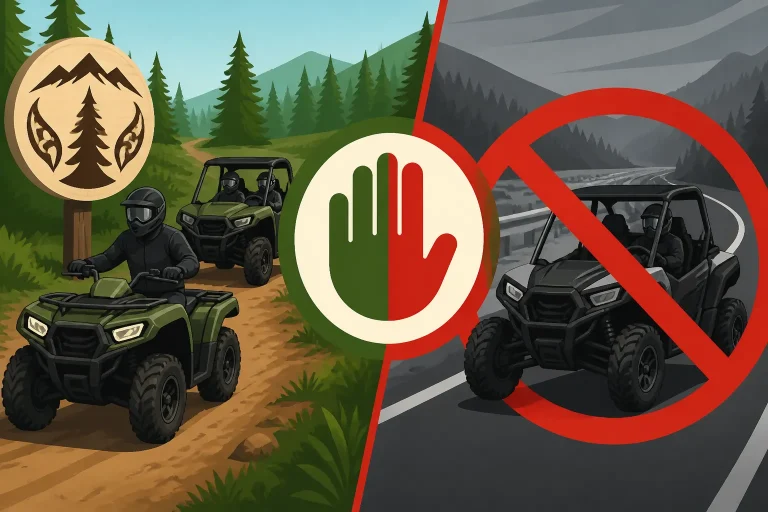
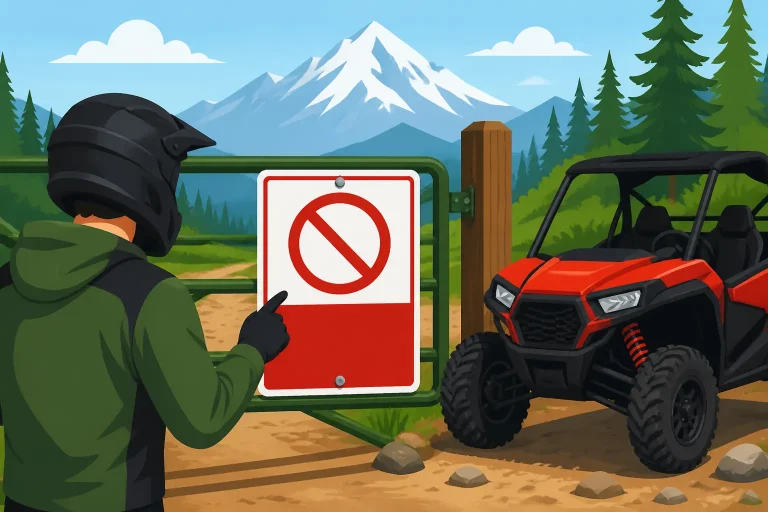
Forest operations, fire conditions, wildlife concerns, or land-management decisions can close routes during a riding season. A blaze-orange vest does not make a closed trail safe or legal to use. Read signs at the entrance, respect barriers, and check current notices before setting out. For help understanding the difference between a temporary closure and an open route, see Washington Rules for Riding a Closed Trail.
When a route crosses an area where hunting is taking place, use extra care rather than trying to get closer to see what is happening. Do not approach a person who may be handling a firearm unless there is a clear safety reason and it is safe to do so. If you cannot tell whether a route is open or whether passage is welcome, turn back and confirm with the land manager.
Choosing and carrying visible clothing
The best orange layer is one that riders will actually wear and that stays visible while they operate the machine. A bulky garment that catches on equipment or blocks movement is not a good choice. For a typical ride, a simple vest or lightweight jacket may be easier to store and put on than a heavy coat.
When choosing clothing, look for:
- A bright fluorescent orange color that stands out from the surrounding vegetation.
- Enough coverage to remain visible when seated, not just when standing beside the machine.
- A fit that does not snag on controls, racks, branches, or other equipment.
- Material that can be worn over regular riding gear without restricting movement.
- A closure that stays secure in wind and vibration.
- A design that does not interfere with a helmet, goggles, seat belt, or protective gear.
A dark backpack can cover much of a bright jacket. If you carry one, consider whether the orange will still show from the sides and behind. A small orange patch may be better than nothing, but it is less noticeable than a clearly visible outer layer. Keep spare clothing in a dry bag or covered compartment so it is ready when needed.
Some riders buy high-visibility clothing from outdoor or safety-gear retailers, including Amazon. When shopping, focus on the garment’s visibility, fit, and compatibility with riding gear rather than assuming that a product’s “safety” description means it meets a particular hunting regulation. If a legal requirement applies to your activity, confirm the required type and coverage in the current official rules.
Do not confuse visibility with protective equipment
Orange clothing helps other people see you; it does not protect you from impact, debris, or a rollover. Keep using the protective gear appropriate to your machine and route. A vest does not replace a helmet, eye protection, or a properly fastened seat belt in a UTV.
Also check that clothing does not cover machine lights or obscure a registration decal. Loose straps and hanging fabric can catch on branches or controls. In a UTV, avoid putting a vest or jacket over a seat belt in a way that changes how the belt fits. If you need to adjust layers, stop in a safe place first.
A practical plan for a hunting-season ride
Before leaving home, check the riding area’s access information and any current hunting or land-use notices. Decide whether the trip is recreational riding, hunting, or a combination. That distinction matters: the clothing rules for a hunter may not be the same as a general recommendation for a rider sharing the woods.
Use this routine:
- Confirm the route is open. Check the current information from the land manager, then read signs at the trailhead or road entrance. Do not use a closed route as a shortcut.
- Review the applicable rules. If anyone in the group will be hunting, check the current requirements for that activity and season. If the group is riding only, look for any additional rules posted for the riding area.
- Pack visible layers where they are easy to reach. Keep orange clothing dry and accessible rather than buried beneath tools or camping gear.
- Talk through the plan with the group. Agree to slow down near people, stop when someone is on the route, and stay together where visibility is limited.
- Ride in a way that leaves room for others. Use established roads and trails, avoid startling people, and turn around if access is uncertain.
- Recheck conditions before heading out. A route can close after you have planned a trip. Notices about fire restrictions, logging, or other closures may affect access; Washington Fire Restrictions That Close Trails explains why checking current conditions matters.
If you expect to travel during a busy hunting period, consider choosing a different route or time when practical. That is not always necessary, but avoiding a crowded area can make the ride less stressful for everyone. If you do share a route, keep the machine under control and make your presence known without aggressive noise or sudden movement.
A useful group rule is simple: when you see a person, slow down early, stop if needed, and wait until it is clear that you can pass safely. Do not assume that a horn, engine sound, or bright vest has already been noticed. In a quiet stretch of woods, another person may be focused on their surroundings and may not hear a machine approaching from behind.
Before the trip, it can also help to review Riding During Modern Firearm Season and Washington Rules for Riding a Forest Road. Those topics are especially relevant when your planned route uses shared forest roads or passes through areas where seasonal hunting activity may be taking place.
Disclaimer
This article is for general informational purposes only and does not constitute professional advice. Laws, prices and regulations vary by location and change over time. Consult a qualified professional for guidance on your specific situation.