Washington ORV Registration for a Trailered Quad
It’s a common misconception that if your quad, side-by-side, or dirt bike spends all its time on a trailer, only hitting designated off-road areas, you might not need to worry about registration. Many riders think the trailer itself is enough to get their machine to the trails. However, Washington State law requires all off-road vehicles (ORVs) to be properly registered, whether they’re being ridden on a forest trail, a sand dune, or just sitting on a trailer in your driveway waiting for the next adventure. This guide will walk you through the essential steps and details for registering your trailered quad in Washington, ensuring you stay legal and support the trails you love.
Understanding Washington's Off-Road Vehicle Registration Basics
Before you even load your quad onto the trailer, it’s crucial to grasp the fundamental requirements for owning and operating an off-road vehicle in Washington State. The state has a robust system in place to manage ORV use, and it applies broadly to almost all motorized recreation vehicles.
Why Even a Trailered Quad Needs Registration
You might be thinking, "But I only ride on private land or designated trails! My machine never touches a public road, so why does it need to be registered?" This is a perfectly understandable thought, and one shared by many new and even seasoned riders. The reality, however, is that Washington State law (specifically RCW 46.09) mandates registration for nearly all ORVs operated within the state, regardless of whether they are driven on public roads or solely trailered to off-road areas. The core reason behind this isn't about road use, but about funding and identification.
When you register your ORV, the fees collected go directly into maintaining and expanding the very trail systems you enjoy. These funds are crucial for things like trail grooming, signage, bridge repair, and managing staging areas. Without these registrations, the resources available for these essential services would dry up, leading to degraded trails and fewer places to ride. Think of it as your contribution to keeping the sport alive and accessible. Beyond funding, registration provides a unique identifier for your machine, which is vital for law enforcement in cases of theft or accidents. While your quad is trailered, it’s generally not subject to roadside stops for registration checks. But the moment those tires hit a state park trail, a DNR forest road, or a federal recreation area, your machine must display its current tabs. This also includes any private timberland where you might have permission to ride. The officials enforcing the rules in these areas are looking for those current tabs, and they won't care how you got your machine there.
The Two-Tab System: Off-Road vs. On-Road
Washington has a unique "two-tab" system for ORV registration, which can sometimes cause a bit of head-scratching, especially for those just getting into the sport or moving from another state. For a trailered quad, your primary concern will be the "off-road tab."
The basic [Washington's Off-Road Tab Explained] is required for any ORV that will be ridden off designated public roads. This means if you're hitting the trails at Capitol State Forest, tearing up the sand at Juniper Dunes, or exploring forest service roads, you absolutely need this tab. It signifies that your machine is registered for off-highway use. This tab is typically an adhesive decal that you place prominently on your ORV, usually on the fender or another visible area, along with a metal tag. The other component is the [Washington's On-Road Tab Explained]. This is an additional tab that allows certain Washington All-Terrain Vehicles (WATVs) to be ridden on designated public roads that have speed limits of 35 mph or less, and where local jurisdictions have opted to open their roads to ORV traffic. If you only trailer your quad to riding areas and never intend to ride it on public streets or county roads, then you technically don't need the on-road tab. However, it's worth noting that many riders eventually consider adding the on-road tab for convenience, allowing them to legally connect trails or access fuel and food without re-trailering. For now, focus on getting that essential off-road tab for your trailered adventures.
The Role of the Metal Tag
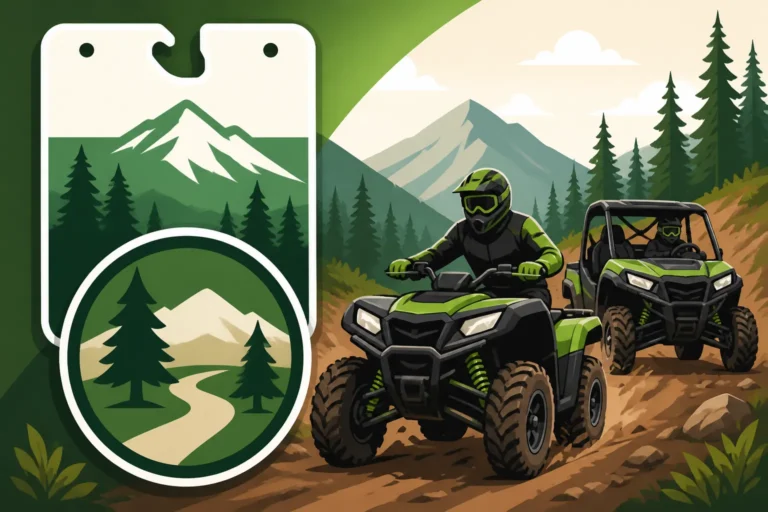
In addition to the annual adhesive tabs, Washington ORVs also receive a permanent metal license plate, often referred to as the [Washington's Metal Tag Explained]. This isn't like a car's license plate that changes every year. Instead, this sturdy metal tag is issued once and is designed to last for seven years. It displays your machine's unique registration number.
This metal tag is a critical piece of your ORV's identification. It must be securely mounted to your quad, typically in a clearly visible location on the rear, similar to where a motorcycle license plate would go. While the annual off-road tab decals confirm your current registration status, the metal tag provides the foundational identification number for your machine. It’s durable, designed to withstand the rigors of off-road riding, from mud splashes to tree branches. If your metal tag ever becomes unreadable due to wear and tear, or if it's lost, you'll need to obtain a replacement, which is a fairly straightforward process. For a trailered quad, having this metal tag properly displayed is just as important as the current year's decal. Law enforcement or park rangers will check both to ensure your machine is legitimately registered to operate on public lands.
The Step-by-Step Process for Registering Your Trailered Quad
Registering your quad doesn't have to be a confusing ordeal. Whether you've just bought a brand-new machine from a dealer or found a hidden gem on the used market, the process involves a few key steps and documents.
Essential Paperwork and Information
The foundation of a smooth registration process lies in having all your ducks in a row when it comes to paperwork. This is where most people get tripped up, often making multiple trips to the licensing office because they forgot one crucial item.
First and foremost, you'll need proof of ownership. If you purchased your quad new from a dealership, they will typically handle the initial titling and registration paperwork for you, making the process much easier. They'll usually provide you with a temporary permit while the official title and registration are processed by the Department of Licensing (DOL). However, if you bought a used ATV in Washington, or from a private seller, you'll need either the original title signed over to you or a properly executed [A Washington Bill of Sale for a WATV]. A bill of sale is particularly important if the machine was older and never formally titled, or if the seller simply used a standard form. Make sure the bill of sale includes essential details like the sale price, the Vehicle Identification Number (VIN), and the signatures of both the buyer and seller. You can find reliable bill of sale templates online through services like LawDepot, which can help ensure all necessary information is included. Without clear proof of ownership, the DOL simply cannot transfer the registration into your name.
Beyond ownership, you’ll need valid personal identification, such as your driver's license. You’ll also need the VIN of your machine. This 17-character code is usually stamped on the frame of your quad and is absolutely essential for registration. It uniquely identifies your machine, much like a fingerprint. Finally, be prepared to pay the applicable registration fees and any sales or use tax. The [Washington WATV Registration Cost] can vary, but generally includes the basic registration fee and potentially other small surcharges. For private sales, you'll also be assessed use tax based on the purchase price or fair market value, whichever is higher, so be honest about the sale price to avoid future issues.
Where to Go for Registration
Once you've gathered all your documents, the next step is to figure out where to actually complete the registration. You have a few options in Washington State, offering flexibility for most riders.
The most common place to register your ORV is at a local vehicle licensing office, also known as a subagent office of the Department of Licensing. These offices are scattered throughout cities and towns across Washington, making them relatively accessible for most residents. You can find a list of [Where to Register a WATV in Washington] on the DOL website. It's often a good idea to check their specific operating hours and, if possible, even call ahead to confirm what documents they require, especially if your situation is a bit unusual (e.g., registering a machine with no prior Washington title). These offices are equipped to handle new registrations, renewals, and replacements of lost documents. Some larger counties or cities might even have a dedicated office for vehicle and vessel services that can process ORV registrations. Another option, though less common for initial registration unless purchased there, is through a powersports dealership. If you buy a new machine, the dealership will usually handle all the paperwork for you, submitting it to the DOL on your behalf. This is often the easiest route as they are well-versed in the requirements and can streamline the process. While you generally can't do a full initial registration entirely online, the DOL website does offer resources and forms for you to prepare beforehand.
Addressing Specific Situations
While the core process is straightforward, certain scenarios can add a few extra layers. Understanding these can prevent headaches down the road.
Buying a New Quad: When you purchase a new machine from a Washington dealership, they typically take care of submitting all the initial [Washington WATV Registration Paperwork] and titling forms to the Department of Licensing. They'll provide you with a temporary permit that allows you to ride legally for a short period while the state processes your permanent registration and issues your tabs and metal tag. This is usually the smoothest process, as the dealer is familiar with all the requirements and procedures.
Buying a Used Quad: This is where attention to detail becomes paramount. When buying from a private seller, you must ensure you receive a properly signed-over title (if the machine was previously titled) or a comprehensive bill of sale. If there's no title, or the seller never titled it themselves, the process can become more complex, sometimes requiring a visit to the DOL for guidance on how to establish ownership. Make sure the seller's name on the title matches their ID, and that the VIN on the paperwork matches the machine itself. Services like LawDepot can help you generate a legitimate bill of sale form, protecting both buyer and seller. Always double-check the VIN on the machine against the paperwork before handing over any money. A common issue is a seller who hasn't properly titled the machine in their own name after purchasing it used; in Washington, you need a clear chain of ownership.
Registering an Out-of-State Machine: If you're bringing your trailered quad into Washington from another state, you'll need to follow the [Registering an Out-of-State Machine in Washington] process. This generally involves presenting your out-of-state title or registration, along with proof of ownership (like a bill of sale) if you just acquired it. Washington will issue a new title and registration, bringing your machine into compliance with state laws. You will also likely owe use tax on the fair market value of the machine if you haven't already paid sales tax on it in Washington or a reciprocal state. Be prepared for a bit more paperwork and potentially a longer processing time as the DOL verifies the machine's history.
Navigating Common Hurdles and Misconceptions
Even with all the right paperwork, it's easy to run into questions or misunderstandings about ORV registration. Let's tackle some of the most common issues riders face.
What Happens If You Don't Register
Ignoring Washington's ORV registration requirements for your trailered quad might seem harmless if you're only riding on remote trails, but it can lead to some significant repercussions. The most immediate consequence is a potential citation from law enforcement or park rangers. If you're caught riding an unregistered ORV on public lands—be it a state forest, a DNR recreation area, or a federal trail—you could face a fine. The [What a Washington Citation for No Tabs Costs] can be substantial, often running into the hundreds of dollars, which is far more than the cost of annual registration. This isn't just a minor slap on the wrist; it's a legitimate traffic infraction.
Beyond financial penalties, an unregistered machine could be impounded, leaving you stranded and adding the headache of recovering your quad. Imagine having your machine towed from a trailhead deep in the mountains because you didn't have current tabs. That's a scenario no one wants to experience. Furthermore, many designated riding areas are patrolled, and rangers actively check for current registration. Having proper tabs is not only a legal requirement but also a show of support for the ongoing maintenance and development of these riding areas. The funds generated from registrations directly contribute to improving trails, maintaining staging areas, and providing essential services that enhance your riding experience. Failing to register your machine means you're not contributing your fair share to the system you benefit from, and you're risking a costly and inconvenient encounter with the law.
Maintaining Your Registration: Renewals and Replacements
Getting your initial registration done is a great start, but it's not a one-and-done deal. Like vehicle registrations, your ORV tabs need to be kept current.
Washington ORV registrations are valid for one year and must be renewed annually. Typically, you'll receive a renewal notice in the mail a few weeks before your registration expires. You can often [Renewing a Washington ORV Registration Yearly] online through the DOL website, by mail, or in person at a vehicle licensing office. It’s important to pay attention to the expiration date on your tabs to avoid riding on expired registration. Life happens, and sometimes those little adhesive tabs or even the metal tag can get damaged or lost during a spirited ride. If your annual registration decals peel off or become unreadable, you can usually order replacements through the DOL. Similarly, if your metal tag is lost, stolen, or becomes too worn to read clearly, you'll need to apply for a replacement. This usually involves a small fee. Keeping your registration current and your tabs clearly displayed isn't just about avoiding fines; it ensures that the critical funding for trail maintenance continues uninterrupted, directly benefiting all riders in Washington.
The Difference Between Off-Road and On-Road Use
It's a point of confusion for many: what's the real difference between the off-road tab and the on-road tab, especially when my quad is usually trailered? For your trailered quad, you absolutely need the off-road tab if you plan to ride on any public land designated for ORV use. This includes trails, open areas, and unpaved roads within state forests, national forests, and other managed recreation sites. This tab validates your machine's legality for all off-pavement adventures.
The [Washington's Off-Road Vehicle Rules Explained] emphasize that this tab is sufficient for most recreational riding, provided you stay off paved public roads that haven't been specifically opened to WATVs. The additional on-road tab, on the other hand, grants you permission to ride a WATV (a specific category of ORV that meets certain equipment requirements) on certain public roads. These are typically county roads or city streets with speed limits of 35 mph or less, in jurisdictions that have passed ordinances allowing WATV use. If you have no intention of ever riding your quad on such roads and are perfectly happy trailering it to and from designated riding areas, then the off-road tab is all you need. However, if you envision a future where you might want the convenience of riding short distances on pavement to connect trails, access a gas station, or get to a nearby campground, then exploring the on-road tab requirements for [Street Legal WATVs in Washington: The Short Answer] might be a good idea. This would involve ensuring your machine meets specific equipment standards (like mirrors, turn signals, and a horn) and potentially undergoing a safety inspection.
Remember, even with a valid on-road tab, there are strict rules about which roads you can use and under what conditions. Most riders of trailered quads only focus on the off-road requirements initially, and that’s perfectly fine and compliant for enjoying Washington’s incredible trail network.
| Requirement / Scenario | New Purchase (Dealer) | Used Purchase (Private) | Out-of-State Transfer | Renewal | Lost Tab/Tag |
|---|---|---|---|---|---|
| Proof of Ownership | Bill of Sale/MCO | Signed Title OR Bill of Sale (e.g., LawDepot template) | Out-of-State Title/Reg | N/A | N/A |
| Personal ID | Yes | Yes | Yes | Yes | Yes |
| VIN Verification | Handled by Dealer | Self-verify/DOL might inspect | Self-verify/DOL might inspect | N/A | N/A |
| Application Form | Usually dealer-filled | Yes | Yes | Renewal Notice | Yes |
| Fees & Taxes | Yes | Yes (incl. Use Tax) | Yes (incl. Use Tax) | Yes | Replacement Fee |
| Metal Tag Issued? | Yes | Yes | Yes | No (unless replacement) | Yes (replacement) |
| Annual Decal Issued? | Yes | Yes | Yes | Yes | Yes (replacement) |
Disclaimer
This article is for general informational purposes only and does not constitute professional advice. Laws, prices and regulations vary by location and change over time. Consult a qualified professional for guidance on your specific situation.