Paying Use Tax on a Quad Bought in Oregon
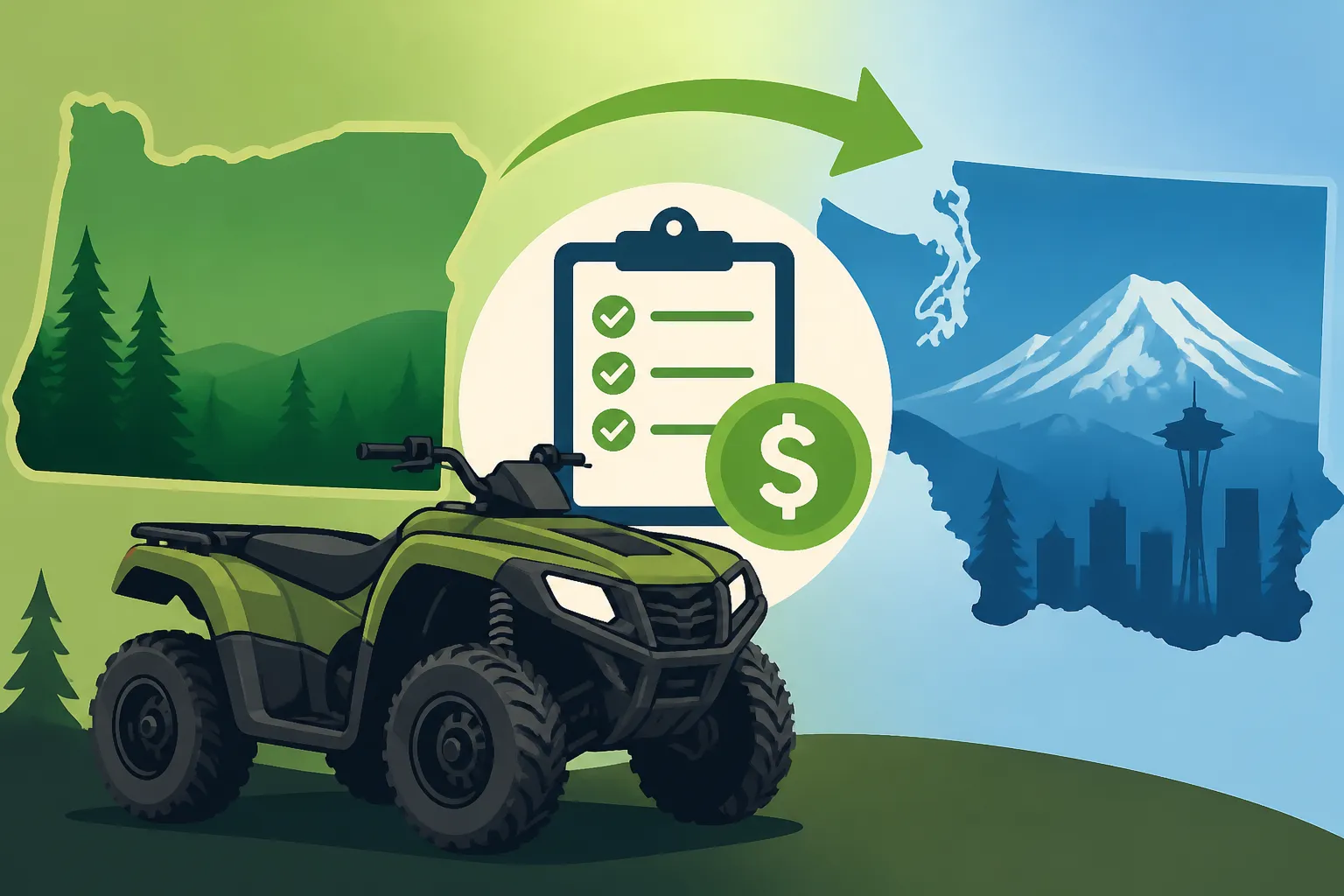
It’s a tale as old as time for Washington State residents who love their off-road machines: you hear about friends, or maybe you’ve even considered it yourself, making the trek down to Oregon to buy an ATV or UTV. The allure is strong, right? No sales tax in Oregon! It feels like you’re getting a fantastic deal, saving a big chunk of change upfront. But then you get back across the border, ready to register your new-to-you quad, and the Washington Department of Licensing (DOL) introduces you to a concept that often catches folks off guard: use tax. It can feel like a punch to the gut after you thought you’d outsmarted the system, leaving you scratching your head about what to do next. This guide is here to walk you through exactly what use tax is, why Washington collects it, and how to navigate the process of paying it when you’ve bought your awesome new machine in Oregon.
The Lure of Oregon and Washington's Use Tax Reality
Let’s be honest, who doesn't love a good deal? The prospect of saving hundreds, if not thousands, of dollars on a big purchase like an ATV or UTV is incredibly appealing. Oregon, with its lack of state sales tax, becomes a beacon for savvy shoppers, especially those just across the border in Washington.
Why Oregon Seems Like a Sweet Deal
Picture this: You’ve been eyeing that shiny new side-by-side or a beefy utility quad. You do your research, compare prices, and suddenly realize that buying it just a few hours south in Oregon could mean sidestepping the sales tax you’d pay back home. In Washington, sales tax can vary quite a bit depending on your county, but it starts at a state rate of 6.5% and can climb well over 10% in some areas when local rates are added in. On a machine that costs, say, $15,000, that’s a potential savings of $975 to over $1,500! That money could buy you a winch, a new helmet, or even cover a few tanks of gas for your first few rides. It's completely understandable why so many Washingtonians make the drive. It feels like a smart financial move, and in the moment, it absolutely is.
However, that initial feeling of triumph can quickly turn into confusion when you encounter Washington’s use tax. It's not about trying to catch you out; it's about fairness within the tax system.
Understanding Washington's Use Tax
Think of Washington’s use tax as the state’s way of saying, "Hold on a minute, if you bought it outside Washington but you're going to use it here, you still need to contribute your fair share." Essentially, use tax is a compensating tax. It’s levied on goods and services purchased outside of Washington but consumed, used, or stored within the state. Its primary purpose is to ensure that businesses operating within Washington aren't at a disadvantage compared to out-of-state competitors, and to make sure that residents who buy from out-of-state vendors contribute to state and local services in the same way they would if they bought locally.
So, while Oregon doesn't charge you sales tax at the point of purchase, Washington expects you to self-report and pay the equivalent tax when you bring that ATV or UTV into the state for permanent use, particularly when you go to register it. This isn't just for ATVs; it applies to cars, boats, furniture, and anything else you might buy without paying sales tax in another state and then bring into Washington. The key trigger for use tax on an ATV or UTV is usually when you initiate the registration and titling process with the Department of Licensing. It's a critical piece of the puzzle to understand when bringing a machine [Bringing a Machine From Oregon] into your home state.
How Use Tax is Calculated and Paid in Washington
Navigating the use tax process can feel a bit like wading through quicksand if you’re not prepared. But once you understand the core principles, it’s much more straightforward. The main thing to remember is that Washington wants to collect the same amount of tax you would have paid had you purchased the machine from a dealer or private seller within Washington.
Purchase Price or Fair Market Value: The DOL's Approach
When you head to the Department of Licensing (DOL) or a subagent to register your Oregon-bought quad, they won't just blindly accept whatever number you write down as the purchase price. While your bill of sale is important, especially when dealing with [Paying Use Tax on a Quad Bought in Oregon], the DOL has a duty to ensure that the use tax collected accurately reflects the value of the machine.
This is where the concept of "fair market value" (FMV) comes into play. If the declared purchase price on your bill of sale seems unusually low – perhaps you bought it from a relative, or it was a screaming deal that raises eyebrows – the DOL might assess the use tax based on the machine's fair market value rather than your stated purchase price. They use various resources, such as industry guides or online valuation tools, to determine what a similar machine in similar condition would typically sell for.
For instance, if you declare you bought a pristine, low-hour side-by-side for $2,000, but its actual market value is closer to $10,000, the DOL might calculate your use tax based on that higher $10,000 figure. This prevents people from intentionally under-reporting a sale price to reduce their tax burden. So, always be prepared to show solid documentation, and understand that for older or very unique machines, the FMV might need to be discussed.
The Role of Sales Tax Rates in Use Tax
The use tax rate isn't some arbitrary number; it directly mirrors the sales tax rate that would apply if you had purchased the machine in your specific Washington county of residence. Washington has a state sales tax rate of 6.5 percent. On top of that, individual cities and counties add their own local sales taxes, which can push the combined rate significantly higher.
For example, if you live in King County, your combined sales tax rate might be over 10%. If you bought that quad in Oregon, you'll owe use tax at that same King County rate when you register it. If you live in a different county, say in Eastern Washington, your combined rate might be lower, and that's the rate you'll pay. This is why it’s so important to know your specific local combined sales tax rate. You can usually find this information on the Department of Revenue’s website or by asking at your local licensing office. Understanding [Washington ATV Sales Tax by County] is crucial for budgeting.
The Payment Process at the Licensing Counter
The good news is that paying use tax isn't a separate, complicated process. It's seamlessly integrated into your standard registration transaction at the Department of Licensing or a local vehicle licensing subagent. When you go in to apply for your title and registration – which you absolutely must do if you plan to ride your quad in Washington – the use tax will be calculated and collected as part of the overall fees. This is part of [Paying Use Tax at the Licensing Counter].
You’ll typically need to bring your bill of sale (even if it's from a private party in Oregon), your title (or the necessary documents to apply for one), and proof of identification. The licensing agent will review your paperwork, determine the correct tax amount based on your declared purchase price (or the fair market value), and add it to your total. This means you'll pay your use tax, title fees, and registration fees (like the [Washington Off-Road Tab Cost] and potentially the [Washington On-Road Tab Cost]) all in one go. It streamlines the process for you, but it also means you need to be prepared for the total cost, which might be higher than you initially anticipated if you only thought about the purchase price in Oregon. This entire payment is a critical part of your [Washington WATV Registration Cost].
Essential Paperwork and Avoiding Pitfalls
Bringing an ATV or UTV across state lines and dealing with different state regulations requires diligence, especially when it comes to documentation. Skipping steps or having incomplete paperwork can lead to frustrating delays and potentially costly fines.
What You Need to Bring from Oregon
Even though Oregon doesn't have a sales tax, and private sales might be very informal there, Washington will want to see clear proof of ownership and the transaction details. The most critical document you can have is a comprehensive bill of sale.
A good bill of sale, even for a private party sale, should include:
- The full names and addresses of both the buyer and seller.
- The date of the sale.
- A clear description of the ATV or UTV, including make, model, year, and crucially, the Vehicle Identification Number (VIN).
- The agreed-upon purchase price.
- Signatures of both the buyer and seller.
Having a robust bill of sale not only helps the DOL accurately assess use tax but also protects you as the buyer by clearly establishing your ownership. If you’re unsure how to draft one, resources like LawDepot offer customizable bill of sale templates that can ensure you cover all your bases, providing peace of mind. This document is integral to your [Washington WATV Registration Paperwork] and helps establish the [Washington WATV VIN Requirements].
Titling First and Proving Ownership
Here’s another point that often surprises Washington buyers who purchased in Oregon: Even if Oregon doesn't issue a title for an ATV (some states don't, especially for off-road-only vehicles), Washington likely will. Our state wants a clear chain of ownership, and that usually starts with getting a Washington title in your name. You can't just register an ATV here without first establishing ownership through a title application.
The bill of sale you brought back from Oregon will be the primary document used to apply for your Washington title. Once the title is in your name, then you can proceed with getting your [Washington Off-Road Tab Explained] and any other necessary registrations. This is a fundamental reason [Why Washington Wants a Title First] and helps to meet all [Washington WATV Title Requirements]. If the machine you bought in Oregon never had a title in that state, or if the seller never bothered to title it, you might face additional hurdles and potentially need to go through an affidavit process to establish ownership, which can complicate and delay things.
Consequences of Skipping Use Tax
It can be tempting to try and avoid paying use tax, especially if you feel like you've already "saved" money by buying in Oregon. However, skipping this step can lead to significant problems down the line. If you bring an ATV into Washington and use it here without properly registering it and paying the use tax, you could face penalties and interest on the unpaid tax. Furthermore, if your machine is deemed unregistered due to incomplete paperwork or unpaid taxes, you could be cited for operating an unregistered off-road vehicle. [Washington Fines for an Unregistered WATV] can quickly erase any perceived savings.
Beyond fines, there's the moral aspect. The use tax helps fund crucial state and local services, including the very trails and infrastructure you’ll likely use with your new machine. It might feel like "extra" money out of your pocket, but it's part of the legal and financial commitment of being a responsible off-road enthusiast in Washington State. It ensures everyone is contributing fairly, whether they bought their machine down the street or down the freeway in another state.
Real-World Scenarios and Smart Planning
Understanding the technicalities of use tax is one thing, but seeing how it plays out in various real-world scenarios can help clarify your own situation and ensure you plan effectively.
Buying a Brand New Machine from an Oregon Dealer
Let's imagine you're at a dealership in Portland, Oregon, gazing at a brand new, gleaming utility side-by-side. The dealer hands you the paperwork, and indeed, there's no sales tax line item. You feel fantastic about your purchase! You pay the sticker price, maybe some dealer fees (which in Washington are capped by law, but out-of-state might differ), and off you go.
When you return to Washington and head to your local licensing office to get your tabs, the process will unfold as follows: You'll present your dealer's bill of sale and the Manufacturer's Certificate of Origin (MCO), which acts as the initial title document for a new machine. The licensing agent will then calculate the use tax based on the purchase price listed on that MCO/bill of sale. You'll pay this use tax, along with your initial titling and registration fees. The dealer might offer some kind of temporary permit to get you home, but that doesn't exempt you from the Washington use tax. So, while you saved at the point of sale, that tax still becomes due once you bring it to Washington for its home.
Purchasing a Used Quad from a Private Seller in Oregon
This is often where things get a little trickier, but with careful planning, it's perfectly manageable. You find a fantastic deal on a used ATV on an online marketplace, advertised by a private seller just across the Columbia River. You drive down, inspect the machine, agree on a price, and shake hands.
Here, the importance of a detailed bill of sale cannot be overstated. Unlike a dealership, a private seller might not have a formal document ready, and it’s up to you to ensure you get one. As mentioned earlier, tools like LawDepot can help you generate a clear, legally sound bill of sale that includes all necessary details, including the VIN, sale price, and signatures of both parties. Without it, or with an incomplete one, the DOL might have difficulty confirming the purchase price, potentially leading them to assess use tax based on a higher fair market value. They are particularly watchful for transactions where the stated price is very low compared to the machine's actual value. This also directly relates to [Buying a Used ATV in Washington], where clear documentation is always paramount.
Planning Your Budget: Beyond the Purchase Price
When considering an out-of-state purchase, it's easy to focus solely on the initial savings from not paying sales tax at the counter. However, a truly savvy buyer factors in all the costs involved. This means:
- Purchase Price: The amount you pay the seller in Oregon.
- Use Tax: The equivalent of Washington's sales tax, based on your county's combined rate, calculated on the purchase price or fair market value.
- Titling Fees: Fees to get a Washington title in your name.
- Registration Fees: The yearly costs for your off-road and potentially on-road tabs. ([Washington WATV Metal Tag Cost] is a one-time fee, but the tabs renew annually.)
- Inspection Fees (if applicable): If your machine is a [Washington WATV Road Requirements] it might need a safety inspection.
- Travel Costs: Don't forget gas, maybe a hotel, and your time for the trip to Oregon.
By adding all these up, you get a realistic picture of the [The Yearly Cost of Riding in Washington]. Sometimes, the "deal" from Oregon, once use tax and other fees are factored in, might not be as significant as it first appeared, especially if a local Washington dealer was offering a competitive price or a special promotion. Always run the numbers thoroughly before you commit!
Paying use tax on a quad bought in Oregon can initially feel like a letdown after thinking you bagged a tax-free deal. However, it's an essential part of complying with Washington State law and ensures you can legally and responsibly enjoy your off-road machine on our fantastic trails and roads. Do your homework, gather your paperwork diligently, and factor in all costs upfront, and you'll find the process quite straightforward. Happy riding!
Disclaimer
This article is for general informational purposes only and does not constitute professional advice. Laws, prices and regulations vary by location and change over time. Consult a qualified professional for guidance on your specific situation.