Tabs for a Side-by-Side in Washington
Getting your side-by-side properly tabbed and ready to ride in Washington state can feel like navigating a maze of acronyms and rules. Many of us just want to hit the trails or cruise a county road, but the confusion around "WATV" versus "UTV" and deciphering the state's unique two-tab system can be a real headache. This guide is here to untangle all that, explaining exactly what tabs your side-by-side needs and why, so you can spend less time on paperwork and more time enjoying the great outdoors.
Understanding Washington's WATV Designation for Side-by-Sides
One of the first things that often throws new side-by-side owners for a loop in Washington is the state's unique terminology. You call your machine a UTV or an SxS, but the Department of Licensing (DOL) refers to it as a "wheeled all-terrain vehicle," or WATV. It's a subtle difference in nomenclature, but it's important because it dictates how your machine is registered and what rules apply to it. Essentially, Washington groups all ATVs, UTVs (including your side-by-side), and even dirt bikes under this broad WATV umbrella when it comes to registration.
This can be incredibly frustrating. You just bought a shiny new side-by-side, expecting clear instructions, and instead, you're met with a term that doesn't quite match what you're used to hearing. It's not just about what they call it; this designation has real implications for everything from titling to how you apply for your tabs. Because your side-by-side is considered a WATV, it falls under a specific set of statutes designed to manage off-road and limited on-road recreational use, setting it apart from standard street-legal vehicles. For a deeper dive, check out [Why Washington Says WATV and Not ATV].
The WATV designation clarifies that your side-by-side is not considered a traditional highway vehicle. This means it doesn't automatically get full road access, and it won't be subject to the same types of taxes or registration fees as your car or truck. Instead, it enters a separate system designed specifically for recreational machines. Understanding this foundational concept is key to making sense of the tabs you'll need and the privileges those tabs grant you. It defines the framework for permissible use, whether you're planning to stick to the dirt or venture onto specific paved roads.
The Two Tabs Your Side-by-Side Might Need in Washington
When it comes to getting your side-by-side ready to ride in Washington, you'll encounter two distinct types of tabs: the Off-Road Tab and the On-Road Tab. Depending on where you plan to ride your machine, you might need one, or you might need both. This two-tab system can feel like a bit of a bureaucratic hurdle, especially if you're used to simpler registration processes in other states, but each tab serves a specific purpose and grants different riding privileges. It's less about nickel-and-diming you and more about funding different types of recreational infrastructure and managing distinct use cases.
The Essential Off-Road Tab for Trail Riding
Every side-by-side that you intend to operate on public lands, designated trails, or recreation areas in Washington state must have the Off-Road Tab. This is your baseline registration. Think of it as your passport to the vast network of motorized trails managed by the Department of Natural Resources (DNR), the Forest Service, and other land managers. Without this tab, you risk a citation if you're caught riding on public land.
This tab ensures that you're contributing to the maintenance and development of these crucial riding areas. The fees collected from the [Washington Off-Road Tab Cost] directly support things like trail grooming, signage, trailhead facilities, and enforcement. It's what keeps those amazing places like Capitol State Forest or Walker Valley open and enjoyable for everyone. Even if you only ever plan to ride on private property, if you trailer your machine across state lines or use it on any public access land for even a minute, this tab is a non-negotiable requirement. For more detailed information on its benefits, see [Washington's Off-Road Tab Explained]. Many riders find it frustrating to pay a fee just to access trails, but when you consider where that money goes—directly back into the trails you love—it makes a lot more sense. It's an investment in the future of our riding opportunities.
Adding the On-Road Tab for Paved Access
Now, if your dreams of side-by-side ownership include cruising down a county road to a trailhead, heading into town for gas, or just enjoying some pavement miles where allowed, you'll need to consider adding the On-Road Tab. This tab is an addition to your Off-Road Tab, not a replacement. It's specifically designed to permit limited use of certain public roads and streets that have been opened to WATVs by local jurisdictions.
The On-Road Tab comes with its own set of requirements, which can include things like a safety inspection to ensure your machine meets specific equipment standards (think mirrors, turn signals, horn, etc.) and that you have a valid driver's license. This is where it gets a bit more complex, as not all roads are open, and rules vary by county and city. You can learn more about this by reading [Washington's On-Road Tab Explained] and [Adding the $12 On-Road Tab on Top]. It's crucial to understand that simply having the On-Road Tab doesn't grant you free rein on all roads; it only applies to those specifically designated by local ordinances. This means you need to do your homework on local regulations before you venture onto any paved surface. Many riders feel this is an unnecessarily complicated layer, but it's designed to balance recreational access with road safety and existing traffic laws.
Here's a quick comparison of what each tab generally allows and requires:
| Feature/Requirement | Off-Road Tab (Required for Public Land) | On-Road Tab (Optional for Road Use) |
|---|---|---|
| Primary Use | Designated ORV trails, public lands | Designated county roads, city streets |
| Required Equipment | Spark arrester, muffler | Mirrors, turn signals, horn, headlights, taillights, brake lights, seat belts (if equipped) |
| Driver's License | Not always required for off-road use | Required (valid driver's license) |
| Safety Inspection | Not required | Required |
| Insurance | Recommended, but not strictly required for off-road | Required for road-registered WATVs |
| Cost | Annual fee | Additional annual fee |
| Validity | On ORV trails and approved off-road areas | On approved paved roads and across highways |
| Mandatory | Yes, for public land use | Only if riding on approved roads |
This table clearly shows that if you plan on riding on pavement, even just to get from one trail segment to another, the requirements significantly increase. It highlights the importance of deciding upfront where you'll be riding your side-by-side. If you decide to add the road tab later, you can do so, but it will involve a few extra steps. You can explore this further in [Paying for Both Tabs in Washington].
Navigating the Registration Process for Your Side-by-Side
Getting your side-by-side fully registered and tabbed in Washington state is a multi-step process that often starts even before you apply for your tabs. It involves establishing ownership through titling, then moving on to the actual registration and tab application. It can feel like a bureaucratic labyrinth, especially when you're just eager to get out and ride, but understanding each step will save you a lot of frustration down the line.
Titling Your Side-by-Side First
Before you can even think about those coveted tabs, your side-by-side must be titled in your name with the Washington State Department of Licensing. This is a critical first step that many people overlook or misunderstand, leading to delays. Whether you bought your machine new from a dealer or used from a private seller, having a clear title in your name is non-negotiable. The title serves as official proof of ownership, preventing future disputes and ensuring that the machine is legitimately yours.
If you bought your side-by-side from a licensed Washington dealer, they'll typically handle the title application process for you as part of the sale, which is a huge convenience. However, if you purchased it from a private party, you're responsible for transferring the title yourself. This involves completing the title application, often found at a vehicle licensing office, and submitting it with the original title document signed over to you by the previous owner. You'll also need a bill of sale to prove the purchase price, especially for calculating use tax. For guidance on this, see [Titling a WATV in Washington] and [Washington WATV Title Requirements]. When drafting a bill of sale for a private transaction, you can find helpful templates and resources on platforms like LawDepot, which can ensure all the necessary legal details are covered. This step can feel like extra paperwork, but it's the foundation of legal ownership in the state.
Submitting Your Registration and Tab Application
Once your side-by-side is titled in your name, you can proceed with the registration process and apply for your tabs. This is where you decide if you need just the Off-Road Tab or if you're adding the On-Road Tab as well. You'll typically do this at a local vehicle licensing office. You'll need to fill out the [Washington WATV Registration Paperwork], which will ask for details about your machine and your intended use.
If you're opting for the On-Road Tab, this is also when the additional requirements come into play. You'll need to submit proof that your side-by-side has passed a safety inspection, verifying that it meets Washington's specific equipment standards for road use. This inspection covers things like working headlights, taillights, brake lights, turn signals, mirrors, a horn, and seat belts if the machine came equipped with them. It's a crucial step that ensures your machine is safe for shared public roads. You can find more details on where to get these inspections done and potential costs in [Washington WATV Safety Inspection Cost]. Trying to skip steps or assume requirements can lead to delays or even fines, so it’s always best to be thorough here.
Don't forget that if you're aiming for the On-Road Tab, you'll also likely need to sign a [Washington Road Use Declaration] to affirm your understanding of the rules and limitations of riding on public roads. It's a formal acknowledgment that you'll abide by the specific county and city ordinances that govern WATV road use. The entire process of [Registering a WATV in Washington] is designed to be comprehensive, ensuring that all machines are accounted for and that riders are aware of their responsibilities.
Costs and Common Questions for Side-by-Side Tabs
Budgeting for your side-by-side isn't just about the purchase price; it also involves understanding the recurring costs associated with keeping it legally on the trails and roads in Washington. The fees for the tabs, the metal tag, and the annual renewals are all part of the ownership experience. While I can't give you exact figures (those change over time!), I can certainly explain the structure of these costs and answer some of the most common questions riders have. It’s normal to wonder where all that money goes, and understanding the system helps clarify why these fees exist.
Deconstructing the Costs: Tabs and the Metal Tag
First, let's talk about the [Washington WATV Registration Cost]. This is typically composed of a base registration fee, plus the specific fees for the tabs you choose. The Off-Road Tab has a fee that contributes to the Off-Road Vehicle Account, directly funding those trail maintenance and acquisition efforts we discussed earlier. If you add the On-Road Tab, there's an additional fee for that, which goes into separate funds dedicated to multi-use roadway safety and administration. It’s easy to feel like you're just paying fee after fee, but these separate charges ensure that specific funds are allocated to the correct purposes, benefiting different aspects of the riding community.
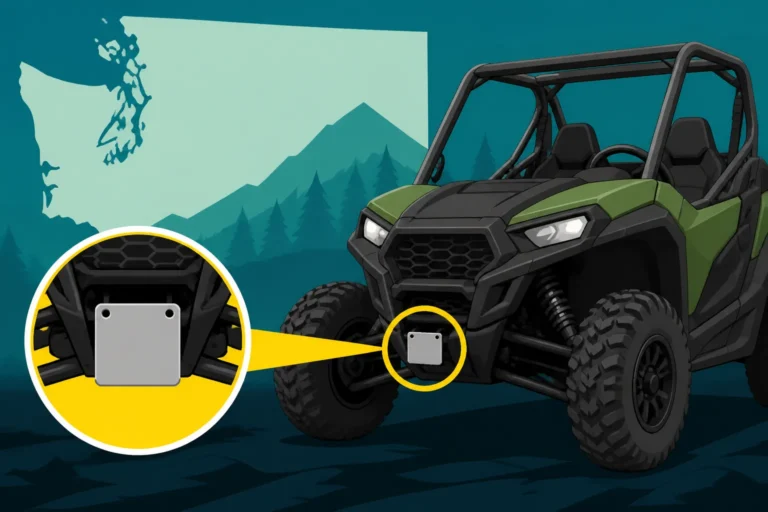
Then there's the [Washington WATV Metal Tag Cost]. Every WATV registered in Washington receives a small, durable metal tag that is affixed to the machine. This tag typically has a long lifespan, usually around seven years, before needing replacement. Its purpose is to provide a semi-permanent identification number for your machine, distinct from the yearly decals. You can think of it as a mini license plate for your off-road vehicle. For specifics on its longevity, check out [Why the Tag Is Replaced Every Seven Years]. Even though the cost is usually quite low, it's an important part of the state's identification system for WATVs.
Renewal and Other Financial Considerations
Your Washington WATV registration and tabs need to be renewed annually. This [Washington WATV Registration Renewal] ensures that you continue to contribute to the upkeep of the riding areas and that your machine remains legally compliant. The renewal process is usually straightforward and can often be done online, by mail, or in person at a vehicle licensing office. It's important to pay attention to your expiration date to avoid riding on expired tabs, which could lead to fines.
Beyond the tabs and tag, remember to factor in other potential costs. If you opt for the On-Road Tab, you’ll need to budget for the safety inspection. While there's typically a cap on how much an authorized inspector can charge for this, it's still an out-of-pocket expense. Additionally, if you're using your side-by-side on public roads, Washington law generally requires you to carry liability insurance. This is another recurring cost that varies widely depending on your machine, riding history, and chosen provider. While you won't get a specific figure from me, obtaining quotes from various insurers can give you a clear picture of what to expect. Platforms like LawDepot can also help you understand the legal documents associated with vehicle ownership and sale, which can influence your long-term financial planning.
Always keep your registration document and proof of insurance (if applicable) with you when riding. It's a simple step that can save you a lot of hassle during a roadside check or if you encounter an incident on the trail. For peace of mind, many riders use a waterproof pouch or a secure compartment on their side-by-side to keep this vital paperwork safe and dry, especially during those unpredictable Washington weather days.
Disclaimer
This article is for general informational purposes only and does not constitute professional advice. Laws, prices and regulations vary by location and change over time. Consult a qualified professional for guidance on your specific situation.