Packing Out an Elk by Machine
Packing out an elk by machine in Washington can save hours of hard carrying, but it does not make every trail or route available. Before the hunt, check where your machine may legally travel and how you will move, cool, and secure the meat. A sensible plan keeps the recovery within land-use rules and helps prevent a heavy load from becoming a safety problem.
Separate the hunt from the recovery ride
A machine can help haul an elk, but using it to retrieve game is not permission to hunt from it or to ride wherever the animal falls. Keep the distinction clear: the hunt must comply with hunting regulations, and the recovery trip must comply with motorized-access rules.
Do not shoot from or use a machine to pursue wildlife. Park in a lawful place, leave the machine, and make the shot only from a position where hunting is permitted. Rules can differ by area and season, so check current Washington Department of Fish and Wildlife regulations for your hunt. For the access side, Washington Rules for Hunting From a Machine explains the important distinction between hunting activity and machine use.
The animal’s location does not automatically make a route legal. A game trail, timber road, or track visible on a map may be closed to motor vehicles, restricted to certain users, or open only during particular conditions. A route that was open on a previous trip may have changed because of hauling, fire restrictions, seasonal closures, or land-manager decisions.
Before heading out, identify the land manager for the area and confirm the allowed routes. Depending on the location, that may mean checking rules for DNR land, a national forest, private timberland, or another landowner. Washington Rules for Riding DNR Land and Washington Rules for Riding a National Forest cover different land-management settings; permission to use one area does not carry over to another.
A practical pre-hunt check includes:
- Confirm the parcel or management area where you plan to hunt.
- Find the current motorized route information for that land, not just a general recreation map.
- Check closures, seasonal limits, and any restrictions on vehicle type or width.
- Confirm that your machine and registration meet the rules for the trip.
- Identify a lawful staging place and a legal route from it to the recovery area.
- Decide in advance what you will do if the elk falls beyond the route you can legally ride.
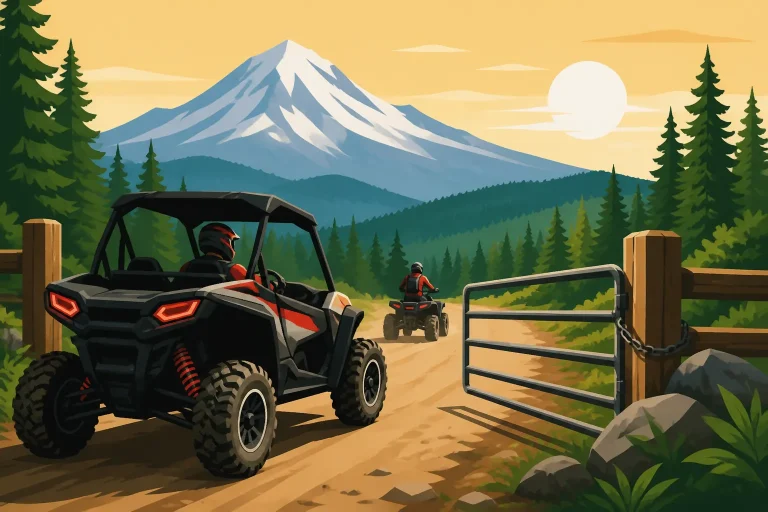
If the animal is off the designated route, do not assume a short detour is harmless. Riding around a gate, across a meadow, through a stream corridor, or into a closed area can damage the ground and create a separate violation. [Washington Rules for Riding Off a Designated Trail] explains why the recovery goal does not override route limits. If a closure is posted, treat it as closed unless the land manager confirms otherwise; see Washington Rules for Riding a Closed Trail.
A useful rule of thumb is to plan for the elk to be recovered by hand from where the machine is legally allowed to stop. If the route and the animal’s location do not line up, carrying meat out or arranging another lawful method may be the only responsible option.
Plan the route and load before the shot
An elk is a large, awkward load. The machine’s advertised carrying capacity is not a promise that it can safely handle a whole carcass over rough ground. The combined load includes the animal or meat, riders, fuel, tools, and any rack or trailer. Steep grades, mud, roots, and uneven ground can make a load feel much heavier than it does on level ground.
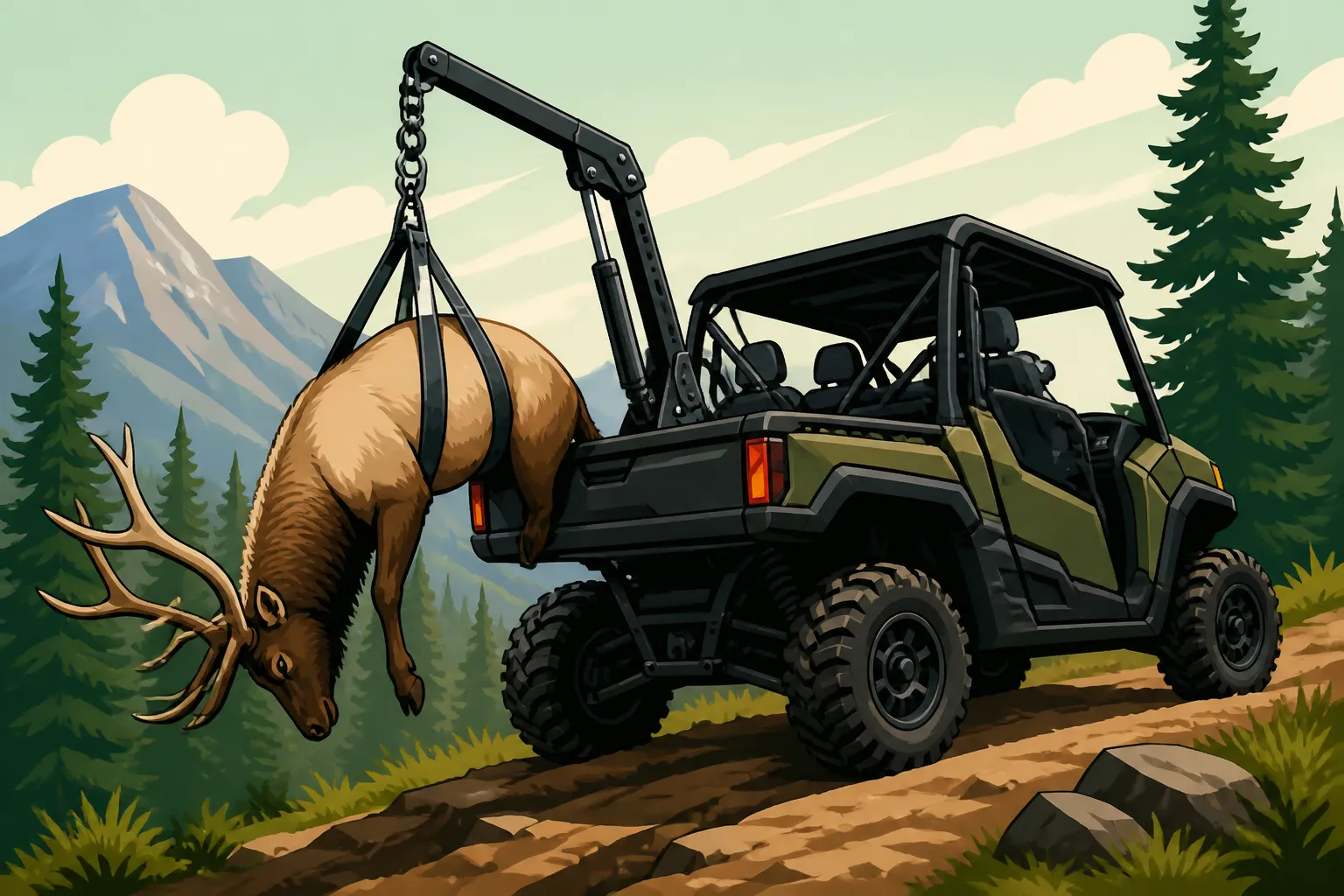
Choose a recovery setup that matches the terrain and the machine. A side-by-side may offer a cargo bed, while a quad may need racks, a trailer, or several trips. Each option has trade-offs: a trailer adds capacity but can be difficult to control on narrow or steep routes; loading meat directly on a rack can raise the machine’s center of gravity; and a winch can help move a carcass but is not a substitute for a safe, stable loading position.
| Recovery method | Useful when | Main limitation to plan for |
|---|---|---|
| Carry meat on a machine’s racks or cargo bed | The route is relatively stable and the load can be divided into manageable pieces | Weight and height can affect balance and handling |
| Use a trailer | The machine can tow safely and the route has enough room | Trailers can jackknife, catch on obstacles, or be hard to turn around |
| Make several trips | The elk is far from the staging area or a single load would be unsafe | More travel means more time, fuel, and exposure to changing conditions |
| Hand-carry to a lawful pickup point | The elk is beyond the permitted motorized route | Requires more people, time, and careful meat protection |
Check the machine’s owner’s manual for cargo and towing limits, then leave a safety margin. Never use the full rated capacity as a target on steep, slick, or uneven ground. If the load shifts, the machine can become unstable, and braking or steering may be compromised. Keep the weight low, balanced, and secured so it cannot slide into the rider, controls, tires, or exhaust.
A recovery kit should be assembled before hunting, not improvised after an elk is down. Depending on the plan, it may include:
- Strong, suitable straps and a means of securing meat or a carcass.
- A winch or other rated pulling equipment, if appropriate for the machine and terrain.
- Knives, gloves, and clean game bags.
- A tarp or other barrier to keep meat off dirty surfaces.
- Water and supplies for cleaning hands and tools.
- A map, charged phone or radio, and a backup navigation method.
- Basic repair and recovery equipment for the machine.
Do not attach a load in a way that blocks lights, controls, or the rider’s view. Avoid tying meat to hot parts or placing it where a strap could reach a wheel or drivetrain. If a winch is involved, keep people clear of the line and follow the equipment’s instructions. A winch pull on a side slope, near a tree, or with a poorly positioned machine can create a serious rollover or line-failure hazard.
Think through turnaround points as well as the route in. A loaded machine may not be able to turn around where an unloaded one could. Narrow roads, steep switchbacks, gates, and soft shoulders can make backing or turning with a trailer particularly risky. If there is no safe place to turn, plan a different approach before the hunt.
Handle and protect the meat during recovery
Once the elk is down, follow Washington’s current hunting rules for tagging, identification, and transportation. Requirements can depend on the season and method of take, and they may specify what must stay with the animal or meat. Review the current regulations before hunting, and complete required steps at the required time. Do not wait until the end of a long recovery trip to check what paperwork or evidence must accompany the harvest.
For broader practical considerations, see Washington Rules for Packing Out Game. The key is to keep the animal or meat identifiable and to follow the applicable tagging and transport requirements throughout the trip. If you are unsure whether a particular part must remain attached or how the tag must be handled, confirm the rule before the hunt rather than guessing in the field.
Meat care starts immediately. Field dress and cool the elk as conditions and safe practice allow. Keep meat clean, shaded, and protected from dirt, fuel, exhaust, and standing water. Game bags can help keep debris and insects off the meat while allowing air movement. Avoid sealing warm meat in an airtight plastic covering, which can trap heat and moisture.
The machine can make meat care harder if the load is packed tightly or left exposed in the sun. Separate pieces so air can circulate, and make as few unnecessary stops as practical. On a long haul, plan for the time it takes to get the meat to a cooler or other suitable storage. If the trip is slow or weather is warm, prioritizing the meat over a complete carcass recovery may be the safer choice.
Keep the meat out of muddy cargo beds and away from areas that have been used to carry fuel, tools, or dirty recovery gear. A clean tarp can provide a barrier, but it should not trap heat around warm meat. Clean knives and hands as you work, and keep edible portions separate from equipment and waste.
Use care with carcass remains. Do not leave them near a road, trailhead, campsite, water source, or other place where they could create a safety or sanitation problem. Disposal requirements and suitable practices can vary with the land manager and location. Check the rules for the property and avoid placing remains where they could attract animals close to people or contaminate water.
A machine is not a reason to drag a carcass across sensitive ground. Dragging can damage vegetation, leave a long trail of remains, and make the load difficult to control. If a carcass must be moved to a legal pickup point, use a method that is allowed on that route and can be managed safely. If the animal lies in a place where motorized access is prohibited, carry the meat to the allowed route rather than driving to the carcass.
Ride out cautiously and verify the rules
A loaded machine needs more room to stop, more care on uneven ground, and a slower pace than an unloaded one. Keep the load secure and check it after the first short stretch, then periodically as conditions allow. A strap can loosen as the load settles, particularly over rough ground.
Avoid steep sidehills, deep mud, and obstacles that could shift the load or lift a wheel. Do not take a route that is beyond the machine’s capability just because turning back is inconvenient. If the machine becomes unstable, stop in a safe place and reduce or rearrange the load before continuing. For a trailer, allow extra space for braking and turning, and do not overload it or exceed the machine’s towing limit.
Travel with a partner when possible, especially in remote country. Agree on a route and a check-in plan before leaving. Keep riders clear of the loaded machine’s path, and do not let anyone walk immediately behind a machine being winched or backed. A heavy recovery load can make a small mistake harder to correct.
Registration and land-access requirements are separate from hunting permissions. Check what applies to your machine and destination before the trip. Washington’s off-road registration and tab rules are explained in Washington ORV Permits Explained. A permit or registration does not authorize travel on a closed route, and a land manager’s access rules still apply.
Before loading the machine, check for current road or trail notices and confirm that the route remains open for your vehicle type. If you encounter a gate or closure sign, do not pass it simply because you are carrying harvested game. Turn back and use a permitted route, or arrange another legal way to move the meat. Reading a Closure Notice Posted at a Gate can help explain why checking the sign matters, but when conditions are unclear, contact the land manager.
The best recovery plan is one that works even if the elk falls in the least convenient spot. Decide what you will do if the animal is too far from a legal route, the weather turns, the machine cannot handle the load, or the trail becomes unsafe. That may mean bringing extra people, making several trips, carrying quarters by hand, or leaving the machine at the lawful access point. A slower recovery is preferable to damaging land, risking a rollover, or breaking access rules.
Disclaimer
This article is for general informational purposes only and does not constitute professional advice. Laws, prices and regulations vary by location and change over time. Consult a qualified professional for guidance on your specific situation.