Sharing a Gravel Road With Hauling
A logging truck can fill a narrow gravel road just as you round a blind bend, leaving little room to react. In Washington’s riding areas, sharing roads with hauling equipment takes more than slowing down: you need to anticipate traffic, manage dust and visibility, and know when access is restricted. This guide explains how to prepare and ride more safely around active hauling.
Before You Ride a Washington Gravel Road
Check whether the road is open and who controls it
A gravel surface does not automatically mean a road is public, open to off-road vehicles, or safe to use. Roads near Capitol State Forest, Ahtanum State Forest, Walker Valley, and other riding areas may pass through land with different owners or managers. A route shown on a map may also be closed temporarily because of active logging, road work, fire conditions, or other restrictions.
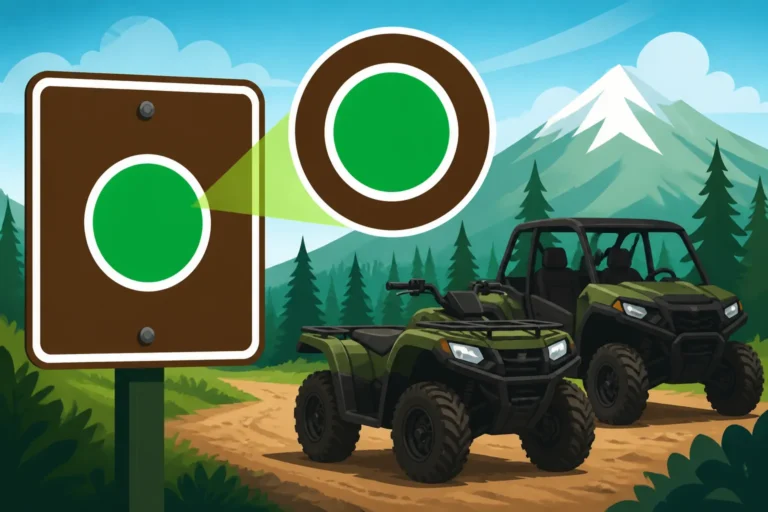
Before loading up, look for current closure notices and posted signs at the entrance and along the route. Check the relevant land manager’s information, and treat a locked gate or a clear “road closed” sign as a reason to turn around. Don’t assume that an old map, a previous ride, or a set of tire tracks means access is still allowed. For more detail, see Washington Rules for Riding a Logging Road and Washington Rules for Riding a Forest Road.
Map apps such as onX Offroad can help you understand where roads and trail connections appear to be, and may help you plan a route with alternatives. But a map is a planning aid, not permission to ride. Confirm access and closures through current posted information before you enter, especially where a route crosses private timberland or a working forest.
Learn to recognize signs of active hauling
A road can be open to riders while still carrying logging trucks, service vehicles, or other work traffic. Watch for warning signs, cones, temporary barriers, flaggers, fresh gravel work, recently cut timber, and vehicles entering or leaving a work area. If you see dust rising ahead or hear heavy equipment, assume a truck may be approaching even if you cannot see it yet.
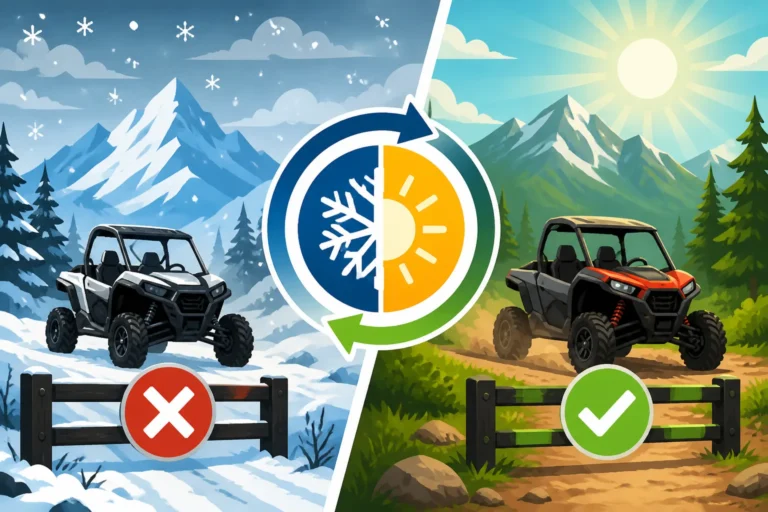
Active hauling can change the feel of a familiar road quickly. A stretch that seemed quiet on your last visit may now be busy with trucks traveling between a landing, work site, and mill. A road that is open on the map may also have a temporary restriction posted at its entrance. Check alerts before you depart, and reassess when you arrive. Riding Around an Active Timber Sale and Checking Alerts Before You Load Up cover why conditions can change between trips.
How to Share the Road With Logging Trucks
Slow down early and make yourself predictable
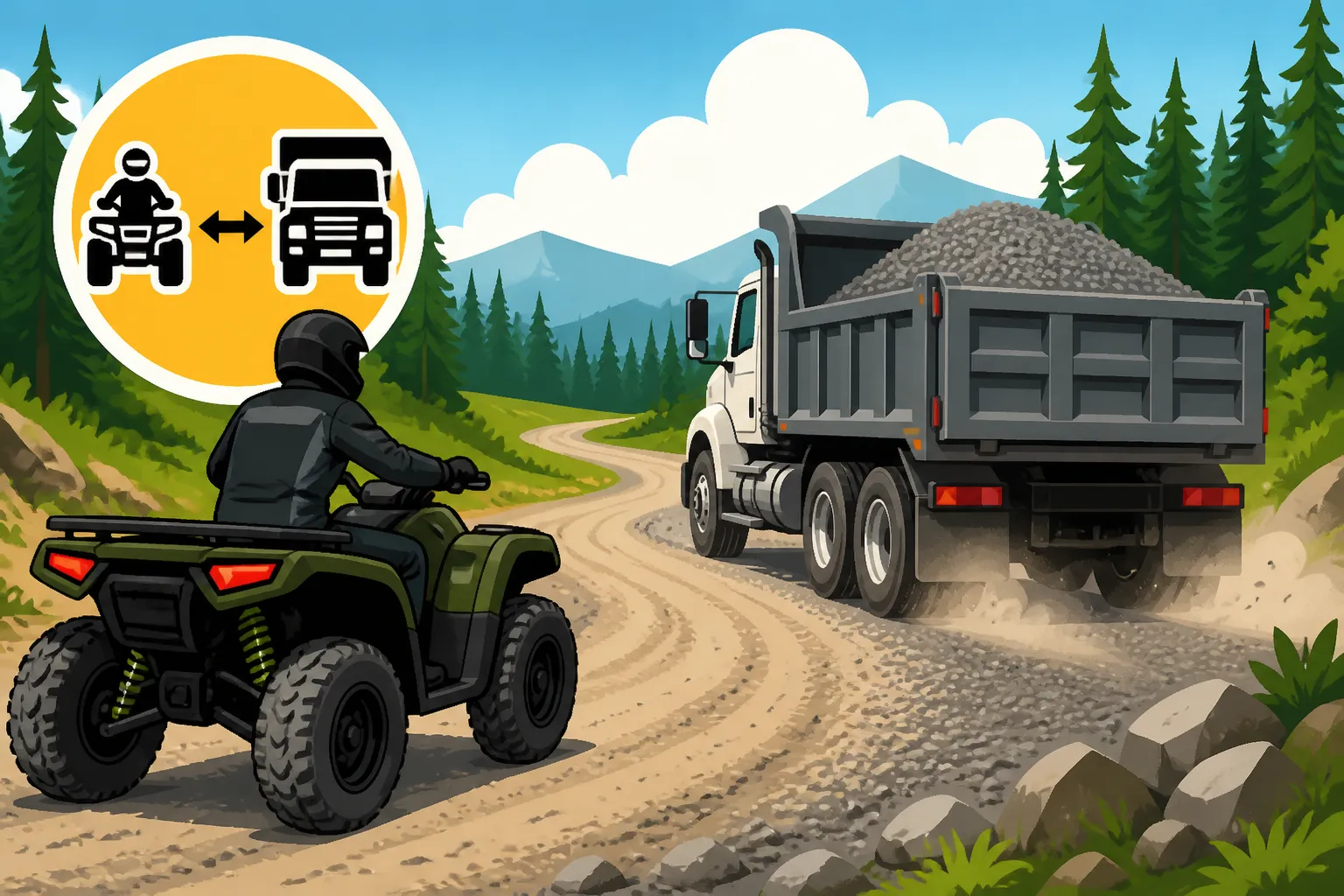
On a narrow gravel road, speed can leave you with very little time to respond. Dust, curves, trees, cut banks, and road crests may hide an approaching truck until it is close. Reduce speed before blind corners and areas with limited sight distance, keep to the right where it is safe to do so, and avoid sudden swerves or braking on loose gravel.
Stay in control rather than trying to keep pace with faster traffic. If a truck comes toward you, slow down steadily and look for a wide, stable place to yield. Don’t pull onto a soft shoulder just because it appears to make more room; the edge may be loose, sloped, or undercut. If there is no safe place to pass, stop in a visible spot where the truck has room to get by. On a particularly narrow road, it may be safer to back slowly to a wider turnout than to squeeze past at the edge.
Being predictable helps the driver judge what you are doing. Avoid stopping abruptly in a blind corner or making a last-second move across the road. If you are riding with a group, leave enough room between machines to stop without bunching up. Make sure the rider behind you knows when you have slowed or pulled over.
Give loaded trucks room and avoid risky passing
A loaded logging truck needs room to move, and its driver may have limited visibility around the vehicle. Don’t assume the driver has seen you, and don’t try to slip past a truck in a narrow spot or near a bend. Wait until the road is wide and visibility is clear, and only pass when it is lawful and safe to do so. If you cannot see far enough ahead to complete the maneuver without forcing another road user to react, wait.
Keep a generous gap behind a truck. Following closely puts you in dust and debris, reduces your view of the road, and leaves less room to respond if the truck slows or stops. The road may also be rougher behind heavy traffic, with loose rock, ruts, or fresh material kicked into the track. Let the dust settle when needed rather than riding into a cloud that hides potholes and oncoming traffic.
If a truck is approaching on a steep or narrow section, don’t try to claim space at the edge of the road. Find a safe turnout early if one is available. Keep clear of loading areas and equipment, and never follow a truck through a gate or into a work zone unless access is clearly allowed. For broader access guidance, see Riding a Road That Crosses Private Land.
Dust, Visibility, and Road Conditions
Leave more room when dust blocks your view
Dust is more than an annoyance. It can hide a washout, a stopped vehicle, a curve, or another rider. If a truck passes and leaves a dense cloud, slow down and increase your following distance. If visibility becomes too poor to ride confidently, pull over only where you can do so safely and wait for the dust to clear. Avoid stopping just over a crest, around a bend, or in the main travel path.
Dust can also make it hard for other road users to see you. Use appropriate lighting where required, keep your machine in good working order, and avoid riding close behind a vehicle that is throwing up a plume. A bright-colored helmet or gear can help you stand out, but it does not replace safe spacing or careful positioning.
A route-planning app such as onX Offroad may help you identify alternate roads or exits before you start, but don’t rely on your phone while moving. If you need to check a route, stop in a safe place away from traffic. Save the route details ahead of time, since cell service may be limited in forested areas.
Expect changing traction after heavy vehicles pass
Truck traffic can change the road surface. A section that was firm in the morning may have loose gravel, ruts, mud, or a fresh layer of crushed rock by afternoon. Heavy vehicles can also push material toward the road edge or create uneven tracks. Reduce speed when the surface changes, avoid abrupt steering, and leave extra stopping room.
Use particular care on downhill grades and near curves. Loose gravel can make braking and turning less predictable, especially if you are also dealing with dust or a narrow shoulder. Keep both hands positioned for control, look ahead rather than fixating on the truck, and choose a line that leaves room to respond to changing conditions. If the road is too rough or narrow for your machine and experience level, turn around where it is safe.
On wet days, gravel roads can become slick, and the mix of mud and heavy vehicle traffic may deepen ruts. Don’t assume that a familiar route will ride the same way after rain or a work shift. Washington Trail Closures to Check First is useful for trip planning, while Riding a Road Shown Open on an Old Map explains why relying on older route information can lead to trouble.
A Safer Ride Plan for Hauling Roads
Prepare before leaving the staging area
A few minutes of planning can prevent a stressful encounter. Check the route, look for current access notices, and decide where you can turn around if the road is busy or closed. Tell your group to keep a safe distance between machines, use a clear hand signal or agreed-upon method to communicate a stop, and regroup only in wide, visible places.
Before setting off, check that your brakes, tires, lights, and controls are working properly. Make sure everyone knows what to do if a truck approaches: slow down, avoid sudden moves, use a safe turnout if available, and wait rather than squeezing through. Carry water and basic supplies, and don’t assume you can call for help from every part of a forest road.
Use onX Offroad or another mapping tool to plan possible alternatives, then verify the route with current land-manager information and signs on the ground. If there is a mismatch between a map and a posted closure, follow the closure. For more about route maps, see Washington Trail Maps From DNR. If you encounter a locked timber gate, don’t try to go around it; What to Do at a Locked Timber Company Gate explains the safer response.
| Situation | Safer response | Avoid |
|---|---|---|
| Dust hides the road ahead | Slow down and increase your following distance; stop in a safe, visible place if needed | Riding close behind a truck or stopping around a blind corner |
| A truck approaches on a narrow section | Reduce speed and yield at a wide, stable turnout when possible | Pulling onto a soft shoulder or squeezing past |
| You hear equipment but cannot see it | Assume work traffic may be nearby and proceed cautiously | Accelerating to get through before a truck appears |
| A gate or closure sign blocks the route | Turn around and choose a confirmed open route | Going around a barrier or relying on an old map |
| The surface has changed after truck traffic | Slow down and adjust for loose gravel, ruts, or mud | Braking or steering sharply on unstable ground |
Know when to turn around
Turning around is often the most sensible choice, not a failed ride. If trucks are moving continuously, the road is too narrow to pass safely, dust makes it difficult to see, or a work zone blocks the route, don’t press on just because you drove a long way to get there. A different trail or a shorter ride is better than a close call with heavy equipment.
If you are unsure whether a road is open, ask the responsible land manager or follow the posted information rather than guessing. Access rules can differ between public forest roads and roads on private timberland, and an open route can still have temporary restrictions. [Washington Rules for Riding a Closed Road] offers related guidance for handling closures.
The safest approach is simple: verify access before the trip, treat every blind stretch as a possible truck encounter, stay visible and predictable, and give heavy vehicles ample space. With that mindset, you can make better decisions on Washington gravel roads without assuming that a quiet road will stay quiet all day.
Disclaimer
This article is for general informational purposes only and does not constitute professional advice. Laws, prices and regulations vary by location and change over time. Consult a qualified professional for guidance on your specific situation.