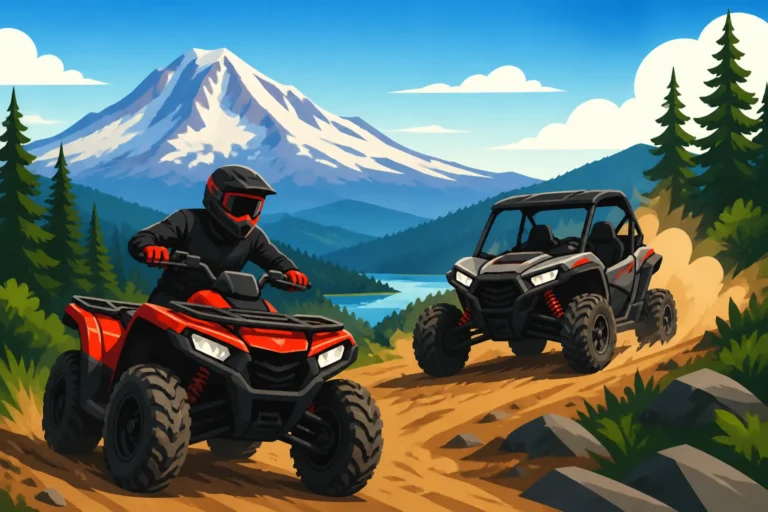
Capitol State Forest Near Olympia, Washington
Capitol State Forest is a tempting day trip from Olympia, but its maze of forest roads, motorized trails, gates, and changing closures can make a first visit feel less straightforward than it looks on a map. This guide explains how to plan a ride, choose an access point, prepare for local conditions, and avoid common surprises in this working forest.
What to know before riding Capitol State Forest
A working forest, not a single off-road park
Capitol State Forest sits southwest of Olympia and is managed by the Washington State Department of Natural Resources. It is a large, multi-use landscape rather than a fenced riding park with one entrance and a single set of loops. Forest roads, designated recreation routes, timber operations, and areas with different access conditions all exist within the broader forest.
That mix is part of the appeal: you can plan a short outing near a familiar access point or build a longer day around connected routes. But it also means that a line on a map should not automatically be treated as permission to ride. Some roads are closed to motorized use, some routes may be temporarily blocked, and active work can change access without much warning.
It helps to think of the forest as a place where recreation and forestry happen side by side. A ride might include a trail section, a gravel road connection, and a staging-area return. You may also encounter timber trucks, maintenance crews, gates, or signs that were not part of your last visit. Plan to follow posted directions and adjust your route if conditions on the ground differ from what you expected.
The rules depend on where and how you ride
Before unloading, check what your machine needs for the type of riding you have planned. Washington’s registration and equipment rules can differ between off-road riding and road use, and a machine that is set up for trails is not automatically eligible to travel on public roads. If your plan involves a road connection, review [What Washington Requires for On-Road ORV Use](What Washington Requires for On-Road ORV Use) and confirm whether the particular road is open to your vehicle.
Also check the land-access requirements for your parking location. A pass or permit requirement may apply to the vehicle you use to reach a DNR recreation site, while your machine may have separate registration or decal requirements. Those are distinct things, so don’t assume that carrying one automatically covers the other. Review [Do You Need a Discover Pass to Ride in Washington?](Do You Need a Discover Pass to Ride in Washington?) and the current instructions for the specific site you plan to use.
Riders under 16 have additional supervision requirements in Washington. If a young rider is coming along, sort out the applicable age, supervision, and machine rules before the trip rather than trying to interpret them in the staging lot. The practical starting point is [Washington's Supervision Rule for Riders Under 16](Washington's Supervision Rule for Riders Under 16). A quick rules check can prevent an otherwise enjoyable family ride from turning into a stressful roadside conversation.
Choosing an access point and planning your route
Think about the day you want, not just the trailhead name
Capitol Forest has multiple access areas, and the best one for your group depends on where you are coming from, how long you want to ride, and what kind of route your machines can handle. Riders approaching from Olympia may look at access on the northern or eastern side, while someone coming from the Shelton area may prefer a different starting point. A route that works well for one group can be inconvenient for another if it adds a long trailer drive or forces a late-day return across the forest.
Before choosing, decide on a realistic ride length and identify a turnaround point. A new rider who wants a relaxed half-day may be happier with a compact route and a clear way back than with an ambitious loop that crosses several unfamiliar junctions. Experienced riders may be comfortable with more distance, but should still allow time for stops, route-finding, mechanical issues, and changes caused by weather or closures.
The forest’s access points are not interchangeable parking lots. Facilities, staging space, and the routes reached from each area can vary. Use [Washington ORV Areas Near Olympia](Washington ORV Areas Near Olympia) for broader trip planning, then compare the specific options on current recreation maps. If you are deciding between north- and south-side approaches, [Riding Capitol Forest From the North End](Riding Capitol Forest From the North End) and [Riding Capitol Forest From the South End](Riding Capitol Forest From the South End) are useful related topics to check.
Compare common access areas before you load
The names below are useful starting points for planning, not a promise that a particular gate, facility, or route will be open on the day you arrive. Verify the access details and closures before driving out, especially if you are towing a trailer or meeting a group at a specific location.
| Access area | Useful for planning | What to confirm before leaving |
|---|---|---|
| Fall Creek area | A potential starting point for riders approaching from the Olympia side | Current access, parking conditions, route connections, and any posted restrictions |
| Waddell Creek area | A recognized access area to consider when comparing forest approaches | Whether the route you want is open and suitable for your machine |
| Porter Creek area | An option to research if camping is part of the outing | Campground status, parking arrangements, and current trail access |
| Margaret McKenny area | A place to investigate when planning around facilities or staging | Current facility availability, closures, and the routes accessible from the area |
Use the table to narrow your options, then confirm each detail through current DNR information. Do not rely on an old social-media post or a map saved months ago to answer whether a gate is open today. Timber operations, weather damage, maintenance, and seasonal restrictions can all affect a route.
If your group has mixed experience levels, choose the access point that makes it easiest to regroup and return. A simple plan with a recognizable staging area, a reasonable turnaround time, and a backup route is often more enjoyable than trying to cover as much ground as possible. The forest rewards preparation more than ambitious mileage.
Maps, navigation, and route-finding
Use an official recreation map as your baseline
A good Capitol Forest plan begins with a current DNR recreation map. Study it before you arrive, not while everyone is waiting with helmets on. Identify your staging area, intended route, likely junctions, and a way to return if a section is closed or feels beyond the group’s comfort level. DNR maps also help distinguish designated routes from other lines that may appear in a general-purpose mapping app.
Pay attention to map dates, legend details, and any notes about access. A map can be useful and still not show a short-term closure that appeared after it was published. On the day of your trip, check for alerts or notices and then read signs at the entrance and along the route. If a sign conflicts with your pre-trip plan, follow the sign and revise the ride.
A paper map is still worth carrying, even if you use a phone for navigation. Batteries drain, screens crack, and reception can be inconsistent in wooded terrain. Keep a map in a dry place where you can reach it without unpacking your whole machine. For a more detailed look at map basics, see [Washington Trail Maps From DNR](Washington Trail Maps From DNR) and [Reading a DNR Recreation Map](Reading a DNR Recreation Map).
Treat phone apps as a supplement, not an access permit
Navigation apps can help you understand your position, follow a planned route, and notice when your group has drifted away from the route you intended to use. Some riders use onX Offroad to review mapped routes and organize a trip before heading out. That can be useful for preparation, but a digital line should not be treated as proof that a road or trail is open to your machine.
Before leaving service, download the maps and route information you expect to need. Set your phone up so the screen is readable without taking your attention away from the trail, and carry a battery pack if you will be out for much of the day. If your riding group has several machines, agree on a simple regrouping plan in advance: for instance, stop at major junctions and wait if someone falls behind.
Apps and official maps serve different purposes. An app can help you see where you are, while official information and posted signs are more relevant to whether access is allowed. Use onX Offroad or another navigation tool to support your route plan, then cross-check that plan against current DNR information. This two-step habit is particularly valuable when a familiar road meets an unfamiliar branch or a gate appears where your app shows a continuous route.
Trail conditions, seasons, and closures
Expect conditions to change with weather and elevation
Capitol Forest riding can feel very different from one visit to the next. Rain may turn clay and packed dirt slick, fill shallow ruts, and make roots harder to read. A route that seemed easy in dry conditions can demand slower riding and more careful braking after a wet spell. In warmer, drier periods, dust and loose material may become the bigger concerns, especially when several machines are traveling together.
The local terrain also makes visibility important. Trees can limit sightlines around bends, and wet leaves or debris can disguise uneven ground. Keep enough space between machines to see what the rider ahead is doing and to stop without a sudden maneuver. If you’re leading a group, adjust the pace to the least experienced rider rather than setting it according to what the fastest machine can manage.
Weather at the trailhead may not tell the whole story. A route can climb into a different set of conditions or remain shaded and wet after nearby exposed roads have dried. Pack layers, gloves, and a dry change of clothes if the forecast or season suggests a chilly, damp ride. For seasonal planning, review [Washington Riding Seasons by Forest](Washington Riding Seasons by Forest) and [Capitol Forest After a Week of Rain](Capitol Forest After a Week of Rain).
Closures are part of responsible trip planning
Temporary closures are frustrating, especially when you have already driven a trailer across the region. They are also a normal part of riding in a working forest. Storm damage, road work, timber activity, maintenance, or safety concerns can affect a route or a facility. A closure may apply to one road or section rather than the entire forest, so check the details instead of assuming the whole area is either open or closed.
Look for notices before you leave home, and check again when you arrive. A sign at a gate or trail junction matters even if an app shows the route as available. Never ride around a closure barrier, move a sign, or use a side track to bypass a blocked route. Besides creating a safety risk, that can take riders into a work zone or onto land where access is not allowed.
Build a backup option into the day. If your first choice is closed, be ready to shorten the route, explore a different authorized section, or switch to another activity rather than improvising an unverified detour. For practical closure checks, see [Washington Trail Closures to Check First](Washington Trail Closures to Check First). If you encounter signs of active forestry work, [Riding Around an Active Timber Sale](Riding Around an Active Timber Sale) is a helpful related topic.
Riding etiquette in a shared forest
Make room for other forest users
Capitol Forest is not used only by ATV and UTV riders. Depending on the route and time of day, you may encounter hikers, cyclists, equestrians, other motorized users, forest workers, or people driving standard vehicles on forest roads. Slow down when visibility is limited, keep to the designated route, and give other users room to move safely. A courteous pause at a narrow spot is usually quicker and less stressful than trying to squeeze past.
Forest roads can also carry working traffic. A log truck or other large vehicle needs space, has limited visibility, and may not be able to stop or move aside quickly. Stay alert for dust, engine noise, signs, and traffic around bends. When you encounter a work vehicle, make your presence predictable, move out of its way where it is safe, and follow any directions from workers.
Noise and speed affect the experience of everyone nearby, including the people who live or work around the forest. Keep your machine in good mechanical condition, use a responsible pace, and avoid unnecessary revving at staging areas or near other visitors. Be especially mindful around campsites and parking areas, where families may be unloading equipment or children may be moving between vehicles.
Leave the route and surrounding ground as you found it
Riding off designated routes can damage vegetation and soil, create new ruts, and widen access into areas that are not meant for motorized use. Stay on routes open to your machine and do not cut around mud, water, or a fallen obstacle by making a new track. If a section appears damaged or unsafe, stop and choose a permitted alternative rather than expanding the impact.
Pack out everything you bring in, including food wrappers, broken tie-downs, and small repair items. A trash bag secured in a storage compartment is easier than trying to keep litter in a pocket while wearing riding gear. Before driving away, take a few minutes to inspect the staging area and the space around your trailer. Small pieces of plastic and packaging are easy to overlook when everyone is tired and ready to head home.
Wash your machine thoughtfully after a ride, especially if you plan to visit another forest or trail system. Mud and plant material can carry seeds and other unwanted hitchhikers. Clean the tires, fenders, racks, and underbody, and check for branches or debris caught around moving parts. Staying on designated routes and leaving no trace helps keep access open for the next group.
Preparing your ATV or UTV for Capitol Forest
Check the machine before loading it
A short pre-ride inspection can prevent a minor problem from turning into a long walk or a difficult trailer recovery. Check tires for cuts and appropriate pressure, inspect the brakes, and look for loose fasteners or obvious leaks. On a UTV, check the seat belts, steering, and basic safety equipment. On a quad, make sure the controls move freely and that the machine starts and idles as expected.
Pay attention to the parts that are easy to ignore when the machine has been sitting. A weak battery, low fluids, worn tires, or a damaged belt can show up when you’re already several miles from the staging area. If your machine has a history of overheating, belt issues, or starting trouble, address that before the ride rather than hoping the problem will not recur in the forest.
Carry a small repair kit suited to your machine and the length of the outing. The exact contents depend on the vehicle, but a basic kit might include tools for common fasteners, tire-repair supplies, gloves, a flashlight, and items needed for a minor adjustment. Keep important supplies accessible and secured; loose gear can shift, fall out, or interfere with vehicle controls.
Bring what the group needs to manage a delay
Even a well-planned ride can take longer than expected. Someone may need to stop for a mechanical check, a route may be blocked, or a new rider may need more breaks. Carry drinking water, food, weather-appropriate layers, and a way to contact help where service is available. Let someone outside the group know your general plan and when you expect to return.
For groups with more than one machine, agree on basic ride habits before starting. Decide who leads and who sweeps, set a pace that works for the least experienced person, and establish where to stop at major junctions. A simple rule such as “wait at each marked intersection until the whole group arrives” can prevent a small gap from turning into a confusing search.
Think through recovery as well. A winch, tow strap, or other equipment may be useful depending on the machine and route, but it is only helpful if someone knows how to use it safely. Avoid standing in a winch line or placing yourself in the path of a moving vehicle. If conditions are beyond the group’s ability, stop and reassess instead of taking a risk to keep the schedule.
Camping and making a full weekend of it
Decide whether to camp or make a day trip
Capitol Forest can be visited as a day trip from Olympia and nearby communities, but camping may make sense if your group wants an early start or a longer weekend. A day trip keeps planning simpler: arrive, ride, and head home without having to manage an overnight setup. Camping adds time to relax and can reduce repeated driving, but it requires checking site availability, access, and the rules for the place you plan to stay.
Do not assume that every forest access area has overnight facilities or that a campground is open simply because it appears in an older guide. Confirm current status, permitted use, and any reservation or site requirements before you leave. If a campground is unavailable, avoid creating an informal campsite at a staging lot or blocking a road to make room for a trailer.
Porter Creek is one location riders may research when considering a camping trip, but verify the details for your intended dates and route. The related guide [Camping at Porter Creek](Camping at Porter Creek) can help with the planning questions to ask. Also review [The Seven-Day Camping Limit in Washington](The Seven-Day Camping Limit in Washington) if your trip involves a longer stay, and confirm any current site-specific conditions.
Keep camp logistics separate from ride logistics
A campsite and a riding access point may not be the same place, and moving between them can involve a trailer, forest roads, or additional driving. Work out where the machine will be parked overnight and whether you are allowed to ride directly from the camping area. If not, plan the drive to the permitted staging area and account for the time needed to unload and secure equipment.
Keep food, fuel, tools, and personal items organized so you are not rummaging through a loaded trailer each morning. Separate riding gear from camp supplies, and store wet clothing where it can dry without soaking sleeping gear. A simple packing list shared among the group helps avoid the familiar problem of bringing two tool kits but forgetting a flashlight or extra gloves.
Be considerate of other campers and nearby residents. Keep noise down during quiet hours, avoid idling machines near sleeping areas, and secure trash so it does not scatter. If the weather turns wet, make sure muddy equipment and boots do not create a slippery mess around shared facilities. A little thought at camp makes the weekend more comfortable for your group and everyone nearby.
A practical plan for your first Capitol Forest ride
Before you leave home
Start with the group, not the map. Ask who has ridden before, what machines they are bringing, and how much time they want to spend on the trail. Set a route that fits the least experienced rider and the narrowest or least capable vehicle in the group. If you are unsure whether a route suits a particular UTV or quad, choose a conservative option and verify the route’s restrictions before committing.
Next, check official maps and alerts, confirm the access point, and make sure the parking and pass requirements are understood. Check registration and equipment requirements for the riding you plan to do. If the plan includes any public-road use, verify that the specific road allows it and that the machine and rider meet the applicable conditions. Do not assume that a short connection between forest routes is automatically legal.
Finally, tell someone where you expect to ride and when you expect to be back. Load the machines securely, bring water and weather layers, and make sure phones or navigation devices have offline information. A little preparation at home can save a lot of time when the group reaches a junction, finds a closure, or realizes that the planned return route is longer than expected.
At the forest and on the ride
When you arrive, read posted signs before unloading or setting off. Look for closure notices, access instructions, and any restrictions that affect your machine. Confirm that you are parked in an appropriate area and that the group has its passes, registration documents, and required equipment. Take a moment to discuss the route and regrouping plan while everyone is still together.
Ride at a pace that allows you to respond to surface changes and people around you. Keep extra distance in dust or around blind corners, and stop in a safe place if the group needs to regroup. If a route is blocked, do not make a new one around the obstruction. Turn around or choose a route you have confirmed is open and appropriate.
At the end of the ride, check that all riders and machines are accounted for before leaving the staging area. Secure the load, collect trash, and make sure nothing has been left behind. If you found a route closure or a condition that other visitors should know about, use the appropriate reporting or information channel rather than relying only on a social post. A careful first visit makes a return trip easier to plan.
Disclaimer
This article is for general informational purposes only and does not constitute professional advice. Laws, prices and regulations vary by location and change over time. Consult a qualified professional for guidance on your specific situation.