Log Trucks on a Weekday
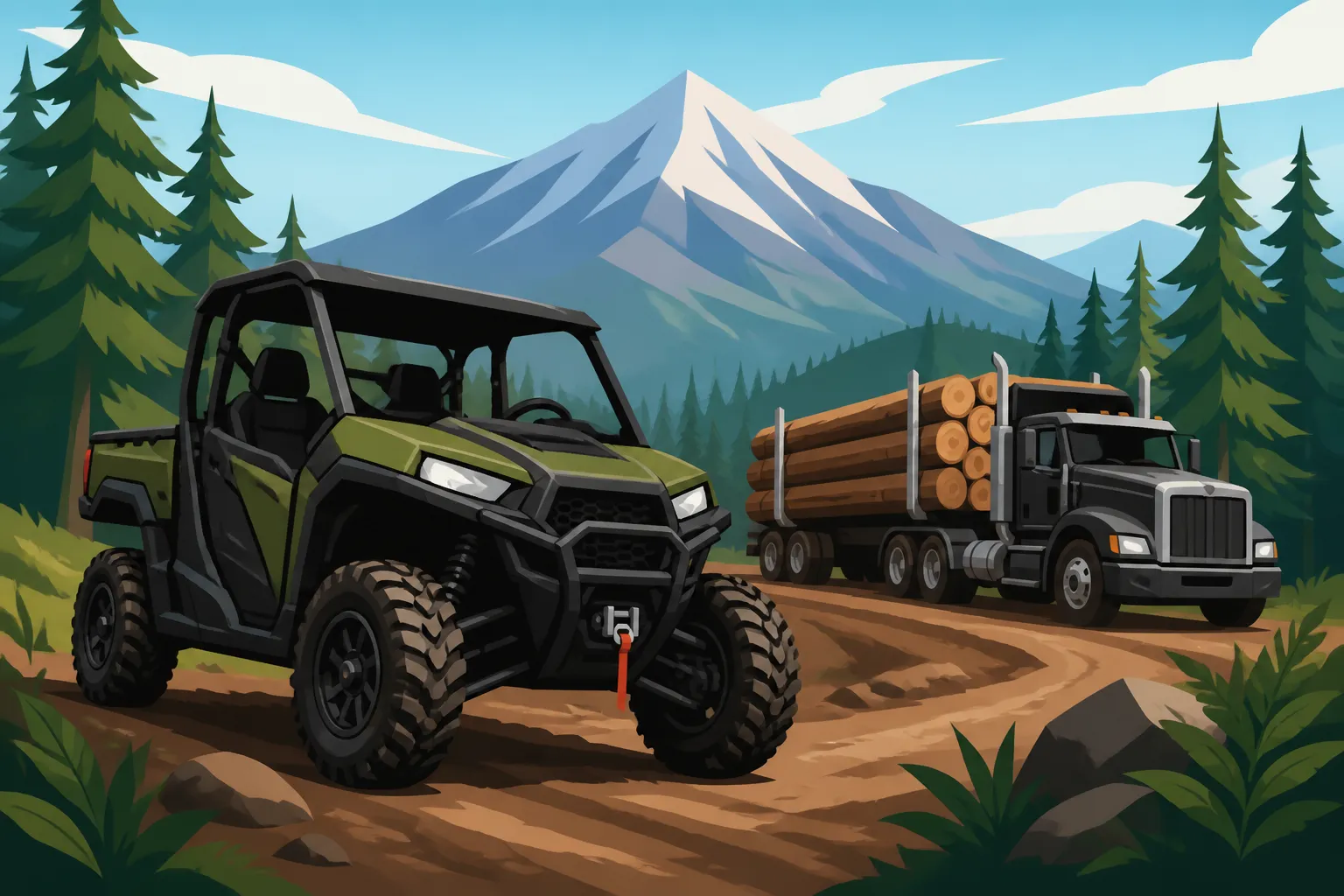
A weekday ride in Washington can turn unsettling when a log truck appears around a blind corner on a narrow forest road. The safest response is to slow down early, make space, and never assume the truck driver can see you or stop quickly. This guide explains how to prepare for active hauling, handle a passing encounter, and decide when to turn around.
Why weekday logging traffic changes a ride
Expect work traffic, but do not assume every weekday is active
Logging and timber hauling may happen on weekdays, but a weekday on the calendar does not tell you whether a particular road is being used. Work can vary with weather, timber operations, road conditions, and site access. A forest road that was quiet on your last visit may have trucks on it today.
The difference is especially noticeable on shared gravel roads. A recreational rider may be moving slowly and looking for trail markers, while a loaded truck needs room to turn and may take up much of the roadway. Dust can also make it harder for both drivers and riders to see what is ahead.
Before you leave, check for current access notices and closures from the land manager or timber company responsible for the area. A recreational map can help you understand the route, but it does not guarantee that a road is open or free of active hauling. Washington Trail Closures to Check First and Riding Around an Active Timber Sale are useful topics to review when planning around current work.
Treat logging roads as working roads
A forest road is not necessarily a recreational road just because it appears on a map or has tire tracks. It may be used by timber crews, contractors, maintenance vehicles, and other road users. Some roads cross private timberland or have access rules that differ from the rules on nearby public land.
Plan to yield, stay alert, and avoid stopping where a truck might need the whole road to turn or pass. If you see dust rising beyond a bend, hear heavy equipment, or spot fresh signs of work, slow down before reaching the activity. Do not ride around a barrier or continue past a closure sign just because the trail looks passable.
For a closer look at the rules and practical considerations, see Washington Rules for Riding a Logging Road and What to Do at a Locked Timber Company Gate. If a route crosses private timberland, access permission matters; a line on a map is not permission to ride.
Plan a route with more than one way out
A flexible route is safer than a ride that depends on one narrow road staying clear. Before unloading, identify a turnaround spot, a second route back to the staging area, and any access points that could be closed. A tool such as onX Offroad can help you inspect a planned route and keep track of where you are, but use it as a planning aid rather than proof that a road is open.
It also helps to share your plan with someone who is not riding with you. Give them the general riding area, your intended return time, and a backup plan if a road is blocked. In places with limited cell reception, save or carry the information you need before leaving service.
How to prepare before you ride
Check access and closure information first
Look for notices from the relevant land manager, park, or timber company shortly before the trip. Pay attention to details such as the road name, closure boundary, dates, and whether the restriction applies to motorized recreation, through traffic, or only a specific section. If the notice is unclear, do not guess that your route is allowed.
Maps are helpful for route planning, but they can lag behind conditions on the ground. A route shown as open on an older map may have changed due to a closure, active hauling, storm damage, or a gate. Riding a Road Shown Open on an Old Map explains why a mapped route should not override posted signs or current information.
onX Offroad may help you compare possible routes and understand the surrounding road network. Still, confirm access using the responsible land manager’s or landowner’s information, and follow signs you encounter. If you cannot verify that a route is open, choose another route rather than riding in to find out.
Set up your group for communication
Before starting, agree on how the group will respond if someone sees a truck or another work vehicle. For example, the lead rider can signal the group to slow down, move into a safe place, or turn around. Keep enough space between machines that riders can react without crowding one another.
Do not assume every rider can hear an engine, see a hand signal, or receive a phone message. Dust, terrain, helmets, and distance can make communication difficult. A quick pre-ride conversation is useful: discuss what a stop signal means, where the group will regroup, and who will make the decision if the route is blocked.
A shared map can help riders understand the route, but it should not replace direct communication. If you use onX Offroad to share or review a route, make sure everyone knows the planned turnaround and backup option before the group sets off.
Pack for a delay or an early return
A truck encounter may mean waiting for a safe opening, taking a longer route, or turning around. Carry enough water, basic repair supplies, and appropriate riding gear for the time you expect to be out. Keep your phone or navigation device secured, and do not rely on a signal being available on a remote road.
It is also sensible to make sure your machine is in good working order before a ride that may involve rough, dusty, or muddy roads. Check tires, brakes, lights, and anything else you depend on for control. If you have a trailer, leave enough room at the staging area to load and turn without blocking other users.
| Before you leave | Why it matters | What to do |
|---|---|---|
| Check access notices | A route may be closed or subject to work traffic | Confirm with the relevant land manager or landowner |
| Choose a backup route | Hauling or a closure can disrupt the planned loop | Identify a safe turnaround and alternate way back |
| Brief the group | Riders may be separated by dust or terrain | Agree on signals, regroup points, and who leads |
| Save route details | Cell service may be limited | Keep essential maps and contact details available offline |
| Check the machine | A mechanical issue can become harder to manage remotely | Inspect tires, brakes, lights, and basic equipment |
What to do when you meet a log truck
Slow down and make room early
If you see a log truck, slow down well before you reach it. Keep your machine under control and look for a safe place to move aside, ideally somewhere with firm ground and enough width for the truck to pass without squeezing between you and a bank, ditch, or drop-off.
Avoid stopping in a blind corner, on a narrow bridge, at the top of a rise, or where the road surface is soft and uneven. If you need to wait, choose a spot where you can be seen and where the truck driver has room to maneuver. Do not assume the truck can stop quickly or move onto an unstable shoulder.
If the road is too narrow to pass safely, do not try to squeeze through. Backing up or turning around may be the better choice, provided you can do so carefully and without putting yourself in a hazardous position. Meeting a Log Truck on a Gravel Road and Sharing a Gravel Road With Hauling cover the practical realities of sharing these roads.
Give the truck time and space
A loaded truck can be wide, heavy, and difficult to maneuver. The driver may need extra space on bends or while negotiating a steep or uneven section. Wait until the truck has passed completely and the road ahead is clear before moving again.
Dust can linger after the vehicle passes. Give it time to settle rather than following close behind in poor visibility. The same caution applies if you meet a truck traveling in the same direction: do not tailgate it or assume you can safely pass. A cloud of dust can hide road hazards, other vehicles, or a change in road surface.
Keep the whole group together in a safe location while waiting. Riders who rush to catch up can create a second hazard, particularly if the road is narrow or visibility is poor. If the truck is accompanied by other work vehicles or the road is actively busy, consider turning around instead of continuing.
Stay calm and follow posted directions
If a worker, flagger, or sign directs you to stop or take another route, comply. Do not ride past a person managing traffic, move a barrier, or follow a truck through a closed section. A closure may be in place for active hauling, equipment movement, road work, or another hazard that is not visible from your position.
If you are unsure whether a road is open, stop in a safe place and reassess. Do not treat a lack of a gate as evidence that access is allowed. Likewise, do not assume that a road is safe simply because another rider has gone through.
When you need to reroute, check your map and look for a confirmed public or authorized route. onX Offroad can be useful for seeing nearby roads, but verify that the alternative is legal and currently open before taking it. If there is no safe, confirmed option, turn back.
How to decide whether to continue or turn around
Use conditions on the ground, not just your original plan
A good ride plan is allowed to change. Turn around if you encounter a closure, active work that leaves no safe passing space, repeated truck traffic on a narrow road, or conditions that reduce visibility. Also reconsider the route if the group is tired, separated, or unable to communicate reliably.
For example, imagine a group reaches a junction and sees fresh logging activity on the road they planned to use. If the road is posted closed, the answer is straightforward: do not enter. If it is not clearly closed but trucks are moving through a tight section, the group should stop at a safe distance, check the route information, and choose a different way back if one is confirmed.
A route may be technically passable and still be a poor choice for a recreational ride. Safety depends on visibility, surface conditions, available space, and the likelihood of encountering more traffic. A short ride back to the staging area is better than forcing a narrow pass with a loaded truck.
Keep your map and road knowledge in perspective
A map helps you understand where a road goes, but it cannot show every active work condition. Signs, gates, direct instructions, and current access notices should guide your decisions on the ground. If different sources appear to conflict, do not use the most permissive one as a reason to proceed.
Use Reading a DNR Recreation Map to understand how to plan with mapped information, and remember that land ownership and access can change along a route. Roads through state-managed land, private timberland, and other properties may have different rules. If the road crosses land you do not have permission to enter, turn around.
onX Offroad can support route awareness, especially when a planned loop has several junctions. But it is not a substitute for posted closures, landowner permission, or current instructions from the responsible agency. Treat the map as one part of your preparation, not the final word on access.
Make a conservative call when information is uncertain
The hardest decision is often not what to do when a closure sign is obvious; it is what to do when the situation is unclear. A quiet road, a missing sign, or a route line on a screen does not prove that riding is permitted or that hauling has stopped.
When you cannot confirm access, choose a route you know is allowed. If the truck traffic feels too close or frequent, turn around. And if the group cannot pass without forcing a rider toward a ditch, soft shoulder, or steep edge, do not attempt it.
That conservative choice can feel frustrating after you have loaded the machines and driven a long way. It is still better than risking a collision, getting trapped behind a closure, or creating trouble for the people working in the area. Planning a backup route before the trip makes that decision much easier.
Disclaimer
This article is for general informational purposes only and does not constitute professional advice. Laws, prices and regulations vary by location and change over time. Consult a qualified professional for guidance on your specific situation.