Washington Rules for Packing Out Game
Packing out game with an ATV or UTV can save a difficult carry, but a harvested animal does not give you permission to ride anywhere you choose. In Washington, the route you can use depends on the land manager, posted access rules and machine requirements. Plan the retrieval route before the hunt, then secure the meat and follow the applicable hunting rules.
The key rule: game retrieval does not open a route
Washington does not have one blanket rule that lets hunters take an ATV or UTV off-road to reach a harvested animal. A machine may be useful for carrying game where motorized travel is allowed, but you still need to follow the rules for that particular road, trail or property.
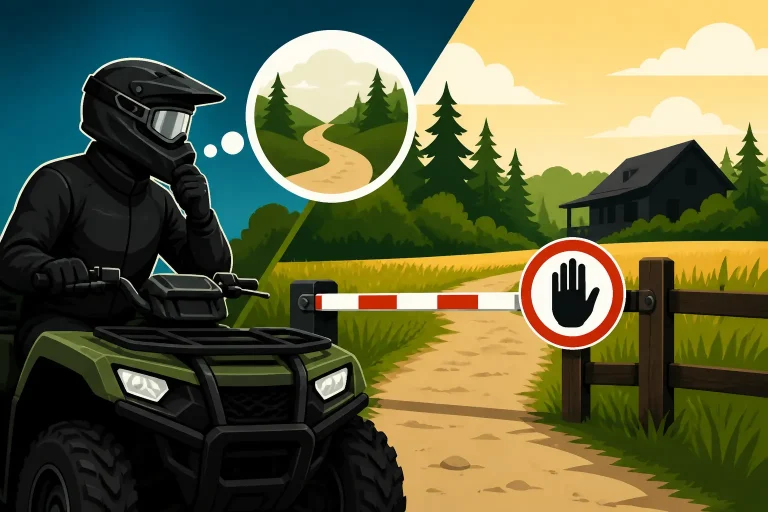
The practical distinction is between carrying game on an authorized route and driving off that route to retrieve it. If a road or trail is closed to motorized use, a harvest nearby usually does not make it open. Crossing vegetation, taking an informal shortcut or driving around a gate can also damage land and create access problems for other users.
Before hunting, work out where the machine can legally travel and how you will get the animal to it. If the animal falls beyond the allowed route, you may need to pack it out by hand or use another lawful method. Do not assume that a recovery trip is exempt from posted closures or land-manager restrictions.
| Situation | Practical approach |
|---|---|
| Animal is beside an open, authorized route | Use the route only if motorized travel is allowed there and your machine meets the applicable requirements. |
| Animal is off the road or trail | Pack the animal to the machine without riding off-route, unless the land manager specifically authorizes motorized access. |
| A gate or closure blocks the planned way out | Do not go around it. Use another permitted route or carry the game out. |
| Hunting on private land | Get permission for both hunting and machine access; permission for one does not automatically include the other. |
| Route status is uncertain | Check with the land manager before relying on it for game retrieval. |
Rules can differ between state, federal, local and private lands, and a route that appears on a map may have a seasonal closure, a vehicle-width restriction or a rule that prohibits motorized use. Check current information for the exact area, not just the general riding rules for the county or forest.
For background on the hunting and riding distinction, see Washington Rules for Hunting From a Machine and [Washington Rules for Riding Off a Designated Trail]. If your trip uses state land, Washington Rules for Riding DNR Land explains why the land manager’s access rules matter.
Check access before the hunt
A recovery plan should start with the property and route, not with the animal after it has been harvested. Identify the legal staging area, the roads or trails open to your machine, and the nearest point where you can load the game. If the route crosses different jurisdictions, check the rules for each part.
State and federal land
On Washington state-managed land, motorized access is generally tied to designated roads and trails, with local closures and restrictions determining where riding is allowed. Forest roads can be closed for reasons such as active work, damage or seasonal conditions. A route shown as usable on an old map may no longer be open.
Federal lands have their own motor vehicle designations and seasonal notices. In a national forest, confirm the current motor vehicle map or other official route information for the area. A road that is open to a pickup is not necessarily open to an ATV, and a route open to one type of machine may have a width or class restriction.
The same care applies to wildlife areas, parks and other managed properties. Some areas prohibit motorized recreation or restrict it to specific roads. Do not treat a public-land boundary as proof that an ATV route is permitted. Washington Rules for Riding a National Forest and Washington Rules for Riding DNR Land provide useful context, but the current notice for the specific site is what you need to check before riding.
Private and timberland property
On private land, get clear permission before using a machine. A landowner’s permission to hunt may not include permission to drive, cross a gate or retrieve an animal with a vehicle. Ask about the route, access hours, gates, road conditions and whether the permission covers game recovery.
Timberland access can change with operations and closures. A road that was open on a previous trip may be closed for hauling or other work. Do not follow another vehicle through a gate or assume that a road shown on a public map is available for recreational use. For related access issues, see Washington Trespass Law and Off-Road Riders.
Public roads and WATV requirements
A road trip to retrieve game is not automatically lawful just because the machine has registration tabs. Washington’s road-use requirements and local road access rules still apply. A route may be open to ordinary traffic but closed to WATVs, or access may depend on local approval and required equipment.
If your plan includes pavement, check whether each segment is approved for your machine and whether it meets the applicable road-use rules. Washington Rules for Riding a County Road and Washington Rules for Riding a City Street explain why access can vary from one jurisdiction to another. Do not use a public road as a shortcut between trails unless the segment is authorized for your machine.
Visitors should also confirm that their home-state registration or permit is accepted for the kind of riding they plan to do. Reciprocity for off-road use does not necessarily grant permission to ride every road or trail. See Washington Reciprocity for Off-Road Use if you are bringing a machine from another state.
Pack and transport the animal carefully
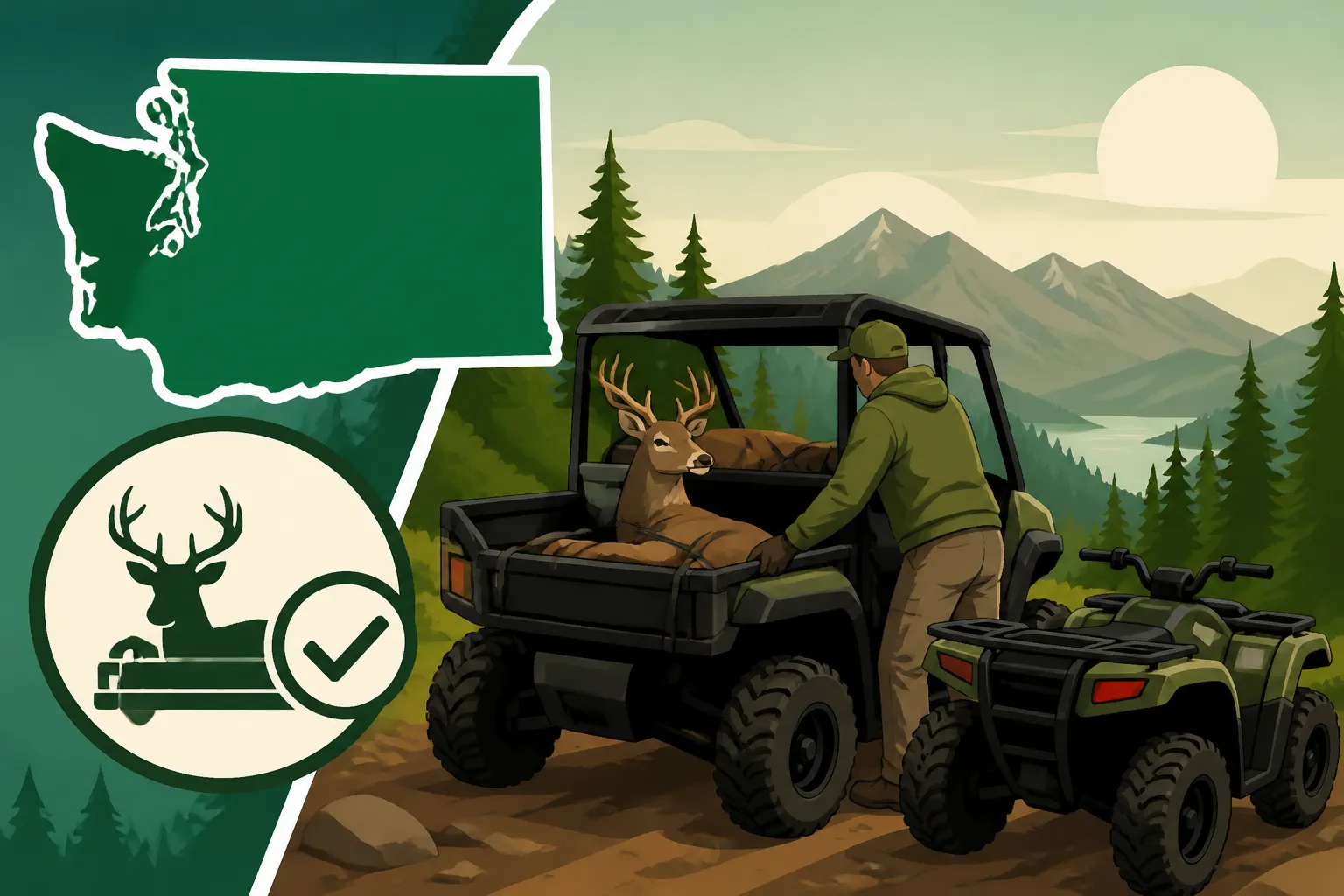
Once you know where you can ride, plan how to keep the meat clean, secure and balanced. An ATV or UTV can carry a heavy, awkward load, but its racks and cargo area have limits. Follow the machine manufacturer’s payload guidance and leave room to control the vehicle safely.
Keep meat clean and protected
Use clean game bags or other suitable coverings to protect meat from dirt, exhaust, mud and contact with machine parts. Keep the load away from hot components and prevent it from dragging or rubbing against the tires. If the animal must be divided into manageable pieces, keep the pieces organized and protect them from contamination during each trip.
A clean tarp or cargo liner can help protect the machine, but it should not obstruct controls, lights or the rider’s view. Do not let loose material hang where it can catch in a wheel or belt. If using a winch or other recovery equipment to move an animal to an authorized route, keep people clear of tensioned lines and follow the equipment instructions.
Balance and secure the load
Heavy game can affect steering, braking and stability. Distribute weight as evenly as practical, keep it low, and secure it so it cannot slide when the machine turns or climbs. Use straps in good condition and check them again after moving a short distance. Do not pile a load so high that it blocks the operator’s view or makes the machine top-heavy.
A side-by-side’s cargo bed may seem spacious, but its stated capacity includes passengers, gear and other cargo. A quad’s front and rear racks also have limits. If the animal is too heavy or awkward for the available carrying capacity, make multiple trips on authorized routes or choose a hand-carry method. Avoid carrying a load in a way that interferes with the passenger’s seating or safety equipment.
If you are buying basic retrieval gear, compare game bags, straps and protective liners for durability and fit; Amazon is one option for finding general-purpose cargo supplies. Whatever the source, confirm that straps are rated for the job and that the load can be secured without covering required lights or registration items.
Keep the ride controlled
A loaded machine handles differently, especially on wet ground, steep slopes, loose gravel or narrow trails. Reduce speed, leave extra room for stopping, and avoid sudden turns. Do not attempt a route that is beyond the machine’s ability simply because returning for another load would take longer.
If the machine becomes unstable or the route is too steep, stop and reassess rather than trying to force the load through. A fall or rollover can injure the operator, damage the machine and spoil the meat. When in doubt, reduce the load or carry it out in smaller portions.
Hunting rules still apply during retrieval
The fact that you are transporting an animal does not replace the hunting rules for the species, season or area. Follow the applicable requirements for identifying, tagging and reporting the harvest. Keep required tags or documentation with the animal as directed by the current Washington hunting regulations, and make sure the animal is not mixed up with another hunter’s harvest during transport.
Be especially careful with firearms and other hunting equipment around a running machine. Do not assume that a vehicle-related exception applies to your situation. Check the current rules for possessing, transporting or handling a firearm while hunting from or near a motor vehicle, and follow the machine and firearm manufacturers’ safety guidance. Keep weapons secured and handled in a way that does not endanger the operator, passenger or other riders.
If several people are helping, agree on who is operating the machine, who is handling the animal and where others should stand. Keep people away from wheels, moving parts, winch lines and the path of travel. A tired group working on uneven ground can lose track of where the machine is pointed, so stop the engine before loading or adjusting cargo whenever it is safe and appropriate to do so.
Finally, leave the site as you found it. Pack out discarded game bags, packaging and other waste. Clean mud and plant material from the machine before moving to another area, particularly if you have traveled between forests or watersheds. This helps limit the spread of invasive plants and keeps access areas usable.
A practical retrieval checklist
Before you leave, make sure your plan covers both legal access and safe transport. A few minutes of preparation can prevent a long, stressful carry or an avoidable violation.
- Confirm the land manager and boundaries. Know whether the route crosses state, federal, local or private property.
- Check current route access. Look for closures, seasonal restrictions, machine-width limits and rules for the exact road or trail.
- Get permission where needed. Ask the landowner or manager about machine access and game retrieval, not only hunting.
- Choose a legal loading point. Plan how the animal will reach the machine without riding off an authorized route.
- Check the machine and cargo limits. Account for passengers, tools and the weight and shape of the animal.
- Bring clean coverings and secure straps. Keep meat protected and prevent the load from shifting or touching moving parts.
- Review hunting requirements. Follow current tagging, reporting and firearm-handling rules for the hunt.
- Have a backup plan. Be ready to pack the animal out by hand if the route is closed or the load is unsafe.
The safest rule is straightforward: confirm that the machine can legally reach the loading point, then carry the game out without exceeding the route or the machine’s limits. If the access rule is unclear, contact the land manager before the hunt rather than relying on an assumption during recovery.
Disclaimer
This article is for general informational purposes only and does not constitute professional advice. Laws, prices and regulations vary by location and change over time. Consult a qualified professional for guidance on your specific situation.