Applying for a DNR Special Use Event Permit
A group ride may feel informal, but organizing a race, guided outing, fundraiser or other event on Washington Department of Natural Resources land can require advance approval. The right steps depend on the activity, location and expected impact. Here’s how to figure out whether to apply, what information to prepare and how to avoid assuming a permit guarantees access.
When a DNR special use event permit may be needed
Washington DNR manages many forests and recreation areas, but permission to ride there is not automatically permission to hold an organized event. A ride that brings a large group together, follows a planned route, charges participants, has a guide or organizer, or includes racing, filming or other commercial activity may need DNR review.
The key issue is the event’s use of the land, not just whether each rider has the right registration or tab. An organized ride can create impacts that a regular visit does not: concentrated traffic, parking pressure, trail wear, noise, crowding, temporary signs, support vehicles, or conflicts with other visitors and land operations.
A special use event permit is not a substitute for ordinary riding requirements. Riders still need to follow applicable registration, equipment and land-use rules. Depending on where you plan to ride, you may also need a recreation pass, access permission from another land manager, or approval for an activity beyond the event itself. Start with Washington Rules for an Organized Ride and Washington Rules for Riding DNR Land to separate event approval from the rules that apply to individual riders.
| Planned activity | Why DNR review may matter | What to clarify before applying |
|---|---|---|
| Club ride on a public trail | Group size, route, staging and effects on other visitors | Whether the event needs formal approval or has limits |
| Race or timed competition | Course setup, safety planning and concentrated use | Whether the location and activity are allowed |
| Guided ride for payment | Commercial use and responsibility for participants | Whether a separate commercial authorization is needed |
| Fundraiser or public event | Attendance, parking, promotion and event logistics | Whether the site can accommodate the expected turnout |
| Filming or photography tied to an event | Equipment, crew access and commercial use | Whether filming needs separate authorization |
| Ride using roads, trails or staging areas managed by different owners | More than one land manager may have authority | Which sections need separate permission |
These examples are prompts for a conversation with DNR, not a definitive list of permit triggers. A small group outing may not be treated like a public event, while a modest event with a commercial or competitive component may need extra review. If you are unsure, describe the plan to DNR before advertising it or collecting registrations.
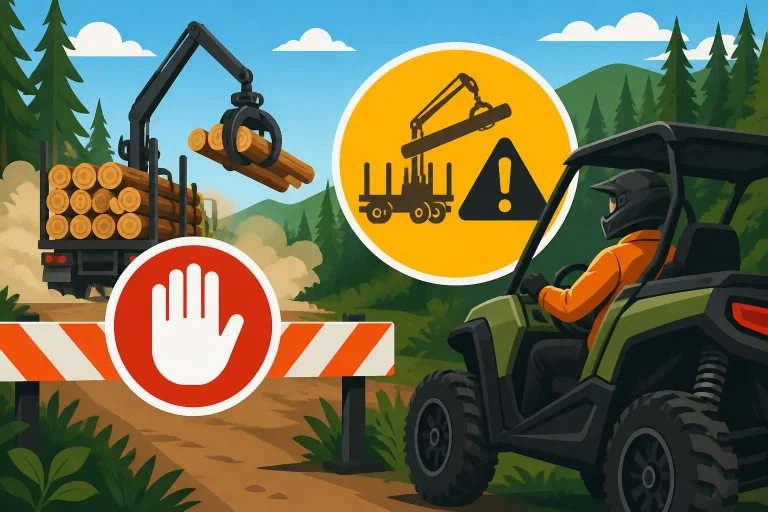
Do not assume that a route shown on an old map remains open, or that an open trail can accommodate an event. Timber work, maintenance, closures, seasonal conditions and other land uses can change access. Check Washington Trail Closures to Check First and Reading a Closure Notice Posted at a Gate while planning, then confirm current conditions with the appropriate DNR office.
How to prepare and submit an application
The practical first step is to contact DNR about the proposed location and event. DNR’s review will depend on the site, the kind of use and the event details, so ask which application materials and approvals apply before building a full plan around one route. A location may be unsuitable or unavailable even if it appears on a recreation map.
Allow time for questions, revisions and coordination. Do not treat an application as approval, and do not announce a confirmed event date until you have written authorization and understand any conditions. DNR may need to consider other land uses, resource concerns, staffing, safety and the proposed schedule. The time required can vary; see Lead Time on a DNR Event Permit and ask the reviewing office what timing is realistic for your specific proposal.
A well-organized application makes it easier for the reviewer to understand what will happen on the ground. Prepare the following information before you contact DNR:
- Describe the event. Explain whether it is a recreational group ride, race, guided outing, fundraiser, filming activity or another organized use. State whether participants will be charged, invited by a club, or recruited from the general public.
- Identify the location. Provide the forest or recreation area, proposed staging point, route or course, and any roads or trails you expect to use. Be clear about access points and the area where participants will gather.
- Estimate attendance. Give a realistic count of riders, support staff, volunteers and spectators. If registration may be capped, say so. Include the number and type of machines if that helps explain the expected use.
- Set out the schedule. Include proposed dates, arrival and departure windows, event hours, setup and cleanup, and any practice or inspection period. Offer alternate dates only if they are genuinely workable.
- Explain logistics. Describe parking, trailers, check-in, toilets, waste, signs, communications, emergency access and any support vehicles or temporary structures. If you expect participants to camp, ask whether that use is allowed and whether it requires separate approval.
- Address safety and environmental care. Explain how you will brief participants, manage the route, handle an incident, keep people out of closed areas, and leave the site clean. Note any sensitive areas or crossings you already know about rather than assuming they can be used.
- Ask about insurance and other documents. DNR may request insurance or additional materials depending on the activity. Confirm the requirements directly, including who must be named or covered and when documents are due. Do not rely on another event’s paperwork as a template for your own requirements.
- Wait for written terms. Review the approved location, dates, participant limits, route, operating conditions and any restrictions. Ask questions before signing or promoting the event if a condition is unclear.
Keep descriptions specific. “We will ride in the forest” gives a reviewer little to assess. A proposed route, participant estimate, parking plan and contingency for a closure are more useful. If you are still choosing between locations, say so and ask which areas could fit the activity rather than submitting an incomplete plan as if the venue were settled.
The application process is not simply a paperwork check. DNR may need to balance the event with public recreation, natural resources, ongoing management and safety. It may ask for changes, set conditions, identify a different area, or determine that the requested use cannot be accommodated. Build flexibility into the plan rather than making a single trail or date essential.
What approval does and does not cover
A DNR special use event permit applies to the use it authorizes, subject to its conditions. It should not be treated as a general pass for every rider, every trail or every activity. Read the authorization carefully and make sure the event plan matches it. If the route, attendance, schedule or activity changes, ask DNR whether the change needs approval before proceeding.
Approval also does not make a closed trail open. It does not automatically authorize travel across land managed by a county, federal agency, state park, private timber company or other owner. If the planned route crosses different jurisdictions, identify each one and obtain the relevant permission. A map can help with planning, but it is not proof that a route is open or that an event is authorized there.
Riders must still meet the rules that apply to their machines and to the places they use. For example, event authorization does not replace required ORV registration or make a road legal for a WATV. Where a route includes county roads or streets, check local access rules separately; Washington Rules for a Group Ride can help organizers think through participant responsibilities beyond the event permit itself.
Likewise, an event permit should not be assumed to cover commercial guiding, filming, camping, food service or other distinct activities. Ask DNR to identify whether those elements require separate authorization. For a guided ride offered for payment, review Washington Rules for a Guided Tour Operator. If filming is part of the plan, check Washington Rules for Filming on Forest Land rather than assuming event approval settles filming requirements.
A permit may also include site-specific conditions. These could address where vehicles may park, how participants must enter and leave, what areas are off limits, how signs may be used, or how cleanup and restoration will be handled. The actual terms depend on the authorization, so avoid relying on a generic checklist as a substitute for reading your permit.
Make sure the event lead and any key volunteers have the final approved documents and know the conditions. A permit that stays in an organizer’s inbox is of limited use when a ranger, land manager or participant has a question at the site. Share only the current version, and keep emergency contacts and the approved route available to the people responsible for the event.
Before event day: confirm access and brief participants
Recheck the plan close to the event. A route that was suitable when you applied may be affected by a closure, timber operation, storm damage, fire restrictions or another change. Confirm conditions with DNR, check posted notices and follow any direction that supersedes the original plan. If a closure affects the approved route, do not improvise onto another trail or road without permission.
Give participants clear instructions before they arrive. Tell them where to stage, which route is authorized, what areas are off limits, how to respond if the group becomes separated, and where to report an incident. Explain that the event approval does not excuse individual riders from applicable rules. For events with multiple groups or staggered starts, provide a simple way for participants to know which route and schedule apply to them.
Plan for the site to be shared with other visitors. Keep staging orderly, avoid blocking roads or gates, and make sure emergency and land-management vehicles can get through. Be prepared to scale back, pause or cancel if the site becomes unsafe or conditions no longer match the permit. A successful event is one that leaves the area usable for the next visitor, not just one that finishes on schedule.
Afterward, remove event materials and waste, check the site for damage or lost equipment, and complete any reporting DNR requires. If the event caused an unexpected problem, tell the reviewing office. That information can help you plan a safer or more suitable event next time.
A DNR special use event permit is best approached as a site-specific approval process, not a formality. Contact DNR early, explain the event plainly, prepare a practical plan and treat the written conditions as the operating rules for the day. That is the clearest way to learn whether the event fits the land and what permissions you need before inviting riders.
Disclaimer
This article is for general informational purposes only and does not constitute professional advice. Laws, prices and regulations vary by location and change over time. Consult a qualified professional for guidance on your specific situation.