Why a Temporary Permit Is Trail Only
It's incredibly frustrating when you're just itching to get your off-road machine out on the trails, maybe you just bought a used quad, or you're visiting Washington from out of state, and you pick up a temporary permit thinking it'll get you everywhere. Then you realize there's a big caveat: these permits are strictly for trails, not for cruising down county roads or city streets. This guide will walk you through exactly why Washington's temporary ORV use permits come with this "trail only" restriction and what it means for your riding plans.
Understanding Washington's Temporary ORV Use Permit
Getting your rig ready to hit Washington's incredible network of trails can sometimes feel like navigating a maze of paperwork and rules. The temporary ORV use permit often seems like a quick fix, a way to bypass some of the longer processes and get straight to the fun. But like most shortcuts, it comes with specific limitations designed to keep things orderly and safe for everyone.
What Exactly Is a Temporary Permit?
Imagine you're visiting Washington from a state that doesn't require ORV registration, or perhaps you just bought a used side-by-side from a neighbor and you're still waiting for the title to process before you can get full tabs. This is where the temporary permit steps in. It's essentially a short-term pass, valid for 60 consecutive days, that allows you to legally operate your off-road vehicle on designated non-highway ORV trails within Washington State. Think of it as a provisional license for your machine, giving you limited access while you sort out more permanent arrangements. For visitors, it's a fantastic way to enjoy our trails without needing to fully register your machine in Washington. You can find more details about its duration in [How Long a Washington Temporary Permit Lasts].
The intent behind these temporary permits is clear: facilitate access to our fantastic trail systems without creating a loophole for street-legal operation. It's a pragmatic solution for situations where full registration isn't immediately feasible or necessary, like for a short vacation. The cost is usually quite reasonable, making it an accessible option for many riders. However, its affordability and convenience shouldn't be mistaken for comprehensive coverage; it’s a focused permit with a specific scope of use. You'll likely encounter discussions about this permit when checking out [Washington's $15.75 Temporary ORV Permit].
The "Trail Only" Limitation: What It Means for Riders
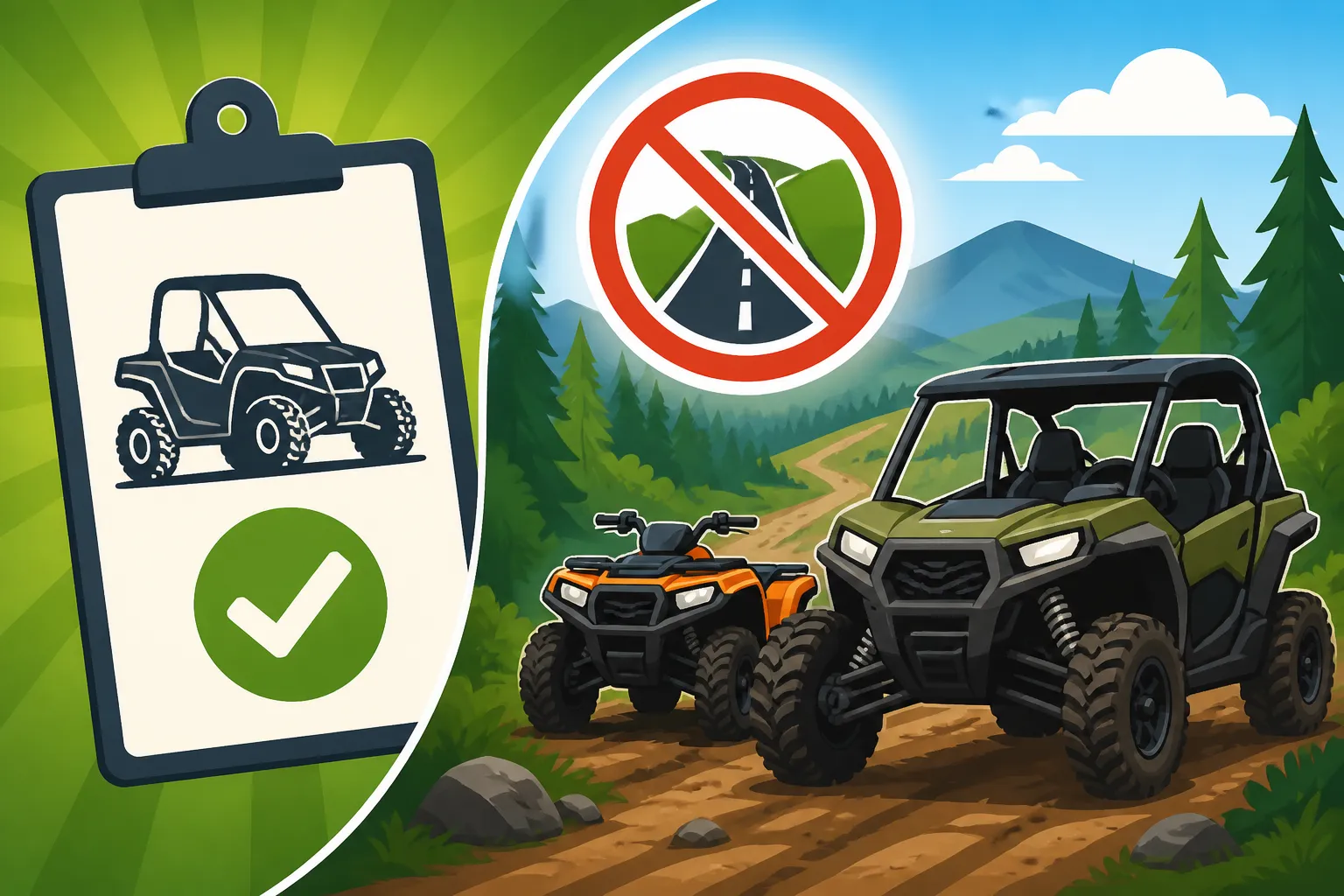
The phrase "trail only" is exactly what it sounds like, and it’s a critical distinction to understand. If you have a temporary ORV permit, your machine is limited to designated off-road trails and areas where ORV use is explicitly allowed. This means absolutely no riding on paved public roads, county roads, or city streets, even if they're otherwise open to street-legal WATVs. You cannot use it to ride from your campground to a nearby store, or even to cross a short segment of pavement to get to another trail system. This restriction is often a rude awakening for riders who assume a "permit" grants them general operating privileges. The rationale is deeply rooted in how Washington differentiates between off-road recreational use and general public road access. The state's temporary permit effectively says, "Go play in the dirt, but stay off our paved roads." This distinction is a major point highlighted in [Why a Temporary Permit Keeps You Off Pavement].
This limitation applies without exception. Even if a local county has opened its roads to street-legal WATVs with full registration, your temporary permit does not grant you those same privileges. It’s not about the road itself being open; it’s about the type of registration your machine carries. Attempting to ride on public roads with just a temporary permit can lead to fines and legal trouble, as it’s considered operating an unregistered vehicle on a public roadway, despite having the permit for trail use. It's a common misconception that because you have some form of state-issued authorization, you're good to go everywhere. Unfortunately, when it comes to temporary permits, that assumption will get you in hot water.
The Core Difference: Temporary vs. Full Registration
To truly grasp why a temporary permit is trail-only, you have to understand the fundamental differences between it and a full Washington ORV registration, especially one that includes the optional on-road tab. The requirements, costs, and ultimately, the privileges, are vastly different because they serve distinct purposes within the state's regulatory framework.
Why Full Registration Opens Up Road Access
Full Washington ORV registration with the added on-road tab is designed for machines that meet specific criteria for safe operation on public roadways. This isn't a minor distinction; it's a comprehensive process. First, your machine needs a proper title in your name, establishing clear ownership. Then, you'll likely need a safety inspection to ensure it meets Washington's equipment standards for road use, which can include things like mirrors, turn signals, a horn, and proper lighting. This can involve a trip to an approved inspection facility, and there's usually a cost associated with it, detailed in [Washington WATV Safety Inspection Cost]. Only after these prerequisites are met can you even consider filling out the [The Washington Road Use Declaration] to request the on-road tab.
The on-road tab isn't just an arbitrary sticker; it's an acknowledgment that your machine has gone through a more rigorous vetting process and that you, as the operator, are also licensed and insured. When you purchase this tab, you're paying into a system that contributes to road maintenance and safety, not just trail upkeep. This comprehensive approach is what grants you the privilege of riding on approved county roads and city streets where WATV access has been specifically permitted. It's a system designed to integrate these vehicles safely into the existing traffic flow, which is a far cry from the purely recreational intent of a temporary permit.
The Legal Framework Behind Road-Legal WATVs
Washington State law (specifically RCW 46.09) establishes distinct categories for off-road vehicles and outlines the conditions under which they can operate on public roads. For an ORV to be considered "street legal" or "road-legal" in Washington, it must jump through several hoops. Beyond the title and inspection, counties and cities must "opt-in" to allow WATV use on their roads, and even then, there are speed limits and specific road segments that are open. This complex interplay of state law and local ordinance is what allows for [Street Legal WATVs in Washington: The Short Answer].
The legal framework demands certain equipment for road use (as opposed to just trail use), a valid driver's license for the operator, and often, proof of insurance. None of these are typically required for purchasing a temporary off-road permit. The state isn't simply trying to be difficult; it's creating a clear distinction for public safety and infrastructure management. A temporary permit bypasses these stringent road-use requirements because it acknowledges the machine is only for designated off-highway areas. Without meeting these higher standards, allowing a temporary permit holder onto public roads would undermine the entire regulatory structure designed to protect both riders and other road users.
Safety and Regulatory Intent Behind the Restriction
At the heart of Washington's "trail only" rule for temporary ORV permits are two primary concerns: ensuring public safety and properly allocating funds for recreational infrastructure. These aren't arbitrary limitations but rather thoughtful considerations designed to create a functional and safe environment for all citizens, whether they're enjoying a trail ride or driving on a public road.
Ensuring Rider and Public Safety
A significant reason temporary permits are limited to trails is the lack of a mandatory safety inspection. When you obtain a full Washington registration with an on-road tab, your machine is usually subject to a physical inspection by a qualified professional. This inspection checks for critical safety features like brakes, lights, tires, mirrors, and turn signals—elements essential for safe operation alongside other vehicles on public roads. With a temporary permit, there's no such verification. The state has no guarantee that the machine is mechanically sound or equipped with the necessary components to safely navigate a shared roadway.
Consider a rider from out of state with a machine that might have modified exhaust systems, no mirrors, or inadequate lighting. Allowing such a vehicle onto public streets and highways with just a temporary permit would pose a significant risk to the rider, pedestrians, and other motorists. The "trail only" rule helps mitigate this risk by confining potentially uninspected or inadequately equipped machines to environments specifically designed for their use, where speeds are generally lower, and interaction with conventional road traffic is minimal or nonexistent. It's a pragmatic approach to preventing accidents and ensuring that only properly vetted and equipped machines can operate where they might encounter cars and trucks.
Funding Trail Systems, Not Road Infrastructure
Another crucial aspect is funding. When you purchase an off-road tab, a portion of that fee goes directly into the Nonhighway and Off-Road Vehicle Activities (NOVA) account, which is dedicated to maintaining and expanding Washington's extensive ORV trail systems. This money funds everything from trail grooming and signage to facilities at staging areas. It's a user-pays system, ensuring that those who enjoy the trails contribute to their upkeep. This is detailed further in [Where Off-Road Tab Money Is Spent].
In contrast, the fees collected for an on-road tab, along with general vehicle registration fees and fuel taxes, contribute to the state's broader transportation budget, which covers the construction and maintenance of paved roads, bridges, and highways. A temporary permit is primarily an access permit for off-highway use, and its modest fee primarily aligns with funding trail-specific efforts. If temporary permit holders were allowed unlimited road access, they would be benefiting from road infrastructure they haven't directly contributed to in the same way that fully registered and taxed vehicles do. This distinction ensures that the financial contributions of riders are channeled appropriately, supporting the specific types of infrastructure they are authorized to use.
Navigating Washington's ORV Landscape with a Temporary Permit
Having a temporary ORV permit in Washington isn't a death sentence for your riding plans, but it does require careful planning. Understanding where you can and cannot go is paramount to having an enjoyable and legal experience. It’s all about working within the boundaries the permit sets, rather than trying to push against them.
Planning Your Ride: Where You Can Go
With a temporary permit, your world is restricted to designated off-highway vehicle areas. This typically includes state DNR lands, specific ORV parks, and certain federal lands where ORV use is permitted. Think about places like Capitol State Forest near Olympia, Walker Valley ORV in Skagit County, or parts of Ahtanum State Forest. These areas have extensive trail systems specifically designed and managed for off-road vehicle use, and they are where your temporary permit is fully valid. Many of these locations are excellent for a day trip or a weekend adventure, offering a variety of terrain for all skill levels. You can get some ideas from [Where to Ride an ATV in Washington].
When planning, always check the specific rules for the area you intend to visit. While your temporary permit is for trails only, some ORV parks might have internal gravel access roads that are part of the designated ORV system. The key is that these are within the ORV area, not public roads connecting to it. Always consult maps and official publications from the Department of Natural Resources (DNR) or the U.S. Forest Service for the most current information on trail access and boundaries. This due diligence will prevent any accidental infringements and ensure your ride is smooth and legal.
Avoiding Fines and Frustration
The absolute best way to avoid a citation or a ruined trip is to strictly adhere to the "trail only" rule. Do not be tempted to take a "quick hop" down a paved county road, even for a short distance, with just a temporary permit. A Washington State Patrol trooper or a county sheriff deputy will not differentiate between a few yards and several miles; unauthorized road use is unauthorized road use. The penalties for riding an unregistered or improperly tabbed vehicle on a public road can include significant fines, as outlined in [Washington Fines for an Unregistered WATV], and possibly even having your machine impounded.
If your riding plans regularly include needing to connect trails via public roads, or if you envision yourself needing to run into town for supplies while on a trip, then a temporary permit simply isn't the right solution for you. In these scenarios, the smart move is to invest the time and money into getting a full Washington ORV registration with the appropriate on-road tab. It removes all doubt and allows you to enjoy the full spectrum of legal riding opportunities Washington offers. Think of the temporary permit as a specialized tool: it's fantastic for its specific job, but it's not a general-purpose solution.
When a Temporary Permit Makes Sense (And When It Doesn't)
Understanding the limitations of Washington's temporary ORV use permit helps in deciding if it's the right choice for your specific needs. It's a tool with a narrow purpose, and like any tool, it's most effective when used for what it was designed for.
Ideal Scenarios for a Temporary Permit
The temporary permit shines in a few particular situations. One of the most common is for visitors to Washington. If you're coming from Oregon, Idaho, or another state, and your home state's ORV registration isn't recognized for trail reciprocity in Washington, or if your machine isn't registered at all, a temporary permit is perfect for a short riding vacation. It allows you to legally enjoy our trails for up to 60 days without the hassle of full out-of-state registration. This is especially useful for those who might only visit once or twice a year. [What a Visitor With No Home-State Registration Buys] explains this scenario well.
Another great use case is for new owners who've just purchased a machine and are in the process of titling and registering it. Washington has a 15-day deadline to register a newly acquired vehicle, and sometimes getting all your ducks in a row – especially with a used machine or one bought privately – can take a little longer. A temporary permit can bridge that gap, allowing you to hit the trails while you wait for your permanent tabs to arrive. It's also suitable for infrequent riders who only plan one or two trail-specific outings a year and don't require road access. For these riders, the minimal cost and quick turnaround of a temporary permit make it an attractive option over the annual commitment of full registration.
When to Prioritize Full Washington Registration
While temporary permits have their place, they are clearly not for everyone, nor for every riding plan. If you're a Washington resident who plans to ride frequently, or if you absolutely need the ability to connect trails via county roads or even just cross a paved road to reach a different riding section, then you must prioritize getting a full Washington ORV registration with the necessary on-road tab. This isn't just a convenience; it's a legal necessity. Trying to make a temporary permit fit a road-access need will inevitably lead to frustration and potential legal trouble. Information on the annual process can be found in [Renewing a Washington ORV Registration Yearly].
Furthermore, if you intend to travel extensively within Washington, exploring various ORV areas that might require short segments of road travel to get from one trailhead to another, the temporary permit will constantly hold you back. The peace of mind that comes with knowing you're fully compliant with all state laws, whether on a trail or an approved road, is invaluable. Investing in the full [Washington's Off-Road Tab Explained] and potentially [Washington's On-Road Tab Explained] from the start will save you headaches down the line. While handling all the paperwork might feel like a chore, especially when drafting official documents, services like LawDepot can assist with creating a bill of sale or other necessary forms that simplify the process of establishing clear ownership for full registration. It ensures your machine is ready for whatever adventure Washington throws your way, without constantly worrying about where the pavement begins or ends.
Temporary Permit vs. Full Washington ORV Registration
To help clarify the differences, here's a quick comparison of the temporary ORV use permit versus a full Washington ORV registration that includes the on-road tab.
| Feature | Washington Temporary ORV Use Permit | Full Washington ORV Registration (with On-Road Tab) |
|---|---|---|
| Duration | 60 consecutive days | Annual (renews yearly) |
| Road Access | NO – Strictly for designated off-road trails. | YES – On approved county/city roads (with valid driver's license, insurance, and equipment) |
| Trail Access | YES – On designated non-highway ORV trails. | YES – On designated non-highway ORV trails. |
| Inspection Req. | Generally NO | YES – Safety inspection often required for on-road tab. |
| Title Req. | No, but ownership proof needed for purchase. | YES – Machine must be titled in your name. |
| Purpose | Short-term trail access for visitors or while awaiting full registration. | Long-term, comprehensive access for trail and approved road use. |
| Cost Implication | Lower initial cost, no long-term commitment. | Higher initial cost (includes titling, inspection, tabs), recurring annual renewal. |
| Who Benefits Most | Out-of-state visitors, new owners awaiting full reg, infrequent riders. | Washington residents, frequent riders, those needing road connectivity. |
Disclaimer
This article is for general informational purposes only and does not constitute professional advice. Laws, prices and regulations vary by location and change over time. Consult a qualified professional for guidance on your specific situation.