Washington’s $15.75 Temporary ORV Permit
It's incredibly frustrating to get a new-to-you off-road machine, or perhaps you're visiting our beautiful state with your own rig, and you just want to hit the trails without getting bogged down in mountains of paperwork. You've got the machine, the gear, and the enthusiasm, but the Washington Department of Licensing (DOL) process can feel a bit like wading through quicksand. This guide is here to cut through the confusion and explain Washington's $15.75 Temporary ORV Permit, a practical short-term solution for getting out on the dirt.
Understanding the Washington Temporary ORV Permit
When you're eager to explore Washington's vast network of off-road trails, but you're not quite ready for full annual registration, the state offers a temporary solution. This isn't just a simple piece of paper; it's a specific, time-limited permit designed to get you out on the trails legally while you sort out more permanent arrangements. It's truly a lifesaver for many riders.
What Is a Temporary ORV Permit?
Think of Washington's Temporary ORV Permit as a short-term pass to adventure. It’s a permit issued by the Washington Department of Licensing that allows an off-road vehicle (ORV) or wheeled all-terrain vehicle (WATV) to be operated on designated non-highway roads and trails within the state for a limited period. It specifically costs $15.75, which is quite a reasonable fee for the convenience it offers. This permit is often sought by visitors from out of state, new residents, or even those who've just purchased a machine and are navigating the titling and registration process for the first time. It prevents that immediate rush against [Washington's Fifteen-Day Registration Deadline].
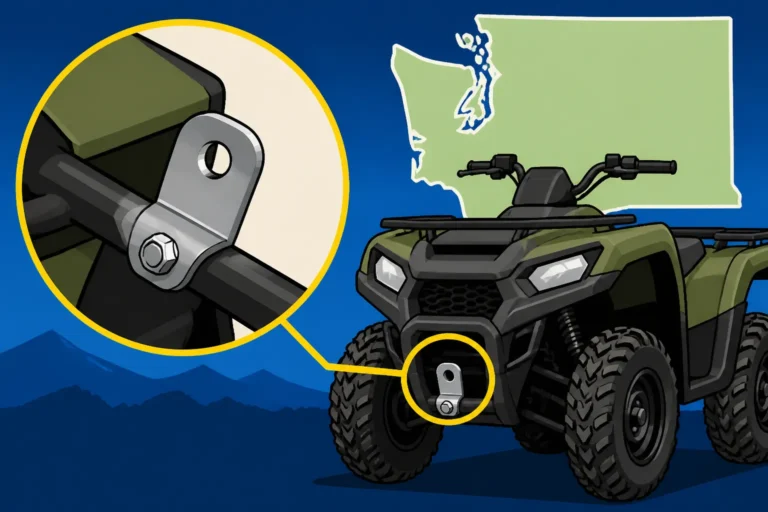
The permit is distinct from the annual off-road tab or the additional on-road tab. It doesn't come with the physical decals you typically affix to your machine, nor does it grant you any privileges for road use. Its sole purpose is to provide legal access to the trails. This focus on immediate, off-highway access makes it incredibly useful for those who might be in a transitional period or simply visiting for a short adventure.
Who Is This Permit For?
This temporary permit is a fantastic option for a few key groups of riders who often find themselves in a bind. First and foremost, it's a huge benefit for non-resident visitors. Imagine you're driving up from Idaho or down from British Columbia, excited to ride Capitol State Forest or Walker Valley. Your home state might not have an ORV registration system that Washington recognizes for all types of use, or perhaps you just don't have your home state's registration handy. Instead of scrambling, you can grab one of these permits.
Secondly, it's incredibly useful for new residents who've just moved to Washington and brought their machines with them. You're probably overwhelmed with unpacking, changing addresses, and navigating a new state's bureaucracy. Getting your ORV fully titled and registered might not be your top priority, but you still want to ride. This permit buys you sixty days of trail access while you get settled and understand the full process for [Registering an Out-of-State Machine in Washington]. It offers a much-needed grace period.
The Specific Limitations of a Temporary Permit
While incredibly convenient, it's crucial to understand that this temporary permit comes with some very specific limitations. It's not a golden ticket to ride wherever you please. These limitations are designed to ensure safety and maintain the integrity of Washington's ORV regulations, preventing misuse of what is essentially a stop-gap measure.
Why a Temporary Permit Keeps You Off Pavement
This is perhaps the most critical distinction to grasp: a Washington Temporary ORV Permit is strictly for off-highway use. It means you absolutely cannot operate your machine on any public roads, streets, or highways, even those designated as open for fully registered WATVs. This restriction is explicitly detailed in the law that created the permit. Many riders, especially those new to Washington, assume a "permit" means they can go anywhere, but that's simply not the case here.
The reason for this strict limitation boils down to the requirements for street-legal machines in Washington. To ride on approved roads, a WATV needs to meet specific equipment standards—think turn signals, mirrors, a horn, and often a valid driver's license and insurance. A temporary permit doesn't certify that your machine meets these requirements, nor does it verify the operator's qualifications. It's solely about giving you limited access to the designated trail systems, which don't have the same safety expectations as shared public roadways. If you're caught riding pavement with just a temporary permit, you could face significant fines for operating an unregistered vehicle on a public road. This is a key reason why it's called out as [Why a Temporary Permit Is Trail Only].
Duration: Sixty Days and Done
Another important limitation is the permit's lifespan. A Washington Temporary ORV Permit is valid for sixty consecutive days from the date of purchase. This isn't sixty riding days scattered across a year; it's a continuous sixty-day window, regardless of how often you ride. Once those two months are up, the permit expires, and your machine is no longer legally allowed on Washington's ORV trails without proper, full registration.
There's no option to renew a temporary permit, nor can you purchase another one for the same machine immediately after the first one expires. The idea behind it is to provide a brief window of access, not a substitute for annual registration. It's meant to bridge a gap, allowing you time to complete the necessary steps for full tabs and titling. So, you'll want to use that [Sixty Days on a Washington Temporary Permit] wisely and plan your full registration process accordingly.
How to Get Your Washington Temporary ORV Permit
Getting this temporary permit is designed to be relatively straightforward, but like all things involving the DOL, it helps to know what to expect. You can't just wave a magic wand and have it appear; there are specific places to go and information you'll need to provide.
Where to Purchase Your Permit
The easiest and most common place to get a Washington Temporary ORV Permit is at any authorized vehicle licensing office. These are the same offices where you would go to renew your car tabs, get a new driver's license, or complete other vehicle-related transactions. Many counties have multiple subagents, making it convenient to find one close to you. These offices are equipped to process the necessary paperwork and collect the $15.75 fee.
Sometimes, you might also find temporary permits available through certain ORV dealers, particularly those who specialize in selling off-road machines. They often offer this as a convenience to their customers who are purchasing a new machine and want to ride it right away. However, it's always a good idea to call ahead to any dealer to confirm they offer this specific service, as not all dealerships are set up to issue DOL permits.
What You'll Need to Bring
When you head to the licensing office, you'll need to be prepared with some basic information and possibly some documentation. The goal is to prove who you are and that you own the machine (or have permission to operate it if you're a visitor). While the temporary permit requirements are generally less stringent than full registration, it's always best to be over-prepared.
Typically, you'll need:
- Proof of Ownership: This could be a bill of sale if you've recently purchased the machine, a title in your name, or registration from your home state if you're a visitor. Even if you haven't fully titled the machine in Washington yet, a solid bill of sale from the previous owner is usually sufficient for a temporary permit. Resources like LawDepot can provide customizable bill of sale templates if you're buying a used machine from a private party and want to ensure you have a professional document.
- Vehicle Information: The make, model, year, and Vehicle Identification Number (VIN) of your ORV/WATV. This is crucial for the permit to be linked to your specific machine.
- Personal Identification: A valid driver's license or other form of government-issued ID.
- The $15.75 Fee: Make sure you have the exact amount or a form of payment accepted by the licensing office.
Remember, the purpose of this permit is quick, temporary access. So, while they'll check the basics, it's not the deep dive required for a full title and registration.
Maximizing Your Temporary Permit's Value
Sixty days might sound like a long time, but it can fly by, especially when you're having fun on the trails. To truly make the most of your temporary permit, a little planning goes a long way. This isn't just about riding, but also about preparing for what comes next.
Planning Your Riding Adventures
With your temporary permit in hand, you're cleared for two months of off-road fun in Washington. Now is the time to hit those trails you've been dreaming about! Washington boasts an incredible variety of ORV areas, from the dense forests of Capitol State Forest to the challenging terrain of Reiter Foothills, and the expansive sand dunes like Juniper Dunes. Use these sixty days to explore different areas, get a feel for Washington's diverse landscapes, and perhaps find your new favorite riding spot.
However, don't forget that many of these riding areas, especially those managed by the Department of Natural Resources (DNR) or State Parks, might require an additional pass, such as the [The Discover Pass and Washington Riders]. This pass is separate from your ORV permit and grants access to state-managed recreation lands. Always check the specific requirements for your chosen riding area before you head out. A quick search on the DNR website for "ORV riding areas" will usually give you current information on passes, trail conditions, and any closures due to weather or logging operations.
What Comes After the Sixty Days
The sixty-day period isn't just for riding; it's also your window to get your machine properly registered for long-term use in Washington. As the expiry date approaches, you'll need to decide whether to get a full annual off-road tab, or if you also want the additional on-road tab. The process for full registration involves titling your machine in Washington (if it's not already), submitting an application, and paying the annual fees.
If you're buying a used machine, you'll need to ensure the title is transferred into your name. This often requires a bill of sale, and it's where resources like LawDepot can be handy for creating a legally sound document if the seller doesn't provide one. Once the title is in your name, you can proceed with getting the appropriate tabs. Remember, full registration involves attaching physical decals to your machine, which serve as visible proof of your valid tabs. Don't let the sixty days slip by without a plan, or you'll find yourself sidelined until you complete the full registration process.
Temporary Permit vs. Full Annual Registration
It's easy to wonder why someone wouldn't just go for full annual registration from the start. The temporary permit serves a distinct, short-term purpose, and understanding the differences can help you decide which path is right for your situation.
Key Differences at a Glance
Let's break down the main distinctions between the $15.75 Temporary ORV Permit and the standard annual off-road tab. This comparison should clarify why each option exists and when it's most appropriate.
| Feature | Washington Temporary ORV Permit ($15.75) | Washington Annual Off-Road Tab (Cost Varies Annually) |
|---|---|---|
| Cost | $15.75 | Varies annually, typically higher than temporary |
| Duration | 60 consecutive days, non-renewable | One year from date of purchase, renewable annually |
| Road Use | Strictly NOT allowed on public roads | Off-road use only; requires additional "on-road tab" for street-legal use |
| Physical Decals | No specific decals issued | Annual decals issued, must be affixed to machine |
| Eligibility | Visitors, new residents, pending full reg | Residents & non-residents seeking long-term access |
| Primary Purpose | Short-term, immediate trail access | Long-term, year-round trail access, proof of compliance |
| Titling Required | Proof of ownership (e.g., bill of sale) | Title must be in applicant's name, or in process |
As you can see, the temporary permit is a minimalist approach, designed for quick, uncomplicated access for a limited time. The annual tab, on the other hand, is the full commitment for consistent, year-round riding.
When to Choose Which Option
You'd opt for the temporary permit if:
- You're a visitor from another state or country and only plan to ride in Washington for a short period (less than 60 days).
- You've just purchased a machine (especially a used one) and are waiting for the title to be processed or transferred into your name. This buys you time to ride while the DOL bureaucracy churns.
- You're a new Washington resident and haven't yet gotten around to formally registering your out-of-state machine.
- You're unsure if you'll ride often enough in Washington to warrant a full year's registration. However, remember you can't get a second temporary permit, so if you decide you love it, you'll need the annual tab.
You'd go straight for the full annual registration if:
- You live in Washington and plan to ride regularly throughout the year.
- You've owned your machine for a while and its title is already in your name.
- You want the flexibility to add the on-road tab later if you decide your machine meets street-legal requirements and you want to explore county roads.
- You prefer the simplicity of a single, annual renewal rather than managing a temporary permit then needing to switch to full registration.
Ultimately, the $15.75 temporary permit is a fantastic tool in your riding arsenal for specific situations, offering a legal and affordable way to get rolling without delay. Just be clear on its limitations, especially regarding street use, and make sure you're planning for your long-term registration needs!
Disclaimer
This article is for general informational purposes only and does not constitute professional advice. Laws, prices and regulations vary by location and change over time. Consult a qualified professional for guidance on your specific situation.