Where the Discovery Trail Turns Riders Away
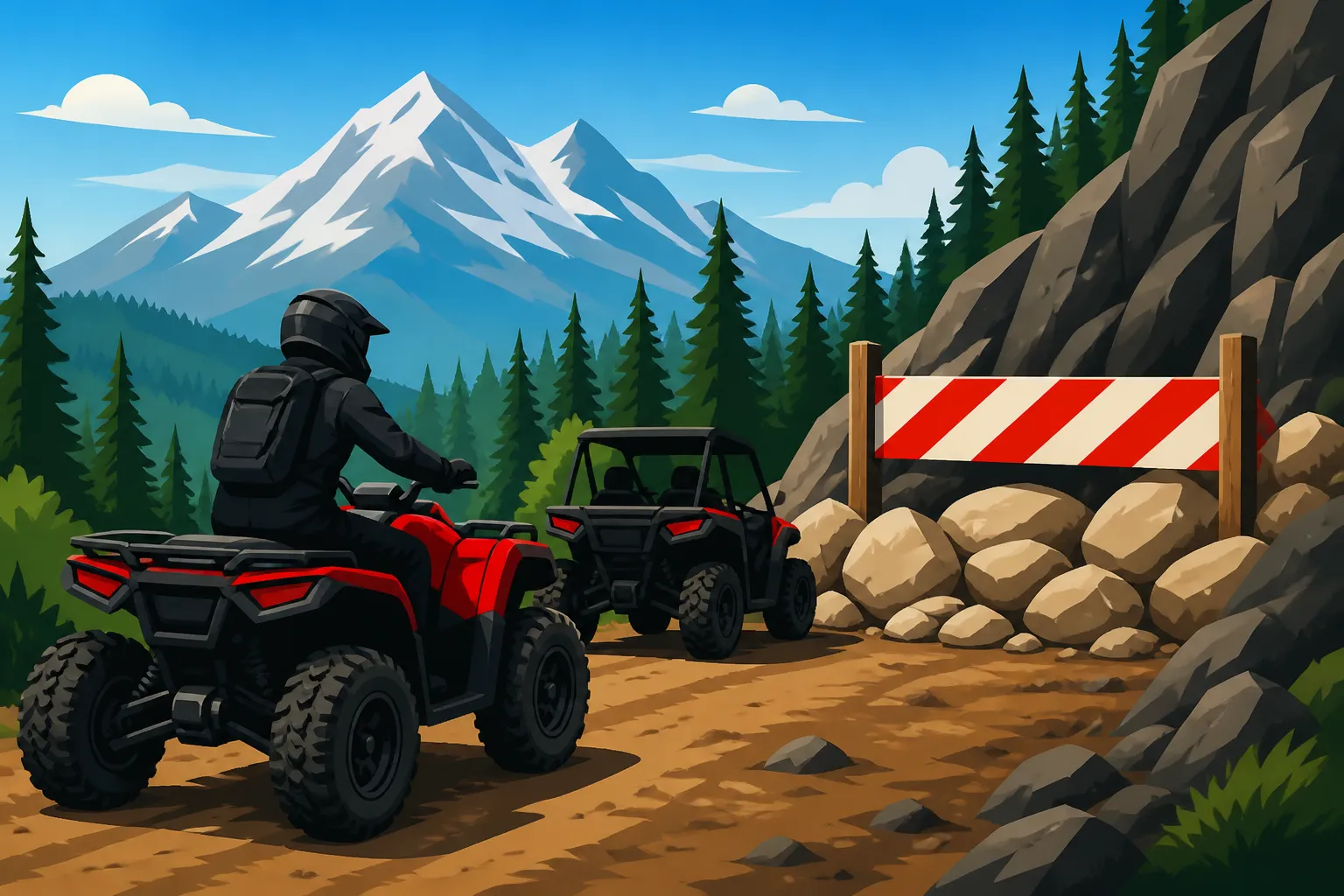
It’s a truly frustrating experience when you load up your Washington ATV or UTV, full of excitement for a scenic ride, only to find that the very trail you were looking forward to exploring explicitly prohibits off-road vehicles. This happens more often than you might think, especially on popular multi-use paths that seem inviting but aren't designed for motorized travel. Today, we’re going to dive into why the famous Discovery Trail, a beautiful coastal pathway, falls into this category, and what that means for your riding plans in Washington.
Understanding the Discovery Trail's Purpose and Design
The Discovery Trail is one of Washington's true gems, a paved pathway that traces a historical and naturally stunning route along the Long Beach Peninsula. When you look at its design and the vision behind it, it becomes clear why off-road vehicles, including our beloved Washington WATVs, don't quite fit the picture.
A Coastal Gem for Non-Motorized Recreation
Stretching over eight miles from Ilwaco to North Long Beach, the Discovery Trail is primarily a paved, non-motorized path. It winds through a breathtaking landscape of dunes, forests, and stretches right along the Pacific Ocean, offering incredible views and fresh sea air. The trail is named for Captain William Clark of the Lewis and Clark Expedition, commemorating their journey to the Pacific Coast in 1805. Along its length, you'll find interpretive markers, public art installations, and plenty of spots to simply stop and soak in the natural beauty.
Because of its unique environment and historical significance, the trail is primarily designed for pedestrians, cyclists, and those enjoying a leisurely stroll. Imagine families pushing strollers, children learning to ride bikes, or serious marathon runners getting their miles in. The atmosphere is one of quiet enjoyment and immersion in nature, a place where the sounds of the ocean and the rustle of the wind are meant to be the predominant soundtrack. Introducing motorized vehicles, even quiet ones, would fundamentally alter this carefully curated experience.
The Vision Behind Its Creation
The initial vision for the Discovery Trail was to create a safe, accessible pathway connecting communities along the peninsula while celebrating its rich history and diverse ecology. It was conceived as a linear park, an amenity for both residents and visitors seeking a tranquil, active outdoor experience. The focus was on human-powered recreation – think walking, running, and biking – allowing people to connect with the landscape at a slower pace.
This vision dictates the very fabric of the trail, from its paved surface to the types of signage and amenities provided. It's built to encourage soft-impact recreation, minimizing disturbance to the delicate dune ecosystems and providing a peaceful environment for wildlife and people alike. Therefore, when you consider the foundational intent of the Discovery Trail, it’s not surprising that it's designed to turn riders away if they arrive on a Washington ATV or UTV. The intent was never to be a shared motorized and non-motorized route; rather, it was always a dedicated path for specific, non-motorized uses.
Washington's Rules for Off-Road Vehicles on Shared Trails
Navigating the rules for off-road vehicles in Washington can feel like a maze, especially when it comes to shared trails. It's not always as simple as seeing a path and assuming it's fair game for your Washington WATV. State and local regulations draw clear lines, and understanding them is key to avoiding disappointment or, worse, a citation.
Designated Trails vs. Multi-Use Paths
In Washington, there's a crucial distinction between trails specifically designated for motorized recreation and general "multi-use" paths. Trails managed by the Department of Natural Resources (DNR) or the U.S. Forest Service often have explicit designations for off-road vehicle use, complete with signage indicating whether a trail is open to motorcycles, ATVs, or side-by-sides. These are the places where you can confidently let your [Washington's Off-Road Vehicle Rules Explained] knowledge shine.
However, many other multi-use paths, like the Discovery Trail, are designed for non-motorized traffic. These paths often connect communities, provide access to scenic viewpoints, or serve as segments of longer pedestrian and cycling routes. While they might be "multi-use" in the sense that they welcome walkers, joggers, and bicyclists, this rarely extends to motorized vehicles. The default assumption should always be that if a trail isn't explicitly marked for ORV use, it's off-limits. This is especially true for paved trails or those that traverse sensitive ecological areas or urban/suburban environments. Always check local ordinances and trail-specific rules before you trailer up your machine.
Local Authority and Ordinances
A significant factor in where you can and cannot ride your Washington ATV or UTV comes down to local authority. While the state provides a framework for ORV use, counties and cities have considerable power to regulate their own roads and trails. This is why you'll find varying rules across different municipalities. For example, some counties might have extensive systems of "green dot" roads open to ORVs, while others might restrict them much more heavily. You can learn more about this by reading up on [Washington Counties That Allow WATVs on Roads].
The Discovery Trail is a prime example of local control in action. It falls within the jurisdiction of Pacific County and traverses various public and private lands, but the overriding local sentiment and specific ordinances on the Long Beach Peninsula prohibit motorized vehicle use on the trail itself. These local decisions are often driven by factors like public safety, environmental protection, and preserving the character of non-motorized recreational areas. Ignoring these local rules, even if you have all your tabs and registrations in order for general ORV use, can lead to significant [Washington Fines for Illegal WATV Road Use]. It’s a stark reminder that a machine legal for some roads or trails isn't legal for all of them.
The Specifics of Why the Discovery Trail Is Closed to WATVs
It's natural to wonder why a publicly funded path in a state that embraces outdoor recreation would turn away off-road enthusiasts. The reasons are multifaceted, stemming from local policy, safety considerations, and environmental stewardship, all converging to create a clear "no ORVs" stance.
The "Long Beach Bans WATVs Outright" Connection
The ban on WATVs on the Discovery Trail isn't an isolated decision; it's part of a broader local policy on the Long Beach Peninsula. Specifically, the city of Long Beach and surrounding areas have made a conscious choice to prohibit most off-road vehicle use on their streets and dedicated multi-use paths. This local stance is deeply rooted in the community's vision for tourism and recreation. The primary draws for visitors to Long Beach are the expansive beach (with specific, often seasonal, rules for vehicle access on the sand itself, separate from the paved trail) and the non-motorized outdoor activities the area offers.
This comprehensive local approach means that even if you have a street-legal Washington WATV with all the necessary [Washington WATV Road Requirements], you won't be able to utilize it on many of the roads or trails within the Long Beach city limits, including the Discovery Trail. The intent is to maintain the distinct character of the area as a haven for walkers, cyclists, and those seeking a quieter, more traditional beach town experience. For this reason, if you're planning a trip to the coast, it's essential to understand that [Why Long Beach Bans WATVs Outright] directly impacts your access to the Discovery Trail and much of the surrounding area.
Safety and User Conflict Concerns
Beyond the overarching local policy, very practical safety concerns play a significant role in restricting WATVs from the Discovery Trail. As we discussed, the trail is heavily used by pedestrians of all ages, including young children and seniors, as well as a variety of cyclists, from casual riders to those on electric bikes. Introducing motorized vehicles, even at slow speeds, creates inherent risks and potential for conflict.
- Speed Differentials: Even a slow-moving WATV is significantly faster and heavier than a bicycle or pedestrian. This creates a dangerous speed differential, increasing the risk of collisions, especially on curves or in crowded sections.
- Noise and Disturbance: While modern WATVs are much quieter than older models, they still produce engine noise that can disrupt the peaceful atmosphere and startle pedestrians or cyclists, leading to accidents.
- Space and Width: Even if the trail is wide in some sections, WATVs take up more space, reducing passing room and potentially forcing other users off the path or into unsafe situations.
- Unexpected Encounters: People using the Discovery Trail expect to encounter other non-motorized users. The sudden appearance of a motorized vehicle can be unexpected and cause panic or confusion, especially for children or pets.
These safety concerns are paramount for local authorities, who prioritize the well-being of the vast majority of trail users. The goal is to prevent accidents and ensure a harmonious environment for everyone, which is why motorized vehicles are simply incompatible with the trail's design and user base.
Environmental Stewardship
The Long Beach Peninsula is a truly special place, home to delicate dune ecosystems, diverse birdlife, and unique coastal flora. Environmental stewardship is a key reason why access to areas like the Discovery Trail is carefully managed. Off-road vehicles, by their very nature, can have a greater environmental impact than non-motorized recreation, particularly in sensitive areas.
- Noise Pollution: Beyond disturbing human users, engine noise can stress wildlife, impacting bird nesting areas or animal migration patterns.
- Emission and Contamination: While vehicles are becoming cleaner, exhaust emissions, even from well-maintained machines, are a concern in pristine environments. There's also the risk of fluid leaks (oil, gas) that could contaminate fragile ecosystems.
- Erosion and Habitat Disruption: Although the Discovery Trail is paved, if ORVs were allowed, the potential for unauthorized excursions off the paved surface into the surrounding dunes would increase. This could lead to erosion, damage to vegetation, and disruption of critical wildlife habitats. The integrity of the dunes is crucial for protecting the coastline from erosion.
Local environmental groups and land managers work tirelessly to protect this unique coastal environment. Restricting motorized access to the Discovery Trail is a proactive measure to minimize these potential impacts and preserve the natural beauty and ecological health of the Long Beach Peninsula for generations to come.
Finding Alternative Riding Opportunities in Washington
While the news about the Discovery Trail might be a letdown, Washington State is an absolute paradise for off-road enthusiasts. The key is knowing where to go and understanding the rules that govern those areas. Don't let one closed trail dampen your spirits; there are countless miles of adventure awaiting your Washington ATV or UTV.
Exploring Designated ORV Parks and Forests
Washington boasts an impressive network of state and federal lands with trails specifically designated and maintained for off-road vehicle use. These are the places where your WATV or UTV truly belongs, offering everything from technical rock crawling to fast-paced forest roads.
- State Forests (DNR Lands): Areas like [Capitol State Forest Near Olympia, Washington], Reiter Foothills State Forest, Green Mountain, and Tahuya State Forest are managed by the Washington State Department of Natural Resources (DNR). These forests offer extensive trail systems, often with varying difficulty levels, and dedicated staging areas. They require a [The Discover Pass and Washington Riders] for parking, and your machine needs its current Washington ORV tabs. You'll find a mix of single-track, ATV-width trails, and wider paths suitable for side-by-sides. Many have camping opportunities nearby, making for fantastic multi-day adventures.
- National Forests (USFS Lands): While federal lands have their own set of regulations, many sections of Washington's national forests, like the Okanogan-Wenatchee or Gifford Pinchot National Forests, contain hundreds of miles of designated motorized trails and forest roads. Some popular areas include Evans Creek ORV Area. These often require a Northwest Forest Pass for day use, in addition to your state ORV tabs.
These designated areas are your best bet for a legal and enjoyable off-road experience. They are designed with ORV use in mind, often featuring clear signage, maps, and facilities like vault toilets at staging areas. It's always a good idea to check the specific land manager's website (DNR or USFS) for current trail conditions, closures, and any fire restrictions before you head out.
Riding Legally on County and Forest Roads
Beyond dedicated ORV parks, many counties in Washington have opened certain low-speed county roads to WATVs and UTVs, and countless miles of unpaved forest roads (often called "green dot" roads in some regions) are open to motorized use. This allows riders to connect trails, access remote areas, or simply enjoy scenic drives.
- County Roads: Counties under 15,000 population in Washington are open by default unless they explicitly ban ORVs on specific roads. Larger counties, however, must "opt-in" and specifically designate roads as open for ORV use. You'll need to research specific county ordinances to find open roads in your desired area. Always remember that riding on these roads requires your WATV to meet specific "street legal" requirements, including mirrors, a horn, turn signals, and proper lighting, and you'll need the "on-road" tab in addition to your off-road tab. This can be complex, so it's worth reviewing all [Washington WATV Road Requirements].
- Forest Roads: These unpaved roads crisscross vast areas of public land and are often accessible to WATVs. They provide amazing opportunities for exploring, accessing trailheads, or simply enjoying the backcountry. Again, check with the managing agency (DNR, USFS) for any specific restrictions or closures. These roads often serve active logging operations, so always be vigilant for large trucks, especially on weekdays.
These options significantly expand your riding territory beyond just trails, but they come with added responsibilities. You're sharing these routes with other vehicles, so defensive driving, respecting speed limits, and adhering to all road-going rules are crucial. Always carry your [Washington ORV Permits Explained] with you and ensure your machine is properly equipped.
Equipping Your Machine for Diverse Washington Terrain
Washington's diverse landscapes mean your off-road machine will encounter everything from deep mud on the west side to dusty desert trails in the east, and rocky mountain passes in between. Having your machine properly equipped makes a huge difference in both enjoyment and safety. Many riders turn to aftermarket components to enhance their WATV or UTV's capabilities.
For example, if you plan on tackling the notoriously wet and muddy conditions in places like Capitol Forest, investing in good mud tires and potentially a winch is a smart move. Brands like SuperATV offer a wide range of accessories, from heavy-duty skid plates for protecting your undercarriage from Washington's rocky trails to suspension upgrades that can improve comfort and handling over varied terrain. They also offer snorkel kits for those who really push the limits in deep water crossings, though always remember to assess water depths carefully and respect environmental regulations.
Regardless of your chosen riding area, basic safety gear is non-negotiable. Always wear a helmet, eye protection, and appropriate riding gear. Make sure your machine is in good working order, with proper tire pressure, fluid levels, and functioning lights. Regular maintenance, especially after dusty or muddy rides, will keep your machine reliable and ready for whatever Washington throws at it. A well-prepared rider with a well-equipped machine will have a much more positive experience exploring the incredible range of legal riding opportunities Washington has to offer, even if the Discovery Trail isn't one of them.
Disclaimer
This article is for general informational purposes only and does not constitute professional advice. Laws, prices and regulations vary by location and change over time. Consult a qualified professional for guidance on your specific situation.