Why Washington Adults Must Wear a Helmet Too
It's a common scenario: you've finally got your side-by-side all geared up, maybe even added a windshield and a roof from a company like SuperATV, and you're ready to hit those open county roads that Washington has started to make accessible. You're an adult, you've got your driver's license, and perhaps you're thinking, "Do I really still need to wear a helmet?" It's a natural question, especially if you feel more enclosed and secure in a UTV than on a traditional ATV. However, the short and unequivocal answer in Washington State is yes, adults absolutely must wear a helmet when operating a wheeled all-terrain vehicle (WATV), whether you're navigating a rugged trail or cruising down a paved road. This guide is here to unravel the legal requirements and critical safety reasons behind Washington's helmet mandate for all WATV riders, no matter your age or experience.
The Common Misconception: Why Many Adults Question the Helmet Rule
It's easy to fall into the trap of thinking that certain safety rules don't apply to you once you hit a certain age or level of experience. For many adult WATV riders in Washington, the helmet law can feel like an unnecessary burden, particularly when they're simply trying to enjoy a scenic drive on an approved public road. There are several reasons why this misconception often takes root, and it's important to address them to fully understand why Washington's law is so universal.
"I'm an Experienced Driver, Not a Kid!"
One of the most prevalent thoughts among adult riders is that their years of driving experience, whether with cars, trucks, or other motorized vehicles, somehow grants them an exemption from helmet use. They might feel that they possess the necessary skills and judgment to avoid accidents and, therefore, don't need the same level of protection as a novice rider or a minor. After all, you don't wear a helmet in your car, right? This line of thinking, while understandable, overlooks the unique dynamics and risks associated with operating a WATV, even for the most seasoned drivers. The terrain can be unpredictable, other vehicles on the road might not expect an ORV, and even a minor tip-over can lead to serious head trauma if unprotected. [Washington's ORV Helmet Rule Explained] dives deeper into the specifics, but the underlying principle is that skill can't always prevent an accident, and helmets are there for when the unexpected happens.
The "Side-by-Side is Just Like a Car" Mentality
As side-by-sides (SxSs) or utility terrain vehicles (UTVs) have grown in popularity, many models now come equipped with features that mimic passenger cars: steering wheels, foot pedals, roll cages, doors, and even seatbelts. It's easy to look at a robust machine from a brand like SuperATV with a full cab enclosure and think, "This is basically a small car; a helmet isn't necessary here." This perception is particularly strong when riders are operating on paved roads where speeds might be lower or the perceived danger is less than on a rocky trail. However, despite their car-like features, WATVs still handle very differently from conventional automobiles. They have a higher center of gravity, are more susceptible to rollovers on uneven terrain or during sharp turns, and offer less structural protection than a traditional car in a collision. The roll cage helps, yes, but it doesn't prevent your head from impacting interior surfaces during a violent jolt or rollover.
Confusion with Other Vehicle Laws
Washington State has a variety of laws governing different types of vehicles. For instance, motorcycle riders are required to wear helmets. Car drivers are not. Bicycle riders over a certain age in many areas don't have to wear helmets, though it's always recommended. This patchwork of regulations can understandably lead to confusion when it comes to WATVs, which bridge the gap between recreational vehicles and road-legal conveyances. Some adults might assume that if their machine is street-legal, the helmet rule might relax, perhaps aligning more with car laws than motorcycle laws. Unfortunately, this isn't the case for WATVs. The state explicitly defines WATVs as a distinct category with specific safety requirements, and helmet use is paramount among them for all occupants. The law is designed to protect against the specific risks inherent to WATV operation, which differ significantly from driving a sedan.
Washington's Unambiguous Helmet Law for WATVs
When it comes to safety on the trails and roads, Washington State doesn't mince words regarding helmet use for wheeled all-terrain vehicles. The law is designed to be comprehensive, ensuring that all riders, regardless of age or experience, are afforded a baseline level of protection against head injuries. It's not about stifling fun; it's about saving lives and preventing devastating long-term injuries.
The Core Statute: RCW 46.09.457
The foundational requirement for helmet use by WATV riders in Washington is laid out in the Revised Code of Washington (RCW) 46.09.457. This statute is crystal clear: "No person shall operate or ride upon a wheeled all-terrain vehicle on a street, road, or highway or on any nonhighway road or trail unless the person is wearing a safety helmet, conforming to the minimum standards for motorcycle helmets established by rule by the state patrol." This is the key piece of legislation that mandates helmets for everyone. There are no age exemptions for adults built into this primary law. It doesn't differentiate between someone just learning to ride and a seasoned veteran who has thousands of hours on various machines, or between a person cruising a paved road and another tackling a difficult mountain trail. [Washington Helmet Law for Riders and Passengers] reinforces this all-encompassing requirement, making it plain that if you're on a WATV, a helmet is a non-negotiable piece of gear.
Applying the Rule On and Off-Road
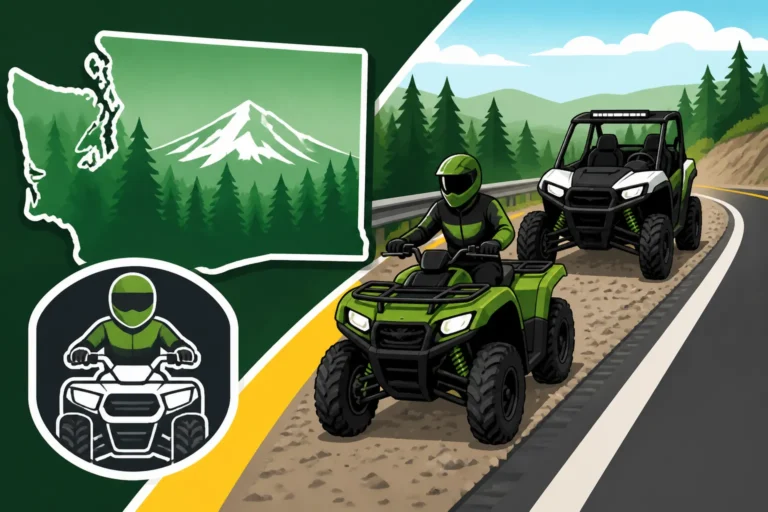
Perhaps the most important aspect of Washington's helmet law for WATVs is its universal application. It explicitly states "on a street, road, or highway or on any nonhighway road or trail." This means there is no distinction in the helmet requirement based on where you are riding. If you're enjoying the sprawling network of [Washington Forest Riding Areas], navigating gravel roads deep in the woods, or exploring designated ORV parks, a helmet is mandatory. Likewise, if your WATV is properly registered and equipped for road use, and you're traveling on an approved county road or city street, that helmet must still be on your head and properly secured. This unified approach simplifies compliance: if you're riding, you're wearing a helmet. This avoids any confusion about transitioning from one type of terrain to another or crossing a paved section to get to another trail.
Passengers and Helmet Requirements
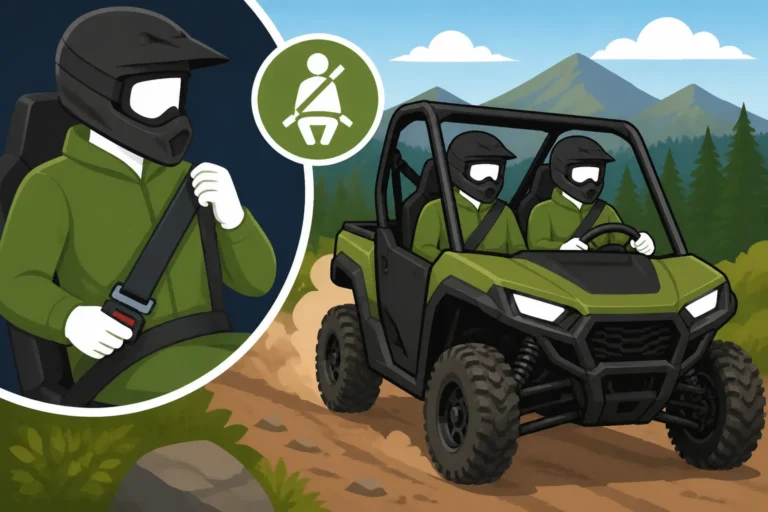
It's not just the operator who needs to wear a helmet; the law extends this protection to passengers as well. RCW 46.09.457 states "No person shall operate or ride upon a wheeled all-terrain vehicle…" This means that if you have a friend, family member, or even a child riding with you in your side-by-side, they too must be wearing an approved safety helmet. This is particularly vital in multi-passenger UTVs, where a common misconception might be that the roll cage and seatbelts offer sufficient protection for everyone. While these features certainly enhance safety, they are not a substitute for head protection. The forces involved in a rollover or collision can be immense, and a helmet is the last line of defense for the brain. For those riding with younger individuals, this also ties into other regulations, as highlighted in [Washington Rules for Riders Under 16], where supervision and appropriate gear are even more critical. Ensuring all occupants are helmeted is not just about following the law; it's a fundamental responsibility for the safety of everyone enjoying the ride.
Beyond the Law: The Critical Importance of Head Protection
While legal compliance is a driving factor, the core reason for helmet laws, especially for WATVs, boils down to one undeniable fact: safety. Head injuries are among the most devastating consequences of powersports accidents, often leading to lifelong disabilities or worse. Helmets are not just a piece of plastic and foam; they are engineered life-savers, meticulously designed to absorb impact and protect the most vital organ in your body.
Mitigating the Risk of Serious Injury
Riding a WATV, whether a quad or a side-by-side, inherently involves risks. You're dealing with powerful machinery, often on uneven terrain or in unpredictable environments. Accidents can happen in a split second, sometimes through no fault of your own. A sudden roll, a collision with another rider or an obstacle, or even a low-speed tip-over on a slippery surface can result in your head impacting the ground, a rock, or even components of your own machine. Without a helmet, the brain is completely exposed to these forces. Traumatic Brain Injuries (TBIs) can range from concussions to severe brain damage, leading to cognitive impairments, motor skill loss, personality changes, or even death. A properly fitted and certified helmet drastically reduces the likelihood and severity of these injuries. It disperses the impact energy, absorbing the shock that would otherwise directly affect your skull and brain. This is why even when cruising on [Washington Rules for Riding a County Road] or [Washington Rules for Riding a City Street], where speeds might be lower, the risk of hitting your head during an unexpected stop or minor accident is still very real and very dangerous without a helmet.
Understanding Helmet Ratings and Types
Not all helmets are created equal, and Washington's law specifies that helmets must conform to minimum standards for motorcycle helmets established by the state patrol. This typically refers to helmets that meet standards set by organizations like the Department of Transportation (DOT), the Snell Memorial Foundation, or the Economic Commission for Europe (ECE).
- DOT Certified: This is the most common standard and legally required for road use in most places. It signifies that the helmet has met federal safety standards.
- Snell Certified: Snell offers more rigorous testing than DOT, often including multiple impacts and higher energy absorption tests. Many serious riders choose Snell-certified helmets for enhanced protection.
- ECE Certified: Common in Europe, ECE standards are also recognized for their stringent safety requirements.
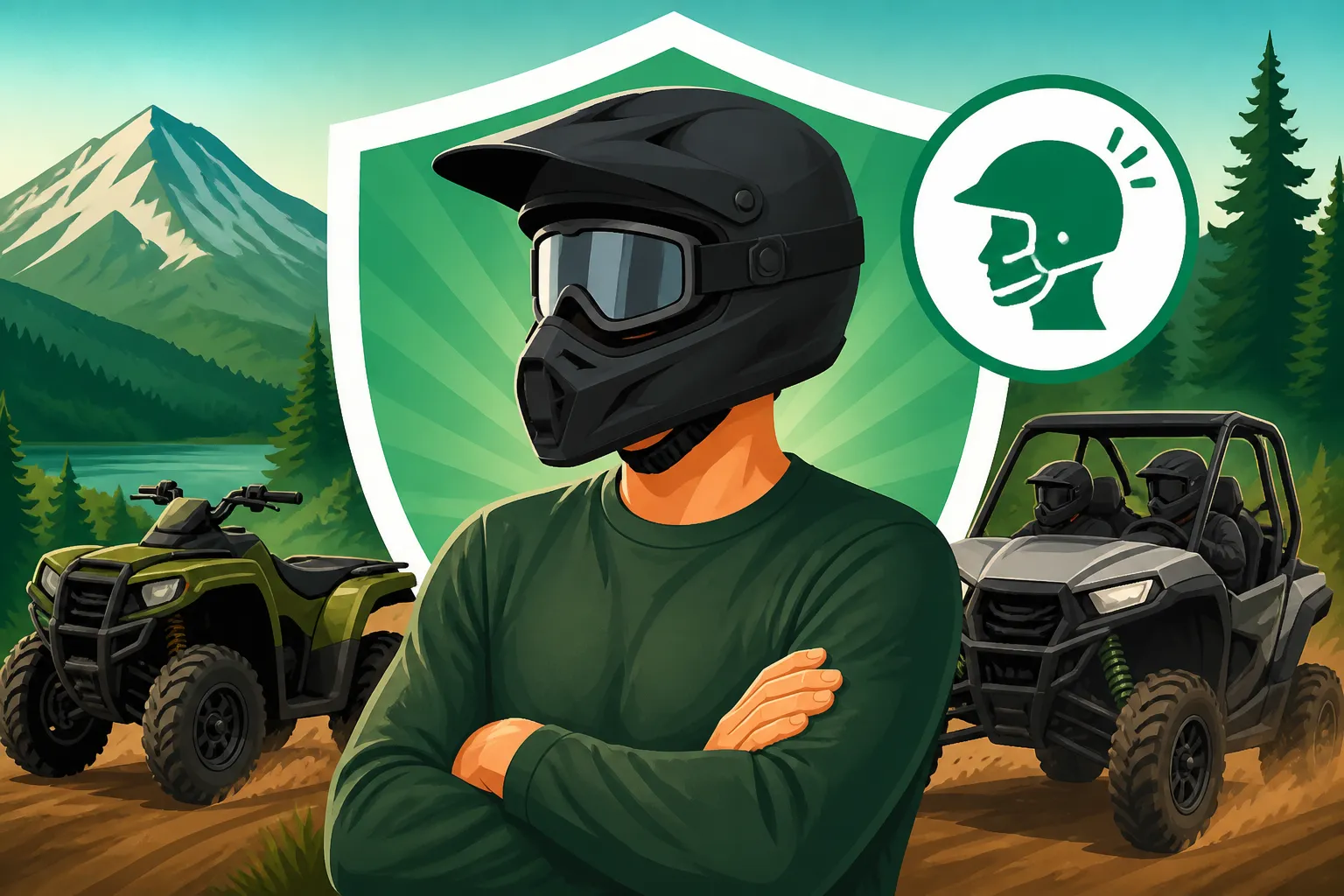
Choosing the right type of helmet is also crucial. For WATV riding, full-face or off-road specific helmets are generally recommended.
- Full-Face Helmets: Offer comprehensive protection for the entire head, face, and chin. They are often quieter and offer better weather protection, making them suitable for mixed road and trail use.
- Off-Road Helmets (Motocross Style): These have a pronounced chin bar for protection, a visor to block roost and sun, and typically a more open face designed to be worn with goggles. They offer excellent ventilation, which is great for strenuous riding.
While companies like SuperATV offer fantastic accessories to enhance your ride, like windshields and full enclosures, remember that these are supplementary. They don't negate the need for a properly certified helmet. Always check for the DOT sticker on the back of any helmet you purchase to ensure it meets the minimum legal standard for Washington.
Here's a quick comparison of common helmet types and their suitability:
| Helmet Type | Key Features | Pros | Cons | WATV Suitability (Washington) |
|---|---|---|---|---|
| Full-Face | Fixed chin bar, integrated visor, good coverage | Excellent impact protection, wind/weather protection, relatively quiet | Can be hot, restricted peripheral vision compared to open-face, heavier | High (DOT required) |
| Off-Road/MX | Extended chin bar, large visor, open face | Excellent ventilation, good for aggressive riding, use with goggles | Less weather protection, can be noisy, goggles required separately | High (DOT required) |
| Modular/Flip-Up | Chin bar lifts up, can be worn open or closed | Versatility (open for breaks, closed for riding), good for glasses wearers | Heavier, chin bar offers less protection than fixed full-face, more complex | Moderate to High (DOT required) |
| Open-Face/3/4 | Covers top, back, and sides of head, open face | Lighter, better airflow, wide field of view | No chin or face protection, higher wind noise | Low (not recommended due to lack of face/chin protection, though some may be DOT) |
The Real-World Consequences of Non-Compliance
Beyond the immediate danger to your physical well-being, choosing to ride without a helmet in Washington can lead to significant legal and financial repercussions. Law enforcement, like the Washington State Patrol or local county sheriffs, take WATV safety seriously, especially when it involves public roads. If you're pulled over during a routine roadside check, perhaps for [What a Washington Trooper Checks Roadside] or simply because they observe you without a helmet, you can expect a citation. These [Washington Fines for Illegal WATV Road Use] can be costly, often in the hundreds of dollars, and can quickly dampen the fun of your ride. Repeated offenses can lead to even stiffer penalties. Furthermore, if you are involved in an accident while not wearing a helmet, your legal liability could increase, and your [Washington WATV Insurance Requirements] might even be impacted, potentially reducing coverage for your injuries if it's determined your negligence (not wearing a helmet) contributed to their severity. It’s simply not worth the risk, financially or physically.
Practical Considerations for Adult Riders
Knowing the law and understanding the "why" behind it is one thing, but actually implementing it into your riding routine involves practical steps. For adult riders, this means not just owning a helmet but ensuring it's the right one, worn correctly, and maintained properly. Making safety a seamless part of your riding experience will enhance your enjoyment and keep you out of trouble.
Choosing the Right Helmet for Your Ride
Selecting a helmet isn't just about grabbing the first one that fits your head. It's about matching the helmet to your specific riding style and the conditions you'll encounter in Washington. If you primarily ride on forest trails that are dusty in summer and muddy in winter, an off-road helmet with good ventilation and space for goggles might be ideal. The visor will shield your eyes from sun and dirt flung by other riders, and the chin bar offers crucial protection. If you frequently use your WATV for utilitarian tasks, or if your rides involve a lot of mixed-surface cruising on county roads and less aggressive trail riding, a good quality full-face helmet might offer more comfort, reduced wind noise, and better overall weather protection. Many helmets today come with features like moisture-wicking liners, integrated sun visors, and communication system compatibility, which can significantly enhance your experience. Don't just settle for the cheapest option; invest in a helmet that offers superior protection and comfort, as it's an investment in your safety.
Proper Fit and Maintenance for Maximum Protection
A helmet can only do its job if it fits correctly. A helmet that's too loose will shift on your head during an impact, potentially failing to protect you and even obscuring your vision. One that's too tight will be uncomfortable, distracting you from the ride. When trying on a helmet:
- Snug Fit: It should feel snug all around your head, with no pressure points.
- No Movement: When you shake your head side-to-side and up-and-down, the helmet should move with your head, not independently.
- Cheek Pads: Cheek pads should press firmly against your cheeks.
- Field of Vision: Ensure your peripheral vision isn't significantly obstructed.
- Chin Strap: Always fasten the chin strap snugly under your chin so that you can't roll the helmet off your head.
Maintenance is also key. Helmets have a lifespan, typically around five to seven years, even if never crashed. The materials degrade over time. If your helmet has been involved in any impact, even a minor drop, it should be replaced immediately, as its ability to absorb a second impact may be compromised. Regularly clean your helmet's exterior and interior liner, and inspect it for cracks, damaged straps, or worn padding. A clean, well-maintained helmet is not only more comfortable but also more effective at protecting you. Consider checking out brands like SuperATV for other safety-enhancing accessories that complement your helmet use, such as durable harnesses or robust bumpers, further bolstering your overall protection on the trails and roads.
Enforcement and Fines for Non-Compliance
As mentioned earlier, law enforcement in Washington State is empowered to issue citations for WATV riders and passengers who are not wearing helmets. These fines are not trivial and can quickly add up, turning an enjoyable outing into an expensive regret. A typical first offense can range significantly, but it’s safe to budget for a few hundred dollars. Beyond the financial penalty, officers might also inquire about other aspects of your WATV's legality, such as proper registration (checking for both the [Washington's Off-Road Tab Explained] and [Washington's On-Road Tab Explained] if applicable) or if you have the required [Washington WATV Registration Paperwork] with you. Non-compliance with the helmet law can sometimes lead to further scrutiny, potentially uncovering other issues that could result in additional citations. The simple act of wearing a helmet avoids all of this hassle and allows you to focus purely on the joy of riding, knowing you're protected and within the bounds of the law. It's a small concession for a huge gain in safety and peace of mind.
Disclaimer
This article is for general informational purposes only and does not constitute professional advice. Laws, prices and regulations vary by location and change over time. Consult a qualified professional for guidance on your specific situation.