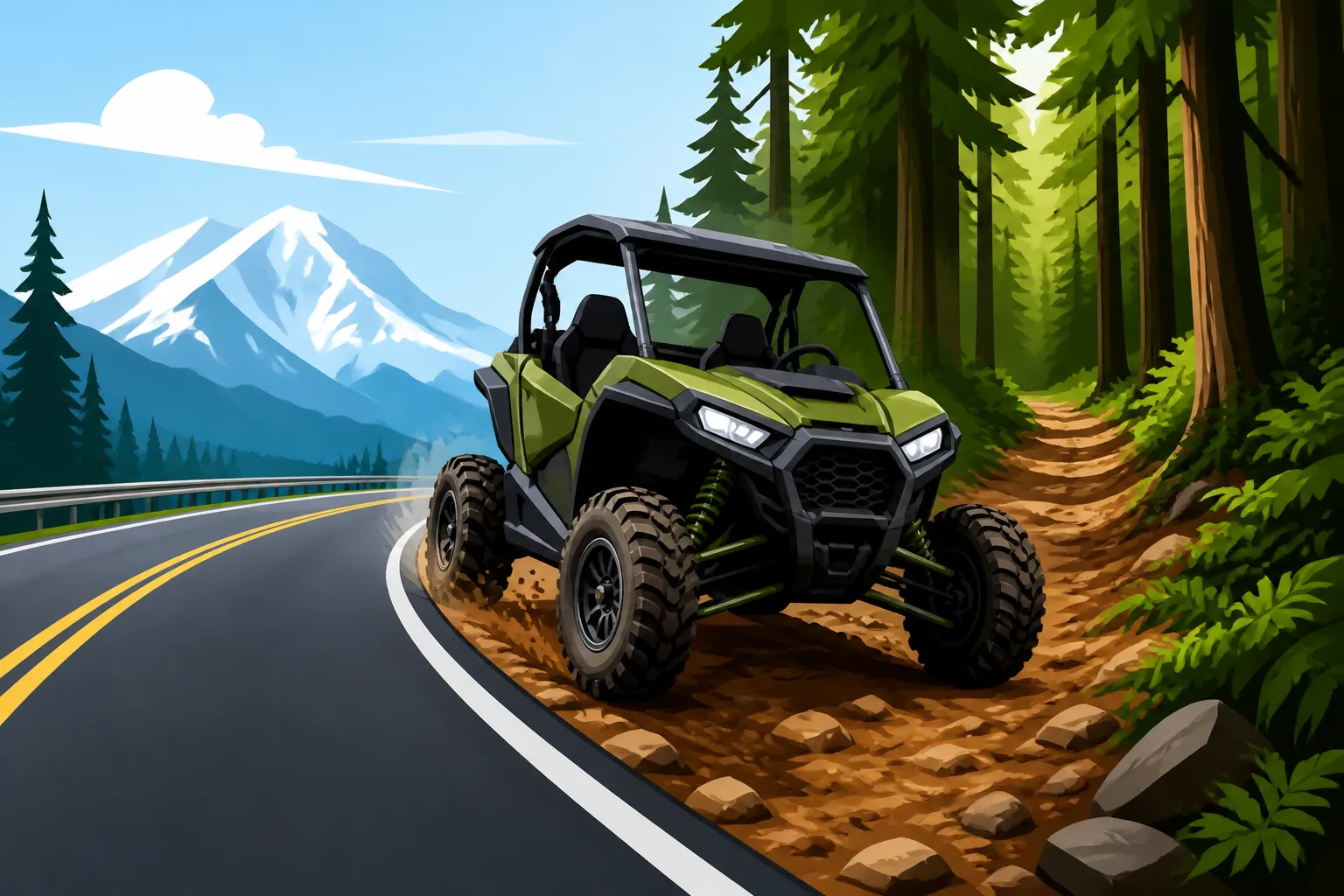
Where Pavement Ends and Forest Road Begins
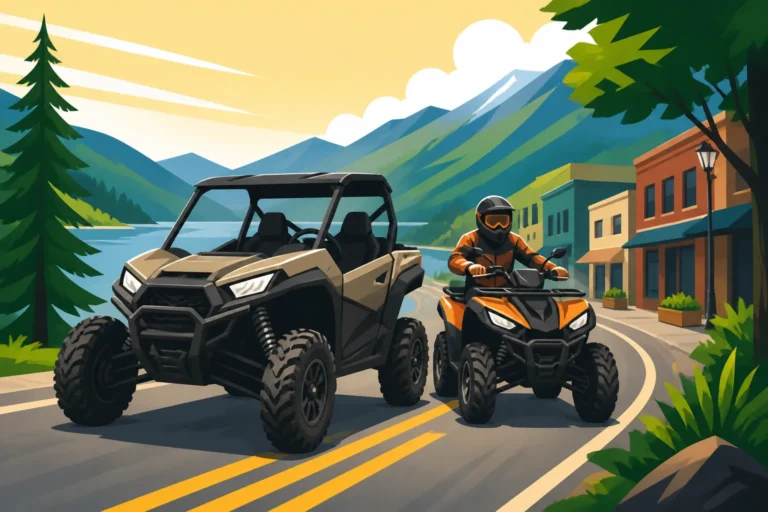
One of the most common headaches for Washington ATV and UTV riders is figuring out exactly where it's okay to ride their machine. You’re cruising down a paved county road, legally, with your on-road tab gleaming, and suddenly, the asphalt gives way to gravel. You see a sign that says "National Forest" or "DNR Land," and a million questions pop into your head: Can I keep going? Do the rules change here? This guide is all about helping you understand those critical transition points, so you can confidently navigate from paved roads to the wild, winding forest routes across Washington.
Understanding the Transition Zones in Washington
Crossing that invisible line where pavement ends and a gravel forest road begins can feel like entering a whole new country, with its own set of laws and expectations. In Washington, this transition isn't just about the surface under your tires; it’s about a fundamental shift in jurisdiction, speed limits, and even the type of other traffic you might encounter. Ignoring these changes can lead to frustration, or worse, a citation.
The Legal Landscape: When Rules Shift
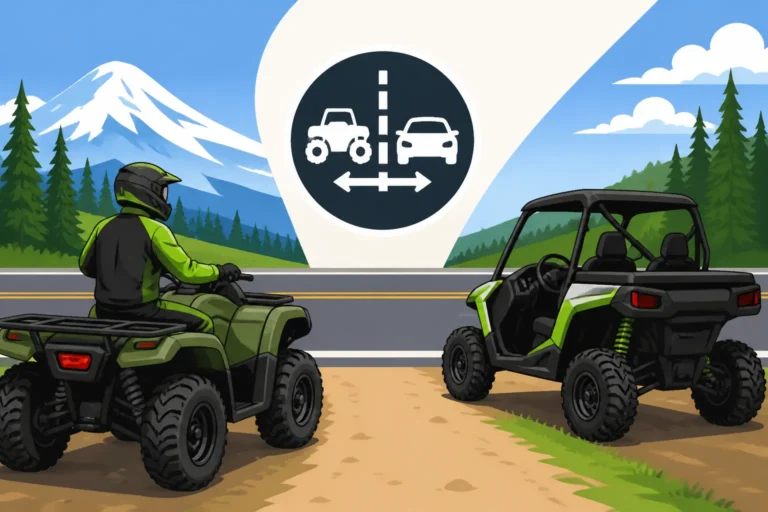
When you're riding your WATV on a paved county or city road that has been designated as open for off-road vehicle use, you're generally operating under the same rules as any other motor vehicle, albeit with specific limitations like speed and equipment. However, the moment that pavement ends, you're often moving onto land managed by different entities, each with its own set of regulations.
For example, a gravel road leading into a state forest is managed by the Washington State Department of Natural Resources (DNR). A road heading into federal land might be managed by the U.S. Forest Service (USFS) or the Bureau of Land Management (BLM). Each of these agencies has specific rules about where and how off-road vehicles can be operated. It’s not uncommon for a designated county road to simply become a DNR forest road without a clear change in name, making it crucial to know who owns the land you're on. [Washington Rules for Riding a County Road] covers the specifics of county-level access, but those rules often don't extend past the county line or onto state/federal land. The transition often means moving from a system of local ordinances and state road laws to federal or state land management regulations, which can focus more on resource protection, designated trails, and fire safety.
Signs and Markers: What to Look For
Navigating these transitions successfully often comes down to paying close attention to signage and having a good map, both digital and physical. Washington's vast network of forest roads can be confusing, and signs are your first line of defense against accidentally trespassing or violating usage rules.
Look for specific signs indicating the managing agency. A "Welcome to [National Forest Name]" sign or a brown recreational sign with a DNR emblem means you're entering a new jurisdiction. Pay attention to speed limit changes, which often drop significantly on gravel roads, even if they're wide and well-maintained. You might also encounter signs specifically forbidding ORV use, or conversely, signs directing you to designated ORV trailheads.
In certain areas, particularly in Eastern Washington like the Ahtanum State Forest, you’ll see "Green Dot Roads." These are roads designated by the DNR that are generally open for motorized vehicle use, including WATVs, for dispersed recreation, hunting access, and timber operations. However, "Green Dot" doesn't mean "anything goes." These roads often have seasonal closures, especially for winter wildlife protection or during critical fire season. Always check the current status before you go. [Ahtanum's Green Dot Roads in Washington] are a prime example of where these markers are critical. Don't rely on old maps or memory; check current conditions, especially for fire closures, as [Washington Fire Season and Trail Access] can drastically change what's open.
Navigating Different Forest Road Types
Washington is a patchwork of public and private lands, each with its own gatekeepers and ground rules. Understanding who owns the gravel road you're on is paramount, as it directly impacts your legal right to be there and the responsibilities you carry as a rider.
DNR Land and Trust Roads
Washington State Department of Natural Resources (DNR) lands make up a significant portion of our accessible forest roads and trails, particularly on the west side of the Cascades. These lands are managed for a variety of purposes, including timber production, recreation, and conservation. When you transition from a county road to a DNR forest road, you're likely entering an area where a [The Discover Pass and Washington Riders] is required.
The Discover Pass is your ticket to most DNR lands, as well as State Parks and Washington Department of Fish and Wildlife (WDFW) lands. You need to display it on your towing vehicle, and while the pass itself isn't on your WATV, being in a DNR staging area or on their roads with your rig requires it. Many popular ORV areas, such as [Capitol State Forest Near Olympia, Washington] and [Reiter Foothills State Forest], are managed by DNR. These areas often have extensive networks of gravel roads that serve as access routes to designated single-track trails and wider ORV routes.
It’s crucial to remember that even on DNR-managed forest roads, not all roads are open to WATVs. There are sometimes specific roads or areas that are restricted to administrative use, hiking, or equestrian use. Always consult current DNR recreation maps for the specific area you're visiting. These maps will show designated ORV trails, open roads, and any seasonal closures. You might encounter active logging operations on DNR land, which means sharing the road with large, heavy equipment like log trucks. Always yield to these commercial vehicles and be aware that roads may close temporarily for safety during harvesting.
National Forest and Federal Land Roads
Stepping onto a road within a National Forest means you're now under the jurisdiction of the U.S. Forest Service (USFS). Washington is home to several vast National Forests, including the Gifford Pinchot, Okanogan-Wenatchee, and Colville. While many National Forest roads are open to the public, including WATVs, their regulations can differ from state lands.
A key difference is often the pass system. While some federal trailheads or day-use sites may require a Northwest Forest Pass (or an America the Beautiful Pass), simply riding on most National Forest roads for access to designated trails or dispersed recreation generally doesn't require a specific pass beyond your ORV registration. For example, [Why Evans Creek Takes a Forest Pass] is a specific exception, often due to improved amenities at that popular ORV area. Most basic National Forest gravel roads, however, are simply public access.
It’s vital to understand that National Forests also have designated motorized vehicle use maps (MVUMs). These maps explicitly show which roads and trails are open to motorized vehicles, which are seasonally closed, and which are completely off-limits. Unlike DNR Green Dot systems, federal MVUMs are the definitive word on what’s allowed. Riding off designated roads or trails in a National Forest can lead to significant fines and environmental damage. The focus here is on protecting wilderness areas, watersheds, and wildlife habitat. Always have the current MVUM for the specific ranger district you're in, whether as a printed copy or downloaded to a GPS-enabled device.
Private Timberland and Managed Forest Roads
This is perhaps the trickiest transition point: when a public road seemingly continues onto private timber company land. Washington has vast tracts of private forestland, actively managed for timber harvest. While some companies allow public access, often through shared-use agreements or permits, many do not.
The default assumption should always be that private land is closed to public motorized access unless explicitly stated otherwise. Look for "No Trespassing" signs, locked gates, or signs identifying the timber company (e.g., Weyerhaeuser, Rayonier). [Washington Trespass Rules for Riders] are clear: riding on private land without permission is illegal and can result in fines and even impoundment of your machine.
Sometimes, a county road may simply end at a private timber gate. Other times, a road that feels like a public forest road might actually be a private access road. It's not always obvious. If you encounter a locked gate or a sign indicating private property, do not proceed. Trying to go around a gate, even if it looks passable, is a definite no-go and can damage equipment or lead to serious legal trouble. Some timber companies offer access permits for specific recreation activities, especially hunting, but these are rare for general ORV riding. Always do your homework before you head out if your route involves potentially crossing private timberland. Knowing [What to Do at a Locked Timber Company Gate] is crucial, and the answer is always to turn around unless you have prior written permission or a key.
Essential Gear and Riding Practices for Transitioning
Successfully navigating the shift from pavement to forest road isn't just about knowing the rules; it's also about preparing your machine and yourself for the changing conditions. The demands of sustained pavement riding are vastly different from the challenges of rugged, unmaintained gravel and dirt.
Machine Prep for Varied Terrain
Your machine needs to be ready for anything once the pavement ends. While street-legal WATVs often have tires suitable for both pavement and light off-road use, truly aggressive trails will demand more. Consider a good all-terrain tire with an aggressive tread pattern that can handle loose gravel, mud, and some rocks. If you anticipate deep mud or exceptionally rocky terrain, you might even consider specialized tires, but remember these often compromise pavement performance.
Table: Road Type vs. Machine Prep Considerations
| Feature/Aspect | Paved Roads (Open to WATVs) | Gravel/Forest Roads (DNR/USFS) |
|---|---|---|
| Tires | Street-legal, all-terrain tires common | Aggressive all-terrain, mud-specific options |
| Suspension | Often factory settings suffice | Tuned for comfort, articulation, ground clearance |
| Underbody Protection | Minimal (stock skid plates) | Essential (heavy-duty skid plates, A-arm guards) |
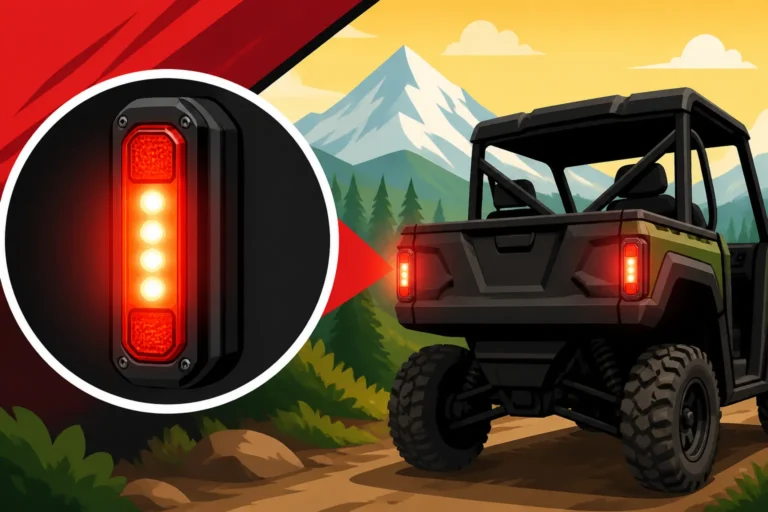
| Lighting | Headlights, tail lights, turn signals (required for street) | Robust aftermarket LEDs for visibility |
| Winches | Not typically needed | Highly recommended for self-recovery |
| Snorkel Kits | Never needed | Critical for deep water crossings |
Adding aftermarket protection like robust skid plates is a smart move. Stock plastic skid plates on many machines are fine for light duty but can quickly get chewed up by rocks and stumps on less-maintained forest roads. Companies like SuperATV offer heavy-duty aluminum or UHMW (Ultra-High Molecular Weight) polyethylene skid plates that provide excellent protection for your frame, A-arms, and CV boots. [Skid Plates for Cascade Rock] are a wise investment if you plan on exploring rocky mountain trails.
Also, think about your suspension. On pavement, a firm suspension is often desired for stability. Off-road, you'll want more articulation and shock absorption to handle bumps, dips, and washboard sections. Some riders opt for adjustable shocks or even full aftermarket suspension kits to optimize for both worlds.
Safety and Awareness
Your personal safety and awareness need to shift gears just as much as your machine does when you leave the pavement.
- Map and Navigation: Always carry detailed maps of the area, and don't rely solely on cell phone service, which is often nonexistent in remote forest areas. A dedicated GPS unit or a smartphone with offline mapping capabilities (like Gaia GPS or OnX Offroad) is invaluable. Know your route, and have a backup plan.
- Speed Management: The biggest culprit for accidents on gravel roads is often excessive speed. Gravel can be unpredictable, with loose sections, potholes, and sudden turns. Reduce your speed significantly from what you might drive on pavement. Dust control is also an issue; slow down when passing other vehicles or riding in a group to minimize dust plumes.
- Other Users: Forest roads are shared spaces. You'll encounter log trucks (especially on weekdays), hikers, mountain bikers, horseback riders, and other off-road vehicles. Always be prepared to stop and yield the right-of-way. Log trucks, in particular, move fast and are often massive; get out of their way safely. [Meeting a Log Truck on a Gravel Road] requires vigilance and common sense.
- Weather Changes: Washington's weather is famously fickle. A sunny morning can turn into a rainy, muddy afternoon in the mountains. Be prepared for changing conditions with appropriate gear and clothing. Rain can quickly turn a dusty road into a slick, muddy mess, demanding even more caution.
Legal Paperwork and Readiness
When you transition from pavement to forest roads, the specific requirements for your machine's registration and your own documentation don't necessarily change, but their importance often becomes even more pronounced. On pavement, a quick glance at your tabs might suffice for a law enforcement officer. In the forest, particularly if you're stopped by a DNR ranger or Forest Service patrol, they'll likely be more thorough.
You absolutely need to ensure your WATV is properly registered with the Washington State Department of Licensing. This includes having your current [Washington's Off-Road Tab Explained] displayed prominently. If you were riding on a paved road, you would also have your [Washington's On-Road Tab Explained] on your machine. Both tabs expire on the same day, so it’s not a case of one being valid when the other isn’t. [Paying for Both Tabs in Washington] is the common approach for those who want mixed-use capabilities.
Always carry your current registration document with you, along with a valid driver's license. [Washington Driver License Rules for WATVs] are strict, and you must have a valid license to operate a street-legal WATV on public roads. It's a good practice to carry proof of insurance, even if it's not strictly required for off-road-only use, if your machine is street-legal. [Washington WATV Insurance Requirements] for road-registered machines are just like any other vehicle. Many riders keep their registration and other critical documents in a waterproof bag or container stored securely on the machine, making sure [Keeping Paperwork Dry in the Rain] is a priority. This ensures they are protected from the elements and easily accessible if needed.
Having all your ducks in a row paperwork-wise not only keeps you legal but also helps ensure a smooth interaction if you encounter law enforcement or land managers, allowing you to focus on the enjoyment of your ride rather than worrying about compliance.
Disclaimer
This article is for general informational purposes only and does not constitute professional advice. Laws, prices and regulations vary by location and change over time. Consult a qualified professional for guidance on your specific situation.