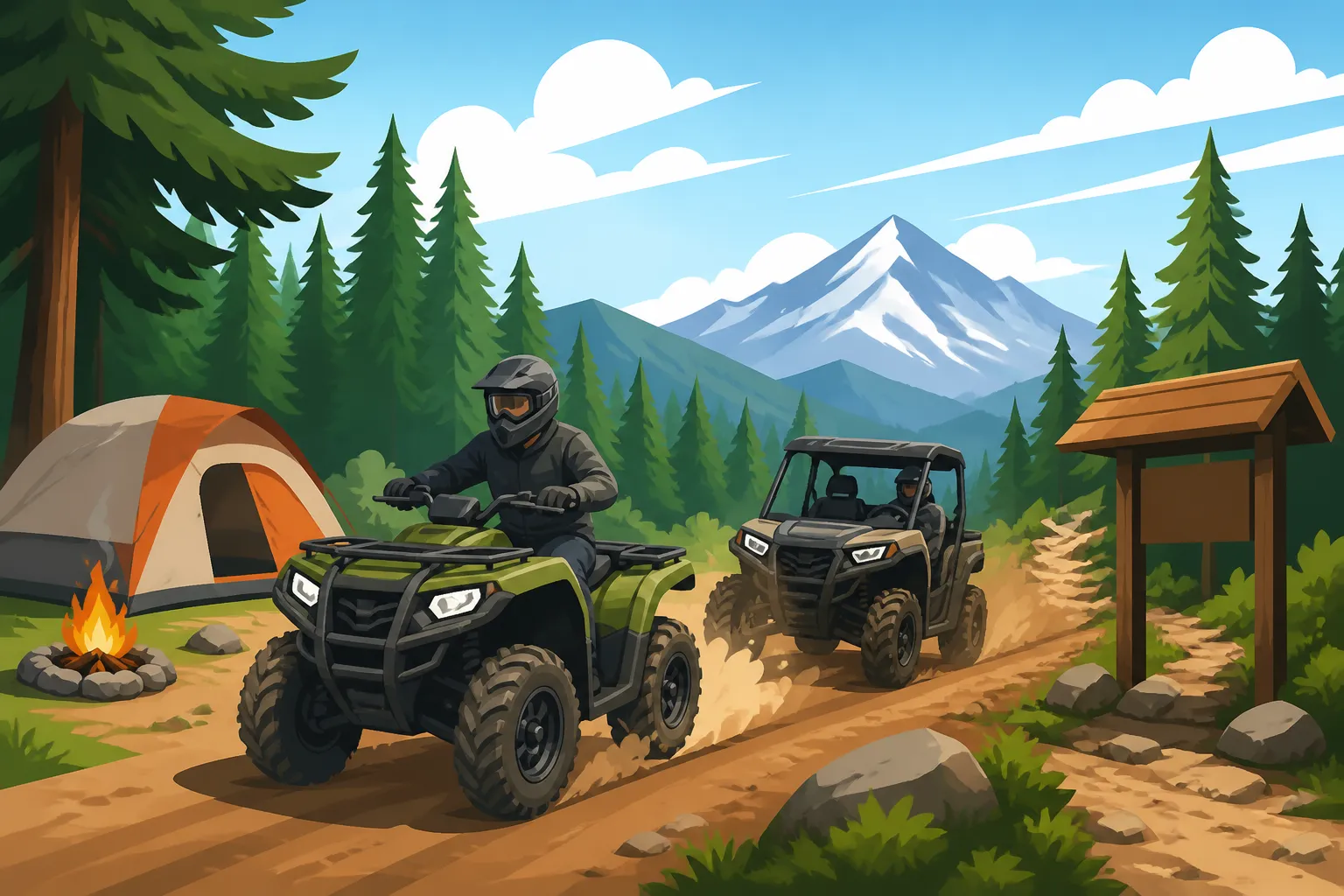
Riding From a Campground to a Trailhead
There's nothing quite like waking up in your tent or RV, the smell of pine and campfire still lingering in the air, and knowing a day of exhilarating trail riding awaits. You've got your Washington wheeled all-terrain vehicle (WATV) all gassed up, your gear is ready, and the trailhead is… well, it's just a mile or two down that paved county road. Easy, right? Not always. Many riders face a common dilemma: how do you legally get your machine from your cozy campground to the roaring trails without running afoul of Washington's sometimes-confusing road laws? This guide is here to untangle those rules and help you navigate the journey safely and legally, ensuring your trip starts on the right side of the law.
Understanding Washington's Road Rules for WATVs
Washington has a specific set of rules that govern where and how you can operate your WATV. It's not as simple as "if it's not a highway, it's fair game," and understanding the nuances is crucial, especially when your campground is separated from the trails by a stretch of public pavement.
The Core Distinction: On-Road vs. Off-Road Tabs
First and foremost, let's talk about the tabs on your machine. In Washington, you’re likely familiar with the distinctive off-road tab. This tab, often green or blue, signifies that your machine is registered for use on designated off-road trails and areas. It's fantastic for tearing up the dirt at Capitol State Forest or exploring the vast network of paths at Ahtanum State Forest. However, it’s vital to understand its limitations: the off-road tab, by itself, does not grant you permission to ride on public roads that connect your campground to these trails. Think of it as a pass for the wilderness, not for Main Street. You can learn more about what this specific tab covers in [Washington's Off-Road Tab Explained].
This is where a lot of riders get tripped up, and it's a perfectly understandable frustration. You might see a dirt road leading directly from your campsite at Evans Creek to the main trail system, and logically, you'd assume your off-road registration covers it. But if that dirt road is actually a county-maintained public thoroughfare, even a gravel one, you're technically on a "road" and not just a "trail." Many folks mistakenly believe that as long as they're not on a major highway, they're fine. Unfortunately, Washington state law draws a much finer line, and it’s a line often enforced by local law enforcement who are well-versed in ORV regulations. Getting pulled over for riding without the proper registration on what feels like a harmless stretch of road can quickly sour a weekend adventure.
To bridge that gap between campground and trailhead, your WATV often needs an additional registration: the on-road tab. This specialized tab, typically a different color, is what permits your machine to be operated on approved public roads, allowing you to legally connect those short distances. It signifies that your machine meets specific requirements for road use, which we'll dive into next. Without this, even a quick run to the store for ice or a short hop across the street to a staging area can land you a citation. This distinction is paramount for anyone planning to use their WATV to access trails from a campground, and knowing the difference could save you a headache. For a deeper look at its function, check out [Washington's On-Road Tab Explained].
Equipment Requirements for Road Use
It's not just about the right tab; your machine itself needs to be equipped for road safety. While your WATV might be a beast on the trails, making it road-legal means adding or upgrading certain components to meet specific Department of Licensing (DOL) standards. This isn't just bureaucratic red tape; it's about ensuring your machine is visible and controllable in a mixed-traffic environment, even if it's just for a mile or two.
So, what exactly does Washington require? First, helmets are mandatory for everyone on board, riders and passengers alike, when operating on public roads. Beyond that, your machine needs at least one rear-view mirror, a functional horn, and working turn signals. While many side-by-sides come with headlights and taillights, these need to be robust enough for road illumination and visibility. You'll also need a windshield or, failing that, eye protection for every occupant. Finally, if your machine has factory-installed seatbelts, they must be worn. It’s easy to assume your powerful UTV is inherently safe, but the rules are designed for shared road spaces, not just the dirt track. This can be a source of frustration, especially if you've purchased a machine primarily for off-road use and now realize you need to add several aftermarket parts. Thankfully, companies like SuperATV offer a range of kits and individual components designed to help riders make their machines compliant, from turn signal kits to mirrors. For a comprehensive list of what you'll need, refer to [Equipment a Washington WATV Needs on a Road].
Imagine you’ve just set up camp at the Porter Creek Campground in Capitol State Forest, ready for a weekend of riding. The main staging area is just a short drive down a paved county road. You hop on your side-by-side, excited to hit the trails, but you haven't installed turn signals or a horn. A county deputy, patrolling the area, notices your machine on the pavement and pulls you over. Even if you're only going a few hundred yards, the lack of proper road equipment can lead to a ticket, spoiling the start of your adventure. This situation highlights why pre-trip checks and ensuring your machine is fully compliant are non-negotiable.
Driver Licensing and Insurance
Beyond the machine itself, the human element also has requirements when riding on public roads. If you're going to operate your WATV on any public road, including those short stretches from the campground to the trailhead, you must possess a valid driver's license. This isn't optional, regardless of how short the distance or how low the speed limit might be. The rationale is simple: when you're on a public road, you're interacting with other vehicles and pedestrians, and the state expects you to be a licensed, competent operator. [Washington Driver License Rules for WATVs] delves deeper into these requirements.
Furthermore, just like a car, a road-registered WATV needs to be insured. Washington requires liability insurance for any WATV operating on public roads. This protects you and others in the event of an accident. While many riders choose to carry insurance for their off-road machines even when not required, it becomes a legal necessity once you venture onto paved or public gravel roads. It's a common oversight, as many off-road-only machines don't have mandatory insurance requirements for trail use. However, when you add that on-road tab, you're essentially making your WATV a road-legal vehicle for those specific segments, and with that comes the responsibility of carrying appropriate coverage. For more information, check out [Washington WATV Insurance Requirement].
Consider a family trip to a popular riding area like Walker Valley. Your 15-year-old, who's a fantastic rider on the trails, wants to take the UTV from the campground to the trailhead a quarter-mile away. Even with adult supervision, they cannot legally drive on that public road stretch because they lack a valid driver's license. The licensed adult would have to operate the machine, or the machine would need to be trailered. Similarly, if you have an unfortunate fender bender with another vehicle while on that short connecting road, having your WATV's specific liability insurance will be critical, rather than trying to rely on your automobile policy, which often won't cover off-road vehicles on public roads. These rules are in place to safeguard everyone, so it's best to be prepared before you even leave your campsite.
Navigating County and City Road Access
Even with an on-road tab and all the right equipment, you can't just ride your WATV on any public road in Washington. The state has an "opt-in" system, meaning counties and cities must specifically designate which roads are open to WATV use. This system can be a major point of confusion for riders, especially those visiting from out of state or new to the local regulations.
Not All Roads Are Open: The Opt-In System
Here's the often-frustrating truth: just because a road looks like a simple two-lane country road, or even a gravel forest service road that's also county-maintained, doesn't mean it's open for WATV use. Washington state law requires individual counties and cities to pass specific ordinances to open their roads. These ordinances will then list the particular roads or segments of roads where WATVs are permitted. This means that a road open in one county might be closed just across the county line, or a road open in an unincorporated area might be closed once you enter city limits. It’s an incredibly localized system, which means your pre-trip research needs to be hyper-focused on the specific areas you plan to visit.
Many riders, myself included, have felt the sting of this system. You pull into a small town near your intended riding spot, and you see other ORVs buzzing around. You might think, "Great! This town is open." But without checking the actual ordinance, you might be riding on a street that hasn't been designated, risking a citation. This patchwork approach is designed to give local communities control over traffic flow and safety, but it places a significant burden on riders to do their homework. The frustration is real when you just want to get from Point A (your tent) to Point B (the trail), and you're faced with a maze of local regulations. You can get a general overview of which areas are more amenable to WATV use in [Washington Counties That Allow WATVs on Roads].
For example, you might be camping near the Gifford Pinchot National Forest, planning to ride a popular trail system. The nearest county road might be a convenient shortcut to a further trailhead. However, if Skamania County hasn't specifically opened that road, your on-road tab won't protect you from a ticket. It's not enough to have the correct registration and equipment; you must also be on an approved road segment. This highlights why relying on what "looks" open or what "everyone else is doing" can be a risky gamble. Always confirm the specific road segments are designated for WATV use by the local jurisdiction.
How to Find Approved Road Lists
Given the "opt-in" nature of Washington's road laws for WATVs, finding out which roads are actually open is paramount. This isn't always as straightforward as checking a single statewide map, unfortunately. Your best bet is to go directly to the source: the local county or city government websites. Most counties will post their ordinances, including lists of approved roads for WATVs, on their public works, sheriff's office, or county commissioners' pages. Similarly, city websites might have this information under their municipal code or city clerk's department. It might take a bit of digital digging, but it's well worth the effort to avoid a costly mistake.
The struggle is real when you're trying to plan a trip. You're already busy packing, getting the machine ready, and coordinating with friends, and now you have to play detective on municipal websites. It's a common frustration, especially when you encounter outdated information or confusing navigation. However, a little legwork before you leave home can save a lot of headaches on the road. Many riders find it helpful to print out or screenshot the relevant ordinances or maps, just in case they need to reference them on their trip. For specific guidance, you can check out [Finding a County's Approved Road List].
Let's say you're camping at the Ike Kinswa State Park and want to take your side-by-side a few miles down a rural road to access a logging road network that leads to trails in Lewis County. Before you even pack, you should visit the Lewis County website, specifically looking for their ordinances related to ORV or WATV use on county roads. They might have a dedicated map or a list detailing which specific roads, by name or number, are open. Don't just assume; verify. Doing this homework ensures that your short ride from the campground isn't interrupted by an unwelcome conversation with local law enforcement about an unapproved road.
Speed Limits and Posted Restrictions
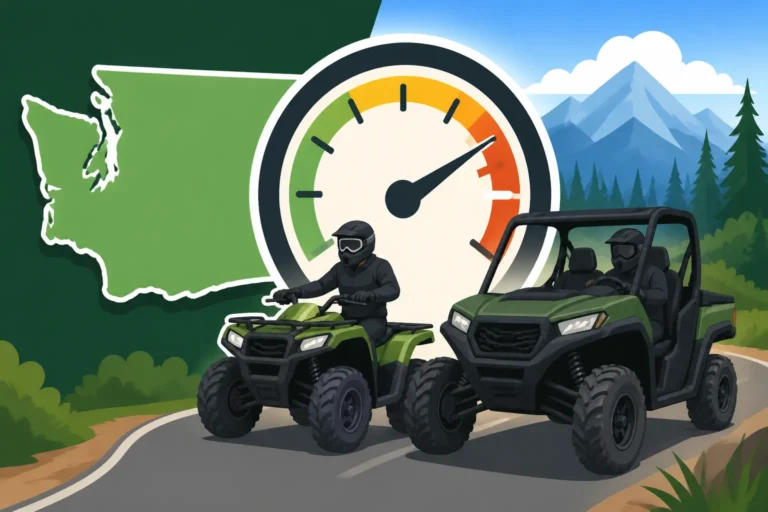
Even on a designated open road, WATVs aren't given free rein. Washington law imposes a strict 35 mph speed limit for WATVs operating on public roads, regardless of the posted speed limit for other vehicles. This means if you're on a county road with a 45 mph speed limit, you still cannot exceed 35 mph on your WATV. This can feel agonizingly slow, especially if you're holding up traffic for a short stretch, and it's a valid source of rider frustration. You might think, "My machine can easily go faster, and it's just a short distance!" but the law is absolute here.
Beyond the speed limit, pay close attention to any other posted restrictions. Some roads might have seasonal closures, weight limits, or specific times of day when ORV use is prohibited. It's all part of the local ordinance you should research. Also, be aware that while county roads might be open, crossing state highways or riding on specific sections of state routes generally requires explicit approval from the Washington State Department of Transportation (WSDOT), which is far less common.
Imagine you're at a campground nestled near a remote area of Stevens County, perhaps close to Colville, and a long gravel county road is your only path to the trailhead. Even though the road feels wild and remote, it's still subject to the 35 mph WATV speed limit. It’s important to ride defensively, stay as far to the right as safely possible, and be courteous to other motorists who might be traveling at higher speeds. While it can be a little unnerving to have a line of cars behind you for a short distance, adhering to the speed limit is non-negotiable for legal road operation and ensures everyone's safety. This situation underscores the importance of being a responsible rider and understanding that road rules are different from trail etiquette.
Practical Tips for Campground-to-Trailhead Riding
So, you've done your homework, your machine is equipped, and you know which roads are open. Now, let's talk about some practical considerations to make that short transit from your campground to the trailhead as smooth and safe as possible.
Pre-Ride Checks and Safety Considerations
Just like you'd do a quick walk-around before hitting a challenging trail, a pre-ride check is even more critical when you're venturing onto public roads. Make sure all your road-legal equipment is functioning perfectly: headlights, taillights, brake lights, turn signals, and horn. Check your tires for proper inflation and ensure your mirrors are clean and adjusted for optimal rear visibility. A quick check of your [Washington Lighting Requirements for WATVs] can be a great refresher.
Safety on the road is paramount. Always ride defensively, assuming other drivers might not see you. Stay to the far right side of the lane, use your turn signals well in advance, and if your machine allows, use hand signals as well to ensure your intentions are clear. Wear bright clothing or add reflective tape to your machine and helmet to increase your visibility, especially on winding roads or in low light conditions. Avoid riding during peak traffic hours if possible, opting for early mornings or late afternoons when roads are generally quieter. Your safety and the safety of others depend on your vigilance.
Picture this: You're at the Green Mountain and Tahuya State Forest, getting ready to head out from your campsite. Before you even start the engine, you quickly test your turn signals, tap the horn, and check that your SuperATV mirrors are positioned correctly to see behind you. This small routine, taking just a minute or two, can prevent potential issues and gives you peace of mind that you're as visible and compliant as possible for that short journey down the access road to the trail system. It’s about being proactive, not reactive, when it comes to road safety.
Carrying Documentation
This might seem like a minor point, but having your essential documents readily accessible is a major convenience if you're stopped by law enforcement. You'll need to carry your valid driver's license, your WATV's current registration, and proof of insurance for road use. The last thing you want is to be fumbling through a backpack or digging under a seat while a state trooper or county deputy waits.
A common frustration for riders is keeping these paper documents dry and legible on rides that often involve dust, mud, or rain. Investing in a small, waterproof pouch or a hard case that can be securely mounted to your machine is a wise move. This ensures your documents are protected from the elements and easily retrievable. For specific guidance on what to carry, refer to [Carrying the Registration in the Machine].
Consider a scenario where you're leaving your campground in Reiter Foothills and a routine traffic stop occurs on the nearby county road. The officer asks for your registration and license. Having them neatly organized in a small, waterproof case that you can quickly grab from your glove box or cargo area makes the interaction smooth and efficient. Contrast this with digging through a soggy jacket pocket for a crumpled piece of paper, and you can immediately see the value of being prepared. It conveys responsibility and can make a big difference in how quickly the stop concludes.
Dealing with Gates and Timber Company Lands
Sometimes, the "road" from your campground to the trailhead isn't just a county road; it might traverse private timber company land or state trust land. These lands often have different rules, and you might encounter locked gates that block your passage, even if your map shows a direct route. Timber companies, for instance, frequently close roads for active logging operations, fire danger, or simply for private land management.
This can be incredibly frustrating. You’ve planned your route, you’re on an officially open county road, but then suddenly, a locked gate appears. This usually means the road transitions from public access to private land. Always be aware of land ownership boundaries, especially in remote areas. Some timber companies offer permits or gate keys for recreational access during non-logging seasons, but these often need to be secured well in advance. Information on these permits can sometimes be found on the timber company's website or local DNR offices. If you encounter a locked gate, do not attempt to bypass or damage it; that's trespassing and can lead to severe penalties. For tips on navigating these situations, check out [Getting a Gate Key From a Timber Company].
Imagine you're staying at a campground near Darrington, planning to ride in the nearby foothills. You find a "road" on your map that appears to connect directly to the trail network. However, this road turns out to be an access route for a private timber company. You arrive to find a sturdy, locked gate with a "No Trespassing" sign. Without prior permission or a key, you're stuck. This scenario underscores why checking land ownership and access points thoroughly before your trip is just as important as knowing the road laws. Sometimes, that convenient "short-cut" on the map is actually a private thoroughfare, requiring you to find an alternate, longer route by trailer or an entirely different staging area.
What to Do If You Can't Ride Legally
Sometimes, despite your best intentions, you simply can't legally ride your WATV from the campground to the trailhead. Perhaps your machine isn't road-legal, or the county roads in your chosen area aren't open. When faced with these situations, it's essential to have a backup plan that keeps you compliant and safe.
Trailer Up or Find Alternative Staging
If road access isn't permitted, or your machine doesn't meet the stringent requirements for road use, the most straightforward solution is to trailer your WATV to the designated trailhead or staging area. This might mean loading up your side-by-side or quad for a short drive, even if it feels like a hassle for just a mile or two. While it's certainly less convenient than just riding out from your campsite, it's the only way to avoid potential fines, vehicle impoundment, or worse, an accident on an unauthorized road.
The frustration here is completely valid. You bought an ORV to ride, not to constantly load and unload it from a trailer for every short hop. However, the alternative of receiving a hefty ticket or having your trip cut short by law enforcement is far more frustrating. Some campgrounds, particularly those designed with ORV riders in mind, may offer direct trail access from individual sites, bypassing public roads entirely. These are ideal scenarios, but they aren't always available. If you have to trailer, ensure your trailer is road-worthy, your machine is securely tied down, and your tow vehicle is up to the task, especially if you're navigating winding mountain roads to reach the trailhead.
For example, you might be camping at a private RV park near Lake Stevens, and the nearest trails are a few miles away, accessible only by roads that are not open to WATVs by city ordinance. Even though the temptation to just "ride it down" might be strong, you have no choice but to load your quad onto your trailer for the short drive to the official staging area. This ensures you comply with local laws and avoid the headache of a citation, even if it means a little extra work before your ride truly begins.
Temporary Permits for Out-of-State Visitors (Off-Road Only)
For those visiting Washington from out of state, there's a specific temporary permit available, but it comes with a critical caveat that many often misunderstand: it's strictly for off-road trail use and does not grant you permission to ride on public roads. Washington offers a temporary ORV use permit, which allows non-residents whose home states don't have a reciprocal agreement (or whose machines aren't registered elsewhere) to legally ride on Washington's designated off-road trails. This is fantastic for visitors looking to explore areas like the Juniper Dunes. You can learn more about its specific cost and duration in [Washington's $15.75 Temporary ORV Permit].
The core frustration here for many visitors is the misunderstanding that this temporary permit might be a workaround for road access. Unfortunately, it isn't. This permit, while essential for legal trail riding, explicitly limits your machine to off-road environments. It does not equip your machine with an on-road tab, nor does it override the need for proper road-legal equipment, a driver's license, or insurance for street use. Therefore, if you're an out-of-state visitor camping and need to cross public roads to reach trails, this temporary permit will not cover you for those road segments. [Why a Temporary Permit Keeps You Off Pavement] is a good resource to clarify this limitation.
Imagine your friends from Idaho, with their unregistered side-by-side, decide to join you for a weekend at Beverly Sand Dunes. They purchase a temporary Washington ORV permit so they can legally ride the dunes. However, their campground is a mile down a paved county road from the dune entrance. Despite having the temporary permit, they still cannot legally ride that mile on the pavement. Their machine would either need to be properly registered and equipped for Washington road use (which is complex for an out-of-state machine) or, more realistically, trailered that short distance. It’s a crucial distinction that can prevent visitors from facing unexpected legal troubles.
Washington WATV Tab Comparison: Campground to Trailhead Access
| Feature | Off-Road Tab Only | On-Road Tab (with Off-Road Tab) |
|---|---|---|
| Primary Use | Designated off-road trails and areas | Designated off-road trails AND approved public roads |
| Eligibility for Road Use | Limited (crossing highways only where authorized) | Yes, on county/city roads specifically opened by ordinance |
| Required Equipment | Basic ORV safety gear | Full road-legal equipment (mirrors, turn signals, horn, etc.) |
| Driver's License | Not always required on trails (age rules apply) | Required for all drivers on public roads |
| Insurance | Not mandatory for off-road use | Mandatory liability insurance for road use |
| Campground to Trailhead | Generally requires trailering if public roads involved | Can ride directly on opened roads (following all rules) |
| Visitor Temporary Permit | Valid for off-road trail use | Does NOT permit road use; specific road registration needed |
Disclaimer
This article is for general informational purposes only and does not constitute professional advice. Laws, prices and regulations vary by location and change over time. Consult a qualified professional for guidance on your specific situation.