When a City Ordinance Opens a Highway Corridor
It's incredibly frustrating, isn't it, trying to figure out where you can legally ride your ATV or UTV in Washington State? One moment you're cruising a county road, and the next you hit a city limit, or worse, a highway corridor, and suddenly everything changes. This guide aims to clear up some of that confusion, especially when it comes to how a city ordinance might, or might not, open up a state highway segment within its boundaries for your off-road machine.
Understanding Washington's General Rules for WATVs on Roads
Navigating the rules for riding your wheeled all-terrain vehicle (WATV) on pavement in Washington can feel like trying to solve a complicated puzzle. It's not just a matter of having the right tabs; it's knowing where those tabs actually grant you permission to ride. The state has a baseline set of rules, but local jurisdictions often layer on their own, leading to a patchwork quilt of regulations that can baffle even the most seasoned rider.
The Basic 35 MPH Limit and County Opt-In
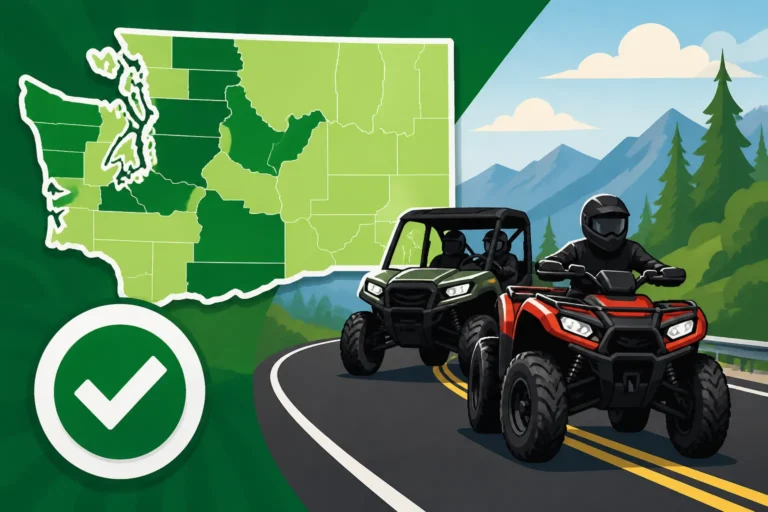
At its core, Washington state law allows WATVs on county roads that are posted 35 mph or less. This is the foundational rule that most riders first encounter. However, it's not a blanket permission slip for every single county road. Counties have the authority to "opt-in" to the state's WATV road use statute, essentially deciding which of their 35 mph or less roads will be open. Many counties in Washington, especially those with smaller populations, are actually "open by default" to WATV use on appropriate roads, unless they specifically pass an ordinance to close certain segments. Conversely, larger, more populated counties often have to specifically opt-in and list the roads they are opening. This means that a road that feels perfectly fine for your machine in one county might be strictly off-limits just a few miles down the road in another. It's this inconsistency that can catch riders off guard and lead to confusion about [Washington Rules for Riding a County Road].
Why State Highways Are a Different Beast
When it comes to state highways, whether they're U.S. routes or state routes, the rules shift dramatically. These aren't your typical county-maintained roads; they fall under the jurisdiction of the Washington State Department of Transportation (WSDOT). For the most part, state highways are generally closed to WATV use. The very nature of a state highway – designed for higher speeds, heavier traffic, and long-distance travel – makes it inherently less suitable for the kind of mixed-use traffic that WATVs represent. Think about the difference between a quiet rural county road and a busy four-lane highway with limited shoulders and merging traffic. The safety concerns are simply on a different scale. Because of this, WSDOT has a significant say in whether any segment of a state highway can be opened to WATV traffic, regardless of what a local city or county might want. This is a crucial distinction that often gets overlooked, and it’s why just having your [Washington On-Road Tab Cost] paid up isn't enough for highway access.
The Frustration of Patchwork Regulations
Let's be honest, the current system is a mess for riders. You spend hours researching, buying your machine, outfitting it, getting your [Registering a WATV in Washington] paperwork in order, and then you hit the pavement, only to be met with a labyrinth of local rules. You might be able to ride legally on a small stretch of road, then encounter a city limit sign, and suddenly you're in violation. Or you're trying to connect two amazing trail systems, but there's a mile-long segment of state highway in between, effectively cutting off your route. This patchwork approach isn't just an inconvenience; it can be a real safety hazard if riders are unsure where they are permitted to be, leading to unnecessary interactions with law enforcement or, worse, dangerous situations on inappropriate roadways. Riders simply want clear, consistent guidelines, but that's a tall order given the different entities involved in road management.
How City Ordinances Can Impact Highway Corridors
While the general rule is that state highways are off-limits, there's a specific, albeit limited, way that a city ordinance can influence WATV access on certain segments. This is where the concept of a "highway corridor" comes into play, creating a nuanced scenario that many riders find difficult to decipher.
What a City Ordinance Can (and Cannot) Do
A city ordinance, by its very nature, governs what happens within that city's incorporated limits. A city council can pass resolutions to open or close city streets to WATV traffic, much like a county can with its roads. For example, a city might decide that all residential streets posted 25 mph are open to WATVs to allow residents to access businesses or trailheads. This is a local decision and generally within their direct control, provided they follow state guidelines for equipment and rider requirements. [Washington Cities That Allow WATVs on Streets] provides more specific information.
However, a city's power to legislate diminishes significantly when it comes to state highways that merely pass through its jurisdiction. Even if a city wants to allow WATVs on a specific segment of a state highway within its boundaries, it cannot do so unilaterally. The city doesn't own or maintain that highway; WSDOT does. This means a city can propose or request access, but it cannot independently authorize it. This distinction is vital for understanding why so few highway segments are open and why the process is so complex. You can outfit your machine with SuperATV mirrors, turn signals, and a horn to meet equipment requirements, but the legal framework still needs to align.
The Crucial WSDOT Authorization for Highway Segments
Here's the critical piece of the puzzle: for a city ordinance to effectively open a segment of a state highway to WATV use, it requires explicit authorization from WSDOT. The state law on WATV road use specifically outlines this requirement. It states that WSDOT, in consultation with the local jurisdiction (in this case, the city), can designate specific segments of state highways where WATVs may be operated. This isn't a quick process. WSDOT has to evaluate traffic volumes, road design, sightlines, safety considerations, and the overall impact on highway operations.
This means that a city ordinance, in effect, acts as a formal request or an expression of local intent. It's the city saying, "We, the local jurisdiction, believe it is safe and beneficial to allow WATVs on this specific highway segment within our limits." But that statement then needs WSDOT's stamp of approval to become enforceable. Without that WSDOT authorization, any local ordinance purporting to open a state highway segment would likely be invalid. This is why when you hear about cities opening streets, it almost always refers to city-owned streets, not state highways. The law also includes specific limits on speed; for example, [Washington's 35 mph Road Rule] applies to these authorized segments.
Practical Examples of City-Opened Highway Corridors
While rare, it's helpful to consider scenarios where a city might pursue opening a highway corridor, and how that would practically work.
Imagine a small Washington town, let's call it "Trailhead Junction," situated between two popular off-road trail systems. Currently, riders have to trailer their machines through town to get from one system to the other because a state highway, State Route 123, runs right through the middle. The city council, seeing the economic benefit and the desire of riders, passes an ordinance requesting WSDOT to allow WATV use on a specific 1.5-mile segment of SR 123 that connects Main Street (a city street already open to WATVs) to the trailhead access road on the other side.
The city's ordinance would detail the exact segment, hours of operation, and any proposed safety measures. They'd then submit this to WSDOT. WSDOT would conduct its own engineering and safety review. If WSDOT agrees it's safe and feasible, they would issue an official authorization, perhaps with conditions (e.g., maximum speed limit, specific signage requirements). Only after WSDOT's approval would that city ordinance effectively allow WATVs on that particular highway corridor. Without WSDOT's green light, the city's ordinance would essentially be a wish on paper. This is the nuanced reality of [Washington Rules for Riding a Bridge] if that highway segment involves one, or [Washington Rules for Getting Across a Road] if it's merely a crossing.
Navigating the Specifics: What Riders Need to Know
Given the complexities, knowing how to identify open corridors and what's expected of you as a rider is paramount. It’s not just about avoiding a ticket; it’s about riding safely and responsibly.
Identifying Approved Highway Segments
Finding out which specific highway segments, if any, have been opened by a combination of city ordinance and WSDOT authorization can be a challenge. It's not always clearly signposted in an easily accessible way. Here’s how you might approach it:
- Check City Websites and Council Minutes: Start with the website of the city you plan to ride through. Look for ordinances related to "WATV," "ORV," or "street legal ATV" use. If they've passed something regarding a state highway, there should be a public record of it, often in their city council meeting minutes or codified ordinances.
- WSDOT Official Publications: WSDOT is required to authorize these segments. While they might not have a single, easy-to-find list for all such authorizations, they would typically issue guidance or add specific routes to their internal mapping systems. You might need to contact WSDOT's regional offices directly or check their general recreation-related publications, though this can be like finding a needle in a haystack.
- Local ORV Clubs and Forums: Often, the most up-to-date and practical information comes from local riding clubs and online forums. These groups frequently engage in advocacy efforts and are usually the first to know about changes in local regulations. They might even have maps or specific instructions for permitted routes.
- Physical Road Signage: Always, always look for official signage. If a segment of a state highway is open, there should be clear signs indicating WATV access, often similar to what you'd see on county roads. If you don't see signs, assume it's closed.
Equipment and Rider Requirements Remain Paramount
Even if you find a rare, authorized highway corridor through a city, you must remember that all standard [Washington WATV Road Requirements] still apply. This isn't a "free pass" to ride an off-road machine without the necessary safety and legal equipment. Your WATV must be properly outfitted to be street legal, which typically includes:
- Headlights and Taillights: Operational and visible.
- Brake Lights: Functioning correctly.
- Turn Signals: Both front and rear, clearly visible. Many riders choose aftermarket kits from reputable brands like SuperATV to ensure compliance and visibility.
- Mirrors: At least one rear-view mirror, but often two are required for better visibility.
- Horn: An audible warning device.
- Windshield or Eye Protection: Depending on the machine, you might need a windshield, or at minimum, the rider and passenger must wear eye protection.
- Seatbelts: If your machine (like a side-by-side) has them, they must be used.
- Spark Arrester and Muffler: Your exhaust system needs to be compliant with noise regulations and safety.
- Helmets: Both driver and passenger must wear an approved helmet, regardless of age. See [Washington Helmet Law for WATV Riders] for details.
- Valid Driver's License: The operator must possess a valid driver's license.
- Insurance: Proof of liability insurance is required for road-registered WATVs.
Failure to meet these equipment and rider requirements, even on an authorized highway segment, can lead to citations and penalties.
The Importance of Local Knowledge and Verification
The bottom line is that navigating WATV access on state highway corridors through Washington cities requires vigilance and a healthy dose of skepticism. Never assume. Always verify. The laws are complex, often updated, and can vary greatly from one town to the next, even for a short stretch of highway.
Before you load up your machine and head out, do your homework:
- Call the Local City or County: Contact the relevant city clerk's office or the county sheriff's department. They can often provide the most direct information about specific ordinances and WSDOT authorizations in their area.
- Consult WSDOT: For state highway questions, WSDOT is the authority. While getting a definitive answer might take persistence, it's the official source.
- Check Signs on the Ground: As mentioned, actual road signs are your final confirmation. If there's no sign explicitly allowing WATV use, assume it's prohibited.
- Err on the Side of Caution: If you're unsure, don't risk it. Riding on an unauthorized segment of a state highway can lead to significant fines, impoundment of your machine, and could even put you and others in danger. It's simply not worth the risk.
The Future of WATV Access and Advocacy
The landscape for WATV road access in Washington is constantly evolving. What was closed yesterday might be open tomorrow, and vice versa. Understanding the advocacy process and the challenges involved can help riders contribute to more comprehensive and safer access in the future.
The Process of Petitioning for More Access
For cities or counties to open up new road segments, especially those tricky highway corridors, it often starts with rider groups and local enthusiasts advocating for change. This isn't just about showing up with a petition; it's about building relationships and presenting a well-researched case.
Here's how such a process typically unfolds:
- Identify a Need: Riders identify a specific road or highway segment that, if opened, would significantly improve access to trails, local businesses, or connect existing routes. This often involves documenting the current limitations and the benefits of opening the segment.
- Gather Support: This means getting local businesses, residents, and other community stakeholders on board. Economic impact studies, showcasing how WATV tourism can boost local economies, are often powerful tools. Local [Washington ORV Registration Lookup] data can help illustrate the number of riders.
- Approach Local Government: Rider groups will then formally approach city councils or county commissioners with their proposal. This involves presenting their case, often at public meetings, detailing the desired access, proposed safety measures, and community support.
- Engage with WSDOT: If a state highway corridor is involved, the local government, with rider support, will then formally engage with WSDOT. This is where the in-depth safety and engineering reviews come into play. WSDOT will assess traffic flow, sightlines, speed limits, and the potential impact on highway safety. They may require specific infrastructure changes or signage.
- Patience and Persistence: This entire process can take months, even years. It requires sustained effort, clear communication, and a willingness to compromise. Often, success means accepting limited access (e.g., only certain hours, or specific vehicle types) rather than full, open access.
Organizations and groups like the Methow Working Group, mentioned in [What the Methow Working Group Is Studying], often engage in these types of discussions to find solutions that balance recreation with environmental and community concerns.
Balancing Access with Safety Concerns
One of the biggest hurdles in expanding WATV road access, particularly on state highway corridors, is the inherent tension between providing recreational opportunities and ensuring public safety. WSDOT's primary mandate is the safe and efficient movement of traffic on state highways. Introducing WATVs, which typically have different performance characteristics than standard passenger vehicles, adds a layer of complexity.
Key safety concerns include:
- Speed Differentials: WATVs often travel at lower speeds than highway traffic, creating potential hazards.
- Visibility: Smaller WATVs can be less visible to larger vehicles, especially in poor weather or at night. While aftermarket lights from SuperATV can help, they don't fully mitigate this.
- Driver Training and Experience: While WATV riders might be experienced off-road, navigating higher-speed, multi-lane highway traffic requires a different skill set.
- Infrastructure: Many highway segments are not designed with WATV shoulder or lane use in mind.
Successful advocacy for increased access must always address these safety concerns head-on. Proposing specific safety measures, such as limiting access to off-peak hours, requiring advanced rider training, or advocating for dedicated signage, can help bridge the gap between rider desires and WSDOT's safety imperatives. It’s about finding that sweet spot where everyone can enjoy the roads and trails responsibly and safely.
Disclaimer
This article is for general informational purposes only and does not constitute professional advice. Laws, prices and regulations vary by location and change over time. Consult a qualified professional for guidance on your specific situation.