Washington Rules for Riding a Ditch
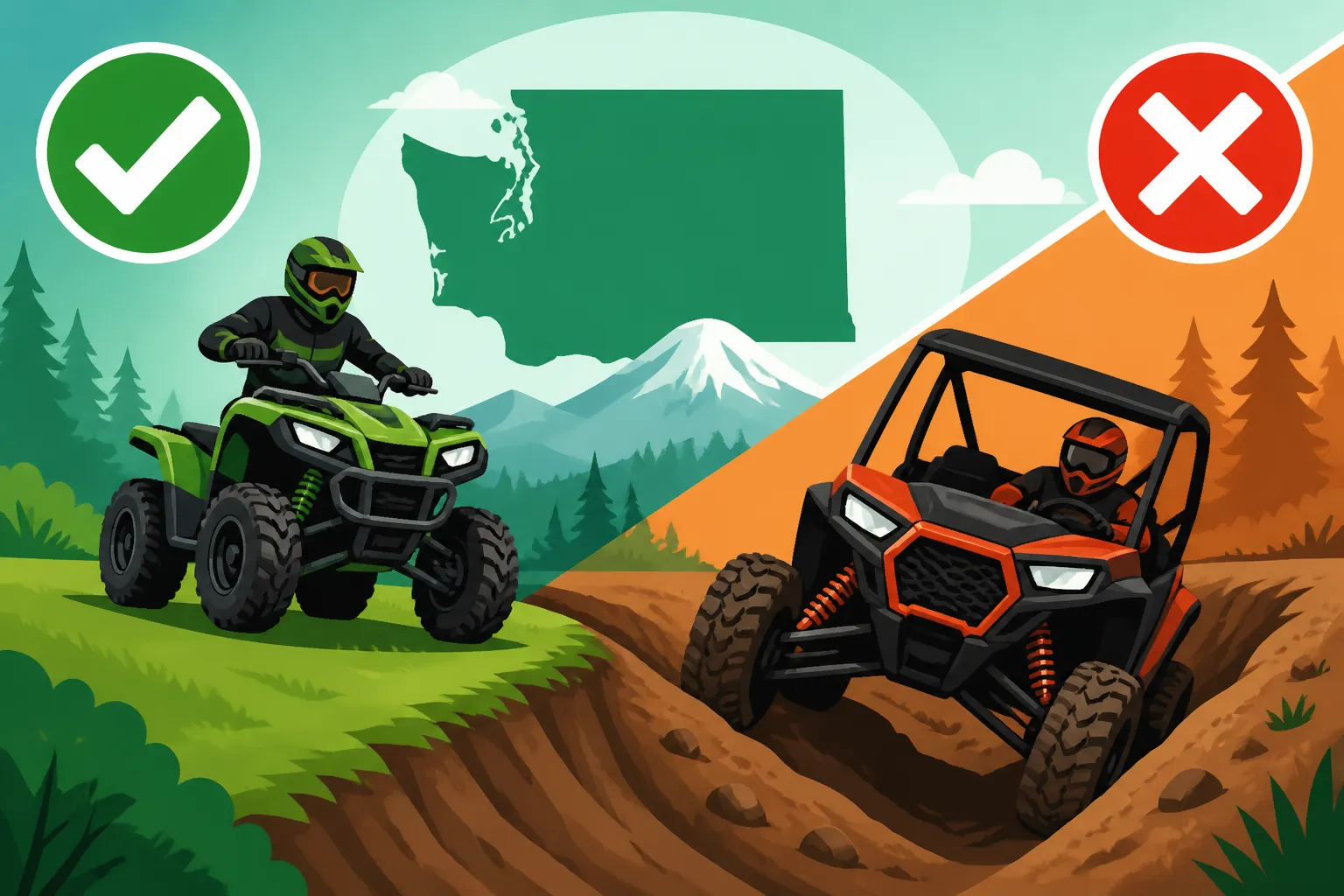
Oh, the ditch. It calls to so many of us, doesn't it? You're out riding your ATV or UTV in Washington, maybe on a quiet county road or simply trying to get from one point to another, and there it is: a tempting, open-looking ditch running alongside the pavement. It often seems like an easy, less-trafficked route, a shortcut, or just a fun little diversion. But here in Washington, that innocent-looking ditch can quickly lead to a heap of trouble, both legally and physically. This guide is all about navigating the murky waters of ditch riding, helping you understand Washington's rules, the hidden risks, and why it's almost always a bad idea to take that tempting detour into the ditch.
The Allure and Danger of Ditch Riding in Washington
It’s completely understandable why many off-road enthusiasts might eye a roadside ditch as a potential riding path. On the surface, it often looks like an open, untamed strip of land, seemingly separate from the pavement and free for the taking. This perception, however, is a common trap that can lead to unforeseen consequences.
Why the Ditch Looks Like a Trail
Picture this: you're cruising down a gravel county road, perhaps one of those that allows WATV use in certain areas, and alongside it runs a wide, grassy depression. It might have a slight slope, a few ruts, and perhaps even some evidence of water flow from a recent rain. To an off-road rider, this often looks like an impromptu, natural trail. It feels less restrictive than the paved or gravel road, offering a sense of freedom and a more "off-road" experience without having to venture far from the main route. Sometimes, it even seems like a convenient way to bypass a short stretch of pavement you’d rather avoid, especially if you're not fully street legal with all the bells and whistles for [Washington WATV Road Requirements].
Another factor is the sheer convenience. Maybe you’re trying to get to a specific property access point, or you see a friend's house just a little further down the road, and the ditch seems like the most direct, least obtrusive path. It often appears to be a no-man's-land, not quite road, not quite private property, leading many to assume it's fair game. This visual deception is powerful, making it easy to rationalize a quick trip through the ditch, even if your gut tells you to be cautious.
The Hidden Hazards of Ditch Riding
Despite their tempting appearance, ditches are far from safe, designated riding areas, and they pose numerous physical and legal hazards. Physically, ditches are designed for drainage, not for recreational vehicle traffic. This means they can hide all sorts of unpleasant surprises. You might encounter deep, unexpected culverts that can swallow a wheel and flip your machine, or hidden rocks, stumps, and debris that can cause significant damage to your undercarriage. Imagine hitting a submerged concrete block you couldn't see, or losing traction on slick, unexpected mud or standing water after a recent rain. These scenarios can lead to serious accidents, injuries, or costly repairs.
Beyond the immediate physical dangers, there's the critical issue of property lines. Even if a ditch is technically within a public right-of-way, its banks often extend onto adjacent private property. This means that by riding in the ditch, you could unknowingly be trespassing on someone's land, leading to confrontation with property owners or even legal trouble. Moreover, ditches are not maintained for ORV use; they might be subject to erosion, washouts, or unstable ground, which can further complicate safe passage. It's a risk that far outweighs any perceived convenience or "shortcut" benefit.
Washington State Law on Ditch Riding
Understanding where you can and cannot legally ride your ATV or UTV in Washington is paramount for responsible ownership. When it comes to ditches, the law is generally quite clear, even if the visual cues on the ground are less so.
The Legal Classification of Ditches
In Washington, most roadside ditches are considered part of the public right-of-way, which is the strip of land owned or controlled by a government entity (like the county or state) for transportation purposes. However, being part of the "right-of-way" does not automatically grant permission for off-road vehicle use. Washington's Off-Road Vehicle (ORV) laws are quite specific about where these machines can operate. Generally, ORVs are permitted on designated trails, approved multi-use roads, and private property with permission. Ditches, by their very nature and primary function as drainage infrastructure, do not fall into these categories.
Think of it this way: the right-of-way is primarily for the road itself and necessary infrastructure like shoulders, drainage, and utility easements. It's not intended to be an extension of the state's trail system. Unless a ditch has been explicitly designated and signed as part of an authorized ORV trail system—which is exceedingly rare—you should assume it is off-limits. Operating a WATV in such an undesignated area can be viewed as an unauthorized use of public land or even a public nuisance, potentially leading to citations. You can read more about [Washington's Off-Road Vehicle Rules Explained] to get a broader understanding of legal riding areas.
Trespass Laws and Property Rights
One of the most significant legal risks of riding in a ditch is trespassing. While the ditch itself might be within the public right-of-way, the banks of the ditch often extend onto private property. Landowners typically own property up to the edge of the public right-of-way, which might be just a few feet from the pavement or extend further back, encompassing part or all of the ditch. When you ride in that ditch, you are often, albeit unknowingly, encroaching on private land.
Even if you believe you are still within the public right-of-way, many jurisdictions have ordinances against operating vehicles in drainage ditches due to potential erosion, damage to infrastructure, or simply because it's not a designated use. A landowner whose property borders that ditch can certainly view your presence as trespass, leading to direct confrontation or calling law enforcement. In Washington, trespass can result in fines and legal action. It’s always best to stay on clearly marked and officially designated trails to avoid any doubt about property boundaries. Familiarize yourself with [Washington Trespass Rules for Riders] to understand the consequences of unauthorized access.
Exceptions and Nuances: When a Ditch Might Be Okay (and When It's Definitely Not)
While the general rule is to avoid riding in ditches, there are always those "what if" scenarios that come to mind. It’s crucial to distinguish between legitimate, albeit rare, circumstances and outright illegal use.
Ditch Crossings for Road Access
There’s a clear distinction between riding along a ditch and crossing a ditch. Sometimes, to legally access an approved roadway or a designated off-road trail, you might need to cross a drainage ditch. For example, if you're trying to get from a private property access point to a county road that is open to WATV use, and a ditch lies between, a brief, direct crossing might be unavoidable. This is generally permissible as long as it's the most direct and safest way to move from one legal point to another, and you are not riding down the ditch.
The key here is "crossing," not "using as a route." You're not meant to ride parallel to the road in the ditch for any significant distance. Such crossings should be done carefully, ensuring no damage to the ditch itself or any culverts. Always remember to check for any local ordinances or specific signage that might prohibit even crossing in certain areas. It's akin to how you're allowed to cross a highway at designated points, but not ride along its median. For more on how to legally get across other types of obstacles, you might find [Washington Rules for Crossing a State Highway] helpful, as the principle of direct access applies. Similarly, when you are trying to reach an official trailhead, a brief ditch crossing to get into the staging area could be necessary, as outlined in [Washington Rules for Riding to a Trailhead].
Designated Multi-Use Paths and Ditches
In very rare instances, a ditch or a ditch-like depression might be incorporated into an officially designated multi-use trail system. This would be clearly marked on maps and with specific signage on the ground, indicating it is an authorized part of the trail. However, this is not the norm for roadside drainage ditches. You’re much more likely to find a purpose-built trail than a repurposed ditch.
Always consult official DNR or county recreation maps, and look for clear signage indicating ORV access. Never assume that because a ditch looks rideable, it is part of a legal trail. If a ditch or similar feature is indeed part of a marked trail, it will typically be maintained for ORV use, mitigating some of the hidden hazards. But without explicit designation, assume it's off-limits.
Private Property and Permission
The one exception to "no ditch riding" is when the ditch is entirely contained within private property, and you have explicit, documented permission from the landowner to ride there. For example, a farmer might have a drainage ditch running through their fields, and if you're helping them with farm work or just riding with their express consent, that's their prerogative on their own land.
However, even on private property, exercising caution is vital. Drainage ditches can be unstable, especially after rain, and can hide irrigation pipes or other hazards. Always ensure you have a clear understanding with the landowner about where you can and cannot ride, and what specific features to watch out for. Verbal permission is often insufficient if a dispute arises; written permission is always best. This concept is similar to understanding the rules for [Washington Rules for Riding Private Timberland], where explicit permission is key.
Practical Implications and Avoiding Penalties
Ignoring Washington’s rules regarding ditch riding isn’t just about the potential for property damage or injury; it can also lead to significant legal consequences and put a damper on your riding season.
What a Law Enforcement Officer Looks For
When a law enforcement officer, such as a county sheriff's deputy or a state patrol trooper, spots an ATV or UTV in a ditch, they are primarily looking for unauthorized operation. They'll assess if the machine is operating in an area not designated for ORV use, which constitutes illegal activity. This includes riding along the ditch for any distance, even if it's just a "shortcut." Officers are trained to recognize the difference between a brief, necessary crossing to access a legal area and intentional ditch riding.
The consequences can range from a verbal warning to a citation, which can carry fines. Depending on the specifics—such as whether you damaged property, were trespassing on private land, or caused a public disturbance—the penalties can escalate. You might face fines similar to those for [Washington Fines for Illegal WATV Road Use], and if your machine isn't properly registered or if you're riding in an area where your tabs don't apply, that can add to the list of infractions. While specific fines vary, even a simple citation for unauthorized operation can be costly, like figuring out [What a Washington Citation for No Tabs Costs] can be for other violations. In severe cases, your machine could even be impounded.
Best Practices for Responsible Riding
To ensure you stay on the right side of the law and protect yourself and your machine, always prioritize responsible riding practices. This means sticking to clearly marked and officially designated trails and roads. Before you head out, always consult current [Washington Trail Maps From DNR] or maps from local counties to understand the permitted riding areas. Don't rely on old maps or anecdotal information.
When you encounter challenging terrain on a legal trail, having the right equipment can make all the difference. For instance, if you're navigating a rutted trail or crossing a stream bed as part of a designated route, products like lift kits or heavy-duty suspension components from reputable brands like SuperATV can provide the ground clearance and durability needed to protect your machine. Similarly, investing in robust skid plates can shield vital components from rocks and debris on legitimate, rough trails. These upgrades enhance safety and performance within the confines of legal riding, allowing you to confidently tackle the trails Washington offers. Remember, these modifications are for enhancing your experience on authorized terrain, not for facilitating illegal ditch riding. Always stay on designated paths, and if a trail is closed or you're uncertain about access, turn back. This proactive approach not only keeps you safe but also protects the future of ORV riding in Washington by demonstrating responsible use. For more on staying within legal boundaries, consider [Washington Rules for Riding Off a Designated Trail].
Here's a quick overview of ditch riding scenarios and their typical implications:
| Scenario | Description | Legal & Safety Implications |
|---|---|---|
| Riding Along a Roadside Ditch | Operating your WATV parallel to a public road within the drainage ditch. | Illegal. High risk of trespassing, fines for unauthorized operation, potential for property damage (to ditch infrastructure or adjacent private land), and significant physical hazards (hidden culverts, rocks, mud, unstable ground leading to rollovers or accidents). |
| Crossing a Ditch for Access | Briefly traversing a ditch to get from private property to a legal road/trail. | Generally Permissible. Must be direct, brief, and done safely with minimal impact. Not considered "riding" the ditch. Ensure no damage to infrastructure. Still exercise caution for hidden obstacles. Check for local ordinances that might prohibit even crossings in specific areas. |
| Ditch on Private Land (with permission) | Operating in a ditch entirely on private property with explicit landowner consent. | Legal (with permission). However, all physical hazards (hidden culverts, unstable banks, water, debris) remain. Still requires extreme caution and ideally written permission. |
| Ditch as Part of a Designated Trail | A rare instance where a ditch-like feature is officially part of an ORV trail. | Legal. Will be clearly marked with signage and on official maps. Usually maintained for ORV use to minimize hazards. Always confirm official designation before entering. Still, caution is advised as trails can change and features like water crossings or ruts can be tricky, where durable components from a brand like SuperATV could be beneficial for long-term machine protection. |
Disclaimer
This article is for general informational purposes only and does not constitute professional advice. Laws, prices and regulations vary by location and change over time. Consult a qualified professional for guidance on your specific situation.