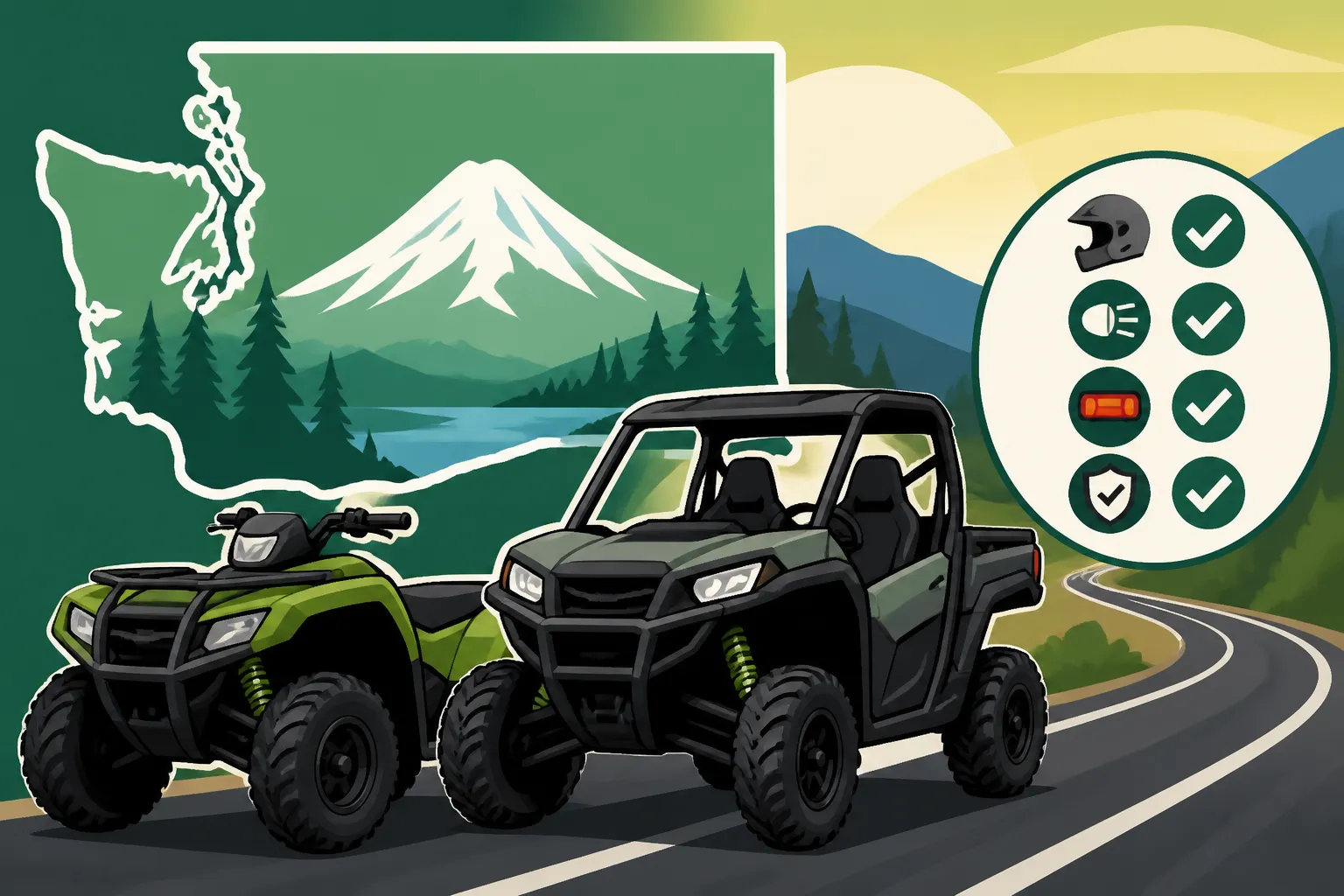
Washington WATV Road Requirements
It can feel incredibly frustrating to buy an amazing recreational machine like a side-by-side or a quad, only to discover a tangled web of rules about where you can and cannot ride it, especially on paved roads. Many folks just want to get from their campground to a nearby trail, or maybe even run into town for a quick supply run without having to load their WATV back onto a trailer. This guide is here to untangle those specific Washington WATV road requirements, helping you understand exactly what it takes to legally ride your off-road vehicle on public roads and city streets in the Evergreen State.
Navigating the Complexities of Washington's WATV Road Rules
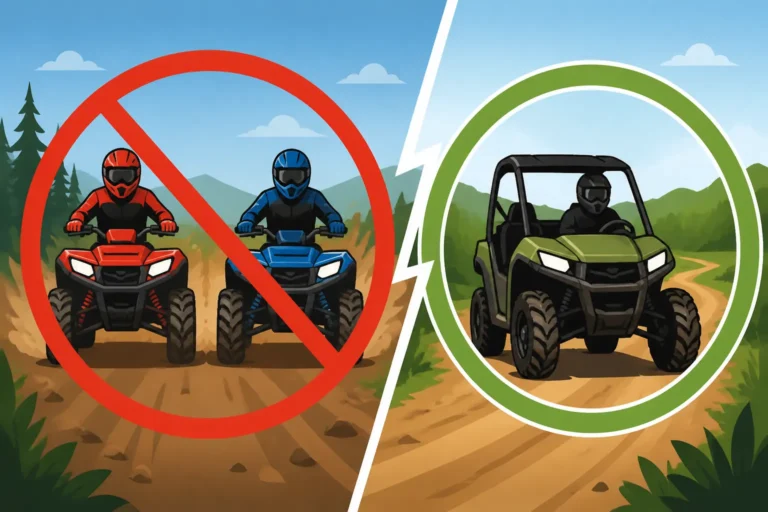
The dream of cruising your WATV down a paved road, feeling the breeze and heading to your favorite trailhead, is a powerful one for many riders in Washington. However, the reality is that making a Wheelbase All-Terrain Vehicle (WATV) "street legal" in Washington involves more than just slapping on a license plate. The state has specific and sometimes intricate rules, designed for safety and to differentiate WATVs from standard automobiles. It's not a free-for-all, and understanding these nuances can save you from a costly citation or, worse, an accident. The biggest hurdle for many is simply wrapping their head around the idea that "street legal" for a WATV isn't the same as it is for your car.
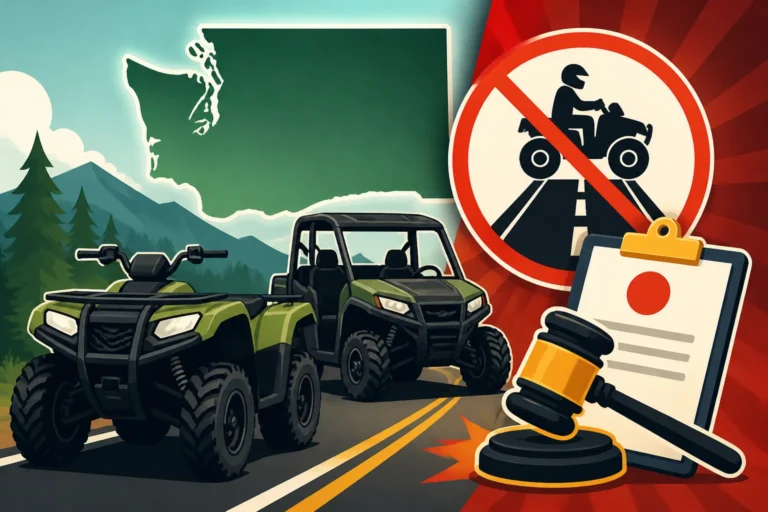
A core frustration comes from how different counties and cities approach WATV road access. While the state sets the general framework, it often delegates the decision-making for specific roads to local jurisdictions. This means that what's legal in one county might be illegal just across the line in another. It demands a proactive approach from riders to know the local rules wherever they plan to ride. Ignoring these details isn't just a matter of skirting a minor rule; it's about ensuring your safety and the safety of others on the road, as well as avoiding significant penalties that can quickly sour your riding experience.
Many riders, especially those new to the hobby or new to Washington, assume that if a machine looks like it could be driven on the road, it automatically can be. This simply isn't the case. Washington has clearly defined equipment standards, rider requirements, and road access limitations that must all be met simultaneously. It’s a comprehensive system, and skipping even one part of the puzzle can render your machine illegal for road use, even if you’ve invested in all the necessary modifications. Think of it as a checklist you absolutely must complete before you even think about dropping a wheel on public pavement.
Essential Equipment for On-Road WATV Use in Washington
Converting your WATV from a pure off-road warrior to a road-legal machine in Washington isn't just about wishing it so. It requires specific modifications to ensure it meets the same basic safety standards as other vehicles on the road. These aren't just suggestions; they are mandates that a law enforcement officer will be checking for if they pull you over on a county road. Many riders choose to install aftermarket kits from reputable manufacturers to bring their machines into compliance. This means you might be looking at adding components that weren't part of your original factory setup, but they are absolutely non-negotiable for road use.
Lighting Requirements for Visibility
When you're out on the pavement, your WATV needs to be just as visible as any other vehicle, especially in low light or at night. Washington law specifically requires your WATV to have at least one headlight (which automatically goes to two on most quads and side-by-sides), a taillight, and brake lights. These must be visible from a certain distance, ensuring that drivers approaching from the front or rear can clearly see your presence. For those who ride after dark, these lighting requirements are paramount. Many stock machines might have adequate lighting for the trail, but road use often demands more robust and brighter solutions to truly stand out.
Beyond the basic headlights and taillights, you also need proper turn signals. These are essential for communicating your intentions to other drivers, whether you're changing lanes, making a turn, or simply pulling over. Standard WATVs rarely come with turn signals installed from the factory, so this is a common modification. Companies like SuperATV offer universal turn signal kits designed to integrate seamlessly with various WATV models, helping riders meet this crucial requirement without a headache. Remember, clear communication on the road is a huge part of preventing accidents, and functional turn signals are at the heart of that.
Mirrors and Horn for Situational Awareness
Just like any other vehicle sharing the road, your WATV needs to be equipped with a functional rearview mirror. This mirror must be positioned to give you a clear view of the road behind you, allowing you to monitor traffic and react safely to changing conditions. Most side-by-sides come with a center rearview mirror, but many quads will require an aftermarket installation, often on the handlebars. Some riders even opt for side mirrors in addition to a rearview mirror to maximize their field of vision, enhancing safety on busy roads. Without adequate mirrors, you’re essentially driving blind to what’s coming up behind you.
Alongside mirrors, a working horn is another non-negotiable item for road-legal WATVs in Washington. This isn't just a courtesy; it's a critical safety device. A horn allows you to alert other drivers or pedestrians to your presence in situations where they might not see you, or to signal a potential hazard. Imagine a car backing out of a driveway unexpectedly or a pedestrian stepping into the road – a quick honk can prevent a serious incident. Many aftermarket companies offer easily installed horn kits that connect directly to your WATV’s electrical system, making compliance straightforward.
Windshield or Eye Protection, and Seat Belts
Washington law is pretty clear on protecting your face and eyes while riding on the road. If your WATV doesn't come with a windshield that meets automotive safety standards, then you, as the operator, are required to wear eye protection. This could be goggles, a face shield on your helmet, or safety glasses. This rule is about preventing debris, insects, or other hazards from impairing your vision or injuring your eyes while traveling at road speeds. Even on a warm day, a tiny pebble kicked up by a passing car can cause significant damage if your eyes aren't shielded.
For utility vehicles (UTVs or side-by-sides), the rules extend to seat belts. If your UTV was designed with seat belts, then they must be worn by both the driver and all passengers while operating on public roads. This mirrors the standard safety regulations for cars and trucks and is critical for occupant safety in the event of a sudden stop or collision. While some older models might not have come with seat belts, nearly all modern UTVs do. Ensuring they are functional and properly used is a fundamental aspect of road-legal operation. For example, SuperATV offers a range of UTV accessories, including windshields and harness systems, that can help enhance safety and meet these requirements.
Here’s a quick summary of key equipment for Washington WATV road use:
| Equipment Type | Requirement | Common WATV Models Needing Upgrade | Purpose |
|---|---|---|---|
| Headlights | At least one, must be visible from 500 ft (most have two) | Generally stock | Frontal visibility |
| Taillight | At least one, visible from 500 ft | Generally stock | Rear visibility, especially after dark |
| Brake Lights | Must activate when brakes are applied | Often stock | Signals deceleration to following traffic |
| Turn Signals | Front and rear, amber or red, clearly visible to indicate turns | Most ATVs & many UTVs | Communicates turning intentions |
| Rearview Mirror | Provides clear view of the road behind the operator | Most ATVs | Situational awareness, monitoring traffic |
| Horn | Audible from 200 ft, operational with a simple push | Most ATVs & some UTVs | Alerts others to presence or hazards |
| Windshield | If none, operator must wear eye protection (goggles/face shield) | Most ATVs & many open-cab UTVs | Protects from debris, insects |
| Seat Belts | Required for all occupants if factory-equipped (UTVs) | All UTVs with factory belts | Occupant restraint in event of collision |
| Spark Arrester | US Forest Service approved | All WATVs | Prevents wildfires from exhaust sparks |
| Muffler | Efficiently muffles exhaust noise, no cutouts or bypasses | All WATVs | Reduces noise pollution |
Rider and Passenger Requirements for Street Legal WATVs
It's not just the machine that needs to be properly equipped; the people riding in and on it also have specific requirements to meet when operating on Washington's roads. These rules are in place to ensure that operators are capable, knowledgeable, and protected, reducing the risk of accidents and serious injury. Getting your machine ready is one thing, but making sure you and your passengers are compliant is equally important. A Washington Trooper will be looking at both your machine and your behavior if you're stopped.
Valid Driver License and Age Restrictions
One of the most fundamental requirements for operating a WATV on a public road in Washington is possessing a valid driver's license. This means you need to be legally licensed to operate a motor vehicle – the same license you'd use to drive your car or truck. A learner's permit or an instruction permit for a standard car often isn't enough; you need the full privileges of a licensed driver. This is because when you take your WATV onto the pavement, you're essentially becoming part of the regular traffic flow, and the state wants to ensure you have demonstrated a basic level of driving competence.
Furthermore, there are age restrictions that tie into this. Generally, to operate a WATV on a public road in Washington, you must be at least 16 years old and hold that valid driver's license. Washington is quite strict about [Washington Minimum Age to Ride a Road]. For riders under 16, even if they have an ORV safety certificate (which isn't mandatory in Washington but is highly recommended), they generally cannot operate a WATV on public roads. These rules are designed to protect younger, less experienced riders from the inherent dangers of mixing with faster, heavier road traffic. Always check the specific laws, but a good rule of thumb is: if you can't drive a car on that road, you shouldn't be driving your WATV there either.
Helmet Rules and Insurance Requirements
Washington has a very clear [Washington Helmet Law for WATV Riders]. When you're operating a WATV on a public road, both the driver and any passengers are required to wear a properly fitted, DOT-compliant helmet. This isn't just for trail riding; it extends to any legal road use. The impact of a fall or collision on pavement is often far more severe than on dirt, making head protection absolutely essential. Even if you're just crossing a short section of road to get to another trail, that helmet needs to be on and securely fastened. It's a simple safety measure that can literally save your life or prevent a devastating injury.
Another critical requirement for road-legal WATVs in Washington is liability insurance. Just like your car, if you're operating your WATV on a public road, it must be covered by a liability insurance policy. This policy needs to meet the minimum coverage requirements set by the state, ensuring that if you are involved in an accident and found at fault, there's coverage for damages or injuries to other parties. This is a huge point of compliance for many riders, as off-road-only machines often don't require insurance. Before you even think about putting a wheel on a county road, confirm your WATV is properly insured for on-road use. Check out [Washington WATV Insurance Requirement] for more details.
Understanding Washington's Road Access Rules for WATVs
Even if your WATV is fully equipped and you, as the rider, meet all the personal requirements, you still can't just ride anywhere on the pavement. Washington has specific rules about which roads are open to WATVs, and this is where local ordinances play a huge role. It's a system designed to give local communities control over their roadways, recognizing that not all roads are suitable or safe for mixed WATV and vehicular traffic. This means research is your best friend before you venture out.
County and City Ordinances for Road Access
Washington state law provides a framework for WATV road use, but it largely empowers counties and cities to decide which of their roads are open or closed to these vehicles. This means that [Washington Counties That Allow WATVs on Roads] have usually passed specific ordinances to designate certain roads as open. Conversely, counties and cities that don't have such an ordinance, or that explicitly prohibit WATV use, will consider it illegal to ride on their streets. This creates a patchwork of rules across the state, which can be confusing for riders.
It's absolutely vital to check the local ordinances for any county or city you plan to ride through. Many jurisdictions will publish a list or map of approved roads on their county or city website. Failing to do this can lead to a citation for illegal road use, which can come with significant fines. You can't assume that because a road looks like a gravel road or a low-traffic paved road, it's automatically open. The local government has the final say, and their decision is legally binding.
Speed Limits and Highway Crossing Rules
When operating on designated open roads, WATVs are generally restricted to roads with a posted speed limit of 35 mph or less. This is often referred to as [Washington's 35 mph Road Rule]. Attempting to ride your WATV on a road with a higher posted speed limit, even if it's an open county road, is usually illegal. This restriction is primarily due to safety concerns; WATVs are not designed to keep up with the speeds of typical road traffic and have different handling characteristics. It's about minimizing the speed differential between your machine and other vehicles, reducing the risk of high-speed collisions.
Crossing state highways also has specific rules. You can't just ride down a state highway like you would a county road. However, Washington law generally allows for direct crossings of highways posted up to 60 mph, provided you do so at approximately a 90-degree angle to the roadway and at a location that ensures safe crossing. This is for getting from one open county road to another, not for continuous travel on the highway itself. Always be extra cautious when crossing any highway, watching for traffic in both directions, and yielding the right-of-way. Consult [Washington Rules for Crossing a State Highway] for detailed guidance.
Common Pitfalls and What to Do Before You Ride
Even with the best intentions, it's easy to make mistakes when navigating the complex world of WATV road legality in Washington. Riders often get caught out by small details or by not doing their homework. Understanding these common pitfalls can save you time, money, and a lot of headaches, ensuring your riding experience remains enjoyable and hassle-free.
The Importance of Checking Local Ordinances
One of the most frequent traps riders fall into is assuming road access. They might see other WATVs on a particular road and assume it's legal, or they might rely on outdated information from a friend. The truth is, county and city ordinances can change, and what was open last year might be closed this year. It's not enough to simply have the right equipment; you need to know where you're allowed to use it. Many online forums or social media groups can be helpful for general advice, but for official, current information, always go directly to the source: the local county or city government website.
Before every ride that involves pavement, even for a short stretch, make it a habit to quickly check the specific ordinances for that area. This diligence prevents accidental violations. Imagine planning a whole day of riding, getting your machine ready, only to be stopped by a trooper who informs you that the road you're on, and the access point you were heading to, are strictly off-limits to WATVs. That kind of frustration is entirely avoidable with a little pre-ride research. It's also worth noting that what a Washington Trooper checks roadside can include verifying your knowledge of local road rules.
Maintenance and Pre-Ride Checks
Beyond legal compliance, regular maintenance and pre-ride checks are crucial for the safety and reliability of your road-legal WATV. The demands of pavement riding, even at lower speeds, are different from off-road conditions. Components like tires, brakes, and lights need to be in top condition. Are your tires properly inflated for road use? Are your brake lights working reliably every time you hit the pedal? Is your horn loud enough? If you've installed aftermarket components like turn signals or mirrors, ensure they are securely mounted and functioning correctly before you head out.
Ignoring these checks not only compromises safety but could also lead to additional citations. For instance, a burnt-out taillight, while perhaps a minor issue on the trail, becomes a legal violation on the road, especially after dark. Think about the added stress you put on your machine's electrical system with new lights and a horn; ensure your battery and charging system are up to the task. Taking a few minutes before each ride to verify everything is in working order means a safer, more compliant, and ultimately more enjoyable journey.
Disclaimer
This article is for general informational purposes only and does not constitute professional advice. Laws, prices and regulations vary by location and change over time. Consult a qualified professional for guidance on your specific situation.