Washington Road Use Declaration Form
Navigating the world of Washington state off-road vehicles, or WATVs as they're officially called, can sometimes feel like trying to solve a puzzle with half the pieces missing. One of the most common head-scratchers, especially if you're hoping to ride your machine on approved public roads, is the Washington Road Use Declaration Form. This guide will walk you through exactly what this form is, why it's so important, and how to fill it out correctly so you can hit the pavement legally and confidently.
Understanding the Washington Road Use Declaration Form
When you envision riding your side-by-side or quad on certain county roads, maybe just to get from your campsite to the trailhead, or to pop into town for supplies, you're looking at needing what Washington calls an "on-road tab." But getting that tab isn't as simple as just checking a box. The state wants to ensure that any machine venturing onto public roadways meets a basic set of safety standards, much like any other registered vehicle. That's where the Washington Road Use Declaration Form comes into play. It's not just another piece of paper; it's your formal statement to the state that your WATV is equipped for the road.
What Is This Form, Really?
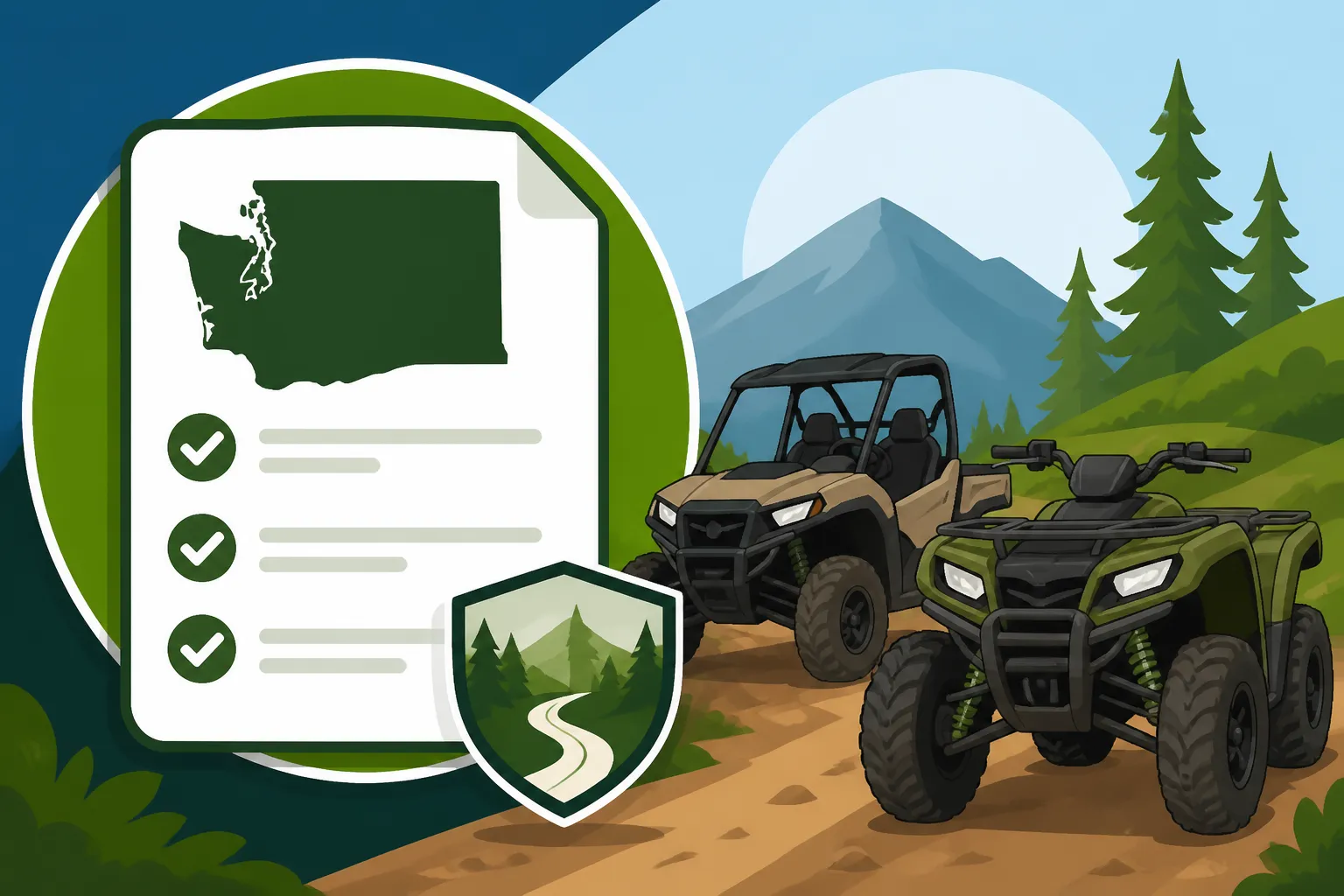
Think of the Road Use Declaration Form as a sworn statement. You, as the owner, are declaring that your specific WATV meets the necessary equipment requirements outlined in Washington state law for on-road use. It's a critical step in proving your machine's roadworthiness before the Department of Licensing (DOL) will issue you that coveted on-road tab. Without this signed declaration, you simply cannot legally obtain the on-road portion of your registration. It's the state's way of putting the responsibility squarely on the owner to ensure their machine is safe and compliant, rather than requiring every WATV to go through a complex, uniform inspection process for every single piece of equipment.
The purpose of this declaration is fundamentally about safety and accountability. Washington has specific [Washington WATV Road Requirements] that cover everything from lighting to mirrors to turn signals. When you sign this form, you're not just saying "yes, I have lights." You're legally affirming that those lights, and all the other required equipment, are present and functional according to the state's statutes. This form helps to streamline the registration process while still maintaining an important layer of consumer responsibility and public safety.
Why You Can't Skip the Declaration for On-Road Use
It might seem like an extra hoop to jump through, but the Road Use Declaration is absolutely non-negotiable if you want to legally operate your WATV on designated public roads in Washington. The state law explicitly requires it for the issuance of the [Washington's On-Road Tab Explained]. If your intent is purely off-road riding, sticking to trails, private property, or areas where only the off-road tab is needed, then you wouldn't need to concern yourself with this particular form. However, even a short jaunt down an approved county road requires this declaration and the accompanying on-road tab.
Many riders initially misunderstand this, thinking their machine is "street legal" just because it has certain features. The declaration formalizes this. It's the official paperwork that ties your machine's physical characteristics to its legal right to be on public roads. Trying to get your on-road tab without a properly completed and signed declaration will result in rejection of your application. The DOL needs this record to confirm your acknowledgment of the requirements and your machine's compliance. It's part of the comprehensive [Washington WATV Registration Paperwork] that you'll need to submit.
Filling Out the Washington Road Use Declaration Form
Once you understand the 'why,' the 'how' becomes much clearer. Filling out the Washington Road Use Declaration Form isn't overly complicated, but it requires attention to detail and honest self-assessment of your WATV's equipment. Rushing through it or making assumptions could lead to issues down the line.
Required Information for Your Machine and You
The form will first ask for basic identifying information about your WATV and yourself. This includes things like the Vehicle Identification Number (VIN), make, model, and year of your machine, along with your full name and address as the owner. Ensuring this information matches your title and other registration documents is crucial to avoid any delays. If you're still in the process of [Titling a WATV in Washington], make sure you've got that sorted first, as the title needs to be in your name before you can complete the registration steps, including this declaration.
You'll also need to clearly indicate the type of WATV you are registering, whether it's a quad, a side-by-side, or a dirt bike, as these classifications can sometimes have slightly different considerations or required features for road use. For example, if you're registering a side-by-side, ensure that it is truly designated as a WATV under Washington law, and not some other type of vehicle. This initial section is straightforward, but it sets the stage for the more critical part of the form: the declaration of equipment.
The Core of the Declaration: Equipment Checklist
This is the heart of the form and where you truly declare your WATV's readiness for public roads. The form presents a series of checkboxes or statements related to specific equipment requirements. These typically include:
- Headlights: Are they properly aimed and functional?
- Taillights: Are they visible from the required distance?
- Brake Lights: Do they illuminate when the brakes are applied?
- Turn Signals: Are they front and rear, amber or red, and clearly visible?
- Mirrors: Does your WATV have at least one mirror providing a view of the highway to the rear for at least 200 feet?
- Horn: Does it produce a sound audible from 200 feet?
- Windshield or Eye Protection: Are you equipped with one or the other?
- Seatbelts: If your WATV has them from the factory, are they present and functional? This often applies more to side-by-sides.
- Muffler and Spark Arrester: Are they in good working order and meeting noise and spark emission standards?
Each of these items corresponds to a specific requirement in Washington's Revised Code of Washington (RCW) for WATV on-road use. When you check a box, you are attesting that your machine has that feature and that it meets the legal standard for functionality. For instance, it's not enough to simply have turn signals; they must be working correctly, visible, and appropriately colored. This isn't a suggestion; it's a firm legal requirement. You are signing under penalty of perjury, so absolute honesty is paramount. If you're not sure if your machine meets all these requirements, it's essential to perform a thorough inspection or have a qualified mechanic do one.
You might find yourself needing to consult resources like LawDepot if you are drafting a bill of sale for a machine you just purchased, ensuring all the details about the machine's condition and accessories are properly documented before you make this declaration. While LawDepot doesn't handle the state's declaration form, it's a great example of a service that helps individuals ensure their legal documents are sound.
The Signature and Its Importance
The final, and perhaps most crucial, step in completing the Washington Road Use Declaration Form is your signature. By signing, you are affirming, under penalty of perjury, that all the information you've provided is true and accurate to the best of your knowledge. This is a legally binding statement. You are literally [Signing the Road Use Declaration for On-Road Tabs]. It's not a casual agreement; it carries significant legal weight.
Consider a hypothetical situation: you sign the form, get your on-road tab, and then later, a state patrol officer stops you on a county road and finds your turn signals aren't working, even though you checked that box on the declaration. Not only could you face a citation for equipment violations, but there could be more serious implications for making a false declaration to the state. Always ensure your machine is fully compliant before putting your signature on that line. It’s better to take the time to install the proper equipment or have it repaired than to face legal repercussions later.
Common Questions and Pitfalls When Dealing with the Road Use Declaration
It's natural to have questions when dealing with state paperwork, especially something as specific as the Road Use Declaration for a WATV. Many riders encounter similar hurdles or have similar misunderstandings. Let's address some of those to help you avoid common pitfalls.
What if My WATV Doesn't Have All the Required Equipment?
This is a very common scenario. Many WATVs, especially older models or those originally designed purely for off-road recreation, don't come from the factory with all the equipment necessary for Washington road use. If your machine lacks any of the items on the declaration checklist—like turn signals, a horn, or specific mirrors—you simply cannot honestly sign the form. The solution is straightforward: you'll need to install the missing equipment or upgrade existing components to meet state standards.
For instance, if you have a quad primarily used for trail riding, it might only have a headlight and a taillight. To get the on-road tab, you'd likely need to add a horn, turn signals for both front and rear, and at least one rearview mirror. There are many aftermarket kits available for WATVs that can help you get compliant. It's a one-time investment that opens up new riding opportunities. Don't try to "fudge" the form; it's not worth the risk. Before signing, make sure your machine truly adheres to all the requirements.
Does the Form Require a Safety Inspection?
This is a point of frequent confusion. The Washington Road Use Declaration Form itself is not a safety inspection report. You, the owner, are performing a self-assessment and declaring its compliance. However, Washington law does require a one-time safety inspection for a WATV before it can be initially registered for on-road use. This inspection confirms that the equipment declared on your form is indeed present and functional. The good news is that this inspection has a [Washington WATV Safety Inspection Cost] cap, ensuring it remains affordable.
So, while the form and the inspection are separate steps, they are intrinsically linked. You fill out the form based on your machine's equipment, and then a qualified inspector confirms that equipment. You'll need to take your WATV to [Where to Get a Washington WATV Inspection] from an approved inspector, who will then sign off on the inspection report. Only after both the declaration is signed and the inspection is passed can you fully complete the process for the on-road tab. This dual-check system ensures both owner accountability and professional verification for public safety.
What About Previously Owned Machines?
When you buy a used WATV, especially one that might have been registered for road use by a previous owner, it's still your responsibility to ensure compliance. Just because the previous owner had an on-road tab doesn't automatically mean your machine, as it currently sits, meets all requirements under your ownership. Conditions change, equipment wears out, or modifications might have been made.
You'll still need to complete your own Washington Road Use Declaration Form and go through the one-time safety inspection. Never assume anything. Always treat a newly acquired used machine as if it's being registered for road use for the very first time. You'll also need to ensure the machine has a clear title transferred into your name, and a proper bill of sale. For these types of personal transactions, especially if you want to ensure all the details are ironclad, services like LawDepot can provide template [Washington WATV Bill of Sale Requirements] that clarify the transfer of ownership and condition of the machine. This ensures you have a solid legal record before you make your declaration to the state.
Beyond the Form: What Happens Next?
Completing and signing the Washington Road Use Declaration Form is a significant milestone, but it's just one part of the journey to getting your WATV fully legal for both off-road and on-road adventures. Once this form is accurately filled out, you're on the home stretch.
The Inspection and Tab Process
After you've completed your declaration and ensured your WATV is equipped, the next crucial step is getting that safety inspection. This is where a qualified mechanic or inspector, as mentioned earlier, confirms that your machine has all the declared safety equipment in working order. They'll verify things like your lights, horn, mirrors, and so on. Once they sign off on the inspection report, you'll gather that report along with your completed Road Use Declaration, your title, and proof of purchase (if applicable).
With all your paperwork in order, you can then head to a local vehicle licensing office. This is where you will formally apply for your WATV registration, including the on-road tab. The process involves submitting all the required documents and paying the necessary fees. The fees will include the standard [Washington WATV Registration Cost] and the additional charge for the on-road tab. Once everything is approved, you'll be issued your new registration and the two distinct tabs – one for off-road use and one for on-road use – that you'll display on your machine. For some machines, like a [Washington WATV Registration for a Quad] or a [Washington WATV Registration for a Side-by-Side], the process is largely the same, but always double-check any specific requirements for your exact vehicle type.
Keeping Your Machine Compliant on the Road
Getting the on-road tab isn't a "set it and forget it" situation. The declaration you signed is a continuous promise that your WATV remains equipped and functional for road use. This means ongoing maintenance is key. Regularly check your lights, horn, turn signals, and mirrors. If a bulb burns out, replace it. If a mirror gets broken, fix it. The law requires these items to be present and in good working order at all times when you're operating on public roads.
Being pulled over on a county road with an on-road tab, only to have a faulty brake light, could still result in a citation for an equipment violation. Your signed declaration provides the basis for your legal road use, but your machine's actual condition in the moment of operation is what truly matters. Stay vigilant, keep your machine well-maintained, and you'll enjoy countless safe and legal miles on Washington's diverse network of trails and approved roadways. This ongoing commitment to safety is part of what it means to be a responsible rider in Washington, and it ensures that you're always ready to meet the [Washington Rules for Riding a County Road] head-on. If you need any other documents throughout your ownership, such as a formal lease agreement if you rent out your machine, LawDepot can be a useful tool to help you generate appropriate legal forms.
Disclaimer
This article is for general informational purposes only and does not constitute professional advice. Laws, prices and regulations vary by location and change over time. Consult a qualified professional for guidance on your specific situation.