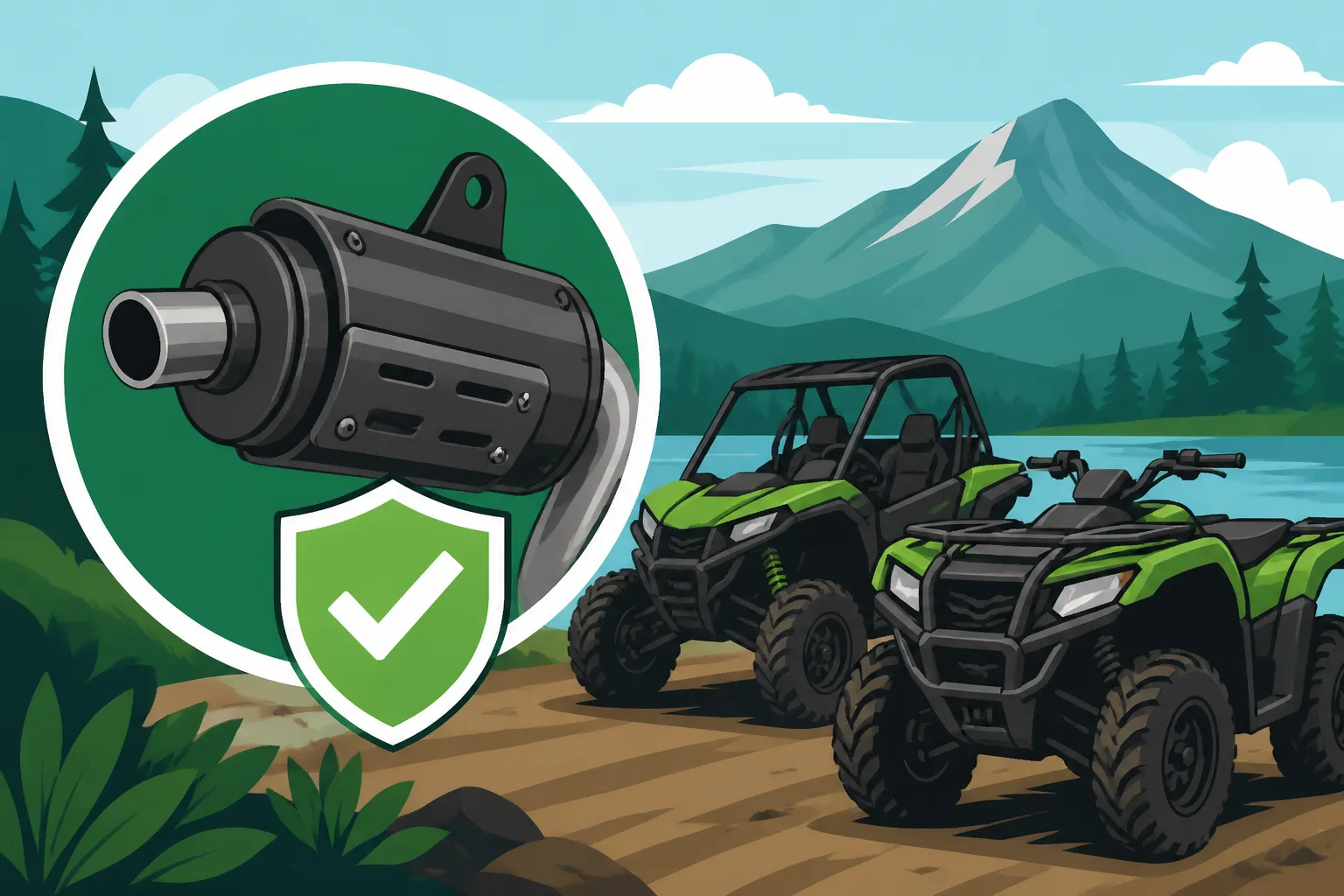
Washington Muffler Requirements for an ORV
There’s nothing quite like hitting the trails on your ATV or UTV, feeling the power, and exploring the incredible landscapes Washington has to offer. But let's be honest, few things can sour a great ride—or even lead to a frustrating citation—faster than a muffler that's just too loud or not up to snuff with state regulations. It's a common headache for riders, trying to figure out what's legal and what's not, especially with all the aftermarket options out there. This guide is here to cut through that confusion, helping you understand Washington's muffler and spark arrester requirements so you can ride confidently and responsibly.
Why Washington Cares About ORV Noise and Mufflers
It might feel like just another rule, but Washington's regulations around off-road vehicle (ORV) noise and mufflers are rooted in some pretty important considerations. It’s not about stifling your fun, but rather about striking a balance that allows motorized recreation to coexist peacefully with nature, wildlife, and other outdoor enthusiasts. The goal is to preserve access to our amazing public lands for everyone, including us riders.
The Impact of Excessive Noise on Trails and Communities
Imagine you're deep in the forest, enjoying the serene sounds of nature, maybe even spotting some local wildlife, and then BLAM! a loud, unmuffled ORV tears by. It's jarring, right? That's the core issue. Excessive noise from ORVs can have a significant, negative impact. For starters, it disrupts wildlife. Animals rely on their hearing for survival, from detecting predators to finding mates, and constant loud noise can push them away from critical habitats or interfere with their natural behaviors. This isn't just a minor inconvenience; it can affect entire ecosystems over time.
Beyond wildlife, there's the human element. Many people flock to Washington's state forests, parks, and national lands for peace and quiet. Hikers, campers, bird watchers, and even residents living near popular trailheads deserve to enjoy their outdoor experience without excessive engine roar. When ORV noise becomes a nuisance, it creates tension between user groups. This tension can, unfortunately, lead to calls for stricter regulations, trail closures, or even outright bans on motorized access—something none of us want. We’ve seen it happen in other areas where the actions of a few loud riders lead to limitations for the entire community.
How Regulations Aim to Protect Everyone's Experience
So, these regulations aren't arbitrary. They're designed to be a protective measure, ensuring that the privilege of riding our machines on public lands remains sustainable for years to come. By setting reasonable limits on noise levels, Washington state agencies, like the Department of Natural Resources (DNR) and State Parks, are trying to create an environment where different forms of recreation can coexist. It's about maintaining a positive image for the ORV community, showing that we are responsible stewards of the land and considerate neighbors to other outdoor users.
Think of it as a shared understanding: you get to enjoy your machine, and in return, you commit to doing so in a way that doesn't detract from someone else's experience. This includes using proper [Washington Muffler Requirements for an ORV] and making sure your machine doesn't exceed the designated sound limits. It's a way of saying, "We value these lands, and we want to keep them open for everyone to enjoy."
What Washington Law Says About Your ORV Muffler
When it comes to the nitty-gritty of what’s legally required for your ORV’s exhaust system in Washington, the state’s Nonhighway Vehicle Act lays out the primary framework. It’s pretty clear on two main points: you need an effective muffler, and you absolutely need a spark arrester. These aren't suggestions; they are mandates designed to keep trails open and safe.
The Nonhighway Vehicle Act and Sound Limits
Washington state law, specifically within the Nonhighway Vehicle Act (NHVA), mandates that every ORV operating on public lands must be equipped with a "muffler in good working order and in constant operation." But it doesn't stop there. The law further specifies that this muffler must "effectively prevent excessive or unusual noise." This is where things can get a little subjective, but enforcement typically relies on measurable decibel (dBA) limits.
While specific decibel limits can sometimes vary slightly by jurisdiction or be subject to different testing methods, the general guideline often cited for Washington is around 96 dBA. This measurement is typically taken at a specific distance (e.g., 20 inches from the exhaust outlet) and angle (e.g., 45 degrees) when the engine is operating at a specified RPM. The intent is to catch machines that have been modified with "straight pipes" or mufflers that are designed solely for noise rather than sound suppression. Running a machine that's significantly louder than this can quickly earn you a citation for [Washington Fines for an Unregistered WATV] or non-compliance. It's not just about the loudness, but about the quality of the sound – a well-maintained, compliant muffler provides a much more acceptable tone than a rattling or unrestricted exhaust.
Spark Arrester Requirements for Fire Prevention
Beyond just noise, Washington takes fire prevention very seriously, especially given our dry summers. That’s why a spark arrester is an absolute, non-negotiable requirement for any ORV operating on public lands. A spark arrester is a device designed to prevent hot carbon particles (sparks) from exiting the exhaust system and potentially igniting dry grass, leaves, or other flammable materials along the trail. Think of it as a critical piece of safety equipment, akin to carrying [Washington Rules for Carrying a Firearm on a WATV] safely.
The law requires that your spark arrester must be "maintained in good working order and in constant operation." Furthermore, it typically needs to be an arrester that is certified by the U.S. Forest Service (USFS) or meets SAE J350 standards. You'll usually find an "USFS Approved" stamp or similar marking directly on the arrester or muffler if it comes integrated. If you've modified your exhaust system, you need to ensure any aftermarket muffler or add-on you install still incorporates a USFS-approved spark arrester. Companies like SuperATV, for example, often offer exhaust systems or replacement components that are designed with compliance in mind, including integrated or bolt-on spark arresters. Make sure to check their product specifications carefully to confirm they meet the Washington requirements for a [Washington Arrester Rated for Washington Trails]. This seemingly small component plays a huge role in preventing devastating wildfires, which can lead to widespread trail closures and environmental damage.
Practical Tips for Ensuring Your ORV Meets Washington's Standards
Navigating the rules can sometimes feel like a chore, but ensuring your ORV meets Washington's muffler and spark arrester standards is a straightforward process once you know what to look for. Proactive checks and smart choices can save you a lot of grief down the trail.
Checking Your Current Muffler and Spark Arrester
Before you even load up the trailer, take a few minutes to inspect your machine's exhaust system.
- Visual Inspection: Start by looking at your muffler. Are there any visible cracks, holes, or signs of significant damage? Is it securely mounted? A rattling or loose muffler is often a sign of trouble, both for noise and potential failure.
- Spark Arrester Check: Locate your spark arrester. This is usually at the very end of your exhaust pipe or integrated into the muffler itself. It often looks like a fine mesh screen. Make sure it's clean and free of excessive carbon buildup, which can restrict exhaust flow and increase fire risk. Many spark arresters can be removed for cleaning; consult your owner's manual for proper procedure. Look for the USFS approval stamp or SAE J350 marking. If it's missing, illegible, or the screen is damaged, it needs to be replaced immediately. This is a critical point that rangers check, and without a compliant arrester, you risk a fine and being turned away from the trail.
- Listen and Observe: Start your machine and listen to the exhaust. Does it sound unusually loud or harsh compared to how it used to? Does it have any sputtering or backfiring that wasn't there before? These can indicate internal muffler damage or a leak in the exhaust system. While a personal decibel meter isn't a required tool for most riders, if you're concerned, some apps on your smartphone can give you a rough idea, though they aren't considered accurate for official enforcement. When you’re at a staging area like those found in [Capitol State Forest Near Olympia, Washington] or [Walker Valley ORV in Washington's Skagit County], pay attention to how your machine sounds compared to others.
Aftermarket Mufflers and Compliance
The world of aftermarket ORV parts offers a dizzying array of options, and exhaust systems are no exception. Many riders opt for aftermarket mufflers for various reasons, including improved performance, different sound characteristics, or simply to replace a damaged OEM part. However, this is where you need to be especially diligent.
When considering an aftermarket muffler:
- Prioritize Compliance: Always, always, always choose a system that explicitly states it is USFS-approved and meets SAE J350 standards for spark arresting. Many reputable brands will clearly advertise this. For noise, look for mufflers that are designed to meet or exceed OEM sound levels, or at least keep within the 96 dBA limit. Don’t fall for marketing that boasts about extreme loudness; that’s a red flag for Washington trails.
- Research Brands: Brands like SuperATV offer a wide range of parts, including exhaust systems and accessories. When shopping for their products, or any other brand, make sure to read the specifications carefully. If it doesn't clearly state compliance with spark arrester and sound regulations, ask the seller or manufacturer directly before purchasing.
- Avoid Illegal Modifications: Never remove baffles, internal packing, or your spark arrester in an attempt to make your machine louder. This is a direct violation of Washington law and is precisely what enforcement officers are looking for. Not only can it lead to fines, but it also contributes to the negative perception of ORV riders, potentially jeopardizing access for everyone. Remember, getting a [Washington Citation for No Tabs Costs] is one thing, but violating environmental and safety rules can have broader consequences for the entire community.
- Professional Installation: If you're not comfortable installing an aftermarket system yourself, have a reputable mechanic do it. They can ensure everything is sealed correctly and mounted securely, which is crucial for both performance and compliance.
What Happens If Your Muffler Doesn't Comply
Ignoring Washington's muffler and spark arrester requirements isn't just a minor oversight; it can lead to direct consequences that impact your wallet, your riding privileges, and the broader ORV community. Rangers and law enforcement officers patrolling public lands are well-versed in these regulations and will not hesitate to enforce them.
Roadside Stops and Trailhead Checks
It's not uncommon for enforcement officers, whether they're DNR rangers, park rangers, or county deputies, to conduct compliance checks at trailheads or during patrols along popular riding routes. This is particularly true in areas like [Ahtanum's Green Dot Roads in Washington] or [Reiter Foothills State Forest], where motorized recreation is popular. They aren't just looking for valid [Washington ORV Permits Explained] or proper [Washington ORV Decal Placement]; they're also checking the physical condition of your machine.
During a stop, an officer might visually inspect your exhaust system for obvious modifications or damage. They'll definitely look for that USFS-approved spark arrester stamp. If they suspect your machine is too loud, they might perform a sound check using a calibrated decibel meter. While the exact procedure can vary, it usually involves measuring the sound level at a specific distance and engine RPM. If your machine exceeds the legal decibel limit, or if you're missing a functional spark arrester, you're looking at a citation. These fines can be significant, and in some cases, you might even be asked to cease riding until the issue is rectified. Imagine driving all the way to a riding area only to be turned around because of a non-compliant muffler—it's a frustrating, expensive waste of a day.
The Wider Implications of Non-Compliance
Beyond personal fines and inconvenience, the collective impact of non-compliant mufflers is a serious concern for the entire ORV community in Washington. When a significant number of riders consistently operate machines that are too loud or pose a fire risk, it fuels public opposition to motorized access. Local residents, environmental groups, and other recreationists often lodge complaints with land management agencies.
These complaints can lead to:
- Stricter Regulations: Lawmakers and agencies, under pressure, might implement even tougher noise limits or more stringent inspection requirements.
- Trail Closures: In extreme cases, repeated violations and public outcry can result in specific trails or entire riding areas being closed permanently to ORVs. We've seen how [Washington DNR Budget Cuts and Site Closures] can impact access, and non-compliance only exacerbates these pressures.
- Damaged Reputation: The entire ORV community gets a bad rap, making it harder to advocate for new trails, maintain existing access, or even get fair consideration in land-use planning.
Ultimately, every rider has a role to play in protecting our access to Washington's amazing trail system. Being a responsible rider means more than just staying on designated trails; it means ensuring your machine meets all legal requirements, including those for your muffler and spark arrester. It’s an investment in the future of ORV riding for everyone.
To help you keep track of what's important, here's a quick comparison:
| Feature | Compliant ORV Exhaust | Non-Compliant ORV Exhaust |
|---|---|---|
| Muffler | Intact, no holes, securely mounted, effectively quiet | Damaged, loose, loud, modified for noise, straight pipe |
| Sound Level | Meets or exceeds OEM standards, below ~96 dBA | Excessively loud, above ~96 dBA |
| Spark Arrester | USFS-approved stamp, clean, intact screen, functional | Missing, damaged, clogged, non-approved |
| Modifications | Aftermarket parts explicitly meeting all WA rules | Baffles removed, custom non-compliant systems |
| Purpose | Reduces noise, prevents fire, maintains trail access | Increases noise, fire risk, leads to citations |
This article is for general informational purposes only and does not constitute professional advice. Laws, prices and regulations vary by location and change over time. Consult a qualified professional for guidance on your specific situation.