Why Small Washington Counties Are Open by Default
For many Washington residents who own a Wheeled All-Terrain Vehicle (WATV) – whether it's a quad, a side-by-side, or a dirt bike – the rules for riding on public roads can feel like a labyrinth. It's frustrating to want to connect trails or simply drive to the store, only to be unsure if you're breaking the law. This comprehensive guide will unravel the specific regulations in Washington State that allow WATVs to legally operate on county roads in smaller jurisdictions, explaining why some counties are "open by default" while others require active legislation.
Understanding Washington's WATV Road Access Laws
Washington's legislature, recognizing the unique nature of off-road vehicles and the varied landscapes across the state, enacted specific laws to govern WATV use on public roads. This wasn't a one-size-fits-all solution, largely because a bustling urban county has very different needs and traffic patterns than a sparsely populated rural one. The laws were designed to offer some flexibility, acknowledging that what works for a county with hundreds of thousands of residents might not be practical, or even necessary, for a county with just a few thousand. This layered approach can certainly feel confusing at first glance, especially when you're just trying to enjoy your machine responsibly.
The Core Legislation: RCW 46.09.310
At the heart of Washington's WATV road access laws is Revised Code of Washington (RCW) 46.09.310. This particular statute lays out the foundational framework for how WATVs can legally traverse public roads. Its primary purpose is to balance the recreational desires of WATV owners with the safety and infrastructure concerns of local communities. It's the legislative key that unlocks road access for some counties while keeping it locked for others, setting the stage for the "open by default" rule.
The legislative intent behind differentiating large and small counties was quite pragmatic. Lawmakers understood that counties with higher population densities and more complex road networks would require a more deliberate process to integrate WATV traffic, primarily due to higher vehicle volumes and potential safety risks. In contrast, smaller, often more rural counties, where WATVs might be a common form of transportation or recreation, were given a simpler pathway. This distinction sought to prevent a flood of WATV traffic onto unsuitable roads in heavily populated areas, while also not unduly burdening counties where such use was already common or less impactful.
To be clear, even in an "open by default" county, your WATV still needs to meet certain criteria to be considered "street legal." This isn't just about having the right county status; it's about your machine being properly equipped and registered. You'll need to ensure your WATV has the necessary safety features, like working headlights, taillights, brake lights, turn signals, mirrors, a horn, and a spark arrester. Without these, even on an open road in a small county, you could find yourself facing a citation.
Imagine a scenario where you've just moved your family and your side-by-side from King County, a densely populated area that strictly limits WATV road access, to Ferry County, one of Washington's smallest and most rural counties. You've been diligently trailering your machine everywhere, even for short hops. Suddenly, you notice locals are riding their WATVs right from their driveways to the local gas station or to connect with nearby trail systems. This immediate observation highlights the stark difference in local rules, all thanks to that pivotal RCW. What was previously off-limits is now a casual part of daily life, offering a newfound freedom that was impossible in your previous locale.
The Definition of a "WATV" in Washington
Before you even think about hitting the pavement, it's crucial to understand what Washington State actually defines as a "Wheeled All-Terrain Vehicle" (WATV) under the law. This isn't just a generic term for anything with four wheels and an engine that goes off-road; it has specific legal parameters that determine if your machine qualifies for road access under these rules. The state differentiates these machines from other types of off-road vehicles, impacting how they're titled, registered, and ultimately, whether they can legally drive on public roads.
A WATV, according to Washington law, generally refers to a quad, a side-by-side (SxS or UTV), or a dirt bike that meets certain specifications. The key distinctions often revolve around width and weight limits. For instance, many side-by-sides are considered WATVs, while traditional ATVs (quads) also fall under this umbrella. However, a dirt bike, while an ORV, is handled slightly differently in terms of equipment and where it can go. It’s not simply about having four wheels, but about meeting the specific dimensional and operational criteria that the state has established. For road use, the machine must typically be 80 inches or less in width, and other parameters also apply.
The significance of these width and weight limits cannot be overstated. These dimensions are not arbitrary; they are critical for determining the safety and compatibility of your machine with public road infrastructure and other vehicles. A machine that is too wide, for example, might pose a hazard in a traffic lane or on narrow shoulders. Similarly, weight limits might play a role in road wear and tear. If your machine exceeds these legal definitions, even if it has all the necessary safety equipment, it simply won't qualify as a WATV for street-legal purposes. That monster custom build with massive tires might be fantastic on the trails, but it might just be too wide for the road.
Consider a new side-by-side owner, perhaps someone who just invested in a sleek new UTV like a Polaris RZR or a Can-Am Defender. They're excited to explore Washington's beautiful backroads and trails, but first, they need to know if their powerful machine actually qualifies for road use. They'll need to check their machine's specifications against the RCW's definition – particularly its width. If their side-by-side is within the 80-inch limit and they've added all the required street-legal accessories, then they're on the right track. If it's an extra-wide, highly modified desert racing rig, they might find themselves in a bind, realizing that while it's still a fantastic off-road vehicle, it simply doesn't fit the state's definition for on-road compliance. This highlights the importance of doing your homework before you even consider adding those critical safety components or buying a new machine.
The Population Threshold: 15,000 Residents
The distinction between counties that are "open by default" and those that require active legislation for WATV road use hinges on a specific population number: 15,000 residents. This seemingly arbitrary figure is actually a legislative dividing line, a way for the state to broadly categorize counties into those that might handle WATV road access differently based on their demographic profiles and perceived traffic complexities. It's the core of why some rural communities can freely embrace WATV road use while their more populous neighbors cannot without jumping through additional legal hoops.
How the 15,000 Population Line Is Determined
This critical 15,000 population threshold is not based on annual estimates or local projections; it's firmly rooted in the official numbers from the most recent decennial census conducted by the U.S. Census Bureau. This provides a clear, verifiable, and static point of reference for all counties. Without relying on dynamic, often fluctuating local data, the state can avoid constant re-evaluation of a county's status, providing a degree of stability for both residents and enforcement agencies. When the new census data comes out every ten years, it can, however, trigger a change in a county's designation.
The implication of population changes can be quite significant, albeit infrequent. If a county's population was previously under 15,000 but crosses that threshold in the latest census, its "open by default" status would eventually expire, and it would then be required to actively "opt-in" to allow WATV road use through a local ordinance. Conversely, if a county were to lose population and fall below 15,000, it could then transition to the "open by default" status. This dynamic, though slow-moving, underscores the need for riders to be aware of the census cycles and their potential impact on local regulations.
There's usually a lag between when new census data is released and when official county statuses might change. Governmental processes take time, and a county wouldn't instantly flip its rules the day new numbers are published. There would typically be a period for review, public discussion, and perhaps even new local ordinances to be drafted and adopted. This means riders shouldn't assume immediate changes. Always check with local authorities for the most current information regarding your specific county, especially around the years following a new census count.
Consider a hypothetical scenario: Lincoln County, a small, agricultural community, has been "open by default" for years, with WATVs commonly seen on its county roads. The latest census data is released, and to everyone's surprise, Lincoln County's population just nudged past 15,000. For riders, this suddenly creates uncertainty. Will their informal, easy-going road access disappear overnight? The answer is likely no, not instantly. The county commissioners would need time to acknowledge the change, assess its implications, and potentially draft new ordinances to either continue allowing WATV access or restrict it. Until such an ordinance is passed and clearly communicated, there might be a period of limbo or a grace period. This situation highlights the importance of staying engaged with local county government news, especially after a census.
The "Open by Default" Rule Explained
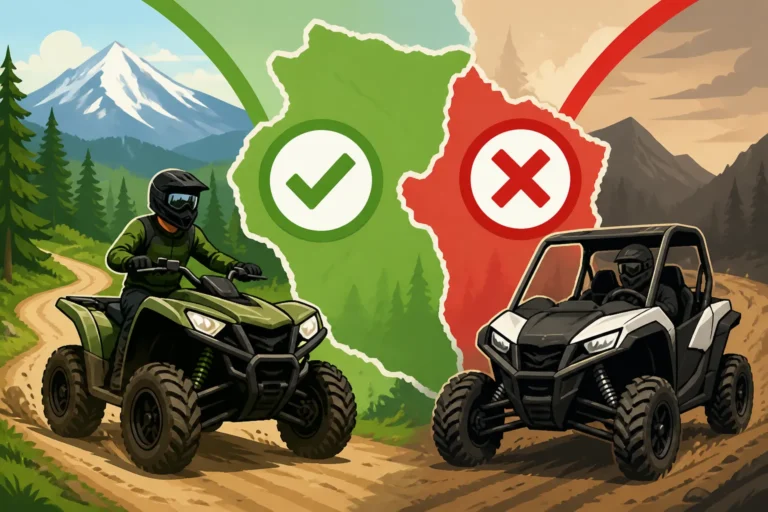
When a Washington county's population falls below the 15,000 threshold, it automatically operates under the "open by default" rule for WATV road access. What this means for riders is profound: unless a specific county road is explicitly posted or designated as closed to WATVs, it is generally considered open for legal WATV use. This greatly simplifies the experience for riders, as they don't have to constantly search for lists of approved roads; instead, they only need to be aware of the restricted ones.
This stands in stark contrast to larger, more populous counties, which operate under an "opt-in" system. In these counties, no road is open to WATVs unless the county board or city council has passed a specific ordinance to allow it. This requires active legislative action, public hearings, and often, significant debate. For riders in larger counties, the burden is on the local government to justify opening roads, whereas in smaller counties, the burden shifts to justifying closing roads.
The reasoning behind this legislative decision is multi-faceted. In less populated areas, traffic volumes are typically much lower, reducing the potential for conflicts between WATVs and traditional vehicles. The road infrastructure is often less complex, with fewer multi-lane highways or intricate intersections. Furthermore, in many rural communities, WATVs are already a practical mode of transport for farming, hunting, or accessing remote properties, making widespread prohibitions impractical or unpopular. The state essentially assumes that in these smaller, rural environments, WATV use on roads is generally manageable and can be accommodated without extensive local legislative efforts.
Imagine an out-of-state rider visiting Pend Oreille County, another small, beautiful area in northeast Washington. They've trailered their side-by-side from a state where road access is severely restricted. Upon arrival, they immediately notice children riding small quads to their friends' houses, adults heading to the grocery store on their UTVs, and other riders connecting directly from their campsite to a nearby forest road without ever loading onto a trailer. This casual, integrated use of WATVs on public roads is a clear indicator of the "open by default" status, showcasing a level of freedom and convenience that can be truly surprising and refreshing for those accustomed to stricter regulations. It underlines how different local laws can shape the entire riding culture of a region.
Counties That Are "Open by Default"
Understanding which Washington counties fall into the "open by default" category is key for WATV enthusiasts looking to ride legally on roads. This list isn't fixed in stone for eternity, as populations can shift over time, but generally, the state's most rural and least populated counties have historically enjoyed this status. Knowing these areas can help you plan your rides, whether you're looking for new scenery or simply a convenient way to get from your cabin to a trailhead.
Identifying Small Washington Counties
Washington State has a number of counties that consistently fall below the 15,000 population threshold, making them "open by default" for WATV road access. Historically, counties like Ferry, Garfield, Wahkiakum, and Columbia are strong examples of jurisdictions where WATV road use is largely permitted on county roads, unless specifically posted otherwise. These counties are often characterized by vast natural landscapes, smaller towns, and a strong agricultural or resource-based economy where off-road vehicles play a practical role in daily life.
To find the most current and authoritative information on a county's population and whether it meets the "open by default" criteria, riders should consult the official U.S. Census Bureau website for the latest decennial census data. Additionally, the Washington State Department of Licensing (DOL) or the respective county's website (often through their Public Works or Sheriff's Office pages) might provide information or links to relevant ordinances. It's really important to remember that while the "open by default" rule applies to the county as a whole, specific cities or towns within that county might have their own ordinances, so don't assume a county rule covers every city street.
It's paramount to emphasize the importance of checking current information. Population figures, while updated every ten years by the census, can still cause a county to cross the threshold. For example, a county that was previously just under 15,000 might grow slightly in population over a decade and suddenly find itself over the line in the next census. This would mean that its "open by default" status would eventually be rescinded, requiring it to adopt opt-in ordinances like larger counties. While such changes aren't frequent, being aware of them and verifying the current status is a responsibility of every rider.
Imagine you're planning a multi-day riding trip through Eastern Washington, known for its scenic trails and wide-open spaces. You've heard great things about the riding near Colville and Kettle Falls. To make your trip more enjoyable and efficient, you want to know if you can ride your side-by-side directly from your Airbnb to the trailhead, or even pop into town for supplies. You check the latest census data and confirm that Stevens County, where Colville is located, is well above the 15,000 population mark. However, you also learn that the cities of [Republic, Colville and Kettle Falls] themselves have passed ordinances allowing WATV street access within their city limits. This scenario perfectly illustrates why checking both county and city regulations is crucial, even when dealing with smaller jurisdictions; the default rule may apply to county roads, but cities retain their own authority.
Exceptions and Exclusions Within "Open" Counties
While the "open by default" rule provides significant freedom, it's not a blanket permission slip for every single road within a small county. It's crucial for riders to understand that even in these welcoming jurisdictions, there are still exceptions and exclusions. The power to designate specific roads as off-limits rests with the local county authorities, who can do so for various reasons, ensuring safety and managing public resources effectively. So, while you might generally expect to ride on most roads, you still need to be vigilant.
A county that is "open by default" still retains the authority to designate certain county roads, or segments thereof, as "unsuitable" for WATV use. This means that while the general assumption is open access, counties can and do identify specific routes where WATV traffic might pose a safety hazard, cause excessive wear and tear, or conflict with other community interests. These might include roads with very high traffic volumes (even in a small county), roads leading to sensitive areas, or roads with specific physical characteristics that make them unsafe for WATVs, such as steep, winding sections with poor visibility.
The process for a small county to list "unsuitable roads" typically involves public input and official county commissioner action. They usually don't just put up a sign overnight. These roads should be clearly marked with signage indicating that WATV use is prohibited. This signage is paramount; it's how the county communicates these specific restrictions to riders. Without clear signs, enforcement becomes difficult, and riders might inadvertently violate rules. It's the county's responsibility to make these exclusions obvious, and it's the rider's responsibility to pay attention to them.
Imagine you're riding your quad through a scenic, gravel county road in Garfield County, enjoying the freedom of the "open by default" rule. You're approaching a small town and suddenly see a clear sign indicating "No ORVs Beyond This Point" or "WATV Use Prohibited on Road X." This is a perfect example of a designated unsuitable road. Even though the county is generally open, this specific segment or road has been identified by local authorities as inappropriate for WATV traffic, perhaps due to increased pedestrian traffic near the town center or specific safety concerns. Ignoring such a sign, even in an "open by default" county, would result in a citation. Always be on the lookout for official signage that overrides the general open access.
Riding Rules and Requirements in Open-by-Default Counties
Even in the most accommodating "open by default" counties, merely having access to roads isn't enough. To legally operate your WATV on public thoroughfares, your machine must be properly equipped, and you, as the operator, must meet specific licensing and insurance criteria. These aren't suggestions; they are non-negotiable legal requirements designed to ensure the safety of both WATV riders and other road users. Thinking these rules don't apply because a county is "open" is a common, and costly, mistake.
Essential Equipment for On-Road Use
Making your WATV street-legal, even in a small county, means outfitting it with a very specific set of equipment. This isn't just about looking good; it's about meeting minimum safety standards for operating alongside cars and trucks. You're essentially transforming your off-road machine into a road-worthy vehicle, and that requires adherence to Washington State law regarding vehicle features.
First and foremost, your WATV must have functioning headlights, taillights, and brake lights. These are fundamental for visibility, especially during dawn, dusk, or inclement weather, and absolutely critical for night riding. The headlights must illuminate the road ahead adequately, and the taillights must be visible from a certain distance. Equally important are turn signals; your machine needs to have operational [Washington Turn Signal Requirements] both front and rear. Hand signals simply aren't enough when you're navigating traffic, even light traffic, on a county road. For many machines, especially older ATVs, this means adding aftermarket kits. Companies like SuperATV offer a wide array of universal and model-specific turn signal kits that can help you meet this requirement, often designed for easy installation.
Beyond lighting, you'll need mirrors. Specifically, your WATV must be equipped with at least one rearview mirror, and ideally two, that allow you to see clearly behind you. Imagine trying to make a lane change or even just track a car behind you on a gravel road without adequate mirrors – it's a recipe for disaster. You can find detailed requirements for [Washington Mirror Requirements for Road Use] in the state's statutes. A horn is also mandatory, providing a vital audible warning signal, much like any other road vehicle. Lastly, for any internal combustion engine WATV, a spark arrester is required. This crucial device prevents hot carbon particles from exiting the exhaust, significantly reducing the risk of wildfires, which are a major concern in Washington's beautiful but often dry landscapes.
Consider a rider who owns an older quad, a trusty Yamaha Wolverine, that they primarily use for trail riding. Now they want to take advantage of the "open by default" roads in Chelan County to connect to new trail systems without trailering. They realize their quad lacks many of the required street-legal items. They'll need to install a headlight kit with high/low beams, add a taillight assembly with integrated brake lights, source a universal turn signal kit, attach a sturdy rearview mirror, and ensure their exhaust has a USFS-approved spark arrester. They might even consider an aftermarket windshield from a brand like SuperATV for added protection from road debris. This comprehensive upgrade ensures their beloved off-road machine is now a safe and legal contender on the county roads.
Rider Licensing, Age, and Insurance
Beyond equipping your machine, the operator themselves must meet specific qualifications to legally ride a WATV on public roads in Washington, regardless of how small or rural the county is. These requirements are in place to ensure that anyone operating a motor vehicle on shared roadways possesses a basic level of competence and responsibility.
First and foremost, to operate a WATV on any public road in Washington, you must possess a valid driver's license. This is not a specialized ORV license; it's your standard driver's license for cars and trucks. The state considers a WATV operating on a public road to be a motor vehicle, and thus, the same licensing rules apply. You can find more specific details on [Washington Driver License Rules for WATVs]. This means that if your license is suspended, expired, or if you've never obtained one, you cannot legally operate your WATV on a public road.
Age restrictions are also a significant factor, especially concerning younger riders. While minors can often ride WATVs on designated trails under supervision, operating one on a public road is a different matter entirely. Generally, a rider must be at least 16 years old and possess a valid driver's license to legally operate a WATV on a public road. Additionally, for riders under the age of 16, even if they have some form of permit, they would still be prohibited from operating on public roads, and there are specific [Washington Minimum Age to Ride a Road] rules that need to be followed. It's about ensuring a certain level of maturity and experience when interacting with other traffic.
Finally, just like any other motor vehicle, if you're going to operate your WATV on a public road, you must carry proof of financial responsibility, which typically means having liability insurance. This isn't an optional extra; it's a legal requirement designed to protect all parties in the event of an accident. The minimum coverage amounts are similar to those required for passenger vehicles. While off-road-only WATVs often don't require insurance, the moment you put rubber to pavement on a public road, the rules change. You can learn more about [Washington WATV Insurance Requirement] to ensure you're adequately covered.
Imagine a parent and their 15-year-old child want to ride their matching quads from their rural home in Columbia County to a nearby fishing spot that requires a short stretch on a county road. The parent has a valid driver's license and insurance, and their quad is fully street-legal. However, their 15-year-old, though an experienced rider on trails and under direct supervision, does not possess a full driver's license. Despite the county being "open by default" and the child's quad being equipped, the child cannot legally operate on the county road. This scenario underscores that all three elements – proper machine equipment, a valid driver's license, and insurance – must be in place for every operator.
Navigating "Unsuitable Roads" and Restrictions
Even with the convenience of "open by default" status in smaller Washington counties, it's a critical error to assume every road is fair game. County commissioners retain the vital authority to designate specific roads as "unsuitable" for WATV use. This isn't about arbitrary bans; it's about localized decision-making to ensure public safety, manage traffic flow, and protect infrastructure. For riders, understanding this nuance is essential for staying legal and safe.
How Small Counties Designate Unsuitable Roads
When a small county decides that a particular road is "unsuitable" for WATV use, it's not a snap decision. There's usually a legal and deliberative process involved, reflecting the county's commitment to community safety and careful resource management. This process allows for public input and ensures that such designations are made for valid, justifiable reasons.
The legal process typically involves the county's legislative body, usually the board of county commissioners or council, passing a formal resolution or ordinance. This might follow public hearings where community members, including WATV riders, can voice their opinions. The county would consider various criteria, which might include the road's traffic volume (even low traffic for a larger county might be high for a small, rural one), its physical characteristics (e.g., narrow, winding, blind curves, steep grades), historical accident data, or its proximity to schools, hospitals, or residential areas where noise or safety concerns might be elevated. These factors are all weighed to determine if WATV use on that specific road segment would genuinely pose an unacceptable risk.
Once a road is officially designated as unsuitable, it is the county's responsibility to clearly and conspicuously mark it. This is usually done with official signage that explicitly states "No ORVs" or "WATV Use Prohibited." These signs should be placed at all entry points to the restricted segment, ensuring that riders are adequately notified before they inadvertently enter an unauthorized area. The expectation is that riders will observe and obey these posted restrictions, just as they would any other traffic sign. Without proper signage, enforcement can become problematic, and riders could argue they were unaware of the prohibition.
Imagine a county commissioner in Wahkiakum County addressing a town hall meeting. A resident expresses concern about increased WATV traffic on a narrow, blind-curved road that leads to a popular fishing spot, especially after a near-miss incident. The commissioner explains that while the county is "open by default," they are considering designating this specific road as unsuitable due to its inherent safety hazards and the recent incident. They would then detail the process: gather traffic data, conduct a safety study, hold another public hearing, and if deemed necessary, pass an ordinance. Once passed, clear "No WATV" signs would be installed at both ends of the road segment, effectively closing it to WATV traffic, despite the county's overall "open by default" status. This proactive measure prioritizes public safety over blanket access.
Staying Informed: Checking Local Ordinances
In the world of WATV road riding, ignorance of local laws is definitely not bliss – and it certainly won't excuse you from a ticket. Even in "open by default" counties, where the general rule is permissiveness, specific restrictions can exist. Therefore, being a responsible rider means taking the initiative to stay informed about local ordinances and any designated "unsuitable roads."
The most reliable way to stay informed is to check the official website of the county you plan to ride in. Look for sections dedicated to Public Works, the Sheriff's Office, or Parks and Recreation, as these departments often publish relevant ordinances and maps. Many counties will have a dedicated page or PDF document outlining their WATV regulations, including lists of open roads or, conversely, a list of roads designated as unsuitable. For specific guidance, you can often find more direct instructions under [Finding a County's Approved Road List], though for "open by default" counties, you're more likely to be looking for a list of closed roads.
It's also crucial to understand that these lists and ordinances are not static; they are dynamic documents that can be updated by county authorities. A road that was open last year might be closed this year due to new development, safety concerns, or changes in traffic patterns. This means that merely checking the rules once and assuming they'll never change is risky. It's a good practice to refresh your knowledge periodically, especially before planning a major ride in an unfamiliar area or if you haven't ridden there in a while.
Consider a rider planning a weekend trip to a remote cabin in a small, "open by default" county. They want to ride their side-by-side directly from the cabin to a nearby general store and then onto some forest service roads. Before they even load their machine onto the trailer, they pull up the county's Public Works website on their phone. They navigate to the ORV regulations section and quickly scan for any "unsuitable road" designations in their cabin's vicinity. They find that one short segment of county road, notorious for its blind corners, has recently been added to the restricted list. Armed with this knowledge, they can plan an alternative, legal route to the store, avoiding a potential citation and ensuring their trip is smooth and enjoyable. This simple act of pre-trip verification can save a lot of headaches and fines.
Benefits and Challenges of the Default Open Rule
The "open by default" rule for WATVs in smaller Washington counties is a double-edged sword, bringing both significant advantages and some inherent challenges. For riders, it represents a remarkable freedom and convenience, but it also creates considerations for the local communities and other road users. Understanding both sides of this coin provides a more holistic view of this unique legislative approach.
Advantages for Riders and Local Economies
For WATV enthusiasts, the "open by default" rule is nothing short of a game-changer. It offers an unparalleled level of freedom and convenience that is often missing in more densely populated areas. Imagine being able to ride your quad or side-by-side directly from your home or campsite to a trailhead, without the hassle of loading it onto a trailer, driving to a designated staging area, and then unloading it. This ease of access can transform a quick evening ride into an impromptu adventure, or simplify logistical challenges on a longer trip. It removes a significant barrier to entry for casual riders and makes WATV use a more seamless part of daily life in these rural settings.
Beyond the immediate convenience for individual riders, this rule can also serve as a significant boon for local economies in these smaller communities. When riders know they can easily access and navigate an area on their WATVs, they are more likely to visit. This translates into increased business for local gas stations, grocery stores, restaurants, and lodging establishments. Riders need fuel, snacks, meals, and sometimes a place to stay. They might also patronize local repair shops or outfitters. This influx of recreational tourism dollars can be a vital lifeline for small towns that might otherwise struggle, helping to sustain local jobs and services.
Consider the example of a small town in Ferry County. Historically, economic activity might have revolved around timber or agriculture. With the "open by default" rule, WATV riders from larger counties, or even out-of-state visitors, see the area as a prime destination. They might spend a weekend at a local campground, fill up their machines and tow vehicles at the town's only gas station, grab dinner at the local diner, and even purchase parts from the small hardware store. This direct injection of tourist spending directly benefits the community, keeping businesses afloat and creating a positive cycle where more riders attract more services, further enhancing the area's appeal.
Potential Drawbacks and Community Concerns
While the "open by default" rule offers many benefits, it's not without its drawbacks and can sometimes lead to legitimate community concerns. What's convenient for a WATV rider might be perceived as a nuisance or a safety risk by other residents, especially those not involved in the riding community. Balancing these different perspectives is a constant challenge for local authorities.
One of the most common concerns revolves around noise. While modern WATVs are generally quieter than older models, the collective sound of multiple machines, especially if they are operated with aftermarket exhausts (even street-legal ones), can be disruptive to residents seeking peace and quiet in rural settings. This is particularly true in residential areas or near homes, where engine noise can carry considerable distances. Dust, especially on unpaved roads during dry spells, is another frequent complaint, affecting air quality and coating homes and vegetation.
Safety is also a significant concern. Although WATVs can be made street-legal, they are inherently different from traditional vehicles. Their handling characteristics, higher center of gravity, and open cabs can make them more vulnerable in collisions with cars and trucks. Non-riders might worry about inexperienced operators, excessive speeds, or the presence of WATVs on roads not designed for them, particularly where children or pets might be present. There can also be concerns about wear and tear on local roads, especially gravel roads, which might require more frequent maintenance if heavily used by WATVs.
Imagine a scenario where a long-time resident of a quiet, rural road in Wahkiakum County, accustomed to only the occasional car passing by, suddenly finds themselves living on a route heavily used by WATVs connecting various trailheads. They might be frustrated by the increased engine noise throughout the day, the dust coating their garden, and worries about their grandchildren playing near the road with more traffic. They might voice these concerns at a county meeting, prompting commissioners to consider whether that specific road segment should be designated as "unsuitable" despite the county's general "open by default" status. This perfectly illustrates the balancing act counties face between promoting recreation and maintaining the quality of life for all residents.
Comparing Small vs. Large County Regulations
The starkest difference in Washington's WATV road access laws lies in how counties are categorized based on population. This divide creates two distinct regulatory landscapes: the "opt-in" system for larger counties and the "open by default" approach for smaller ones. Understanding this fundamental difference is crucial for any WATV owner navigating the state's diverse regions.
The "Opt-In" System for Larger Counties
For counties with a population exceeding 15,000 residents, the legislative approach to WATV road access is entirely different. These larger counties operate under an "opt-in" system, meaning that no county road is open for WATV use unless the county's legislative authority (typically the board of county commissioners or council) has taken explicit action to permit it. This requires a proactive, deliberate process that stands in direct opposition to the default openness of their smaller counterparts.
This opt-in requirement places a significant burden of proof and process on larger counties. They can't just open roads; they must actively choose to do so through formal ordinances. This often involves extensive public hearings, traffic impact studies, safety assessments, and considerable public debate. Residents and various stakeholders, including law enforcement, public works departments, and even anti-noise or safety advocates, typically weigh in on such proposals. The county must demonstrate that opening certain roads can be done safely and without undue negative impact on the community or infrastructure.
Consider the challenges faced by a rider in, say, Whatcom County, which is well over the 15,000 population threshold. If they want to ride their WATV on a county road to access a trail, they cannot simply assume it's allowed. Instead, they must actively search for a county ordinance that specifically opens that particular road or a network of roads. If no such ordinance exists, or if the road they wish to use isn't explicitly listed, it remains off-limits. This is in sharp contrast to a rider in a small county, who would assume the road is open unless there's a sign saying otherwise. This difference highlights why [Washington Counties Over Fifteen Thousand Must Opt In] is a crucial piece of legislation that dramatically shapes the riding experience depending on where you live or visit.
Unified Washington State Rules for All Roads
While the "open by default" versus "opt-in" distinction governs which county roads WATVs can use, it's absolutely vital to remember that certain fundamental Washington State laws apply universally to WATV road use, regardless of the county's population or its specific ordinances. The decision to open a road at the county level doesn't exempt riders from these overarching state statutes. These rules are in place to ensure a baseline of safety and consistency across the entire state.
For example, the statewide speed limit for WATVs on any road where they are legally permitted is generally 35 mph. This is a critical safety rule, and it applies whether you're riding in a small, default-open county or on an explicitly opened road segment in a large, opt-in county. The [Washington's 35 mph Road Rule] is there to reflect the different handling characteristics of WATVs compared to traditional vehicles and the typical road conditions where they are allowed. Exceeding this limit, even on a wide-open rural road, can lead to a citation.
Similarly, specific equipment requirements for street-legal WATVs, such as having proper lighting, mirrors, turn signals, and a horn, are state-level mandates. These don't change from county to county. If your machine is missing a required piece of equipment, it's illegal for road use anywhere in Washington, regardless of the local county's specific road access rules. For instance, [Equipment a Washington WATV Needs on a Road] outlines these essentials. Furthermore, the state's helmet law applies to all WATV operators and passengers on public roads, meaning that [Washington Helmet Law for WATV Riders] mandates that you must wear an approved helmet, period. There are no county-level exemptions to this safety regulation.
Consider a rider traveling from a small county where WATV road use is common to a larger county that has specifically opened a few roads near a state park. While they might be thrilled to find a legal route in the larger county, they cannot assume that all the rules of their home county apply. They still must adhere to the 35 mph speed limit, wear their helmet, ensure their WATV is fully equipped, and be aware that crossing a state highway (even if a county road connects on both sides) has its own very strict regulations, often requiring state Department of Transportation approval. The county's decision to open a road segment simplifies access, but it doesn't override the fundamental safety and operational rules established by the state for all WATV road use.
Understanding WATV Registration and Costs in Washington
Getting your WATV legally set up for road use in Washington involves more than just equipment and county rules; it also means navigating the state's registration and titling processes. Many riders find the initial costs and recurring fees a bit confusing, especially with different types of tabs and the metal tag requirement. It's not just a one-time thing, and understanding where your money goes can help alleviate some of that frustration.
The Two-Tab System: On-Road and Off-Road
Washington State employs a unique two-tab system for WATVs, reflecting the dual nature of these machines designed for both trail and potential road use. These aren't just arbitrary stickers; they represent specific permissions and contribute to different funding streams. Many riders initially wonder if they need both, or which one is appropriate for their type of riding.
The first, and most fundamental, is the off-road tab. Every WATV operating on non-highway public lands in Washington – think designated trails, DNR lands, or forest service roads – must display a current off-road tab. This tab signifies that your machine is registered for off-road use and contributes to funds specifically earmarked for trail maintenance, development, and enforcement. This tab is generally required for all ORVs, including dirt bikes, quads, and side-by-sides, regardless of whether you ever intend to ride on pavement.
Then there's the on-road tab. This is the critical addition for any WATV owner who wants to legally operate their machine on county roads or city streets where permitted. This tab is an additional requirement on top of the off-road tab and comes with its own fee. The funds generated by the on-road tab contribute to different accounts, often related to road safety and local government costs associated with managing WATV use. If you only have an off-road tab, you're strictly limited to off-highway recreational areas and private property; pavement is off-limits.
A common point of confusion is how long these tabs last and their associated costs. Both the off-road and on-road tabs typically expire on the same day, usually a year from your initial registration or renewal. This simplifies the renewal process, as you're not juggling multiple expiration dates. You'll generally pay for both tabs at the same time if you opt for on-road privileges. While specific costs can change, you can get a general idea of [Washington WATV Registration Cost] by checking the Department of Licensing website. Remember, these fees are not negotiable; they are set by the state legislature.
Imagine a rider who just bought a new side-by-side and plans to mostly hit the trails in Capitol State Forest, but also wants the flexibility to ride into the small town of Elbe for lunch while camping at a nearby private campground. They would need to register their machine for off-road use, getting the initial off-road tab. But because they also want to ride on Elbe's streets (assuming Elbe has an ordinance allowing it, and it's a small enough county, or has opted in), they would also need to purchase the on-road tab. Their machine would then display two tabs – the off-road one and the on-road one – allowing them the versatility they desire. Without that on-road tab, that ride into Elbe, even a short one, would be illegal.
The Metal Tag and Its Purpose
Beyond the annual tabs, every registered WATV in Washington also receives a permanent metal tag. This isn't just a decorative plate; it serves a crucial identification purpose, similar to a license plate on a car, but specifically designed for off-road machines.
The metal tag is a unique identifier assigned to your specific WATV. It helps law enforcement and land managers quickly identify registered machines, ensuring accountability and compliance with state regulations. Unlike the annual tabs that change colors each year, the metal tag itself remains with the machine for an extended period, significantly longer than the annual renewal cycle. In fact, a WATV metal tag is designed to last for seven years before needing replacement. This longer lifespan acknowledges that these machines are often exposed to harsh off-road conditions, and constant replacement would be impractical. You can find more information about [Why the Tag Is Replaced Every Seven Years].
The cost of the initial metal tag is typically a one-time fee as part of your first registration. Replacing it, should it become lost, stolen, or damaged to the point of being unreadable, is usually a nominal fee, far less than the initial cost. It's meant to be affordable to ensure machines remain properly identifiable throughout their operational life. Where the tag mounts on your WATV is also specified; it must be securely affixed in a clearly visible location, usually on the rear of the machine, as outlined in state regulations.
Think about a rider whose quad is a few years old. They've renewed their tabs annually, but the metal tag has stayed the same. One day, while navigating a particularly muddy section of trail, they scrape a tree, and their metal tag is bent and unreadable. Even though their annual tabs are current, their machine is technically not properly identified. They would need to order a replacement metal tag from the Department of Licensing. The cost would be minimal, and once the new tag arrives, they would affix it in the designated spot, restoring their machine's full legal status. This ensures that even if their annual decals are pristine, the long-term identification of their machine remains intact, aiding in everything from theft recovery to accident reporting.
Disclaimer
This article is for general informational purposes only and does not constitute professional advice. Laws, prices and regulations vary by location and change over time. Consult a qualified professional for guidance on your specific situation.