Riding Ben Howard Road
Picture this: you've loaded up your ATV or side-by-side, driven to the foothills, and you're staring at a map, trying to figure out how to link up two fantastic sections of trail without having to re-trailer your machine. The frustration is real when you know certain county roads might be open, but the specific rules feel like a mystery wrapped in an enigma. This guide is here to untangle that mystery, focusing specifically on what you need to know to legally and confidently ride your WATV on Ben Howard Road in Snohomish County, Washington.
Unpacking Ben Howard Road's WATV Access in Washington
Ben Howard Road holds a special place in the hearts of many Washington ATV and UTV riders, not just because of its scenic beauty but because it represents a critical piece of the puzzle for connecting different riding areas. For years, the inability to legally connect trails via short road segments was a major headache, often forcing riders to find alternate staging areas or to simply avoid entire sections of potential adventure. The opening of roads like Ben Howard has been a game-changer for local enthusiasts, offering a taste of true multi-use recreation.
Where is Ben Howard Road and why is it important to riders?
Ben Howard Road is a quintessential Snohomish County gem, weaving its way through the beautiful, often tree-lined landscapes of the Skykomish River Valley, near the towns of Sultan and Gold Bar. It's not just a standalone route; it's a vital artery for recreationalists, including those on off-road vehicles. Its significance for WATV riders stems from its unique position as an unincorporated county road that provides crucial connectivity. Imagine being able to ride from one trailhead to another, or even from a campground to a staging area, without having to load your machine back onto a trailer. That's the dream, and for roads like Ben Howard, it's become a reality.
Before Snohomish County's decision to open certain roads, many riders felt constrained, unable to fully explore the vast network of trails and logging roads that might otherwise be accessible. Ben Howard Road, along with others like [Old Owen Road] and [Mann Road to the River], serves as a bridge, literally and figuratively, allowing for longer, more integrated rides. It transforms separate riding experiences into a more cohesive journey, validating the efforts of countless advocates who pushed for responsible road access. This means you can plan routes that incorporate diverse terrain, from the technical challenges of a forest trail to the graded gravel of a county road, all in one outing.
What Snohomish County Ordinance 17-032 Means for You
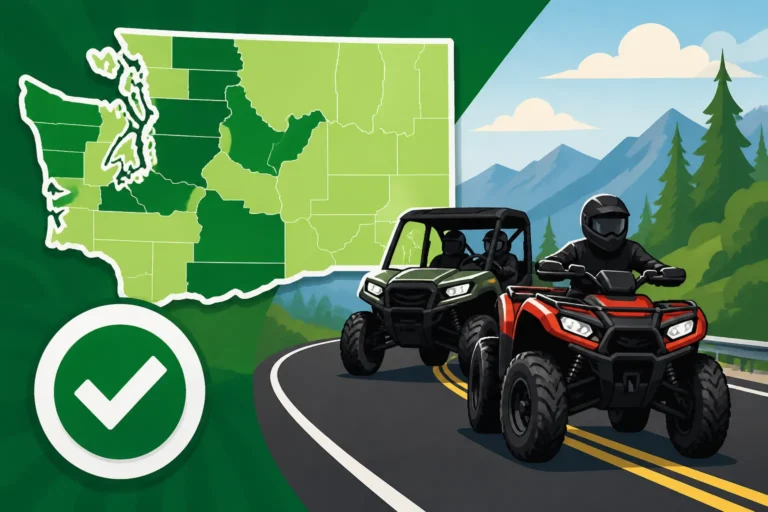
The key to understanding legal WATV access on Ben Howard Road lies squarely with Snohomish County Ordinance 17-032. This isn't just a random rule; it's a carefully considered piece of legislation that specifically designated certain unincorporated county roads as open for wheeled all-terrain vehicle (WATV) use. The ordinance was passed to align Snohomish County with state law, which allows counties to opt-in to open their roads. It's a crucial distinction because Washington's ORV laws are not a blanket "open roads" policy. For counties with a population greater than 15,000, like Snohomish, the local government must actively opt-in by creating and approving a list of specific roads where WATV use is permitted. This is very different from smaller, less populated counties, which are often "open by default" unless they actively opt-out and declare specific roads unsuitable.
So, for you, the rider, Ordinance 17-032 means that Ben Howard Road is on an approved list. This isn't just some local rumor or a "don't ask, don't tell" situation; it's codified law. However, it's vital to remember that this ordinance only applies to designated unincorporated county roads. It does not automatically grant you access to state highways, nor does it override city ordinances if Ben Howard Road were to pass through an incorporated city (which it doesn't for the relevant sections). When you're planning your ride, you need to be absolutely sure that the road you intend to take is explicitly listed as open by the county. Ignorance of the law is never an excuse, and riding an undesignated road can quickly lead to a citation for [Washington Fines for an Unregistered WATV] or, worse, for illegal road use.
Essential Requirements for Riding on Washington's Open County Roads
Riding Ben Howard Road or any other open county road in Washington isn't as simple as just having a machine. It requires your WATV to be "street legal" and for you, the rider, to meet specific licensing, insurance, and safety requirements. Think of it less like riding on a private track and more like operating a small, specialized vehicle on public thoroughfares alongside cars and trucks. The state takes this seriously, and so should you.
Your WATV Must Be Street Legal
This is perhaps the biggest hurdle for many riders looking to take their machines on public roads. "Street legal" isn't a vague term; it refers to a precise set of equipment standards your WATV must meet to be considered safe and compliant for road use. Washington state law is clear on these requirements, and they mirror many of the features you'd expect on a standard car or motorcycle.
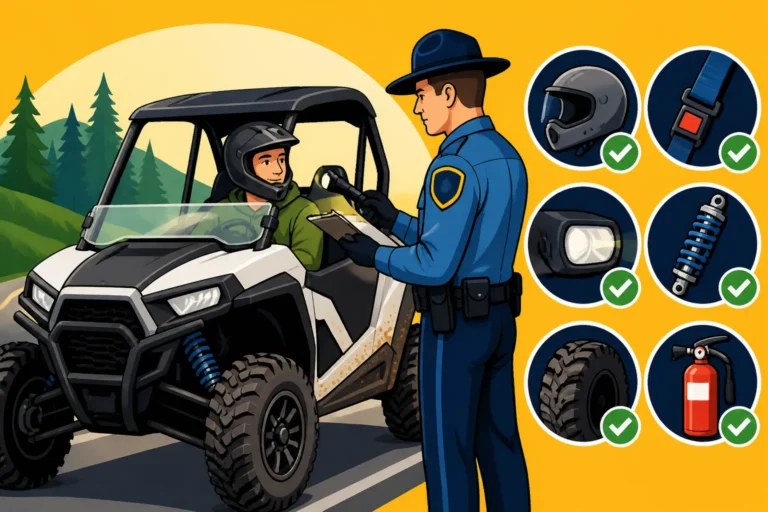
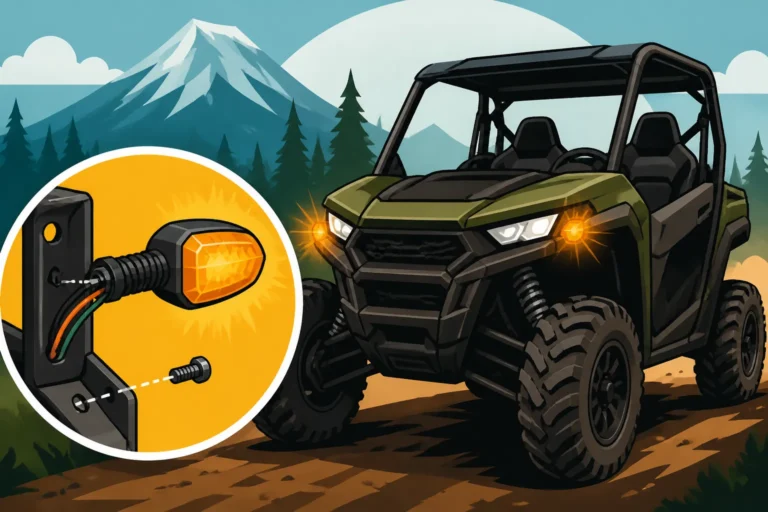
First and foremost, your WATV needs proper lighting. This means at least one headlight (though two are often better for visibility), a taillight, and a brake light. These lights must be functional and visible from specific distances, especially if you plan on [Riding Back to Camp After Dusk]. Beyond basic illumination, you'll need proper signaling. This includes operational [Turn Signals on a Washington Road Machine] at both the front and rear of your machine, allowing you to clearly indicate your intentions to other drivers. Don't forget [Mirrors and a Horn for Washington Road Use]; at least one rearview mirror is mandatory to give you a clear view of traffic behind you, and a horn audible from 200 feet is essential for warning others of your presence. Many riders turn to aftermarket suppliers like SuperATV for high-quality, durable turn signal kits, mirrors, and horns that can withstand the rigors of off-road riding while meeting street-legal standards.
Additionally, your WATV must be equipped with [A Windshield or Eye Protection in Washington]. This doesn't necessarily mean a full, automotive-style windshield (though many side-by-sides have them); it can be met by wearing DOT-approved goggles or a face shield on your helmet. Your machine also needs a USFS-approved [Washington Spark Arrester Requirement] to prevent wildfires, and a [Washington Muffler Requirements for an ORV] that meets noise limits. Remember, these requirements are not just bureaucratic hurdles; they are safety measures designed to protect you and others sharing the road. A comprehensive pre-ride checklist covering all these items is crucial before you even think about hitting a public road.
Rider and Passenger Requirements
Beyond the machine itself, the human element is equally critical. Washington has specific rules for who can operate a WATV on an open public road and what safety gear they must use. These rules are in place to minimize risks and ensure that everyone sharing the road does so safely.
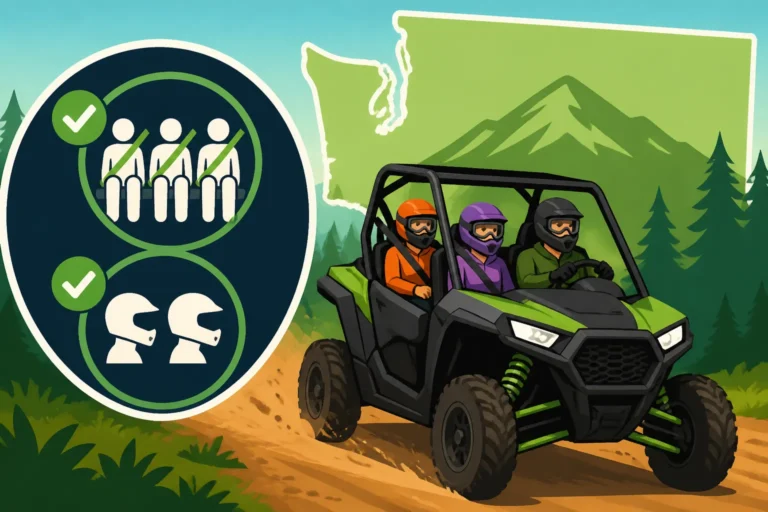
First, let's talk about helmets. It's a common misconception that only minors need to wear helmets on ORVs. In Washington, that's simply not true. The [Washington Helmet Law for WATV Riders] mandates that all riders and passengers, regardless of age, must wear a USDOT-compliant helmet when operating a WATV on public lands, which includes open county roads. This is a non-negotiable safety item. For the operator, a valid driver's license is absolutely mandatory. [Washington Driver License Rules for WATVs] are clear: if you're riding on a public road, you need to be a licensed driver, just as if you were driving a car. This means no provisional licenses for driving a WATV on an open road, and certainly no unlicensed drivers.
Furthermore, you must carry proof of liability insurance. [Washington WATV Insurance Requirement] states that any WATV operating on a public road must have at least the minimum liability coverage required for other motor vehicles. This is critical for protecting yourself and others in case of an accident. If you're riding with a minor, [Washington Rules for Riders Under 16] are strict. While a supervised minor can ride an ORV off-road in many areas, a minor typically cannot operate a WATV on an open public road. For side-by-sides, [Washington Passenger Rules on a WATV] dictate that all passengers must have an available seat designed for them, and anyone in a utility vehicle must use the installed seat belts. Never exceed the manufacturer's passenger capacity. These rules ensure that everyone on board is as protected as possible.
Tabs, Title, and Paperwork
Having the right equipment and meeting rider requirements is fantastic, but it's all meaningless without the proper documentation. In Washington, operating a WATV on designated public roads means your machine must be fully registered and legally titled. This involves a multi-step process that ensures your machine is recognized by the state and that you're contributing to the funds that maintain trails and open roads.
The cornerstone of WATV legality in Washington is the "two-tab" system. You'll need both [Washington's Off-Road Tab Explained] and [Washington's On-Road Tab Explained] displayed on your machine. The off-road tab is your standard annual registration for trail use, while the on-road tab specifically grants you permission to use your WATV on designated public roads. These tabs must be current and correctly affixed. In addition to the decals, your WATV must also have a physical [Washington's Metal Tag Explained] permanently mounted. This metal tag, often referred to as a "license plate," has a unique identifier and is crucial for law enforcement. Remember [Where the Metal Tag Bolts On a WATV] – it needs to be securely attached and visible.
Before you can even get the tabs, your machine must be properly titled in your name. [Washington WATV Title Requirements] mandate that every WATV owned by a Washington resident must have a title, similar to a car. This title process typically involves a [Washington Road Use Declaration] form, which you'll fill out when you apply for your on-road tab. Once everything is squared away, it's absolutely essential to carry your physical registration card with you whenever you ride. [Carrying the Registration in the Machine] is a legal requirement, and a trooper or deputy will ask for it during a roadside stop. Many riders use a waterproof pouch or a small, secure box to keep this vital paperwork safe and dry, especially in Washington's often-damp climate.
Navigating and Riding Ben Howard Road Safely
Riding your WATV on an open county road like Ben Howard is a privilege, and it comes with responsibilities. It's a different experience than ripping through a forest trail, requiring a heightened awareness of other traffic, road conditions, and the specific limitations placed on WATV use. Safety and courtesy should always be at the forefront of your mind.
Understanding Speed Limits and Road Etiquette
One of the most critical aspects of riding an open county road in Washington is understanding and adhering to the speed limits. For WATVs on designated county roads, the maximum allowable speed is 35 mph. This isn't just a suggestion; it's a hard limit. Going faster can result in a citation and is inherently more dangerous, as WATVs are not designed for high-speed road travel like cars. This 35 mph rule applies even if the posted speed limit for cars on Ben Howard Road is higher. You must always obey the lower, WATV-specific limit.
This speed differential can be a challenge. You'll often be riding slower than other vehicles, which requires extra vigilance. Stay as far to the right of the lane as safely possible, giving faster traffic ample room to pass. Use your turn signals well in advance of any turns, and be predictable in your movements. [Washington Rules for Riding Two Abreast] explicitly prohibit it; you must ride single file. This is crucial for maintaining a safe space on the road and allowing other vehicles to navigate around you. Imagine [Meeting a Log Truck on a Gravel Road]—these are common in areas around Ben Howard, and they need plenty of room. Being courteous and aware not only keeps you safe but also helps maintain the positive public perception necessary to keep these roads open for WATV use in the future. Remember, these roads are shared spaces, not exclusive ORV parks.
Crossing State Highways and Restricted Zones
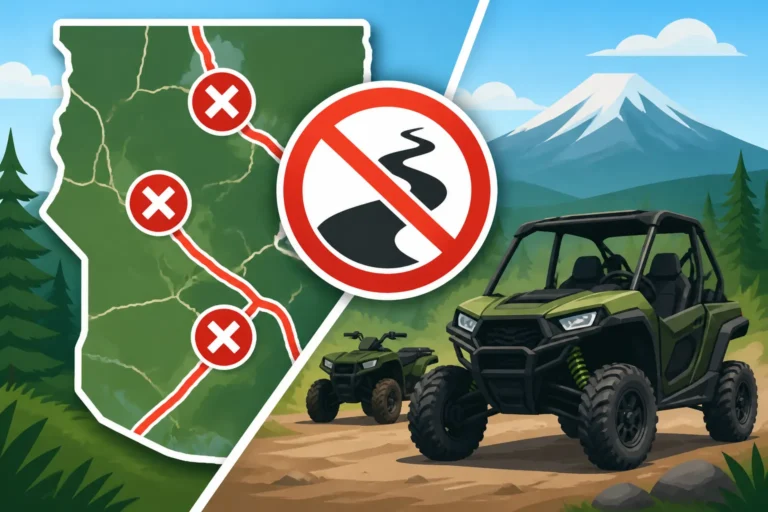
While Snohomish County Ordinance 17-032 opens Ben Howard Road for WATV use, it's crucial to understand its limitations, especially when it comes to intersecting with state highways or other restricted zones. A county ordinance does not automatically grant you permission to ride on a state highway for any extended period. The rules for [Washington Rules for Crossing a State Highway] are very specific. You might be allowed to cross a state highway at an intersection, but this is usually only if the state highway segment has a posted speed limit between 35 mph and 60 mph. Even then, you are typically only allowed to cross directly, not ride along the highway for any distance.
It's vital to research your route thoroughly and understand [Which Washington Highway Segments Allow ORVs] for crossing. State highways, managed by WSDOT, have different regulations than county roads. Never assume that because a county road is open, any intersecting state highway is also fair game for riding. If you're unsure about a particular crossing, it's always best to find an alternative route or trailer your machine. Attempting to ride on a restricted highway can lead to severe penalties and could jeopardize future road access for all WATV riders. Always look for clear signage or official county and state maps that designate open crossing points or allowable segments.
Pre-Ride Checks and Practical Considerations
Before you even turn the key, a thorough pre-ride inspection of your WATV is non-negotiable when planning to ride on public roads. This isn't just about avoiding a breakdown; it's about ensuring your machine meets all the legal safety standards. Check your tires for proper inflation and any signs of damage, confirm your brakes are responsive, and verify all your lights—headlights, taillights, brake lights, and especially your turn signals—are working perfectly. Ensure your horn is functional and that your mirrors provide clear visibility. Top off your fluids, and double-check that your spark arrester and muffler are securely in place and meet requirements. A quick once-over can prevent a roadside stop from turning into a costly citation or a dangerous situation.
Beyond the machine, practical preparation is key. Always carry a physical or digital map that clearly shows where public roads end and designated [Where Pavement Ends and Forest Road Begins] areas start. Cell signal can be spotty in the foothills, so don't rely solely on your phone for navigation. Bring plenty of water, snacks, a basic tool kit, and a first-aid kit. Washington weather can be unpredictable, so dress in layers and be prepared for sudden changes, especially rain. If you're riding through areas with active logging, be extra cautious; [Meeting a Log Truck on a Gravel Road] can be an intimidating experience, so yield to all commercial vehicles. Remember that riding on roads means sharing them with everything from families in SUVs to commercial traffic, so stay alert, ride defensively, and be a good ambassador for the WATV community.
| Requirement Category | Specific Item | Description for Road Use | Notes |
|---|---|---|---|
| Machine | Headlights | At least one, DOT-compliant, working | Required after dark and in low visibility. |
| Taillights | At least one, DOT-compliant, working | Red, visible from 500 ft. | |
| Brake Lights | Red, illuminate when braking, working | Required to signal deceleration. | |
| Turn Signals | Front and rear, amber or red, visible, working | Essential for indicating turns or lane changes. | |
| Mirrors | At least one rearview, providing clear view rearward | Required for situational awareness. | |
| Horn | Audible from 200 ft, working | Essential for warning pedestrians and other vehicles. | |
| Spark Arrester | USFS approved | Prevents wildfires, especially critical in dry seasons. | |
| Muffler | Meets noise limits (often 96 dB or less) | Keeps peace with residents; excessive noise can lead to fines. | |
| Windshield/Eye Protection | Windshield OR DOT-approved goggles/face shield | Rider's choice, protects from debris and wind. | |
| Paperwork | Off-Road Tab (Decal) | Current yearly decal, affixed to machine | Standard ORV registration for trail access. |
| On-Road Tab (Decal) | Current yearly decal, affixed to machine | Specific decal authorizing road use. | |
| Metal Tag | Permanently affixed to machine, clearly visible | Unique identifier, similar to a license plate. | |
| Registration Card (Paper) | Original or copy, carried on machine | Proof of current registration and ownership. | |
| Driver's License | Valid, unrestricted, carried by operator | Required for operating any motor vehicle on public roads. | |
| Insurance Proof (Paper) | Valid liability insurance card, carried on machine | Required for all road-legal vehicles in Washington. | |
| Rider | Helmet | DOT-approved, worn by all riders and passengers | Mandated by Washington law for all WATV riders on public land. |
| Operator Age | 16+ for road use (with valid driver's license) | Younger riders have specific restrictions and typically cannot ride roads. | |
| Passenger Capacity | Do not exceed manufacturer's rated capacity | Ensure all passengers have a designed seat and use seat belts if equipped. | |
| General Rules | Speed Limit | Maximum 35 mph on county roads, regardless of posted limit for cars | Crucial for safety and compliance; ride below this if conditions warrant. |
| Riding Abreast | Prohibited | Must ride single file on public roads. |
Disclaimer
This article is for general informational purposes only and does not constitute professional advice. Laws, prices and regulations vary by location and change over time. Consult a qualified professional for guidance on your specific situation.