Lake Stevens Ordinance 1045
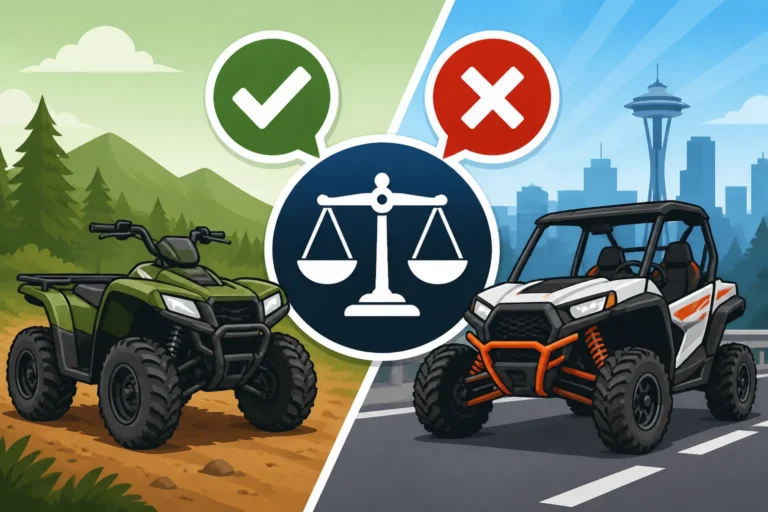
One of the biggest headaches for Washington ATV and UTV enthusiasts is figuring out where you can actually ride your machine on the pavement. It's frustrating when you just want to get from point A to point B, or even just access a trailhead without loading your machine back onto a trailer, only to be met with a maze of state laws and local ordinances. This guide is here to untangle the specifics of Lake Stevens Ordinance 1045, helping you understand how you might be able to legally navigate the streets of this particular Washington city on your beloved wheeled adventure vehicle (WATV).
Understanding Washington's Broader WATV Road Rules
Before we dive into the nitty-gritty of Lake Stevens, it's crucial to understand the broader framework Washington State has established for off-road vehicles on public roads. The state has gone to great lengths to provide a pathway for some machines to become street-legal, but it's not a free-for-all. Local jurisdictions, whether counties or cities, still have a significant say in where and when these vehicles can operate. This layered approach can be incredibly confusing, making it feel like you need a law degree just to plan a weekend ride.
The General State-Level Restrictions
At the state level, the Washington Department of Licensing (DOL) defines what constitutes a "Wheeled All-Terrain Vehicle" (WATV), which includes most ATVs, UTVs, and side-by-sides. The overarching rule is that these machines are generally designed for off-road use, and using them on public roads comes with strict conditions. For instance, the state allows counties with a population of less than 15,000 to automatically open all their roads to WATVs, unless specifically closed by local ordinance. For larger counties, it's the opposite: all roads are closed unless a specific ordinance opens them. This distinction is critical because it dictates whether you're looking for a list of open roads or a list of closed roads. Most importantly, any road opened by the state or a county ordinance generally cannot have a speed limit higher than 35 miles per hour. This is a common point of confusion and frustration, as many rural roads exceed this limit, forcing riders to stick to slower routes. You'll also need to ensure your machine meets specific equipment requirements and carries the correct registration and tabs. For a deeper dive into the state's classification system, you might want to read [Why Washington Says WATV and Not ATV].
Beyond speed limits, the state also mandates certain equipment for any WATV venturing onto public roads. This isn't just about having headlights; it's about a full suite of safety features designed to make your off-road machine visible and controllable in a mixed traffic environment. Think about standard automotive equipment: turn signals, mirrors, a horn, and often a windshield or eye protection. These are non-negotiable and are usually checked during a safety inspection. Without these items, even if a road is open, you could face a citation. It’s also vital that the operator possesses a valid driver's license, and all riders, including passengers, must wear a helmet. Understanding these foundational state rules is like learning the alphabet before you can read a book; they're the absolute basics upon which all local ordinances are built.
Why Local Ordinances Matter
Given the state's framework, local ordinances like Lake Stevens Ordinance 1045 become the definitive guide for riding in specific areas. They act as the final word, either opening or closing roads that might otherwise fall under a general county rule or state mandate. For cities, this is especially true. A city council can evaluate its unique traffic patterns, population density, and public safety concerns to tailor rules that make sense for their community. This means that even if the surrounding Snohomish County might have certain rules, the City of Lake Stevens can establish its own. This local control is why you can't assume that just because you rode legally in one town, you can do the same in the next. It’s a patchwork system that requires riders to be diligent about checking local regulations for every community they plan to visit.
The beauty of a specific ordinance is that it provides clarity. Instead of wondering if a particular street is fair game, the ordinance should lay it out explicitly. This legislative process typically involves public hearings, allowing residents and riders to voice their opinions. The resulting ordinance aims to balance recreational access with community safety and quality of life. Without these local laws, riders would be left guessing, or worse, riding illegally and facing fines. It’s a necessary layer of governance that addresses the hyper-local realities of traffic flow, pedestrian safety, and access to trails or commercial districts within city limits. Checking the specific text of the ordinance is always the best course of action. For more general information about what makes a city street different from a county road, check out [Washington Rules for Riding a City Street].
Diving Deep into Lake Stevens Ordinance 1045
Lake Stevens Ordinance 1045 is the specific piece of legislation that addresses the use of WATVs within the city limits of Lake Stevens. Passed by the city council, this ordinance dictates exactly which roads, if any, are open to these machines, and under what conditions. It's a localized answer to the statewide question of "Can I ride my ATV on the street?" For riders in Snohomish County, particularly those living in or visiting Lake Stevens, this ordinance is the document you need to understand.
What the Ordinance Actually Allows
Lake Stevens Ordinance 1045 typically outlines specific streets or segments of streets where WATVs are permitted. It's highly unlikely that all city streets would be opened; usually, these ordinances are very particular about their scope. Often, the permitted roads are those that provide access to popular trailheads, connect residential areas to services without traversing major arterials, or are quieter, lower-speed routes. The ordinance will also likely reiterate the state's 35 mph speed limit restriction, meaning that even on an approved street, if the posted speed limit is higher, WATV use would still be prohibited. Riders must always adhere to the posted speed limits, and this 35 mph cap is a non-negotiable state standard. If you're riding a road with a 40 mph limit, even if it's on a list, you're technically in violation of state law.
Furthermore, these ordinances often come with specific time-of-day restrictions or seasonal limitations, although this varies greatly by locality. For example, some cities might allow WATV use only during daylight hours, or prohibit it during peak traffic times. They might also specify rules about crossing major highways or operating within certain proximity to schools or parks. The devil is truly in the details with these local laws. It's not enough to know which roads are open; you also need to know when and how you can use them. These details are designed to minimize conflicts with other road users and ensure public safety within a bustling community like Lake Stevens. Without familiarizing yourself with these specifics, you might find yourself facing a fine, even if you thought you were riding legally. Knowing the ins and outs of [Riding Through Lake Stevens] is key to a hassle-free experience.
Specific Equipment Requirements for Lake Stevens
While Washington State sets the baseline equipment requirements for any WATV used on public roads, local ordinances can (though don't always) add supplementary rules. Lake Stevens Ordinance 1045, for example, might specify additional lighting requirements for riding after dusk, or perhaps stricter rules about noise levels. Generally, a WATV must have working headlights, taillights, brake lights, turn signals, at least one rearview mirror (many riders opt for two for better visibility), and a horn. These are the standard features required by state law. Many off-road machines, especially older models or those focused purely on trail riding, might not come equipped with all of these from the factory. This is where the aftermarket comes in. Companies like SuperATV offer a wide range of street-legal kits and individual components like turn signals, mirrors, and horns that can help bring your machine up to snuff. It's always best to review the ordinance for any unique local provisions that go beyond the state's mandates.
The safety inspection process, which is mandatory for obtaining your on-road tab, will meticulously check for these required items. Imagine pulling up for your inspection and realizing your horn isn't loud enough or your turn signals aren't visible from the required distance. It's an easy way to fail the inspection and delay your ability to ride legally. Beyond the basic equipment, some ordinances may also clarify rules around helmets for riders and passengers, or even the use of seatbelts for utility vehicles. Even if not explicitly stated in the Lake Stevens ordinance, adhering to all state laws regarding equipment and rider safety is paramount. For example, Washington's helmet law extends to all WATV riders on public roads, regardless of age. Always ensure your machine is in top operational condition, not just for legal compliance, but for your own safety and that of others on the road. For more details on what's expected, check out [Washington Lighting Requirements for WATVs] and [Washington Mirror Requirements for Road Use].
Navigating the Permitting and Registration Process in Lake Stevens
Getting your WATV legally onto the streets of Lake Stevens isn't just about understanding the local ordinance; it's a multi-step process that involves state-level registration and inspections. This can feel like a bureaucratic labyrinth, but breaking it down into manageable steps makes it less intimidating. The goal is to ensure your machine is not only compliant with local rules but also with the foundational state requirements for on-road use.
Getting Your WATV Road-Ready
The first hurdle to clear is ensuring your WATV meets all the physical requirements for road use in Washington. This means having all the necessary safety equipment installed and functioning correctly. We're talking about more than just lights; your machine needs turn signals that flash amber to the front and red or amber to the rear, a working horn that's audible from at least 200 feet, and at least one rearview mirror mounted to provide a clear view of the road behind you. Many riders choose to install two mirrors for better situational awareness, especially in city traffic. A windshield or eye protection for the operator is also crucial. For many machines, especially those designed purely for off-road adventures, these items are not standard. This is where aftermarket solutions come into play. Companies like SuperATV specialize in providing kits and individual parts that can convert an off-road machine into one that meets street-legal specifications. You can find everything from wiring harnesses for turn signals to universal mirror mounts.
Once your machine is equipped, it must pass a safety inspection performed by an authorized inspector. This isn't just a cursory glance; the inspector will verify that all required equipment is present, properly installed, and operational. This includes checking brake lights, headlights (both high and low beam), turn signals, horn, mirrors, tire tread, and even the structural integrity of your machine. The inspection also typically verifies the presence of a spark arrester and an adequate muffler to meet sound emission standards. Passing this inspection is a critical step, as you won't be able to get your "on-road" tab without the signed inspection form. It's worth remembering that there's a cap on how much an inspection can cost, so it's not an open-ended bill. For details on this, see [Washington WATV Safety Inspection Cost]. Make sure your machine is in tip-top shape before you show up to avoid a re-inspection.
Understanding the "On-Road" Tab
Washington uses a unique "two-tab" system for registering WATVs that wish to operate on public roads. You need both the standard "off-road" tab, which allows you to ride on designated trails and non-highway roads, AND the additional "on-road" tab. The on-road tab is what truly signifies your machine's legal eligibility for approved paved roads, like those in Lake Stevens. This is a crucial distinction. Simply having an off-road tab isn't enough to ride on city streets. The on-road tab demonstrates that your machine has met the state's safety equipment standards and has passed the required inspection. Without it, even if you're on a street designated by Ordinance 1045, you could still be ticketed for improper registration. [Washington's Two-Tab System] goes into great detail about why this system is in place.
To obtain the on-road tab, you will need to submit your vehicle's title, proof of insurance (which is mandatory for on-road WATV use), the completed and signed safety inspection form, and the required fees to the Department of Licensing (DOL) or an authorized subagent. This process ensures that your machine is properly documented, insured, and verified as safe for mixed-traffic environments. It's often a good idea to gather all your paperwork in advance to make the process smoother. Remember that the on-road tab is an annual renewal, so you'll need to keep up with it to maintain your street-legal status. For a comprehensive overview of this specific tab, refer to [Washington's On-Road Tab Explained]. This tab is your passport to riding in Lake Stevens, provided you also adhere to the specifics of Ordinance 1045.
Practical Considerations for Riding in Lake Stevens
Riding a WATV on city streets, even where permitted, comes with a unique set of challenges and responsibilities. It’s a completely different environment from the open trails or forest roads that most off-road machines are accustomed to. In a place like Lake Stevens, with its mixed residential and commercial areas, being acutely aware of your surroundings and considerate of other road users is paramount.
Riding Etiquette and Safety on City Streets
When you're out on the streets of Lake Stevens on your WATV, you become part of the regular traffic flow, and that means adhering to all traffic laws just like any car or motorcycle. This includes signaling turns, stopping at stop signs and red lights, yielding to pedestrians, and maintaining safe following distances. Because WATVs are often smaller and can be less visible than full-sized vehicles, defensive riding is key. Assume that other drivers might not see you, especially when changing lanes or at intersections. Use your mirrors frequently, and consider adding bright reflective tape to your machine or gear to increase visibility, especially during dawn, dusk, or overcast weather. While the state mandates helmets for all WATV riders on public roads, it's also about setting a good example for the riding community. Adhering strictly to all rules helps foster a positive image for WATV riders, which can influence future decisions by local councils regarding road access.
Beyond legal compliance, good etiquette involves being mindful of noise and dust. WATVs, by their nature, can be louder than passenger cars, and in residential areas, this can quickly become a nuisance. Try to keep engine revs low and avoid excessive acceleration. If your exhaust system is particularly loud, consider modifications to reduce its sound output within legal limits. Dust can also be an issue, especially on gravel shoulders or when pulling off paved surfaces. Ride courteously, slowly, and maintain control to minimize any disruption to residents. Remember that public perception plays a huge role in the ongoing debate about street-legal WATVs. Every time you ride responsibly, you're helping to ensure continued access for the entire community. For more on safety, refer to [Washington Helmet Law for WATV Riders].
Where You Can and Cannot Go
Even with Lake Stevens Ordinance 1045 in place, it’s critical to understand that you won't be able to ride your WATV on every street within the city. Local ordinances are almost always specific, listing particular roads or zones that are open, and implicitly or explicitly closing others. Major arterials, state highways that pass through the city, or roads with speed limits exceeding 35 mph are typically off-limits. Imagine yourself needing to get across town; you can't just take the most direct route if it involves prohibited roads. You'll need to plan your route carefully, sticking strictly to the approved list of streets. Getting caught on a closed road, even inadvertently, can result in a significant fine and potential impoundment of your machine.
It is your responsibility as the rider to obtain a copy of the ordinance or check the city's official website for the most current list of open roads. Sometimes, maps are provided to help visualize the permitted routes. This is not a situation where you can "ask for forgiveness later." Ignorance of the law is rarely an excuse. Additionally, be aware of any temporary closures due to construction, special events, or other city activities. Always be on the lookout for signage that might indicate restrictions. This might seem like a lot of homework, but it’s essential to ensure legal and safe operation. The ability to ride from your home to a local store or to a nearby trailhead is a privilege, and understanding its boundaries is key to maintaining that privilege for all riders. For general rules on road crossings, see [Washington Rules for Getting Across a Road].
| Feature | Washington State Requirements (General) | Lake Stevens Ordinance 1045 (Potential Additions/Clarifications) |
|---|---|---|
| Speed Limit | Max 35 mph on open roads | Reinforces 35 mph state limit; specific roads may have lower limits |
| Registration | Off-road + On-road tabs (annual renewal) | Same as state, verified for city street use |
| Safety Inspection | Mandatory; verifies state equipment compliance | May emphasize certain aspects like noise or specific lighting |
| Required Equipment | Headlights (high/low), taillights, brake lights, turn signals, horn, mirrors, eye protection/windshield, spark arrester, muffler | Reiterate state minimums; potentially specific noise limits or visibility standards |
| Driver's License | Valid driver's license required | Same as state |
| Helmet Use | Mandatory for all riders/passengers | Same as state |
| Road Access | Closed by default in counties >15k pop (like Snohomish); opened by specific ordinance | Specific list of city streets where WATVs are permitted (e.g., local access roads, connectors) |
| Time Restrictions | Generally none at state level | Could specify daylight hours only or exclude peak traffic times (check ordinance text) |
| Insurance | Mandatory for on-road use | Same as state |
Beyond Lake Stevens: Other Nearby Riding Opportunities and Regulations
While Lake Stevens Ordinance 1045 opens up new avenues for WATV use within its city limits, it's also important to remember that Washington is a vast state with diverse riding opportunities. Many riders use their street-legal WATVs to get to trailheads or to connect between different off-road areas. Therefore, understanding the regulations in neighboring communities and the broader context of off-road riding remains crucial.
Neighboring Communities and Their Rules
Just because Lake Stevens has an ordinance, it doesn't mean neighboring cities or unincorporated areas of Snohomish County follow the same rules. In fact, it's highly probable they do not. Each city council or county commission makes its own decisions based on local input and conditions. For example, Everett, Marysville, or other nearby towns would have their own distinct ordinances, or potentially no ordinance at all, keeping their streets closed to WATVs. This means if you plan a longer ride that takes you through multiple jurisdictions, you must do your homework for each one. A common frustration is riding legally on an open road in one city, only to cross an invisible boundary into a jurisdiction where WATV use is prohibited on those same types of roads. This is why planning your route with official maps and current ordinances is so important.
The takeaway here is that reciprocity between cities is rare, and assuming one area's rules apply to another is a recipe for trouble. Always check the local government's website for specific details, or contact their city clerk's office if the information isn't readily available. Some counties have also passed their own ordinances for unincorporated areas, which might differ from the rules in their incorporated cities. So, if you're riding outside Lake Stevens, say into an area overseen directly by Snohomish County, you'll need to consult the county's specific WATV ordinances. It truly requires a proactive approach to research and planning to ensure your ride remains legal and enjoyable.
Forest Roads and Designated ORV Areas
While navigating city streets is convenient, the true heart of WATV riding for many in Washington lies in its vast network of forest roads and designated Off-Road Vehicle (ORV) areas. These are often managed by the Department of Natural Resources (DNR), the Forest Service, or other land management agencies. Places like the Capitol State Forest near Olympia, Walker Valley ORV in Skagit County, or the Ahtanum State Forest near Yakima offer hundreds of miles of trails specifically designed for off-road enthusiasts. These areas usually have different rules regarding speed, equipment (though spark arresters and mufflers are universally required), and the type of machines allowed. For example, some trails might be width-restricted, meaning wider side-by-sides might not fit.
Many riders use the street-legal status of their WATV in places like Lake Stevens to legally access these forest roads and trail systems. Imagine being able to ride directly from your driveway to a logging road that leads into a fantastic trail network, bypassing the need for a truck and trailer! However, even on forest roads, there can be restrictions. Some forest roads are open to all vehicles, while others may be designated for non-highway use only or have seasonal closures. Always check with the specific land management agency (DNR, Forest Service, etc.) for current trail conditions, closures, and required passes (like the Discover Pass or a Northwest Forest Pass) before you head out. These agencies often have websites with detailed maps and alerts. Knowing [Where to Ride an ATV in Washington] is just as important as knowing how to get there.
Disclaimer
This article is for general informational purposes only and does not constitute professional advice. Laws, prices and regulations vary by location and change over time. Consult a qualified professional for guidance on your specific situation.