Washington Seat Belt Rules in a Utility Vehicle
It's a common scenario for Washington off-road enthusiasts: you've got your utility vehicle (UTV) set up perfectly for the trails, maybe a side-by-side with aggressive tires and plenty of ground clearance. But then you consider taking that short stretch of pavement to connect two amazing trail systems, or perhaps even ride to the local ice cream shop on an approved county road. Suddenly, the rules of the road come into play, and one of the most frequently asked questions is about seat belts. This guide will cut through the confusion and explain exactly what Washington state expects when it comes to seat belts in your UTV, especially when you venture onto public roads.
The Pivotal Moment: When Seat Belts Become Mandatory for UTVs in Washington
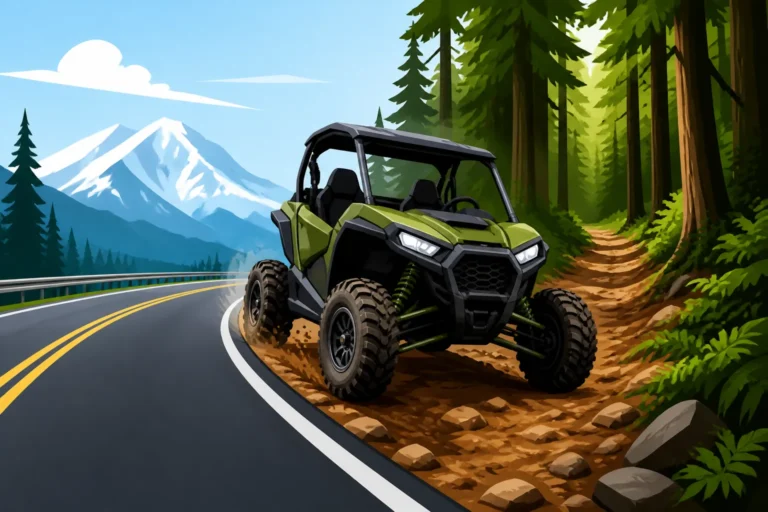
For many of us, our UTVs are synonymous with open air, freedom, and the thrill of off-road adventure. Out on the dirt, gravel, or designated trails, the focus is often on robust roll cages, helmets, and a driving style suited to the terrain. However, the moment your wheels touch public pavement, everything changes. Washington state has clear guidelines that transform your off-road machine into a bona fide "wheeled all-terrain vehicle" (WATV) in the eyes of the law, complete with specific safety requirements, including seat belts, that align more closely with traditional street-legal vehicles. This transition from trail to pavement isn't just a physical one; it's a legal one that demands attention to detail.
The Key Distinction: On-Road vs. Off-Road Use
Let's be real: when you're roaring through a forest trail in Capitol State Forest or navigating the rocky climbs of Walker Valley, a state trooper isn't typically pulling you over to check your seat belt use. That's because, while helmets are generally mandatory for riders and passengers in Washington ORV areas, the specific rules for seat belts are largely reserved for public road usage. Off-road environments allow for more flexibility, often trusting the machine's inherent design and the rider's judgment for safety within those specific contexts.
However, the minute you decide to utilize one of Washington's approved county roads or city streets to get from point A to point B, or simply to enjoy a scenic drive on legal pavement, you're operating under a different set of rules entirely. It's a fundamental shift in legal classification and expected safety standards. Think of it like this: your dirt bike might be exhilarating on a track, but you can't just slap a license plate on it and ride it to work without significant modifications to meet street-legal requirements. For UTVs, the seat belt rule is one of those critical "street-legal" requirements that often surprises riders who are used to the more relaxed off-road standards. You need to know the local [Washington Rules for Riding a County Road] or [Washington Rules for Riding a City Street] to avoid issues.
The Specifics of Washington's WATV Law
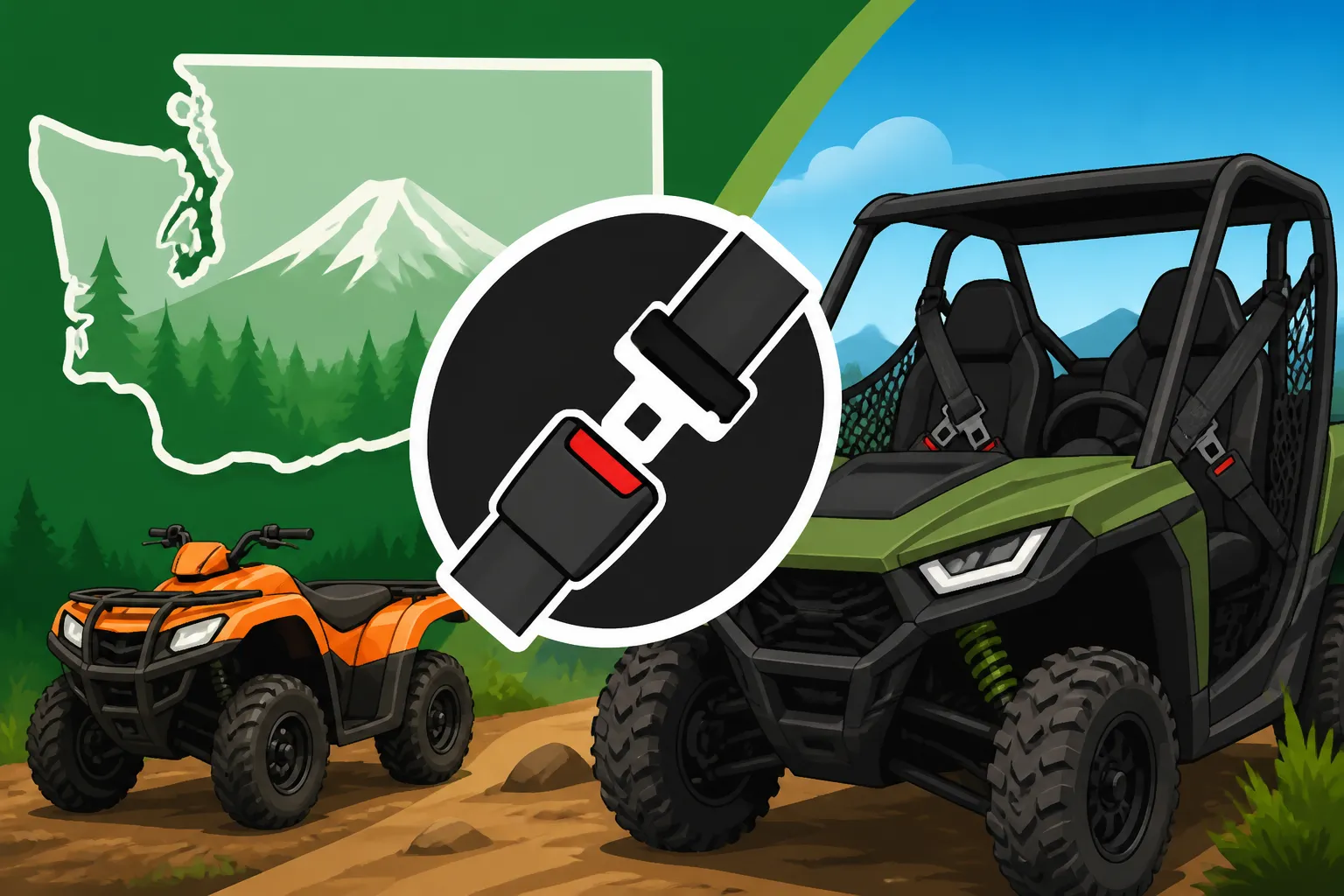
Washington State law (specifically RCW 46.09.310 and subsequent sections governing WATVs) makes it abundantly clear: if your utility vehicle is equipped with seat belts from the manufacturer, and you're operating it on a public road where WATV use is permitted, then those seat belts must be used by all occupants. It's not an option; it's a requirement. This isn't unique to Washington; many states adopt similar stances when allowing ORVs onto paved surfaces. The rationale is simple: public roads are designed for vehicles with certain safety features, and UTVs, when operating in this environment, are expected to provide similar levels of occupant protection.
This requirement specifically targets utility vehicles, or side-by-sides, which by design often have factory-installed seating and seat belts, unlike many traditional ATVs that are designed for a single rider straddling the machine. The law hinges on the presence of those factory-installed belts. If your UTV came from the factory with a roll cage and seat belts for two, three, or even four occupants, then every single one of those available seats, when occupied, requires the occupant to be buckled up when riding on any authorized public road. This is a critical piece of the puzzle for understanding [Washington WATV Road Requirements].
Understanding the "Road Legal" Equipment List for WATVs
Getting your UTV truly ready for public road use in Washington isn't just about throwing on a license plate. It involves a suite of modifications and checks to ensure your machine meets the standards of a street-legal vehicle, albeit one with specific limitations like speed and road type. Seat belts are a cornerstone of this, but they exist within a larger ecosystem of safety equipment. Ignoring any part of this list can not only lead to citations but, more importantly, can compromise the safety of you and your passengers.
Beyond Just Belts: A Holistic Approach to Road Safety
While seat belts are paramount, they're part of a comprehensive safety package required for legal road operation. Washington's law mandates several other pieces of equipment to ensure your WATV is visible, controllable, and predictable to other road users. This includes proper lighting – headlights, taillights, brake lights, and often turn signals – to communicate your intentions on the road. You'll also need mirrors to see traffic around you and a horn to alert others to your presence. These are all non-negotiable for riding legally on pavement.
Many riders invest in aftermarket kits from reputable brands like SuperATV to ensure their UTVs meet all these requirements. These kits often bundle everything you need, from turn signal systems to mirrors, to make the conversion process smoother. The idea is to make your UTV as safe and visible as a compact car when it shares the road with other vehicles. It’s a testament to the belief that safety should be holistic, not just focused on one component. Having robust [Washington Lighting Requirements for WATVs], functioning [Washington Mirror Requirements for Road Use], and a clear [Does Washington Require a Horn on an ORV?] are all part of that safety picture.
Here's a quick overview of some key equipment differences when moving from purely off-road to on-road use:
| Feature | Off-Road Use (Designated Trails) | On-Road Use (Approved Public Roads) |
|---|---|---|
| Helmets | Generally required for all riders/passengers. | Required for all riders/passengers. |
| Seat Belts | Often present, recommended, but not universally mandated by law. | Mandatory for all occupants if factory-installed. |
| Headlights | Required for night riding, often simple. | Must meet specific brightness/aim, often high/low beam, for road use. |
| Tail/Brake Lights | Basic taillight for visibility, brake light for stopping. | Must be visible from a specified distance, clear brake light activation. |
| Turn Signals | Not typically required. | Mandatory for indicating turns. |
| Mirrors | Not typically required. | Mandatory (at least one, often two) for rear visibility. |
| Horn | Not typically required. | Mandatory for warning other road users. |
| Windshield/Goggles | Goggles/eye protection often required with helmets. | Windshield OR eye protection required. |
| Spark Arrester | Mandatory on public lands. | Mandatory. |
| Muffler | Sound limits apply. | Must meet specific sound limits for road use. |
Factory Installed vs. Aftermarket Solutions
Most modern UTVs, especially side-by-sides from major manufacturers like Polaris, Can-Am, or Yamaha, come equipped with seat belts right from the factory. These are typically three-point harnesses, similar to what you'd find in a car, or sometimes four- or five-point harnesses designed for more aggressive off-road use. If your UTV has these, you're in good shape, provided they are in good working order and properly maintained. The law expects you to use what the manufacturer provided for occupant restraint.
However, some older UTVs or custom builds might have rudimentary or even absent seat belts. If you plan to ride these machines on public roads, you'll need to install an appropriate and functional seat belt system. This often means looking at aftermarket solutions. Companies like SuperATV offer a variety of seat belt and harness options, from basic replacements to advanced multi-point racing harnesses. When choosing an aftermarket solution, ensure it's robust, properly installed according to manufacturer guidelines, and designed to offer adequate protection. It's not just about meeting a legal checkbox; it's about genuine occupant safety in case of an unexpected stop or collision.
Practical Implications and What to Expect Roadside
Understanding the law is one thing; experiencing its enforcement firsthand is another. When you take your UTV onto public roads in Washington, you're stepping into the domain of traffic laws, and enforcement officers are trained to look for compliance with WATV regulations. Being prepared and knowing what to expect can make all the difference, not just in avoiding a citation, but in ensuring a safe and enjoyable ride.
Enforcement and Consequences
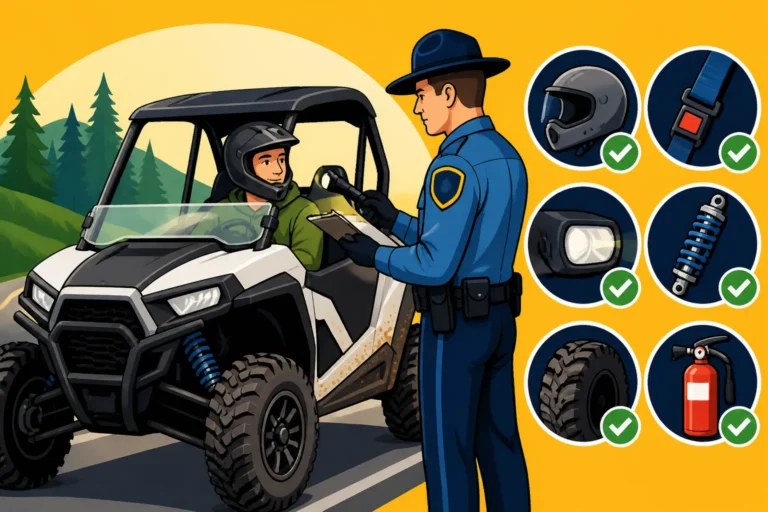
Imagine you're cruising down an approved county road, enjoying the scenic beauty of the Methow Valley, when you see those flashing lights in your rearview mirror. A Washington State Trooper, county sheriff, or local police officer might pull you over to perform a routine check of your WATV's road-legal status. They'll be looking for your valid tabs, sure, but they'll also visually inspect your machine for the required safety equipment, and yes, that includes checking that everyone in your side-by-side is properly buckled up.
If an officer observes occupants not wearing their factory-installed seat belts on a public road, you could face a citation. These aren't just minor inconveniences; they come with fines and can put a damper on your riding day. Moreover, if a serious accident were to occur while occupants were unbuckled, the legal ramifications and injury potential would be significantly greater. It’s a very real concern, and something [What a Washington Trooper Checks Roadside] definitely includes. The financial hit from [Washington Fines for Illegal WATV Road Use] is enough to make anyone rethink skipping the belt.
Passengers and Occupant Safety
This is particularly crucial for UTVs, which often carry multiple passengers. Whether it's your kids, your riding buddies, or your spouse, every single person in a seat with a factory-installed seat belt must be wearing it when on public roads. It's not enough for just the driver to be buckled up; the law applies to all occupants. This is a significant point of distinction from some traditional ATV rules, where passengers might simply hold onto the driver.
For side-by-sides, the design typically includes individual seats with their own restraint systems. This means if your UTV is a four-seater, all four occupants must be belted. This applies equally to adults and children. While Washington has specific rules regarding [Washington Rules for a Rider Under 16] and [Washington Passenger Rules on a WATV], the fundamental requirement for seat belt use, when present and on the road, applies universally to all ages. Always ensure your passengers understand this rule before you hit the pavement, reinforcing the importance of safety for everyone onboard. Even for passengers, [Washington Helmet Law for Passengers] is a critical piece of protection.
Common Misconceptions and Safety Best Practices
The world of WATV regulations can feel like a minefield of "what ifs" and exceptions, leading to a lot of confusion and sometimes dangerous assumptions. Let's clarify some common misconceptions and emphasize the best practices that will keep you safe and legal on Washington's roads. Ultimately, these rules are about preventing injuries and ensuring everyone can enjoy the sport responsibly.
"Just Crossing the Road" vs. "Riding the Road"
One of the most frequent misconceptions is the idea that if you're "just crossing" a road or only going a "short distance," the rules don't fully apply. Unfortunately, this isn't how the law sees it. The moment your WATV enters a legally designated public road or street, you are subject to the same requirements as if you were planning a long journey. There's no legal distinction for duration or distance when it comes to required safety equipment like seat belts. Whether you're traveling a hundred yards to connect two trails or ten miles to get to the nearest town, the rules for road-legal WATVs are in effect.
This means if you're coming off a trail, spot a county road that's open to WATVs, and plan to use it to reach another trail system, you and all your passengers need to be fully compliant before you enter that road. That includes buckling up, ensuring your lights are working, and having your helmet on. It's a key part of understanding [Washington Rules for Getting Across a Road] safely and legally. Don't fall into the trap of thinking a quick hop doesn't count; the law is applied the moment you merge with public traffic.
Beyond Compliance: Why Seat Belts Save Lives
While the legal obligation is a strong motivator, the primary reason to wear seat belts is, of course, safety. Utility vehicles, even robust ones, are not cars. They have a higher center of gravity, different handling characteristics, and often open cabs. In the event of a collision with another vehicle, an unexpected obstacle, or even a sudden stop, an unbelted occupant can be easily ejected from the machine. Ejection significantly increases the risk of severe injury or fatality.
Seat belts, especially the multi-point harnesses often found or installed in UTVs from companies like SuperATV, are designed to keep you securely within the protective cage of the vehicle. They distribute impact forces, prevent you from hitting internal components, and, most critically, keep you inside the vehicle where the roll cage can offer protection. Think about the energy involved even in a low-speed impact. A rider or passenger can be thrown with considerable force. Wearing a seat belt dramatically reduces the risk of serious injury. It's a simple, effective measure that should be a habit every time you get into your UTV, whether you're off-road or making a quick run on approved pavement. It's not just about obeying the law; it's about protecting yourself and those you care about.
Disclaimer
This article is for general informational purposes only and does not constitute professional advice. Laws, prices and regulations vary by location and change over time. Consult a qualified professional for guidance on your specific situation.