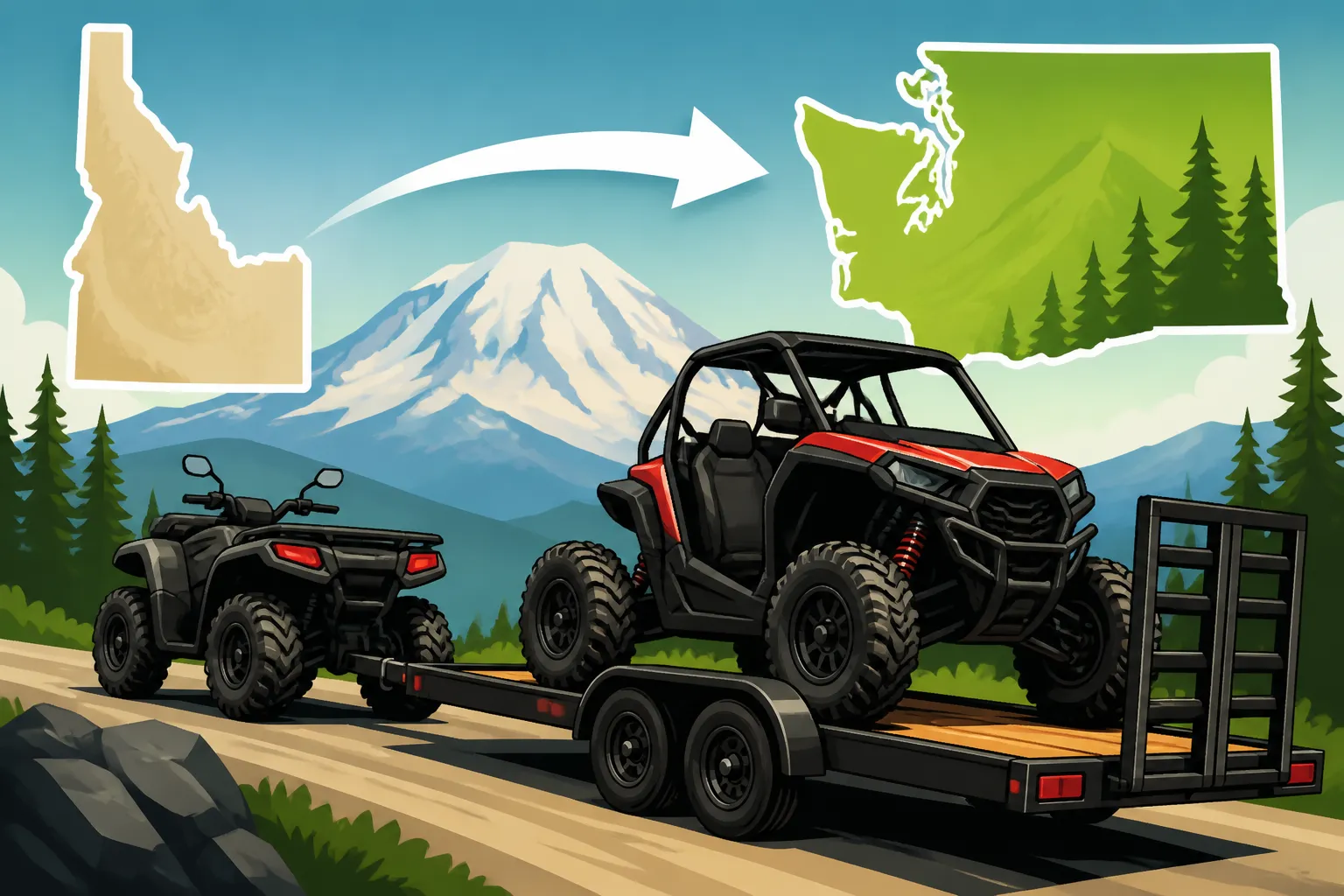
Hauling a Machine In From Idaho
Bringing an ATV or UTV into Washington State from Idaho can feel like navigating a maze, especially when you're used to Idaho's straightforward approach to off-road vehicles. Many riders get frustrated trying to figure out which pieces of paper from their Idaho purchase are actually relevant in Washington, or why suddenly a safety inspection is required. This guide will walk you through the entire process, from understanding Washington's unique requirements to successfully getting your machine titled and registered, so you can hit those Washington trails without a hitch.
Understanding Washington's View of Your Idaho Machine
When you've just pulled your quad or side-by-side across the state line from Idaho, Washington's Department of Licensing (DOL) sees it through a slightly different lens than Idaho did. While your Idaho title or registration might have been perfectly adequate for riding in the Gem State, Washington has its own set of rules, particularly around proving ownership and ensuring the vehicle meets safety standards for its roads and trails.
Why Your Idaho Title Matters
One of the biggest differences between Washington and Idaho often comes down to titling. Idaho has historically offered a bit more flexibility, especially for older or off-road-only machines, where a full title might not have been a strict requirement. However, Washington is pretty firm on the idea that every "Wheeled All-Terrain Vehicle" (WATV), which is what they call ATVs and UTVs here, needs to have a valid title. It's the cornerstone of proving legitimate ownership in the Evergreen State.
Even if your machine was only registered in Idaho, without a formal title, you'll likely need to go through Washington's titling process first. This can be a bit of a curveball if you're expecting to just transfer a registration. Washington uses the title to track ownership changes, establish liens, and ensure the vehicle isn't stolen or subject to other legal disputes. So, if you have an Idaho title, hold onto it tightly—it’s your golden ticket. If you don't, prepare for a few extra steps to get that initial title issued in Washington. The state really wants that clear chain of ownership documented before anything else. [Do You Need a Title for a WATV in Washington?] is a great resource if you're unsure about this step.
The Importance of a Bill of Sale from Idaho
Whether your Idaho machine has a title or not, a well-documented bill of sale is absolutely critical when you bring it into Washington. This document serves multiple purposes: it confirms the transaction, verifies the purchase price, and acts as a crucial piece of evidence for both ownership transfer and use tax calculation. Without it, you could face delays or complications at the licensing office.
A solid bill of sale should clearly list the buyer (that's you!) and the seller, the full Vehicle Identification Number (VIN) of the machine, the make, model, and year, and the agreed-upon purchase price and date of sale. Don't just scribble something on a napkin; a professional and comprehensive bill of sale is your best friend here. Many riders find it helpful to use a template from a reputable source like LawDepot to ensure all the necessary information is included and properly formatted. This protects both you and the seller and makes the process smoother when you present it to the Washington Department of Licensing. It's truly a foundational piece of paperwork for your Washington registration. For more on what Washington expects, check out [A Washington Bill of Sale for a WATV].
Use Tax on an Out-of-State Purchase
Here’s another point where Idaho and Washington often differ: sales and use tax. If you bought your ATV or UTV in Idaho and paid sales tax there, Washington will typically credit you for that amount. However, if the Idaho sales tax rate was lower than Washington's combined state and local rate, you'll owe the difference. And if you purchased your machine from a private party in Idaho and paid no sales tax at all, then Washington's full use tax will apply.
The use tax is calculated on the purchase price you declared on your bill of sale. However, be aware that Washington's DOL has the right to assess the tax based on the machine's fair market value if they believe the stated purchase price is unusually low. This is to prevent people from artificially lowering the sales price to avoid taxes. So, it's always best to be truthful and have a realistic purchase price on your bill of sale. You'll typically pay this use tax when you go to title and register your machine at a Washington licensing office. It’s an unavoidable part of bringing a vehicle into the state if you haven't already settled the tax bill at Washington rates. You can find more details on [Washington ATV Use Tax on a Private Sale].
Navigating Washington's Registration Process
Once you understand Washington’s expectations for your Idaho-bought machine, the next step is to actually get it registered. This involves gathering specific documents, potentially getting a safety inspection, and choosing the right tabs for your riding plans. It might seem like a lot of hoops to jump through, but each step is designed to ensure compliance with state laws and proper identification of your vehicle.
Required Paperwork for Idaho Imports
Getting your Idaho machine officially recognized in Washington starts with a specific stack of paperwork. You'll need to present several key documents to the Department of Licensing or a local vehicle licensing office. First and foremost, you'll need your Idaho Certificate of Title. This proves you are the legal owner. If Idaho didn't issue a title for your specific machine (which can happen with older off-road vehicles or certain categories), you’ll need to inquire about Washington’s process for titling an untitled vehicle, which often involves a bonded title or other specific procedures.
Secondly, your Bill of Sale from the Idaho purchase is crucial. As we discussed, this verifies the transaction details and purchase price. Make sure it's complete and clearly legible. Thirdly, you'll need a completed Washington Vehicle Certificate of Ownership Application. This form gathers all your personal information and details about the machine. Finally, if your machine is over 50 inches wide and you plan to ride it on public roads, you’ll need proof of a successful WATV Safety Inspection (more on that below). Having all these documents in order before you visit the licensing office will save you a lot of time and potential headaches. For a complete rundown, check out [Washington WATV Title Requirements].
The Washington Safety Inspection
For any WATV that you intend to make "street legal" in Washington and ride on designated public roads, a safety inspection is mandatory. This is a critical step that often catches Idaho riders by surprise, as it’s not always a requirement for off-road use in their home state. The inspection ensures your machine meets Washington’s minimum safety standards for road use, which include functional headlights, taillights, brake lights, turn signals, mirrors, a horn, and a spark arrester. They’ll also check for proper braking systems and tire condition.
This inspection must be performed by a qualified WATV inspector, which can be found at many ATV dealerships or certified repair shops across Washington. The state has set a cap on the cost of this inspection, so you won't be charged an exorbitant amount. Remember, even if your machine seems perfectly safe, an official stamp of approval is needed. Without a passed inspection, you won’t be able to get the on-road tab. This step is solely for those who plan to use their machine on public roadways; if you're only sticking to trails, you can skip this. For more details on the process and fees, refer to [Washington WATV Safety Inspection Cost] and [Where to Get a Washington WATV Inspection].
Choosing Your Washington Tabs
Washington has a two-tab system for WATVs, giving you flexibility based on how and where you plan to ride your Idaho machine. You can choose to get an "off-road tab," an "on-road tab," or both.
- Off-Road Tab: This is the basic registration required for all WATVs operating on designated non-highway public lands and trails in Washington. If you're planning to stick strictly to trail systems like Capitol State Forest or Walker Valley, this is the tab you'll need. It contributes to the Nonhighway Vehicle Account, which helps fund trail maintenance and development. The cost for this tab is typically a yearly fee. More information can be found in [Washington Off-Road Tab Cost].
- On-Road Tab: If your WATV is wider than 50 inches and you want the legal ability to ride on approved public roads within Washington counties and cities that have opted in, you'll need this tab in addition to your off-road tab. This is where the safety inspection mentioned above comes into play, as it’s a prerequisite for obtaining the on-road tab. This tab grants you access to specific low-speed roadways and contributes to roadway safety funds. You can learn more about its specific cost in [Washington On-Road Tab Cost].
You absolutely have the option to pay for both tabs if you envision using your machine in both environments. Many riders choose this for maximum flexibility. The crucial thing is to decide your intended use and apply for the appropriate tabs. It’s a yearly renewal process for both. For a detailed breakdown of getting both, check out [Paying for Both Tabs in Washington].
| Document/Requirement | Purpose | Notes |
|---|---|---|
| Idaho Certificate of Title | Proves legal ownership | Essential. If not available, be prepared for Washington's untitled vehicle process. |
| Bill of Sale | Verifies purchase transaction, price, and date | Crucial for ownership transfer and use tax calculation. Consider using a template (e.g., from LawDepot) to ensure all details are included. |
| Washington Vehicle Application | Official state form to title/register the vehicle | Available at DOL offices or online. |
| WATV Safety Inspection | Ensures machine meets road-use safety standards | Only if seeking on-road tab. Must be performed by a certified inspector. Max cost is capped by the state. |
| Use Tax Payment | Compensates Washington for sales tax not paid (or paid at lower rate) | Calculated on purchase price or fair market value. Paid at time of titling/registration. |
Common Pitfalls and Smooth Transitions
Bringing an out-of-state vehicle into a new state always has its quirks. Even with the best intentions, it's easy to overlook a deadline or misunderstand a specific requirement. Being aware of these common pitfalls and understanding how to navigate them can save you a significant amount of stress and potential fines, ensuring your transition from Idaho trails to Washington's vast riding opportunities is as smooth as possible.
The Fifteen-Day Deadline
One of the most frequently missed details when bringing a vehicle into Washington from another state, including Idaho, is the strict fifteen-day deadline for titling and registration. The clock starts ticking the moment you either purchase the machine and bring it into Washington, or when you become a Washington resident while possessing the machine. This isn't just a suggestion; it's a legal requirement.
Failing to title and register your WATV within this window can lead to penalties and fines, which nobody wants to deal with after a fun ride across the border. The state wants to ensure all vehicles operating within its borders are properly documented and that any applicable use tax is settled promptly. So, as soon as that Idaho machine rolls onto Washington soil and into your possession, make it a priority to gather your paperwork and head to the nearest licensing office. Don't procrastinate on this one! You can learn more about the specifics in [Washington's Fifteen-Day Registration Deadline].
What to Do If Your Idaho Machine Isn't Currently Titled
This is a common scenario, especially if you're buying an older ATV or UTV that might have only been registered for off-road use in Idaho. As we discussed, Washington prefers that every WATV has a clear title. If your Idaho machine doesn’t have a title, or if the seller never obtained one, you're looking at an extra step to get a title issued in your name before you can register it.
The process often involves filling out specific Washington Department of Licensing forms (like a Vehicle Certificate of Ownership Application, even if you’re only seeking a title at this stage), providing a comprehensive bill of sale, and sometimes even a VIN inspection to verify the machine's identity. In some cases, for very old machines or those with unclear ownership history, you might need to apply for a bonded title, which involves getting a surety bond to protect against potential claims of prior ownership. This can add a little time and cost to the process, but it's a necessary step to establish clear legal ownership in Washington. Remember, organizations like LawDepot can provide robust bill of sale templates that help establish your ownership clearly, which is a great starting point for this process. It’s paramount to get this title in your name first; Washington views it as a fundamental step for all vehicle ownership. [Why Washington Wants a Title First] delves deeper into this requirement.
Getting Your New Metal Tag and Decals
Once you’ve successfully navigated the titling, inspection (if applicable), and registration process, you’ll be issued your Washington WATV metal tag and annual registration decals. The metal tag is a small, durable plate that permanently attaches to your machine. It’s typically replaced only once every seven years, making it a fairly long-term identifier for your ATV or UTV.
Alongside the metal tag, you'll receive annual decals, which are stickers that display the year your registration expires. These decals must be affixed to the metal tag each year upon renewal. The placement of both the metal tag and the decals is specific: the metal tag generally mounts visibly on the rear of the machine, or in another readily identifiable location, while the decals go directly onto the tag. Correct placement ensures that law enforcement and park rangers can easily verify your machine’s current registration status. It's a small but vital detail that completes your compliance with Washington's ORV laws. For specific guidance on where these go, consult [Washington's Metal Tag Explained] and [Washington ORV Decal Placement].
Disclaimer
This article is for general informational purposes only and does not constitute professional advice. Laws, prices and regulations vary by location and change over time. Consult a qualified professional for guidance on your specific situation.