Bringing a Machine From Oregon
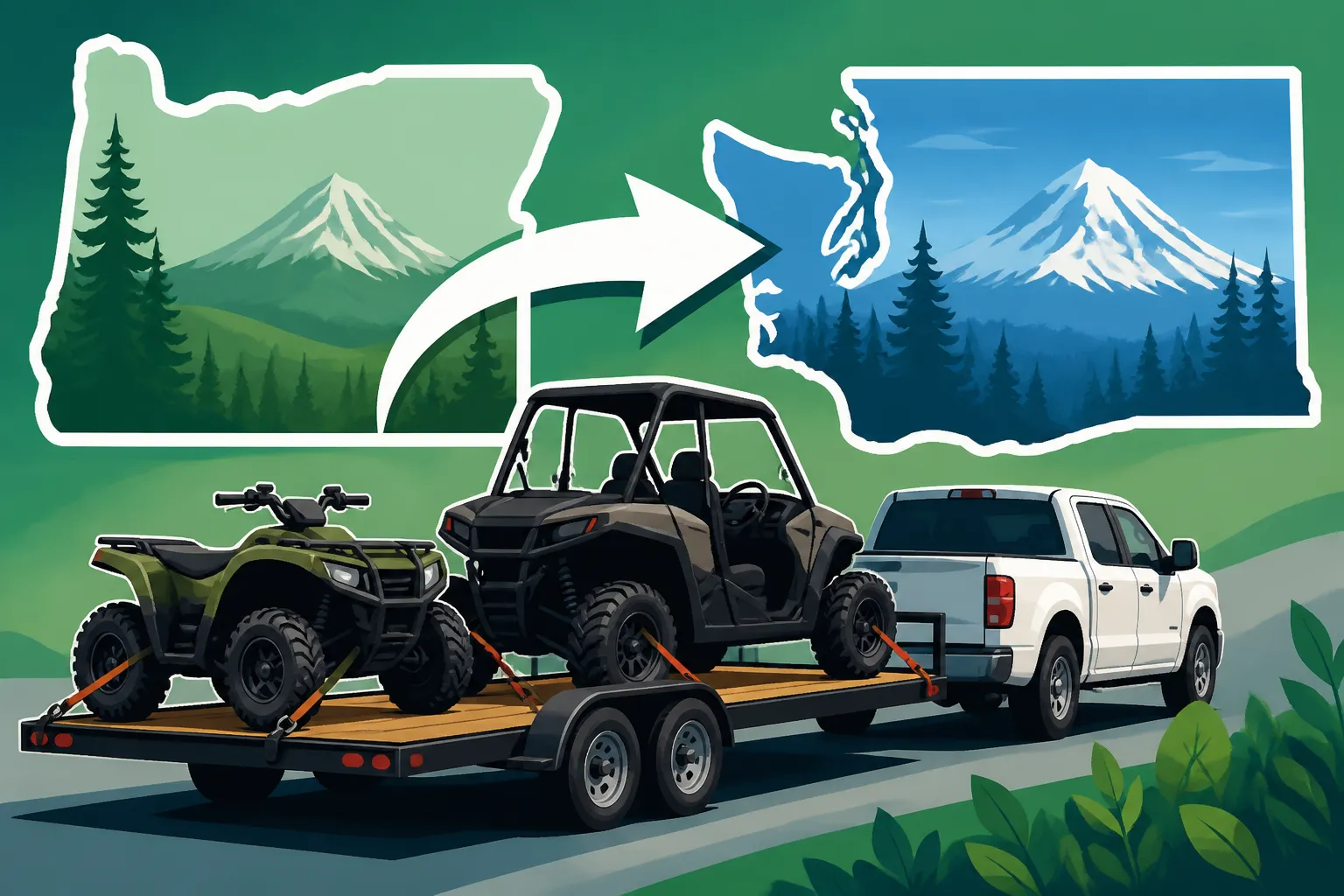
Moving your beloved off-road machine across state lines, especially from a neighboring state like Oregon to Washington, often feels like it should be a straightforward process. You already have a title, maybe even a current registration from Oregon, and you're thinking, "Great, just a quick transfer!" However, many riders quickly discover Washington has its own unique rules and terminology, turning what you hoped would be simple paperwork into a head-scratching journey through new regulations. This guide is here to walk you through exactly what you need to do to get your ATV, UTV, or dirt bike legally titled and registered in Washington state when it's coming from Oregon, helping you avoid common pitfalls and get back on the trails.
Understanding Washington's View on Out-of-State ORVs
It’s completely understandable to assume that if your ATV or UTV is legally registered and titled in Oregon, it should be a relatively simple transfer when you move to Washington. After all, it's just a few hundred miles north, right? But Washington state has a very distinct way of classifying and regulating these machines, often leading to confusion for new residents.
The Initial Shock: Different Rules, Different Names
First off, Washington doesn't widely use the term "ATV" in its formal statutes for all-terrain vehicles; they refer to them as "Wheeled All-Terrain Vehicles," or WATVs. This might seem like a small detail, but it signifies a different legal framework. What was straightforward in Oregon might be approached with an entirely different set of requirements and expectations here. Your Oregon title might simply say "ATV," but Washington will categorize it based on its features, like width and weight, to determine if it fits the WATV definition and what tabs it can receive. You might even find that Washington has a specific definition for your side-by-side that dictates what roads or trails it can legally access, which could be different from how Oregon treated it.
This often leads to a moment of "wait, what?" when you first try to register. The familiar process you navigated in Oregon simply doesn't exist here in the same form. Washington's system requires its own specific title and registration for all wheeled off-road vehicles that will be used on public land, regardless of where they came from.
Why Your Oregon Title and Registration Aren't Enough
While your Oregon title serves as crucial proof of ownership, Washington will require you to apply for a new Washington title. Think of your Oregon title as the foundational document that proves the machine is yours, allowing Washington to then issue its own. You won't simply be "transferring" your Oregon registration and tabs. Instead, you'll be going through the full Washington titling and registration process from scratch.
This is because Washington has its own fee structure, its own registration period, and its unique two-tab system for off-road and potential on-road use. Oregon's fees and regulations don't directly contribute to Washington's trail maintenance or road safety funds, so a new registration is necessary to ensure you're contributing to the local infrastructure you'll be using. Your machine needs to enter Washington's record-keeping system, which starts with a Washington title and then moves to new Washington tabs and decals.
The Washington Titling Process for an Oregon Machine
Titling is the first crucial step, establishing legal ownership in Washington state's records. Without a Washington title, you can't get those all-important tabs and decals that allow you to ride legally.
Getting Your Oregon Title Ready for Washington
The very first thing you'll need to do is present your current, valid Oregon title. This document proves that you are the legal owner of the machine. Make sure the title is in your name. If you recently bought the machine in Oregon and haven't yet transferred the title into your name there, you will need to do so, or at least have a properly signed-off Oregon title from the previous owner, along with a bill of sale. Washington will want to see a clear chain of ownership. If you happen to be in a situation where the Oregon title is lost, you'll need to apply for a duplicate Oregon title before you can proceed in Washington, as Washington won't title a machine without proof of prior ownership. Sometimes, if the machine was purchased privately, a detailed bill of sale can complement the title, providing a clearer record of the transaction. For generic templates that might help document such a sale, resources like LawDepot can be useful, but always ensure you're using official Washington forms for the actual titling process. You will be essentially going through the process of [Titling a WATV in Washington] as if it were a new acquisition to the state.
The All-Important Washington Road Use Declaration (Even for Off-Road)
This is a step that often catches people off guard. Even if you only intend to ride your machine strictly off-road, Washington requires you to complete a [The Washington Road Use Declaration] when titling and registering. This form is a critical piece of paperwork, and it's where you declare whether your machine will be used exclusively off-road, or if you intend to add the street-legal "on-road" tab.
If you opt for the off-road-only option, you're essentially stating that the machine does not meet the necessary equipment requirements for on-road use (like turn signals, mirrors, horn, etc.) or that you simply don't plan to ride it on public roads where allowed. If you declare for on-road use, then you're committing to ensuring the machine meets those requirements and will likely need to undergo a safety inspection. Either way, this declaration must be submitted with your titling paperwork. Don't overlook it, as your application can't move forward without it.
What If Your Oregon Machine Never Had a Title?
This is where things can get a bit trickier, though not impossible. Some older off-road machines, or those purchased in states with less stringent titling requirements for certain ORV types, might never have received a formal title. If your Oregon machine falls into this category, Washington's Department of Licensing (DOL) will still require proof of ownership. This usually means providing a detailed bill of sale, often notarized, and potentially even an affidavit of ownership if the circumstances are unusual.
You might need to contact the Oregon DMV or equivalent agency to verify that a title was never issued or required. If you only have a bill of sale, ensure it includes all critical information: seller's name and address, your name and address, the machine's make, model, year, and crucially, its Vehicle Identification Number (VIN). Without a clear VIN, titling will be impossible. For robust bill of sale templates that cover all necessary details, you could look to online platforms like LawDepot to help ensure you haven't missed any vital information. The goal is to provide Washington DOL with enough evidence to satisfy them that you are the rightful owner, even in the absence of a traditional title. This situation is similar to [Buying a Machine With No Title] in Washington.
Registering Your Oregon Machine in Washington
Once your machine is titled in Washington, the next step is to get it registered and obtain the proper tabs and decals. This is what allows you to legally operate your ORV on designated trails and, if applicable, approved public roads.
Choosing Your Tabs: Off-Road, On-Road, or Both?
Washington offers a distinct two-tab system, and when you register, you'll need to decide which tab (or both) your machine will display.
- The Off-Road Tab: This is the basic registration required for any WATV used on designated non-highway trails and public lands. This tab ensures that funds are contributed to the [Washington's Off-Road Tab Explained] and maintenance of these riding areas. Most riders bringing a machine from Oregon will primarily need this tab to access Washington's vast trail systems. It's often the simpler and more common choice for pure off-road enthusiasts. The cost for this tab is typically consistent statewide.
- The On-Road Tab: This additional tab, often referred to as the "street legal" tab, allows your WATV to be operated on specific public roads where permitted by local jurisdiction. This is a separate, additional fee on top of the off-road tab. To qualify for [Washington's On-Road Tab Explained], your machine must meet a series of equipment requirements (like mirrors, horn, turn signals, and a windshield or eye protection), and you must sign the Road Use Declaration affirming these requirements. There's also a mandatory safety inspection by a certified professional, which can cost up to $50. Not all machines can qualify, and not all roads are open. If you plan on riding county roads or city streets in Washington, even briefly to connect trails, you need to understand [Washington WATV Road Requirements]. You can choose to add [Adding the $12 On-Road Tab on Top] when you first register, or even add it mid-year if your plans change.
You might even consider [Paying for Both Tabs in Washington] if you want the flexibility to ride legally on both trails and approved roads. Make sure you understand the difference and choose the option that best suits your riding intentions and your machine's capabilities.
Temporary Permits for Immediate Trail Access
Life doesn't always wait for paperwork to clear. If you've just moved to Washington and are itching to hit the trails, or if you're a visitor from Oregon who plans to stay for a bit, Washington offers a [Washington's Temporary ORV Use Permit]. This permit is an excellent short-term solution, allowing you to legally ride designated off-road trails while your permanent registration is processing or if your home state's registration isn't reciprocal.
Keep in mind that this temporary permit is specifically for off-road use only and generally does not permit you to ride on public roads. It's usually valid for sixty consecutive days from the date of purchase and is tied to a specific machine. It's the perfect option if you need to buy yourself some time before completing the full titling and registration process, or if you're just visiting. The cost for these temporary permits is usually quite reasonable, making it a viable option for immediate gratification on the trails.
Navigating Sales and Use Tax When Moving States
One of the less enjoyable, but absolutely necessary, aspects of bringing your machine into Washington is dealing with sales and use tax. If you originally purchased your ATV or UTV in Oregon, a state without a sales tax, you will likely owe Washington's use tax when you title and register your machine here. Washington applies a sales tax (or use tax, in this context) to the fair market value of the machine at the time you register it, even if you’ve owned it for a while. This is part of [Washington ORV Registration and Use Tax].
The tax rate will be the combined state and local sales tax rate of your new Washington residence. This can be a bit of a sticker shock if you're coming from Oregon, so it's wise to factor this into your budget. The Department of Licensing will assess the value of your machine based on established guides, or what you paid if it's a very recent purchase. Be prepared to show documentation of your purchase price, especially if it's a high-value machine, to avoid potential disputes over its fair market value. While LawDepot won't help you pay the tax, having clear, documented proof of purchase from Oregon can be helpful in establishing the original value for tax purposes.
Practical Tips for a Smooth Transition
Getting your Oregon machine legal in Washington doesn't have to be a nightmare. A little preparation can go a long way in making the process as smooth as possible.
Preparing Your Paperwork and Machine
Before you even step foot into a licensing office, gather all your documents. This includes:
- Your original Oregon title (or verified proof of ownership if no title was issued).
- A bill of sale, especially if the machine was a private purchase or if the title transfer isn't perfectly clear.
- Your Washington State Driver's License or ID.
- Proof of residency in Washington (e.g., utility bill, lease agreement).
- Any inspection forms if you plan on getting the on-road tab.
- Payment for fees and taxes (check current rates online or by phone before you go).
It's a good idea to make photocopies of everything before you head out. Having everything organized will impress the licensing agent and prevent delays. Also, ensure your machine's VIN is clean, legible, and easily accessible, as the agent may need to verify it. Don't forget that [Washington WATV Registration Paperwork] will include forms specific to Washington, which you can often download and fill out in advance from the DOL website.
What to Expect at the Licensing Office
The Washington Department of Licensing (DOL) handles all WATV titling and registration. You can visit a local vehicle licensing office (often called a subagent) or a county auditor's office. When you arrive, be prepared for a process similar to registering a car or truck, but with specific WATV forms.
The agent will review all your documents, verify the VIN, calculate any use tax owed, and then process your titling and registration application. They will issue you temporary paper tabs on the spot, and your permanent decals and metal tag (if applicable) will be mailed to you within a few weeks. Don't be afraid to ask questions if anything is unclear. They've likely helped many people in your exact situation. Remember, the [Department of Licensing and Washington ORVs] are intertwined, and these offices are your primary point of contact. You can even sometimes initiate some parts of [Washington ORV Registration Online] or check on processing times, but for an out-of-state title, an in-person visit is usually required initially.
Riding Legally While You Wait
Once you've completed your registration at the DOL office, you'll typically be given temporary paper tabs. These are usually valid immediately and allow you to legally ride on designated off-road trails. Attach them prominently to your machine as instructed.
However, there's a crucial distinction: if you applied for the on-road tab, these paper tabs do not grant you immediate permission for street use. You generally need to wait for your permanent metal tag and decals to arrive, and your machine must pass the required safety inspection before you can legally ride on approved public roads. For general off-road use, your temporary paper tabs, along with carrying your registration card [Carrying the Registration in the Machine], should keep you legal while you await your permanent [Washington's Metal Tag Explained] and decals. Always double-check the specific instructions provided by the licensing agent regarding the validity and display of your temporary tabs.
Disclaimer
This article is for general informational purposes only and does not constitute professional advice. Laws, prices and regulations vary by location and change over time. Consult a qualified professional for guidance on your specific situation.