Fog on a Coast Range Ridge
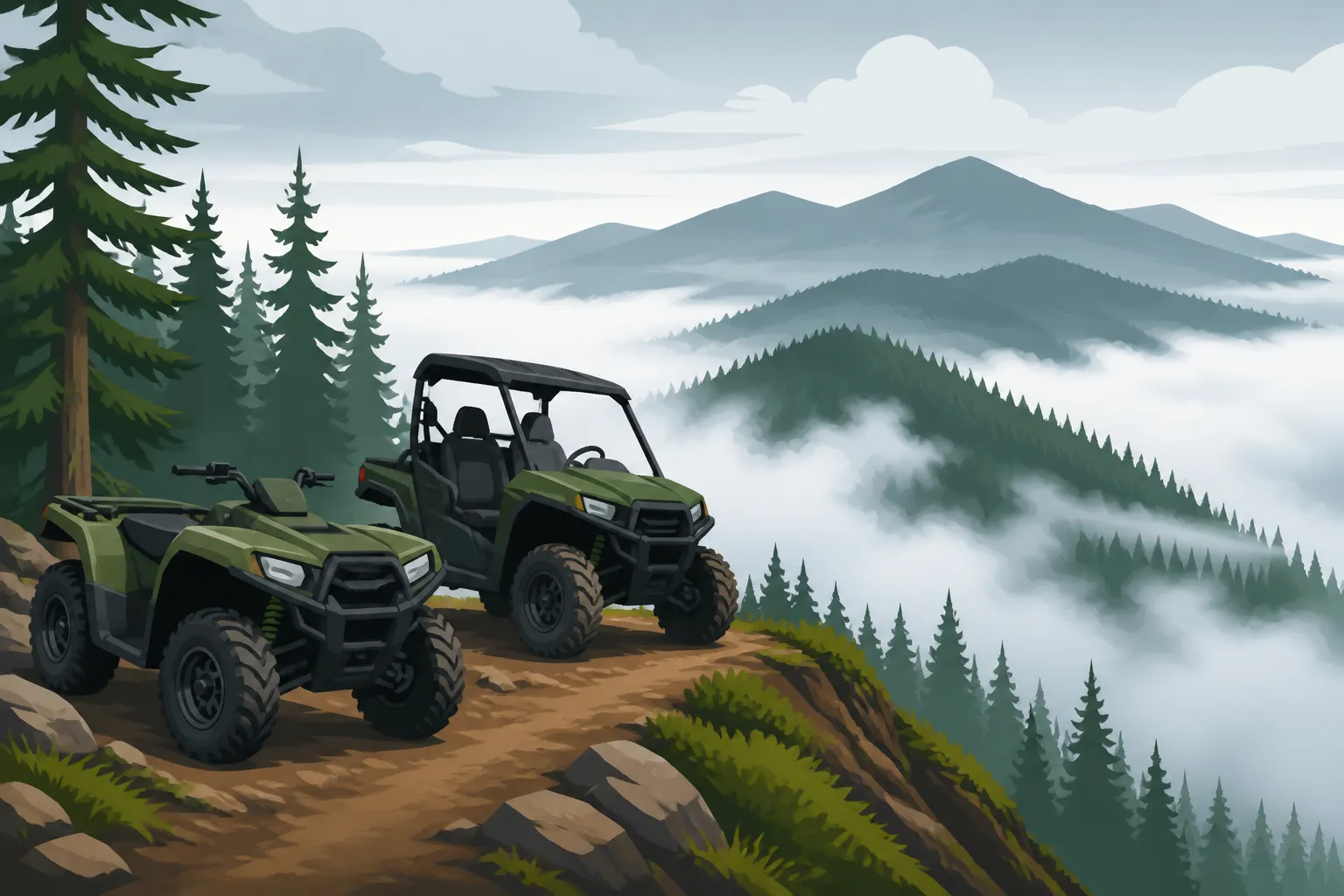
Fog on a Coast Range ridge can turn a familiar ATV or UTV ride into a slow, stressful crawl. Visibility can shrink quickly, trail edges disappear, and a group can lose sight of one another around a bend. This guide explains how to prepare, ride safely, and decide when conditions are too poor to continue.
Why fog changes a Coast Range ride
How fog affects visibility and distance
Fog makes it difficult to judge how far away a bend, gate, machine, or drop-off is. On a winding forest road, you may see only a short stretch ahead, even when you know the route well. That limited view can make ordinary obstacles feel sudden: a pothole, a washout, a parked vehicle, or a trail user moving in the opposite direction.
It can also be harder to tell whether the ground ahead is flat, sloped, or edged by a ditch. A headlight helps other people see your machine, but it does not let you see clearly through dense fog. If your beam reflects off moisture in the air, it can create glare and make the road look even more washed out.
Fog often arrives with damp surfaces. Roots, clay, leaves, and compacted gravel may be slicker than they looked on a previous ride. Braking and turning take more care, especially on a slope or in a narrow section where you have little room to correct a mistake.
Why ridges and forest roads can feel different
A ridge can be exposed to wind and shifting cloud, while the trail below it may be clearer. Conditions can change over a short distance, so don’t assume the fog will remain constant—or lift just because the next bend looks brighter. In forested areas, trees may block the breeze that would otherwise thin the fog, and damp foliage can reduce visibility even after the open ridge improves.
The effect is especially unsettling when landmarks vanish. A turn you normally recognize by a distant hill or a gap in the trees may look unfamiliar. Even experienced riders can misjudge a junction when they can’t see the terrain around it. That’s one reason it helps to plan a route before leaving the staging area and to keep track of turns as you ride.
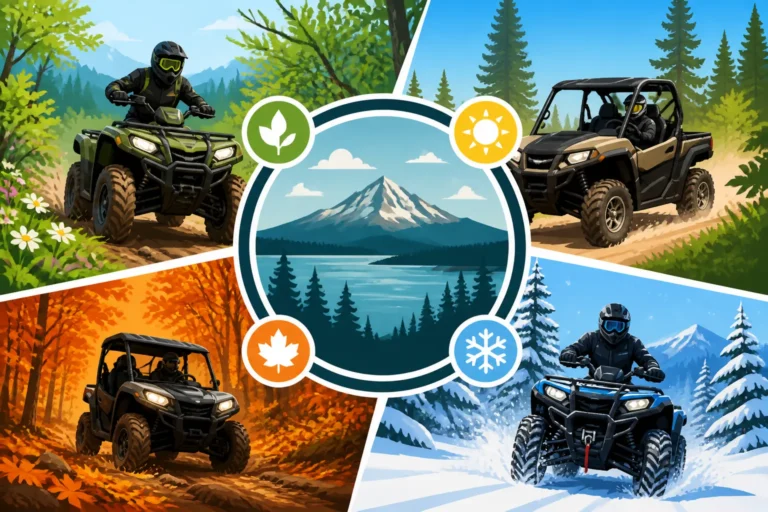
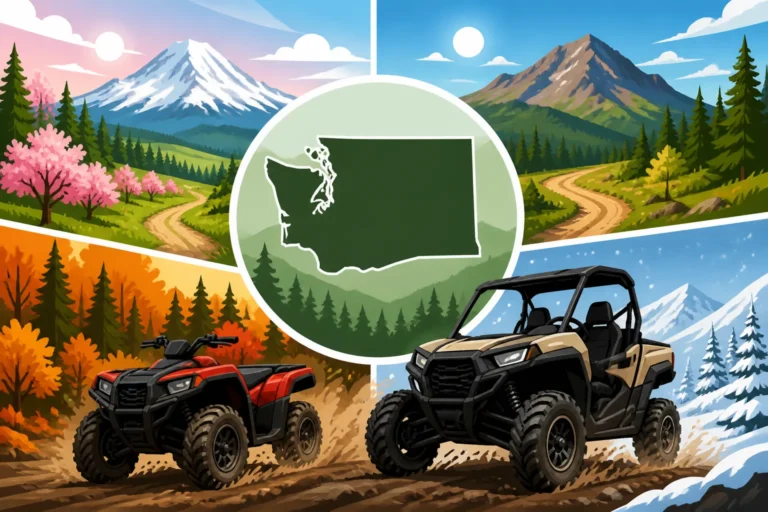
For broader seasonal context, see Washington Riding in the Wet Season and Washington Riding Seasons by Forest. A foggy morning can bring many of the same practical challenges as a wet ride, even when rain isn’t falling.
Prepare before riding into fog
Check conditions, route information, and closures
Before unloading, check the forecast and any available land-manager notices for the riding area. Look for visibility, wind, rain, and temperature—not just whether the forecast says “rain.” A cool, damp morning can feel much colder once you’re moving slowly or stopped beside the trail.
Review a current map and identify your intended route, major junctions, and a reasonable turnaround point. On state-managed land, consult official recreation information for access and closure details. Washington Trail Maps From DNR and Washington Trail Closures to Check First are useful starting points for thinking through maps and access. If you’re planning a trip around Capitol State Forest, Capitol State Forest Near Olympia, Washington can help with area-specific background.
A navigation app can be helpful as a backup. For example, onX Offroad may help you review a route and keep track of your position, but don’t treat an app as a substitute for official closure information or sound judgment. Check what map information is available offline before you lose cell service, and make sure your phone is charged and protected from moisture. If the route or land status is unclear, stop and confirm before continuing.
Pack for delays, not just the planned ride
Fog can slow a trip enough that a quick loop takes much longer than expected. Pack clothing that stays warm when damp, water, food, a basic first-aid kit, and a dependable way to contact someone if you need help. Keep essential items secured so a sudden stop or a bumpy trail doesn’t scatter them.
Before departure, tell someone who isn’t riding with you where you plan to go and when you expect to return. Agree on what they should do if you’re late. If your group changes the route, update that person when you have a reliable way to communicate.
Carry a paper map or another backup navigation option if practical. A phone can lose power, get wet, or become difficult to use with gloves. onX Offroad can be part of a navigation setup, but it’s sensible to have a second way to understand where you are. Marking the planned route and turnaround point before starting can make it easier to notice when the group has drifted off course.
Ride cautiously when visibility drops
Slow down and leave room
When fog limits what you can see, ride at a speed that lets you stop within the clear distance ahead. There is no single safe speed for every trail: a broad gravel road and a narrow, rutted track demand different judgment. If you can’t clearly see the surface and enough space to react, slow down further or stop somewhere safe.
Increase the distance between machines. Following closely can leave the rider behind with no time to respond if the lead machine brakes for an obstacle. Keep the group together through agreed check-ins, but don’t bunch up so tightly that one sudden stop causes a collision. On a winding route, a designated lead and sweep rider can help keep everyone accounted for.
Use lights in a way that makes your machine visible without creating unnecessary glare. Avoid abrupt acceleration, hard braking, or sudden turns. On a slippery slope, make smooth adjustments and avoid stopping where you might block the trail or leave yourself with no safe way to restart.
Keep the group together without pressuring anyone
Before the ride, agree on simple signals and what the group should do if someone can’t see the machine ahead. Decide whether the group will stop at junctions, wait at safe pullouts, or regroup at named landmarks. Don’t assume that everyone can hear a shouted instruction through helmets, engines, and wind.
If a rider becomes uncomfortable, take that seriously. A less experienced rider may need more time to navigate unfamiliar terrain, and even a confident rider can be unsettled when the route disappears into fog. Nobody should feel pushed to keep going just to avoid inconveniencing the group.
Use onX Offroad or another map tool to confirm your general position when it’s safe to stop, rather than trying to read a screen while moving. A location marker can support good decisions, but it can’t show every slick root, fallen branch, or changing trail condition in front of you. Look up, ride to what you can see, and stop before a junction if you’re uncertain which way to go.
| What you notice | Safer response |
|---|---|
| You can’t see far enough ahead to stop safely | Reduce speed or pull over at a safe spot |
| The group is stretching out | Stop and regroup; increase spacing without losing contact |
| A junction or trail edge is hard to identify | Pause, check your map, and confirm the route before moving |
| The surface is slick or visibility is worsening | Slow down, avoid abrupt inputs, and reassess whether to turn back |
| A rider feels cold, anxious, or disoriented | Stop together and choose a safe plan that works for the whole group |
Know when to turn around or stop
Use clear turnaround signs
Turning back is the sensible choice when the fog keeps thickening, the trail becomes difficult to follow, or you can’t see enough to ride at a controlled speed. The same goes for repeated navigation uncertainty, a rider who is getting chilled or overwhelmed, or a surface that has become too slick for the group’s experience and equipment.
It helps to decide on a turnaround point before the ride, while everyone is warm, calm, and looking at the route. That way, turning back doesn’t feel like a failure or a last-minute argument. If conditions worsen before you reach the planned point, turn around sooner. The original plan is not more important than the conditions you’re actually facing.
If you’re unsure whether you can safely continue, stop in a place where you’re visible and not blocking other trail users. Give everyone time to regroup and check the route. Don’t keep moving simply because the staging area seems close on a map; fog can make a short distance feel much longer when every turn requires extra care.
Return slowly and reassess after the ride
Retrace a route you know rather than improvising a shortcut. Returning to a familiar trail may still be challenging, so keep the same cautious pace and spacing. If you need to stop, choose a location where other riders can see you and where the group can pull clear of the travel path.
As you approach camp or the staging area, keep paying attention. Riders sometimes relax once they recognize the route, even though fog and damp surfaces are still present. If visibility worsens near dusk, or the group is returning later than expected, Riding Back to Camp After Dusk offers related planning considerations. Follow posted signs and land-manager directions, and don’t ride onto a closed route just because it appears to lead back more directly.
After the ride, check that everyone has returned and inspect the machines for mud, debris, or damage picked up on the trail. Make a note of any confusing junctions or places where visibility was particularly poor. That information can help you choose a shorter route, a different departure time, or a better turnaround point next time. Use it as a planning reminder—not as a reason to assume the same route will have the same conditions on your next visit.
Fog is part of riding in damp, changeable terrain, but you don’t have to push through it. Prepare for slower travel, keep the group connected, and treat poor visibility as a reason to reassess. A ride that ends early is still a successful outing if everyone gets back safely.
Disclaimer
This article is for general informational purposes only and does not constitute professional advice. Laws, prices and regulations vary by location and change over time. Consult a qualified professional for guidance on your specific situation.