Do You Need a Title for a WATV in Washington?
Many folks new to the world of Washington all-terrain vehicles (WATVs) or even seasoned riders who are buying a new machine often find themselves scratching their heads over a seemingly simple question: "Do I actually need a title for this thing?" It’s a common point of confusion, especially since the rules can feel a bit different from how we title our cars or trucks. Ignoring this question can lead to significant headaches down the road, from legal trouble to an inability to sell your machine. This guide is here to untangle that mystery, clarifying why a title is not just important but absolutely essential for your WATV in Washington, how to get one, and what to do in sticky situations where one might be missing.
Why a Title Matters for Your Washington ATV/UTV (WATV)
Let's be clear from the outset: yes, you absolutely need a title for your WATV in Washington state. This isn't just some archaic piece of paper; it's the fundamental document that proves you are the legal owner of your quad, side-by-side, or dirt bike. Without it, you’re looking at a host of potential problems, from being unable to register your machine to facing significant difficulties if you ever want to sell it or even if it gets stolen. Think of it as the birth certificate and deed rolled into one for your off-road pride and joy.
The Cornerstone of Ownership and Registration
In Washington, your WATV's title is the official record held by the Department of Licensing (DOL) that establishes who legally owns the machine. It contains critical information like the Vehicle Identification Number (VIN), the make, model, and year, and, most importantly, the name of the legal owner. This document is paramount because you cannot legally register your WATV without first having a valid title in your name. This means if you buy a machine, even a brand new one, the very first step the state requires before you can hit the trails or ride legally on designated roads is to get that title sorted.
For a new machine, the dealership typically handles the initial application process. They'll take the Manufacturer's Statement of Origin (MSO) – which is like the machine's birth certificate from the factory – and submit it to the DOL to get a title issued in your name. Most people buying new from a dealer don't even realize this process is happening in the background because it's usually part of the purchase agreement.
However, if you're buying a used WATV, the responsibility often falls squarely on your shoulders. You'll need the seller to sign over their existing title to you. Without this physical document, properly signed and dated, you simply cannot move forward with getting the machine titled and subsequently registered in your name. Imagine finding a fantastic deal on a quad, only to discover later that the seller never had a title, or lost it years ago. You could end up with a machine you technically don't own in the eyes of the law, and certainly can't get official tabs for. This crucial link between title and tabs is why we have specific guidelines for [Titling a WATV in Washington] and [Registering a WATV in Washington].
Protecting Your Investment and Preventing Headaches
Beyond legal compliance, the title serves as a vital layer of protection for your investment. WATVs aren't cheap, and just like any other valuable asset, you want clear proof of ownership. A title protects you in several ways:
Firstly, it prevents ownership disputes. If you purchase a WATV and the previous owner suddenly claims it's theirs again, your title is your definitive proof. Without it, it can become a "he said, she said" situation that's incredibly difficult to resolve.
Secondly, it's absolutely essential for selling or transferring ownership. Try to sell a WATV without a title, and you'll quickly realize how difficult, if not impossible, it is. Reputable buyers won't touch it because they know they won't be able to register it themselves, and they'll have no proof of ownership. This significantly depreciates the value of your machine and limits your pool of potential buyers to those willing to take on a legal risk. A friend of mine once tried to sell an older dirt bike without a title, thinking it wasn't a big deal since it was "just for trails." He had countless inquiries, but as soon as he mentioned no title, everyone walked away. He ended up having to go through a lengthy process to get a title before he could legitimately sell it.
Finally, in the unfortunate event of theft, your WATV's title is critical for law enforcement. The VIN on the title can be entered into national databases, making it much easier for police to identify and return your machine if it's recovered. Without a title, proving the machine is yours can be a nightmare, and recovering it may become an uphill battle. It's a layer of security that provides immense peace of mind.
The Process of Titling a WATV in Washington
Getting your WATV titled in Washington generally follows a straightforward path, but the specifics can vary depending on whether you're buying a new machine from a dealer, a used one from a private seller, or bringing one in from another state. Knowing what to expect for each scenario can save you a lot of time and frustration.
Titling a New WATV from a Dealer
When you purchase a brand-new WATV from a licensed dealer in Washington, they typically handle the heavy lifting of the titling process. This is one of the conveniences of buying new. Here’s how it generally works:
- Manufacturer's Statement of Origin (MSO): The dealer receives the WATV with an MSO, which is essentially the factory's certificate that verifies the machine's origin and specifications.
- Application Submission: The dealer will prepare the necessary paperwork, including a title application form, often incorporating it into your sales contract. They will use the MSO to initiate the titling process in your name.
- Sales Tax Collection: During the purchase, the dealer will collect the appropriate [Washington ATV Sales Tax Rate], which is then remitted to the state. This tax must be paid before a title can be issued.
- Temporary Permit (Optional): While you wait for your official title and tabs, the dealer might issue a temporary permit that allows you to operate your new WATV for a limited time, usually up to 60 days, while the permanent paperwork is processed.
- Title and Tabs Mailed: After the DOL processes the application, your official title certificate and registration decals (tabs) will be mailed directly to you.
The dealer's involvement makes this process relatively seamless for the buyer. However, it's still wise to keep track of the paperwork you receive and follow up if you don't receive your title and tabs within a reasonable timeframe.
Titling a Used WATV from a Private Seller
This is where many people encounter confusion, as the responsibility for titling shifts largely to the buyer. It's crucial to be diligent to avoid future problems.
- The Signed-Over Title: The most critical piece of documentation is the existing certificate of title. The seller must physically sign over the title to you. This usually involves signing in a designated area on the front or back of the title, releasing their ownership. Ensure that the VIN on the title matches the VIN on the machine itself. Any discrepancies here are major red flags.
- Bill of Sale: Even with a signed title, always, always get a [A Washington Bill of Sale for a WATV]. This document serves as a record of the transaction, detailing the buyer and seller's names, the purchase price, the date of sale, and the WATV's information (make, model, VIN). It’s especially important for establishing the purchase price for use tax calculations and as a backup in case there are any issues with the title transfer. Resources like LawDepot offer templates for a comprehensive bill of sale that can provide peace of mind for both parties.
- Applying for Your New Title: You’ll need to take the signed-over title, your bill of sale, and a completed title application form to a Washington State Department of Licensing (DOL) office or a local vehicle licensing subagent.
- Use Tax: When buying from a private seller, you’ll be responsible for paying use tax on the purchase price (or fair market value, whichever is greater). This is paid at the time of titling and registration. Understanding [Washington ATV Use Tax on a Private Sale] is key to budgeting for your purchase.
- Fees: There will be titling fees, registration fees, and potentially other small charges involved in processing the transfer and issuing your new title and tabs.
- Timeline: Washington state has a specific timeframe, typically fifteen days from the date of purchase, to complete the title transfer. Failing to do so can result in penalties. Always prioritize getting this done promptly.
A common scenario involves buying a used quad from a neighbor. You might shake hands, exchange cash, and load it up, thinking that's it. But if your neighbor just handed you the machine without signing over the title, or if they claim they lost it, you're in for a tough time. Always make sure the title is physically present and correctly signed over before money changes hands.
Titling an Out-of-State WATV
Bringing a WATV into Washington from another state can add a layer of complexity, especially if the state it came from has different titling requirements for off-road vehicles. Washington's stance is generally clear: if you want to ride it here, it needs to be titled and registered here.
- Existing Out-of-State Title: If your WATV has a title from another state, you’ll follow a process similar to transferring a Washington title. You’ll present the out-of-state title, signed over to you, along with a Washington title application.
- No Out-of-State Title (from a non-titling state): This is where it gets tricky. Some states may not require titles for certain types of off-road vehicles. If you're bringing a machine from such a state, you'll generally need to provide other proof of ownership, such as a bill of sale, previous registration documents, or an affidavit of ownership. The DOL may also require a physical inspection of the vehicle to verify the VIN. This situation directly relates to the process of [Registering an Out-of-State Machine in Washington].
- Safety Inspection: Depending on the age and origin of the WATV, especially if it was previously registered in another state or if there are questions about its previous ownership, the DOL might require a [Washington WATV Safety Inspection Cost]. This inspection ensures the machine meets basic safety standards and helps verify the VIN.
- Use Tax: Just like private sales within Washington, you’ll owe Washington use tax on the fair market value or purchase price (whichever is greater) of the WATV when you title it, regardless of where you bought it.
For instance, you might have bought a dirt bike in Oregon where, depending on the year, dirt bikes might not have been titled. When you bring that machine to Washington, the DOL will still require a Washington title. You'll need to gather all possible ownership documents you have, including a detailed bill of sale, and present them to the DOL to establish your claim of ownership.
What Happens If Your WATV Doesn't Have a Title
Ignoring the title requirement for your WATV in Washington state isn't just a minor oversight; it can lead to a cascade of legal and practical problems that will severely limit your ability to enjoy your machine or even prove it's rightfully yours. Many riders learn this the hard way after a traffic stop or when trying to upgrade their ride.
The Registration Roadblock and Legal Complications
The most immediate consequence of not having a title in your name is that you simply cannot legally register your WATV in Washington. And without registration, you cannot get the necessary decals or "tabs" – whether it's [Washington's Off-Road Tab Explained] for trail riding or [Washington's On-Road Tab Explained] for approved road use.
Riding an unregistered WATV, even on designated trails, can lead to serious legal repercussions. If a ranger, sheriff, or trooper pulls you over or inspects your machine at a trailhead, they can issue a citation. [Washington Fines for an Unregistered WATV] can be substantial, and repeated offenses could even lead to your machine being impounded. Imagine planning a weekend trip to Capitol State Forest, only to have your machine sidelined before you even hit the dirt, all because a vital piece of paper was missing.
Beyond fines, not having a title means you lack official proof of ownership. If your WATV is involved in an accident, even a minor one, proving that you are the legitimate owner for insurance claims or legal purposes can become incredibly difficult. This ambiguity can expose you to legal vulnerabilities and make any process involving your machine significantly more complicated.
The Nightmare of Selling or Transferring Without a Title
If you think not having a title is just a problem for riding, try selling an untitled WATV. You'll quickly discover that the market for such machines is virtually non-existent, or it’s limited to cash-only buyers willing to take on significant risk for a deeply discounted price.
Prospective buyers, especially those who know the rules, will rightly demand a clear, signed-over title. Without it, they know they won't be able to register the machine in their own name, nor will they have legal proof of ownership. This significantly reduces the value of your machine and makes it a "hard sell." You might end up holding onto a machine you can't use or sell, turning your asset into a liability.
This problem also extends to other forms of transfer, such as gifting or inheriting. If you want to give your WATV to a family member, they will still need a title in their name to register it. If a loved one passes away and leaves you a WATV without a title, the process of [Registering an Inherited Machine in Washington] becomes much more complicated, often requiring additional legal steps like affidavits or even probate court involvement to establish legitimate ownership before a new title can be issued.
Paths to Obtaining a Title for an Untitled Machine
So, you've realized your WATV doesn't have a title, or you've acquired one without one. Don't despair entirely, but understand that rectifying the situation can require patience and diligent effort. Washington's DOL does have processes for these scenarios:
- Lost Title by Current Owner: If you are the titled owner, but have simply lost the physical title certificate, you can apply for a duplicate title through the DOL. This is usually the easiest path, assuming you were legitimately the last titled owner.
- Buying a Machine With No Title: This is a much trickier situation. If you purchased a WATV from someone who never had a title, or if they lost it and can't obtain a duplicate (perhaps they were never the titled owner themselves), you have a few options:
- Contact Previous Titled Owner: The ideal scenario is to track down the person who was the last registered owner on record with the DOL and ask them to apply for a duplicate title and sign it over to you. This can be challenging if many hands have touched the machine since the last known title.
- Affidavit of Ownership: For older machines where titles may not have been common or records are scarce, the DOL might accept an affidavit of ownership, often accompanied by a comprehensive bill of sale (which a service like LawDepot can help you generate), as proof that you acquired the vehicle legitimately. This is typically reviewed on a case-by-case basis.
- Bonded Title: In some cases, for vehicles where a clear chain of ownership cannot be established but you possess the vehicle, Washington state offers a "bonded title" process. This involves purchasing a surety bond for a certain value of the vehicle, which protects the state and any potential previous owners from future claims. If no claim is made after a set period (usually three years), the bond is released, and you receive a clean title. This is a last resort and involves additional costs and paperwork.
- Inspection and VIN Verification: Regardless of the path, the DOL will almost certainly require a physical inspection of the WATV to verify the VIN and ensure it's not stolen.
It's a common story: someone buys an old quad from a barn sale, or inherits one from a relative who never bothered with paperwork. Now, years later, they want to ride it legally. The key here is gathering every single shred of evidence you have – old registrations, a detailed bill of sale, repair receipts, photos – anything that can establish your legitimate possession and ownership history. The more documentation you have, the stronger your case will be with the DOL.
Common Titling Scenarios and Practical Advice
Beyond the standard processes, certain situations surrounding WATV ownership can present unique titling challenges. Being prepared for these can make the difference between a smooth transition and a bureaucratic headache.
Buying and Selling Used WATVs: Due Diligence
When you're dealing with used WATVs, whether you're the buyer or the seller, due diligence is your best friend. The vast majority of titling issues arise from private sales where corners were cut or crucial steps were skipped.
For Buyers:
- Insist on a Signed-Over Title: Never, ever buy a WATV without seeing the physical title signed over to you by the seller. Verify that the seller's name on the title matches their ID and that the VIN on the title matches the machine itself. Any hesitation from the seller on this point is a massive red flag.
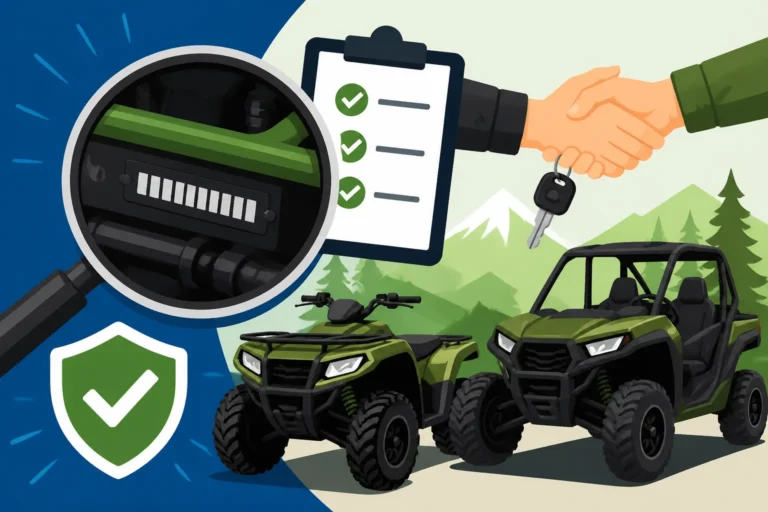
- Verify the VIN: Use the VIN on the machine to perform a basic check. While Washington doesn't have a specific VIN lookup service for ORVs, you can often run it through general vehicle history services or even contact the manufacturer. This helps confirm the machine's identity and can sometimes reveal if it's been reported stolen. This is covered in more detail in [Checking a VIN Before You Pay].
- Get a Detailed Bill of Sale: Even with a signed title, a comprehensive bill of sale is non-negotiable. It should include:
- The full names and addresses of both buyer and seller.
- The date of sale.
- The exact purchase price.
- A complete description of the WATV (make, model, year, VIN).
- A statement that the seller warrants they are the legal owner and the machine is free of liens (if applicable).
- Signatures of both parties.
- LawDepot is a great resource for generating professional and legally sound bill of sale templates that cover all these essential details, protecting both you and the seller.
- Complete Transfer Promptly: Washington's 15-day deadline for title transfer is real. Don't procrastinate. Get to the DOL or a subagent as soon as possible after the purchase. This also helps with establishing the exact date for [Fifteen Days From Purchase in Washington] to avoid penalties.
For Sellers:
- Have a Clean Title: Ensure your title is free of liens and that your name is clearly listed as the owner. If you have lost your title, apply for a duplicate before listing the machine for sale.
- Sign Over Correctly: Know where to sign on the title to release your ownership. A small error can invalidate the transfer and create issues for your buyer.
- Provide a Bill of Sale: Just like for buyers, a detailed bill of sale protects you. It clearly documents the sale, the date, and the price, which can be important for your records and if there are any future disputes about the transaction.
Gifting, Inheriting, or Rebuilding a WATV
Life happens, and sometimes a WATV changes hands not through a direct sale, but through a gift, inheritance, or extensive rebuilding. Each of these scenarios has its own specific titling nuances.
Gifting a WATV:
If you want to give a WATV to a family member or friend, it still requires a title transfer. You'll sign over the title just as if you were selling it. However, for use tax purposes, you might be able to declare it as a gift, which can exempt the recipient from paying use tax on the transaction, provided certain conditions are met (often requiring a gift affidavit). Always confirm current DOL requirements for gift transfers to ensure you're following the correct procedure. A bill of sale noting "$0" or "Gift" as the purchase price, along with a gift affidavit, can be used to document the transfer clearly.
Inheriting a WATV:
Receiving a WATV through inheritance can be a sensitive time, and the titling process often depends on whether the deceased had a will and if the estate is going through probate.
- With a Will/Probate: If the WATV is specifically mentioned in a will, and the estate goes through probate, the court will typically issue documents that authorize the transfer of title to the heir. You'll then present these legal documents to the DOL along with the original title (if available) to get a new title issued in your name.
- Without a Will/No Probate: If there's no will or the estate is not going through formal probate, the DOL has procedures for transferring ownership using an affidavit of inheritance or small estate affidavit. This typically requires other heirs (if any) to sign off, acknowledging the transfer. This process can be intricate, so studying [Registering an Inherited Machine in Washington] is highly recommended. You'll need the death certificate and any documents establishing your right as the inheritor.
Rebuilding a WATV:
If you acquire a WATV that is essentially a frame or parts, and you rebuild it, titling can become more complex.
- Existing Title: If the frame has an existing VIN and title, you'll work from that title. Any major modifications might need to be noted, but the core ownership often traces back to the frame's title.
- Salvage Title/Assembled Vehicle: If the WATV was previously declared salvage, or if you're assembling a machine from various parts without a clear originating title for the complete unit, Washington state has specific procedures for "assembled" or "custom-built" vehicles. This often involves detailed documentation of all major components, receipts for parts, and a thorough inspection by the Washington State Patrol to verify the VIN and ensure the machine is legitimate and safe. A new VIN might even be assigned. This is a very specialized process and requires close coordination with the DOL and potentially law enforcement.
| Scenario | Key Document Needed | Action Required | Potential Challenges |
|---|---|---|---|
| New WATV from Dealer | MSO, Dealer Paperwork | Dealer handles initial title application | Ensuring dealer submits paperwork promptly |
| Used WATV from Private Seller | Signed Title, Bill of Sale | Buyer submits title transfer at DOL | Lost title, seller not registered owner, use tax issues |
| Out-of-State Purchase | Out-of-state Title/Registration/Bill of Sale | May need inspection, Washington title application, VIN verification | State of origin didn't title ORVs, differing regulations |
| Inherited WATV | Death Certificate, Will/Affidavit of Inheritance | Transfer through probate or affidavit of inheritance at DOL | Complex legal processes, no existing title |
| WATV Gift | Signed Title, Gift Affidavit/Bill of Sale | Recipient submits title transfer as gift at DOL | Documenting true "gift" status for tax purposes |
| Rebuilt/Assembled WATV | Receipts for parts, Inspection documents | State Patrol inspection, assembled vehicle title application | Proving legitimate source of components, new VIN assignment |
Navigating the world of WATV titling can seem daunting at first, but with a clear understanding of the requirements and a proactive approach, you can ensure your machine is legally yours and ready for all the adventures Washington's diverse landscapes have to offer.
Disclaimer
This article is for general informational purposes only and does not constitute professional advice. Laws, prices and regulations vary by location and change over time. Consult a qualified professional for guidance on your specific situation.