Washington’s Metal Tag Explained
When you're out riding the amazing trails and roads Washington has to offer on your ATV, UTV, or dirt bike, there's one little piece of metal that sometimes causes more head-scratching than it should: the Washington metal tag. It's not a license plate in the traditional sense, and it definitely operates differently than the yearly tabs you stick on your fenders. This guide is here to demystify that often-misunderstood metal tag, explaining what it is, where it comes from, and why it's so important for every rider in our beautiful state.
What Even Is Washington's Metal Tag for Your WATV?
Let's be honest, all the different pieces of paper and little stickers required for off-road vehicles in Washington can feel like a bureaucratic puzzle. You've got your yearly off-road tab, maybe an on-road tab if you plan to hit county roads, and then there's this metal tag. It’s easy to get them all mixed up, especially when you’re just trying to enjoy a ride in [Capitol State Forest Near Olympia, Washington] or up in the [Ahtanum State Forest]. But understanding the metal tag is crucial for staying legal and avoiding unnecessary hassle.
Distinguishing the Metal Tag from License Plates
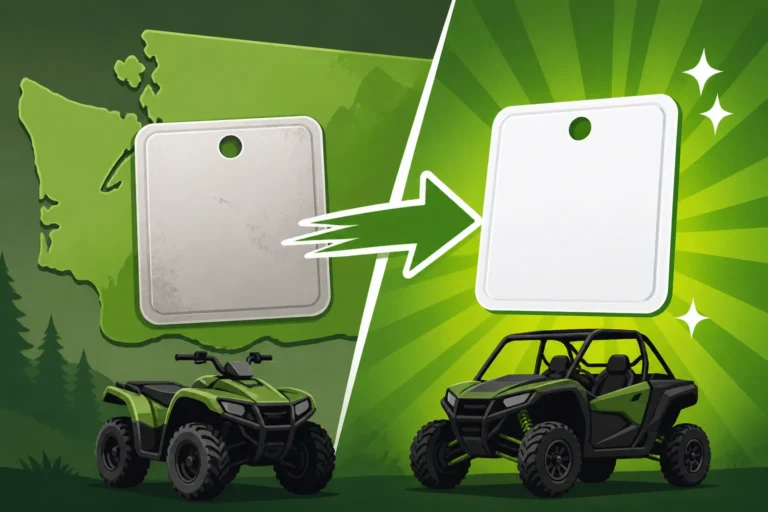
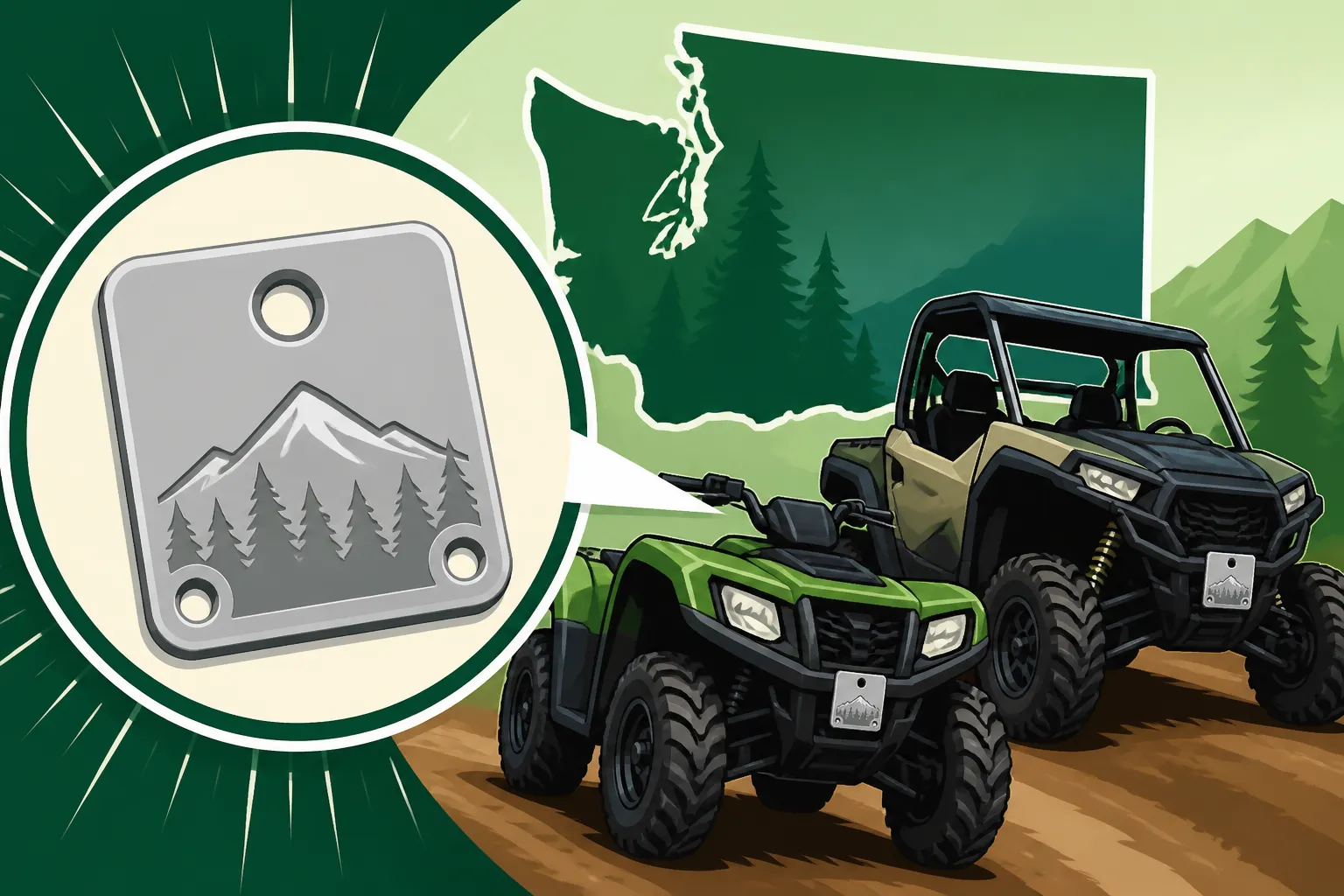
First things first, let's clear up a major point of confusion. The Washington metal tag is not a standard license plate like you'd find on your car or truck. It doesn't have a unique alphanumeric sequence that changes with each vehicle, nor does it require yearly renewal stickers. Think of it more as a permanent identifier for your off-road vehicle's registration, a physical marker that says, "Yes, this machine has gone through the initial registration process in Washington." It's one piece of the puzzle that confirms your machine is recognized by the state, even before you get into the yearly [Washington's Off-Road Tab Explained] or [Washington's On-Road Tab Explained].
Unlike the colorful, year-stamped decals that you apply to your fenders, the metal tag itself doesn't change color or design year after year. It's a more robust, long-lasting component of your machine's identity. This distinction is really important, because while you might easily overlook the nuances, law enforcement officials certainly won't when they're performing [What a Washington Trooper Checks Roadside]. They're looking for all the pieces of the puzzle to be in place, and the metal tag is a fundamental one.
Why the Metal Tag Exists for Off-Road Vehicles
So, if it's not a license plate, why do we need it? The metal tag serves a critical purpose in Washington's system for tracking and managing off-road vehicles, or as the state often calls them, WATVs (Wheeled All-Terrain Vehicles). It provides a durable, permanent, and easily visible physical identification marker for your machine. This tag is directly linked to your vehicle's unique VIN (Vehicle Identification Number) and its initial registration record with the Washington State Department of Licensing (DOL). It’s essentially a tamper-resistant proof of initial registration.
This permanent identification helps in several ways. For one, it aids in theft recovery. If your machine is ever stolen, that metal tag, along with your VIN, is a key piece of information for law enforcement. It also helps in enforcing regulations and ensuring that machines operating on public lands have at least been through the initial state registration process. The state has a vested interest in knowing which machines are out there and ensuring they meet basic requirements. It's a foundational element of the broader [Registering a WATV in Washington] system, establishing that your machine has been properly cataloged from the start.
Where Does This Metal Tag Come From?
Getting your hands on this metal tag is part of the initial registration process, and it's something many new WATV owners encounter for the first time. It can feel a bit like a scavenger hunt to figure out all the steps, especially if you’ve just bought a machine from a private seller or an out-of-state dealer. But understanding where it originates will help you navigate the process smoothly and get out on the trails faster.
The Registration Process and the Metal Tag
The Washington metal tag is issued when you complete the initial registration of your WATV with the Department of Licensing. This isn't something you can just pick up off a shelf; it's intrinsically tied to proving ownership and getting your machine entered into the state's system. Typically, this involves presenting your vehicle's title, a bill of sale, and completing the necessary application forms. For example, if you bought a machine from a private party, you'd need a clear title in the seller's name and a properly filled out [A Washington Bill of Sale for a WATV]. If there's no title, or the title situation is murky, that's a whole other ball of wax to sort out first, as Washington generally requires a title before registration.
Once all your paperwork is in order and you've paid the initial fees, including the [Washington WATV Metal Tag Cost], the DOL or one of its authorized subagents will issue the metal tag along with your initial registration certificate and your first set of yearly decals. This tag is a physical piece of aluminum or similar metal, stamped with specific numbers and letters unique to Washington's ORV program. It's designed to be durable and withstand the rigors of off-road use, which makes sense given where these machines often go! Don't be surprised if the whole process feels a bit daunting; it's why it's good to show up prepared with all your documents.
Initial Issuance vs. Yearly Renewals
Here’s a crucial distinction that often confuses riders: you only receive a new metal tag during the initial registration of your WATV in Washington, or if you need to replace a lost or damaged one. Unlike your annual registration decals, which you'll renew and receive every year, the metal tag is a one-time issuance (barring replacement needs) that is designed to last for a significant period. When you go to [Renewing a Washington ORV Registration Yearly], you'll typically just receive new yearly decals for your off-road and/or on-road use, but not a new metal tag.
This setup helps keep administrative costs down and simplifies the ongoing process for riders. Imagine having to bolt on a new metal tag every single year! It would be cumbersome and unnecessary given the tag's purpose. Instead, the yearly [Washington ORV Tab Cost per Year] covers your operational privilege for that specific year, while the metal tag serves as the foundational identifier established at the very beginning of your machine's journey in Washington. It’s part of Washington’s comprehensive [Washington's Two-Tab System] that differentiates between the permanent identification and the annual use permits.
The Lifespan of Your Washington Metal Tag
One of the most unique aspects of Washington's metal tag, compared to other state's systems or even other vehicle plates, is its longevity. This isn't a temporary sticker or a plate you'll swap out every few years. It's designed for the long haul, which can be a relief once you understand its purpose.
Why Your Tag Lasts for Seven Years
Unlike most vehicle license plates that are replaced every few years or require yearly renewal stickers, your Washington WATV metal tag is intended to last for seven years. Yes, you read that right – seven whole years! This is a deliberate design choice by the state, reflecting the nature of off-road vehicle use. While the annual decals you affix to your fenders signify your current registration period, the metal tag itself acts as a more permanent fixture. It signifies that the machine has been properly titled and initially registered within the state's system. The law specifically calls for this extended lifespan, which means you won't be messing with bolts and brackets every year.
The idea behind this long lifespan, as detailed in [Why a WATV Metal Tag Lasts Seven Years], is partly to reduce waste and administrative burden. Producing and distributing a new metal tag annually for every registered WATV would be a massive undertaking. By making it a semi-permanent fixture, the state can streamline its process and focus on the annual decal distribution. It's a pragmatic approach that acknowledges the robust nature of these tags and their role as a durable identifier rather than a transient permit.
The Replacement Cycle and Its Timing
So, what happens after those seven years are up? Eventually, even the most durable metal tag can succumb to the elements, trail debris, or just general wear and tear from years of adventure. When your seven-year cycle is complete, the Department of Licensing will issue you a new metal tag. You don't have to guess when this is coming; the DOL generally tracks this and will include the new tag with your annual renewal materials when the time comes. This ensures a seamless transition and keeps your machine compliant without you having to remember a specific replacement date seven years down the line.
Of course, sometimes life on the trail throws you a curveball. What if your metal tag gets ripped off by a rogue branch, or becomes so scratched and faded it's unreadable long before its seven-year expiration? Don't fret! You can apply for a replacement tag at any time. This isn't an uncommon occurrence, especially for machines that see a lot of aggressive riding. There's a small fee for this, as explained in [Washington WATV Metal Tag Replacement], but it's a necessary step to ensure your machine remains legally identifiable. Just remember to always keep your machine's registration paperwork, or at least a digital copy, handy when you're riding, just in case you need to prove its identity on the spot.
Mounting Your Metal Tag: What You Need to Know
Once you've got that shiny new metal tag in your hand, the next logical question is, "Where does this thing go?" And more importantly, "How do I make sure it stays there?" This might seem like a minor detail, but proper mounting is critical not only for compliance but also for keeping your tag safe on the rough and tumble trails.
Finding the Right Spot on Your Machine
Washington state law is quite specific about where the metal tag needs to be mounted on your WATV. It must be prominently displayed on the rear of the machine, above the lowest point of the frame and below the highest point of the seat. This placement ensures it's visible to anyone inspecting the machine, whether it's a ranger at the trailhead or a law enforcement officer on a rural road. The exact spot can vary slightly depending on whether you're riding a traditional ATV, a UTV (side-by-side), or a dirt bike, but the principle remains the same: it needs to be rear-facing and easily seen.
For most ATVs, this means finding a flat, stable surface on the rear fender or a dedicated mounting bracket if your machine has one. Side-by-sides often have a bit more real estate, sometimes with a designated spot on the rear bed or a bumper. Dirt bikes can be a bit trickier due to their minimalist design, but generally, there's a space on the rear fender or a small subframe where it can be securely attached. The key is to avoid placing it somewhere it might be easily obstructed by cargo, mud, or even your riding gear. For more specific guidance, you can refer to information on [Where the Metal Tag Bolts On a WATV].
Secure Attachment and Visibility Requirements
Simply finding a spot isn't enough; you need to ensure the tag is securely attached. The state intends for this tag to last seven years, so it needs to be able to withstand vibrations, impacts, and the various conditions you'll encounter on the trail—from muddy creek crossings to dusty forest roads. This usually means using bolts, washers, and nuts to firmly affix it to your machine's frame or a sturdy plastic component. Zip ties or flimsy adhesive are generally not considered adequate for something that needs to stay put for so long.
Beyond secure attachment, visibility is paramount. The tag must be kept clean and legible. If it's covered in mud, scratched beyond recognition, or otherwise unreadable, it defeats its purpose as an identifier. Take a moment before and after your rides to clean off any grime that might be obscuring it. This small act of maintenance not only ensures compliance but also reflects a responsible attitude towards your machine and its registration. After all, if a ranger can't read it, how can they confirm your machine is properly registered?
Costs Associated with the Washington Metal Tag
Understanding the costs involved with anything related to vehicle registration can often feel like trying to solve a riddle. The Washington metal tag is no exception. While it's a one-time issuance for the most part, there are still specific fees associated with it that you should be aware of, both upfront and for potential replacements.
The Initial Fee When You First Register
When you first bring your shiny new (or new-to-you) WATV in for its initial [Registering a WATV in Washington], you'll encounter a specific fee for the metal tag. This isn't usually a standalone charge but rather part of the overall initial registration costs. It's often bundled into the application process. This fee covers the cost of manufacturing the physical tag, the administrative process of linking it to your VIN, and entering your machine into the state's ORV database. While I can't give you exact figures, it's generally a modest amount compared to the total [Washington WATV Registration Cost].
This initial payment establishes your machine's long-term identification in Washington's system. It’s part of that foundational step to ensure your WATV is properly accounted for and can be legally operated on designated trails and roads. Think of it as a small investment in the long-term identification and compliance of your machine. When you're gathering all your paperwork, like a completed [Washington Road Use Declaration Form] (if applicable) or making sure you have a proper [Washington Bill of Sale for a WATV], remember to factor in this one-time tag fee into your budget.
Replacing a Lost, Stolen, or Damaged Tag
Life happens, and sometimes, despite your best efforts, that sturdy metal tag might get lost, stolen, or damaged beyond recognition. Maybe a tree branch had other ideas about where it should be mounted, or perhaps your machine took a tumble and bent it beyond repair. Whatever the reason, if your metal tag is no longer present or readable, you'll need to apply for a replacement. There is a specific fee associated with getting a new tag before its seven-year lifecycle is complete.
This [Washington WATV Metal Tag Replacement] fee is usually a nominal amount designed to cover the cost of producing and issuing a new tag. You won't pay the full initial registration fee again, just the replacement cost for the tag itself. To replace it, you'll typically need to visit a DOL office or an authorized subagent, fill out a replacement request form, and pay the fee. It's an important step not to skip, because riding without a visible, legible metal tag can lead to complications, as we'll discuss in the next section. Think of it as insurance for your machine's identity on the trails.
Why the Metal Tag Matters: Avoiding Issues on the Trail
It's easy to dismiss a small metal tag as just another bureaucratic hurdle, but in reality, it plays a significant role in ensuring you have a smooth and legal riding experience in Washington. Ignoring its importance can lead to unnecessary fines and headaches, pulling you away from the joy of riding.
Legal Implications of an Unattached or Missing Tag
Imagine you're out exploring the stunning [Walker Valley ORV in Washington's Skagit County] or traversing a remote forest road, and you're stopped by a ranger or a sheriff's deputy. They're checking for proper registration, current decals, and yes, that metal tag. If your metal tag is missing, unattached, or unreadable, you could face consequences. Riding without a properly displayed metal tag is considered a violation of Washington's ORV laws. This isn't just a slap on the wrist; it can result in a citation and fines.
The metal tag serves as a visible, enduring proof that your machine has been initially registered and is part of the state's system. Without it, law enforcement has no immediate way to confirm that your WATV is legally identified within Washington. This could lead to a delay in your ride as they investigate, or worse, a ticket for [Washington Fines for an Unregistered WATV] or improper display. It's far better to ensure it's securely mounted and visible than to deal with the stress and cost of a roadside stop that goes south.
Roadside Stops and Compliance Checks
Roadside compliance checks are a reality for ORV riders, especially in popular riding areas or during peak seasons. Law enforcement and land management agencies are out there to ensure everyone is riding responsibly and legally. When they stop you, they're typically looking for a few key things: proof of your annual off-road tab (and on-road if applicable), your current registration document (which you should always [Carrying the Registration in the Machine]), and of course, that prominent metal tag.
The metal tag allows them to quickly identify your machine as having gone through the initial registration process. It provides a visual confirmation that the machine itself is "on the books." While your annual decals and registration card confirm your current riding privileges, the metal tag authenticates the machine's primary identity. If they see a machine without a metal tag, it raises a red flag that it might be an unregistered vehicle, leading to a more in-depth inquiry. Ensuring your tag is in place and legible is a simple step to help your roadside stop go quickly and smoothly, letting you get back to enjoying the trails.
Common Questions and Misconceptions About the Metal Tag
Despite its clear purpose, the Washington metal tag often sparks questions and creates confusion among riders. Let’s tackle some of the most common misunderstandings to help clarify its role and prevent any mix-ups.
What to Do If Your Decals Don't Match the Tag
Sometimes, riders notice that the serial number or identifier on their annual off-road or on-road decals doesn't perfectly match the sequence on their metal tag. This can cause a moment of panic, making you wonder if there’s a mistake in your registration. Generally, there’s no need to worry. The numbers on your annual decals are primarily tied to your yearly registration account, which includes the expiration date. The numbers on the metal tag are a more permanent identifier for the machine itself, linked to its initial registration and VIN.
Think of it this way: your metal tag is like your machine's permanent address, while the decals are like the yearly utility bill that confirms you're currently paying for services. They are both linked to your machine, but they serve slightly different administrative purposes and may have different sequential numbering systems based on when and how they were issued. As long as you have your current year's decals properly affixed and the metal tag is present and legible, you’re usually good to go. If you are ever truly concerned, a quick call to the DOL or an authorized subagent can provide peace of mind.
The Metal Tag and Out-of-State Machines
What about visitors from other states who want to experience Washington's incredible riding opportunities? Do they need a Washington metal tag? The answer is generally no. Washington state has reciprocity agreements with many other states, meaning that if your out-of-state ORV is properly registered and stickered in your home state, you can typically ride on Washington's public lands without needing to get Washington-specific tabs or a metal tag. This is a huge relief for travelers, making it easier to enjoy the trails without jumping through too many hoops.
However, there are nuances. While you won't need a Washington metal tag, you will need to ensure your home state's registration is current and properly displayed. For those coming from states without a formal ORV registration program, or for very extended stays, Washington does offer a [Washington's $15.75 Temporary ORV Permit]. This temporary permit, typically for 60 days, allows you to ride legally on Washington's off-road trails. But even with this temporary permit, you wouldn't be issued a permanent Washington metal tag. The metal tag is specifically for machines that are permanently registered within Washington state. Always double-check current reciprocity rules before you travel to avoid any surprises.
Table: Washington ORV Identification Overview
To help visualize the differences between the various identification methods for ORVs in Washington, here's a quick overview:
| Feature | Washington WATV Metal Tag | Washington Off-Road Tab Decal | Washington On-Road Tab Decal | Standard Vehicle License Plate |
|---|---|---|---|---|
| Purpose | Permanent machine ID | Yearly off-road registration | Yearly on-road authorization | Yearly on-road vehicle ID |
| Lifespan | 7 years | 1 year | 1 year | 1 year (with yearly renewal sticker) |
| Material | Metal | Vinyl sticker | Vinyl sticker | Metal |
| Primary Location | Rear of machine (permanent) | Visible on machine (fender) | Visible on machine (fender) | Rear of on-road vehicle |
| Cost Frequency | Initial fee, replacement fee | Annual renewal fee | Annual renewal fee | Annual renewal fee |
| Issued When | Initial registration | Annual renewal | Annual renewal (if selected) | Initial vehicle registration |
| Required for Road Use? | Yes (part of WATV reg) | No (off-road only) | Yes | Yes |
Final Thoughts on Washington's Metal Tag
The Washington metal tag, while a small component of your overall WATV registration, is a mighty important one. It serves as the enduring identifier for your machine, a testament that it has been properly recognized and cataloged by the state. Understanding its purpose, its lifespan, and the requirements for its display can save you from a lot of potential headaches on the trail.
Remember, it's not just about avoiding fines; it's about being a responsible rider and contributing to the system that helps maintain and manage our fantastic riding areas. By keeping your metal tag securely mounted, legible, and understanding its role in the broader [Washington's Two-Tab System], you're ensuring that you can continue to enjoy the freedom and thrill of off-road riding across Washington's diverse and breathtaking landscapes. Whether you're planning a weekend adventure or just a quick spin, make sure that little piece of metal is in its rightful place.
Disclaimer
This article is for general informational purposes only and does not constitute professional advice. Laws, prices and regulations vary by location and change over time. Consult a qualified professional for guidance on your specific situation.