Washington Rules for a Commercial Guide
Washington commercial ATV and UTV guides need land-manager approval, compliant machines, and a route plan; public access and recreation passes are not enough.
Your sticker stops at the state line.
Non-resident permits, what they cost and how long they last, and which states honor each other’s — or, increasingly, none at all.
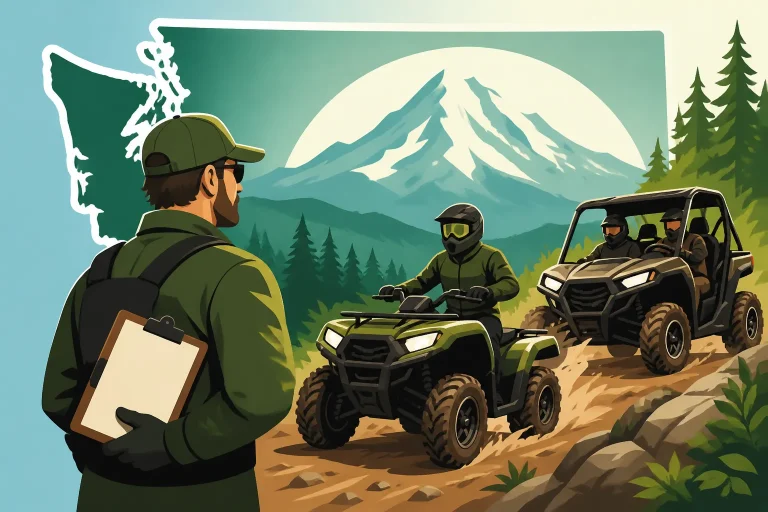
Washington commercial ATV and UTV guides need land-manager approval, compliant machines, and a route plan; public access and recreation passes are not enough.
Washington ATV and UTV filming on public land depends on the manager, production type, and riding access; confirm permits before filming.
Washington race permits depend on land ownership and event scale; secure land-manager approval before advertising, then verify rider tabs and insurance.
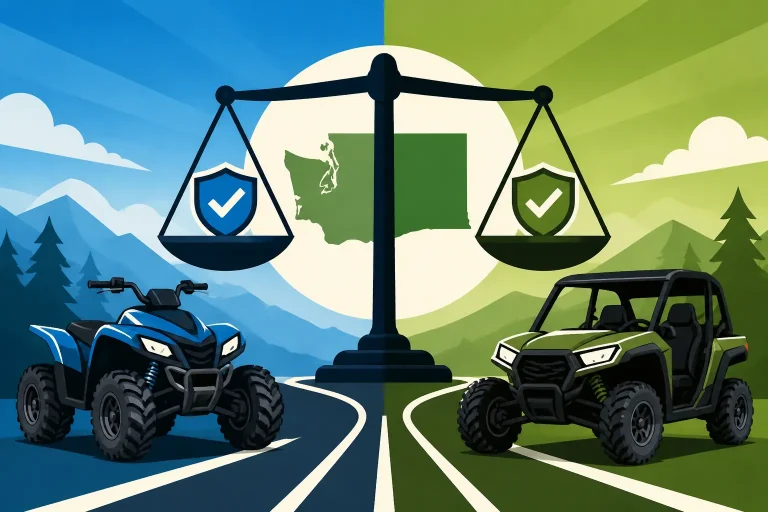
Washington ATV and UTV road reciprocity depends on comparable home-state privileges, Washington requirements, and whether each planned road is open.
Washington organized ATV and UTV rides may need land-manager approval; confirm routes, permits, participant rules, and closures before setting a date.
Washington road reciprocity for ATVs and UTVs depends on valid home-state authorization, Washington rules and whether each route is open to WATVs.

Washington ORV reciprocity may let visitors ride with recognized home-state registration, but it does not replace trail access passes or road-use rules.

Washington riders under 16 may ride off-road with a licensed adult age 18 or older, but supervision does not make public-road riding legal.

Washington riders under 16 need direct supervision from a licensed adult on covered public-land rides; road use and visitor permits involve separate rules.
Washington riders under 16 need an eligible adult actively accompanying them on public land; supervision is not simply waiting nearby at the trailhead.