Riding Ahtanum in Autumn
Autumn riding in Ahtanum can mean crisp mornings, dusty roads, slick leaves, and a trail closure that changes your plans after you have already loaded the trailer. This guide explains how to prepare for fall conditions near Yakima, read Green Dot road markings, choose a sensible route, and check access before heading into the forest.
What to Expect When Riding Ahtanum in Autumn
Fall conditions can change quickly
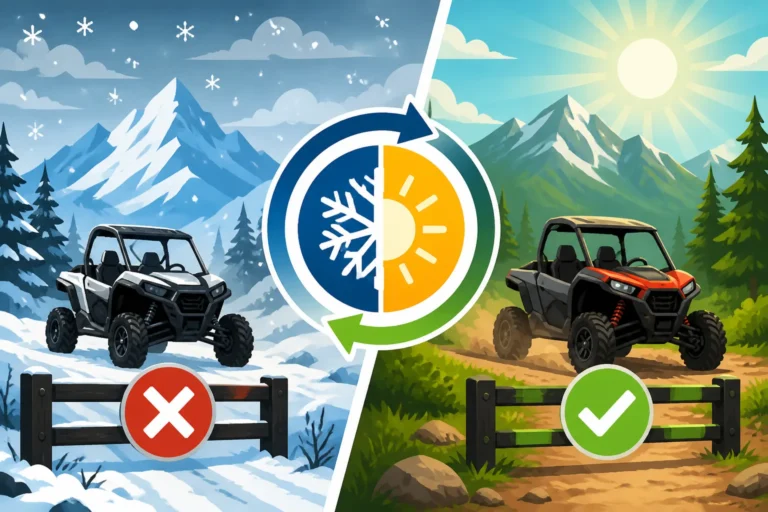
Ahtanum State Forest lies west of Yakima, with access routes leading from the Ahtanum Valley toward forested slopes and higher ground. In autumn, a ride can begin in dry, mild weather near the valley and turn colder, windier, or wetter as you climb. Shade, elevation, and exposure make a real difference: a road that feels dusty at the staging area may be slick with leaves or damp soil farther uphill.
Plan for the conditions you may encounter later in the ride, not just the weather at the truck. Rain can soften dirt, reduce traction, and make ruts harder to see. A cold morning can also mean chilly hands and fogged goggles, especially when you stop moving. Layers, waterproof outerwear, and dry gloves are more useful than packing only for the sunny forecast you saw at home.
Autumn also brings shorter daylight hours. A route that feels comfortably manageable in summer can take longer when you stop to check junctions, wait for a riding partner, or turn around at a closure. Set a turnaround time before leaving the staging area, and keep enough daylight in reserve to get back without rushing.
For a broader sense of how riding conditions vary around the state, see [Washington Riding Seasons by Forest]. Ahtanum’s fall weather is not a reason to avoid the area; it is a reason to leave more room in your plan.
Forest roads and trails are not all the same
Ahtanum is often discussed as a Green Dot road riding area. That does not mean every road, spur, or track visible on a map is open to motorized use. Posted signs and current land-manager information matter, and an old map or a line on a phone screen should not override a closure sign at the road.
Green Dot roads are marked routes, but riders still need to understand what a marker means and follow the access rules for the specific route. If you are new to the system, [What a Green Dot on a Road Sign Means] offers useful context before you head out. You can also review [Ahtanum's Green Dot Roads in Washington] and [Following Green Dot Roads] while planning a route.
Do not assume that a road is open simply because it looks wide enough for your machine or because another rider has used it before. Forest work, weather, fire restrictions, and land-management decisions can affect access. If signage at a junction conflicts with an older map, stop and follow the posted direction rather than trying to guess which information is newer.
Choose a route that suits your group
A fall ride is more enjoyable when the route matches the least experienced rider in the group, the machine’s capabilities, and the day’s conditions. A straightforward route with clear junctions may be a better choice than a longer outing with several spurs, especially if rain or low visibility is likely. If your group includes newer riders, consider agreeing in advance that anyone can call for a slower pace or a turnaround without pressure.
Before you leave, decide how the group will handle a separation. Set a simple rule: stop at major junctions, keep the lead and sweep riders in contact, and do not leave a rider behind to navigate alone. In fog, falling rain, or deep shade, a group can lose visual contact more quickly than expected.
Use route-planning tools as aids, not as permission to ride. Some riders use onX Offroad to review route lines and terrain before a trip, then compare that information with land-manager maps and signs on the ground. If you use onX Offroad, download the information you expect to need before leaving reliable cell coverage, and remember that a mapped route does not by itself confirm current access.
How to Plan a Fall Ride Before You Leave
Check access and closures close to your trip
Ahtanum access can be affected by temporary conditions, including fire restrictions, road work, timber activity, weather damage, or seasonal closures. A route that was open on a previous visit may not be open on your next one. Check current notices from the responsible land manager before loading, and look again for signs when you arrive.
Build a backup plan. If your preferred route is closed, you should know whether there is another appropriate route in the area or whether the better choice is to turn around. This is especially important when you have driven from Yakima, Ellensburg, or farther away and feel tempted to make the trip “worth it” by pushing past a closure. A closure is not a puzzle to solve around; it is a boundary to respect.
For practical pre-trip habits, read [Washington Trail Closures to Check First] and [Washington Fire Closures That Shut Trails]. Closures can affect both safety and land protection, and fall weather does not guarantee that fire restrictions have ended.
| Fall factor | What you may notice | Practical response |
|---|---|---|
| Rain or damp ground | Slick leaves, soft soil, hidden ruts | Slow down, leave more following distance, and avoid damaging muddy routes |
| Shorter daylight | Less time for detours or delays | Set a turnaround time and carry a reliable light |
| Cooler temperatures | Cold hands and reduced comfort at stops | Pack layers, dry gloves, and a wind-resistant outer layer |
| Reduced visibility | Fog, dust, or deep shade at junctions | Keep the group together and stop where everyone can regroup safely |
| Temporary access changes | Signs, gates, or closed roads | Follow posted directions and use a backup plan |
Use maps alongside signs on the ground
A paper or offline map can help you understand the general layout, identify junctions, and keep track of your intended return route. It cannot tell you everything about current conditions. A line on a map may represent a road that is closed, unsuitable for your machine, or restricted for reasons that are not obvious from the map itself.
Before the trip, compare your planned route with the relevant land-manager information. [Reading a DNR Recreation Map] is a helpful starting point for interpreting mapped recreation access. Once you reach Ahtanum, pay attention to posted notices and signs at road entrances and intersections. If you are unsure whether a route is open, do not treat uncertainty as permission.
Digital tools can still make navigation easier. onX Offroad may help you keep track of your position or follow a saved route where map coverage is available. Download maps beforehand, keep your phone protected from rain, and bring a backup navigation option. Do not rely on a phone battery lasting all day in cold weather, especially if you are using the screen continuously.
Prepare your machine and gear for wet weather
A pre-ride check is particularly worthwhile in autumn, when mud, water, and cold can make small problems more inconvenient. Check tires, brakes, lights, and controls before leaving home. Inspect the machine again at the staging area, and make sure loose cargo is secured before you start. On a longer ride, a basic tool kit and the repair items suited to your machine can help with minor issues.
Pack for the possibility of a slow return. Bring water, food, a first-aid kit, a charged phone, and an extra layer in a dry bag. If your group has more than one machine, agree on what to do if one has a mechanical problem and whether anyone carries equipment to help recover it. A winch or tow strap is useful only when riders know how to use it safely and have agreed on a plan.
If you ride in wet conditions, avoid spinning tires to force your way through soft ground. That can deepen ruts and damage the route. When a road is deteriorating or your machine is losing traction, turning around is often the sensible choice. For more general wet-weather considerations, see [Washington Riding in the Wet Season].
Riding Green Dot Roads Safely
Ride at a pace that leaves time to react
Forest roads can have blind corners, loose gravel, washboards, potholes, and unexpected traffic. In Ahtanum, you may encounter other motorized users, hikers, hunters, or work vehicles. Slow down where sightlines are short, stay alert at intersections, and leave enough space to stop without relying on the rider ahead to warn you.
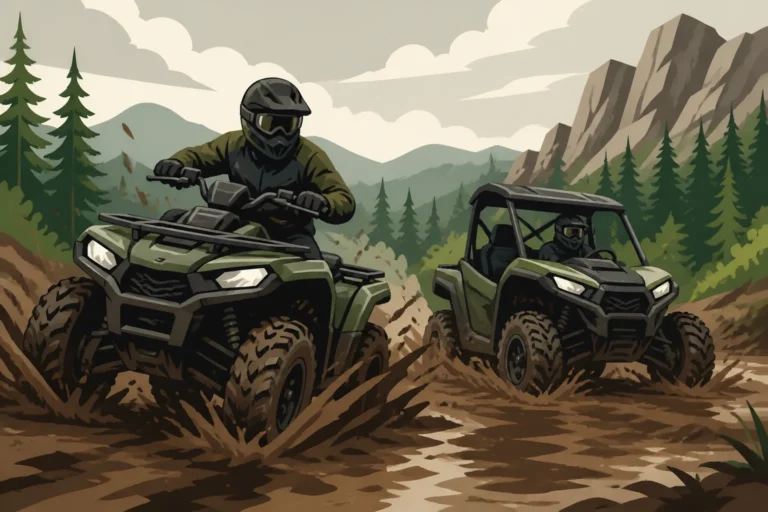
Dust can be a problem on dry roads, while wet leaves and mud can reduce grip after rain. Both conditions reward smooth control. Avoid abrupt braking or sharp steering, particularly on a slope or a surface you cannot see clearly. If visibility drops, increase spacing and regroup somewhere safe rather than continuing close together through dust or fog.
Autumn can also bring active forest use. Work trucks may need room, and a road that is quiet when you start may become busy later. Give other road users space, follow posted speed and access rules, and do not block gates or junctions while stopping to check a map.
Keep the group together without crowding
A group ride works best when everyone knows the plan. Identify the lead and sweep riders, agree on regrouping points, and make sure each rider knows the route back to the staging area. At a confusing junction, stop in a place that does not block traffic and let the whole group confirm the next turn before moving on.
Avoid riding so close that dust, spray, or a sudden stop leaves you with no time to respond. The right spacing depends on the surface and visibility, so increase it when conditions worsen. If a rider falls behind, the sweep rider should slow or stop at a safe place while the lead rider waits at the agreed regroup point.
Take particular care when carrying passengers or riding with young people. Keep the pace comfortable, use appropriate protective gear, and make sure everyone understands that the group can turn around at any time. A short, enjoyable outing is better than an ambitious route that leaves a less experienced rider exhausted or cold.
Respect closures and land rules
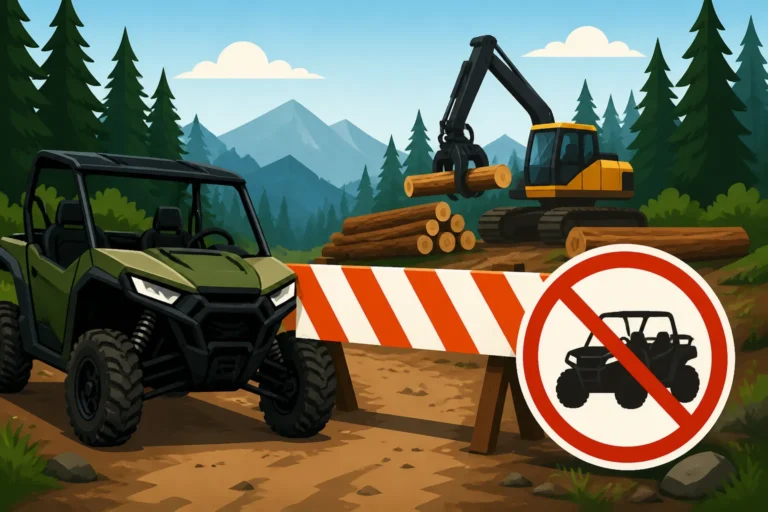
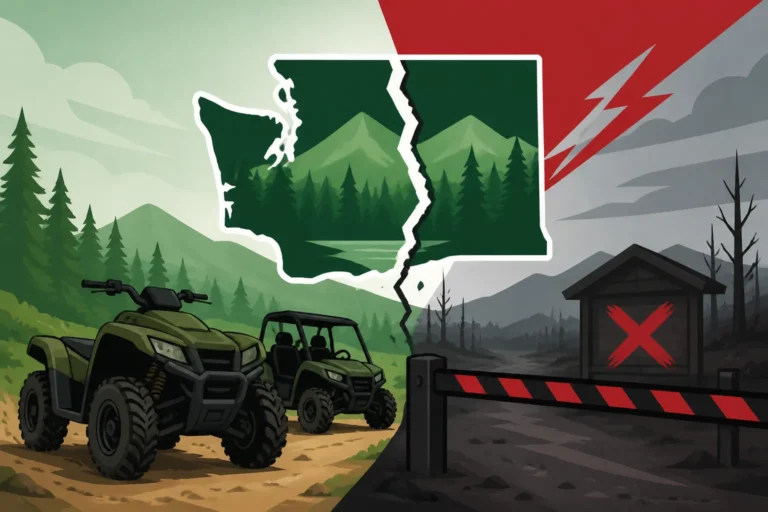
A road closure may protect riders from hazards such as unstable ground, active work, fire danger, or damage to the route. Do not move barriers, ride around a gate, or follow tracks that appear to bypass a closed section. If you find an unexpected closure, note your location, turn around safely, and use your backup plan.
Ahtanum is managed land, so riders should confirm what access requirements apply to their machine and the area they intend to visit. The rules can depend on where you ride and how the machine is registered. Review [Washington Rules for Riding DNR Land] before your trip, and make sure your paperwork and required equipment are in order.
Also plan for where you will park, unload, and stage. Keep access points clear, pack out litter, and avoid making new tracks around muddy or damaged sections. These small choices help keep routes usable for other riders and reduce the chance that a difficult autumn season causes lasting damage.
A Practical Ahtanum Autumn Ride Checklist
Before loading the trailer
Confirm the access information and any closures for your intended route. Choose a primary route and a shorter backup, then tell someone at home where you plan to ride and when you expect to return. Check the forecast for both the valley and the higher terrain rather than relying on conditions at one location.
Inspect the machine, pack protective gear, and bring layers that can handle wind and rain. Prepare offline navigation and make sure your phone is charged. If you use onX Offroad, save the maps or route details you need ahead of time and compare them with official information before riding.
If your machine requires a pass or other access credential at the location, sort that out before the trip. [The Discover Pass and Washington Riders] explains why riders should check land-specific pass requirements rather than assuming the same credential applies everywhere.
At the staging area
Look for current signs, gates, and notices before unloading or setting off. Confirm that your route still makes sense based on the weather and the condition of the road. If the ground is already soft, visibility is poor, or a rider is not comfortable with the plan, shorten the outing.
Review the group’s turnaround time, regrouping points, and basic communication plan. Make sure everyone knows who is leading and sweeping, and that no one is expected to continue through a closed or uncertain route. Check that loose items are secured and that each rider has the gear they need to stay warm and dry.
On the way back
Keep enough daylight in reserve to return without rushing. If conditions worsen, take the shorter route or turn around rather than trying to complete the original plan. On arrival, check the machine for mud or debris that could hide damage, and leave the staging area clean and accessible.
Ahtanum can be a rewarding place for a fall ride when the route and the day’s conditions line up. The best outing is not necessarily the longest one; it is the one where everyone returns safely, respects the posted access rules, and leaves the forest in good shape for the next visit.
Disclaimer
This article is for general informational purposes only and does not constitute professional advice. Laws, prices and regulations vary by location and change over time. Consult a qualified professional for guidance on your specific situation.