Buckling Up in a Utility Vehicle
Riding a utility vehicle (UTV) in Washington is an incredible experience, whether you're tackling challenging trails in Capitol State Forest or cruising a designated county road. However, it’s easy to get caught up in the thrill and overlook one of the most fundamental aspects of safety: buckling up. Many riders, especially those new to the UTV world or transitioning from quads, might underestimate the importance of seatbelts or be unclear on Washington's specific rules. This guide is here to walk you through everything you need to know about seatbelt requirements, safety, and options for your utility vehicle in Washington, ensuring you stay safe and compliant on every adventure.
The Non-Negotiable Necessity of Seatbelts in Your Washington UTV
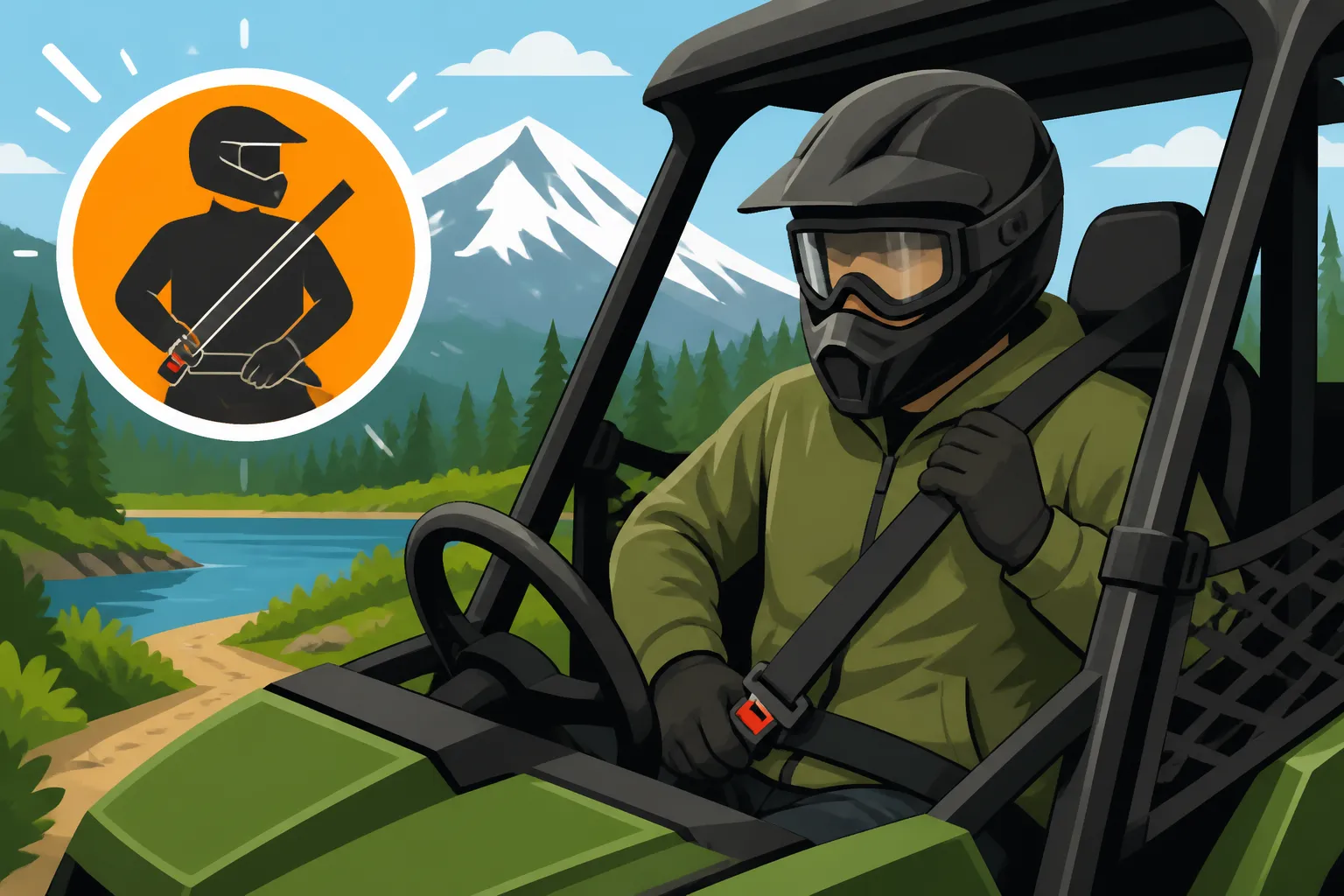
Let's be real for a moment: the freedom of an open-air utility vehicle is a huge part of its appeal. You're out in nature, feeling the wind, hearing the engine hum. But that very openness means you're more exposed than you would be in a traditional car or truck. While a helmet protects your head, and other gear keeps you warm and visible, it's the seatbelt that truly keeps you inside the machine and secure, regardless of whether you're on a gnarly trail or a paved country road.
Beyond the Law: Why Seatbelts Save Lives on Trails and Pavement
Think about the dynamics of UTV riding. These machines are designed for dynamic terrain – hills, bumps, ruts, sudden turns. Even the most cautious driver can encounter unexpected obstacles: a hidden rock, a fallen branch, a sudden wash-out after a rainstorm. Without a seatbelt, any sudden jolt or impact can throw you around the cab, or worse, eject you from the vehicle entirely. Being ejected, even at low speeds, can lead to severe injuries from impacting the ground, obstacles, or even being run over by your own machine or another vehicle.
On paved roads, while the terrain might be smoother, the risks shift to other factors like higher speeds and interaction with other vehicles. A sudden stop, a swerve to avoid an animal, or an unexpected collision with another car or truck can generate immense forces. A seatbelt ensures you remain in your seat, preventing you from hitting the steering wheel, dashboard, or even other passengers. It’s not just about avoiding a ticket; it's about making it home safe to your family after a fantastic day of riding. This is especially true when navigating designated multiuse roads where you're sharing space with cars and trucks, making solid protection even more paramount.
Understanding the Forces at Play: Why You Can't Just "Hold On"
Our natural instinct is often to brace ourselves or grab onto something when we feel a jolt. While this might help in minor instances, human strength is no match for the G-forces generated during a significant impact or rollover. Imagine a scenario where your UTV hits a large pothole unexpectedly while you're cruising a gravel road, or even worse, rolls over on a steep incline. The weight of the machine, combined with its momentum, creates forces that are far too strong for your arms and legs to counteract.
A properly worn seatbelt distributes these forces across the strongest parts of your body – your hips, chest, and shoulders. This significantly reduces the risk of injury by preventing your body from becoming a projectile within the cab or being thrown out. Without a seatbelt, your body is effectively unrestrained, turning you into a passenger in a violent ballet of physics, with potentially devastating outcomes. Even a simple bump can send you flying if you're not secured.
Washington State Laws: Buckling Up for On-Road UTV Use
When you decide to make your utility vehicle street legal in Washington, you're embracing new freedoms but also taking on new responsibilities. One of the most critical of these is adhering to the state's specific laws regarding occupant restraint systems. While you might be used to the idea of wearing a helmet when riding off-road, the rules for riding on public roads are designed to mirror, in many ways, the safety standards of conventional vehicles. For many riders, understanding these nuances is key to enjoying paved roads without worry. You'll also want to make sure your machine passes a [Washington WATV Safety Inspection Cost] check, which will cover safety items like seatbelts.
The Specific Statute: What Washington Demands for Street-Legal Utility Vehicles
Washington State law is quite clear when it comes to operating a street-legal utility vehicle on public roads. The Revised Code of Washington (RCW) specifies that any person operating or riding in a "wheeled all-terrain vehicle" (WATV) that is equipped with a seatbelt must wear that seatbelt when the vehicle is being operated on a public roadway. This isn't an optional suggestion; it's a legal mandate. The definition of a WATV includes most modern side-by-sides and utility vehicles designed for off-road use but modified and registered for limited on-road access. If your machine has a seatbelt, you must use it. This aligns with other road requirements, such as carrying a valid driver's license and having appropriate lighting. For a full rundown, check out [Washington WATV Road Requirements].
This means if your UTV came from the factory with seatbelts, or if you've installed an aftermarket restraint system, those belts must be utilized by all occupants when you're traversing a county road or city street that has been opened for WATV use. The intent here is to bring the safety standards of UTVs operating on public roads closer to those of passenger cars, acknowledging the shared risks.
Who Needs to Buckle Up? Drivers, Passengers, and Minors
The Washington law extends to all occupants of a WATV equipped with seatbelts. This means:
- The Driver: You, as the operator, are legally required to buckle up. There's no exception here, just like in your car.
- Adult Passengers: Any adult riding as a passenger in a seat equipped with a seatbelt must also wear it. They are responsible for their own safety and compliance.
- Minor Passengers: This is where it gets particularly important. Washington takes the safety of young riders very seriously. Any passenger under the age of 16 must wear a seatbelt if one is available. Furthermore, there are specific supervision rules for young riders, even off-road. For on-road use, not only must they be buckled, but the driver must also meet [Washington Minimum Age to Ride a Road] and [Washington Driver License Rules for WATVs] requirements. Even with a valid driver's license, supervising a minor means ensuring they are properly secured. For more details on rules specific to kids, you can look up [Washington Rules for a Rider Under 16].
It's your responsibility as the driver to ensure that all passengers, especially minors, are properly secured before you even put the machine in gear on a public road. A quick check of seatbelts should be part of your pre-ride ritual, similar to checking your tires or fuel.
Consequences of Non-Compliance: Fines and Safety Risks
Ignoring the seatbelt law for your UTV on Washington roads isn't just a minor infraction; it carries tangible consequences. You could face a traffic infraction and a fine for failing to wear a seatbelt, similar to what you'd get in a regular car. These fines can add up, making a fun ride quickly turn into an expensive one. But beyond the monetary penalty, the real consequence is the increased risk to your safety and the safety of your passengers.
In the event of an accident, if you or a passenger weren't wearing a seatbelt, injuries are far more likely to be severe, and in some cases, fatal. Unbuckled occupants are susceptible to ejection, head injuries, internal trauma, and broken bones from impacting the vehicle's interior. Furthermore, your insurance provider might even factor non-compliance into claims, potentially affecting coverage for injuries or damages if a seatbelt wasn't used as required by law. Always remember that while a [Washington Helmet Law for WATV Riders] is crucial for head protection, a seatbelt is equally vital for securing the rest of your body. Think of it as a complete safety system: the helmet for your head, the seatbelt for your body, working together to keep you safe.
Upgrading Your Safety: Seatbelt and Harness Options for Washington Riders
While every utility vehicle sold in the US comes equipped with some form of factory seatbelt, not all seatbelts are created equal, and not every stock system offers the optimal level of protection for all riding styles. Many riders, especially those pushing their machines hard on challenging trails or spending significant time on varied terrain, find themselves looking for enhanced safety and comfort. This is where the world of aftermarket seatbelts and harness systems comes into play, offering a range of choices to boost your confidence and security.
Stock Seatbelts: What Comes Standard and Its Limitations
Most UTVs come from the factory with a standard 3-point seatbelt system, similar to what you'd find in a car. These systems are designed to meet basic safety regulations and are perfectly adequate for casual riding and on-road compliance. They consist of a lap belt and a shoulder strap, connecting at a single buckle. For many, these belts are all that's needed to meet [What Washington Requires for On-Road ORV Use] and provide a baseline level of protection.
However, factory 3-point seatbelts do have their limitations, particularly when tackling aggressive off-road conditions. In rough terrain, or during sudden maneuvers, a 3-point belt can still allow for some body movement. You might find yourself leaning forward or sliding slightly in your seat, which can be unsettling and momentarily take away from your control of the vehicle. For serious trail riders, this movement can reduce comfort over long periods and, in extreme cases like rollovers, might not hold you as snugly in place as a more advanced system. They're good for getting you to the [Washington Rules for Riding to a Trailhead], but once you hit the really bumpy stuff, you might want more.
Aftermarket Solutions: Enhanced Protection for Aggressive Riding or Added Comfort
For riders seeking greater security, reduced body movement, and enhanced comfort, aftermarket restraint systems are a fantastic upgrade. These typically fall into two main categories: 4-point and 5-point harnesses.
- 4-Point Harnesses: These systems add an extra shoulder strap to the traditional 3-point design, securing both shoulders independently and meeting at a central buckle. This significantly reduces upper body movement, keeping you planted in your seat more effectively during bumps, jumps, and aggressive cornering.
- 5-Point Harnesses: Considered the gold standard for off-road safety, 5-point harnesses add a strap that goes between the rider's legs, securing them even further from below. This prevents "submarining" (sliding down and out from under the lap belt) during severe impacts or rollovers. With a 5-point harness, you are truly locked into your seat, offering maximum protection and stability. Many performance UTVs and race-focused machines utilize this type of system.
Brands like SuperATV offer a wide range of aftermarket harnesses and mounting solutions, designed specifically for various UTV models. Their products often focus on durability, ease of installation, and enhanced adjustability, allowing riders to find a snug and comfortable fit that truly makes a difference. Investing in a high-quality aftermarket harness from a reputable brand like SuperATV can be one of the best safety upgrades you make to your machine, especially if you routinely ride challenging trails or participate in competitive events.
Installation and Compatibility: Getting It Right
Installing aftermarket seatbelts or harnesses isn't usually overly complex, but it's crucial to do it correctly. Most kits come with detailed instructions, and many are designed to bolt directly into existing factory mounting points. However, some installations might require specific mounting plates or hardware, especially if you're upgrading from a 3-point system to a 4- or 5-point harness that requires a harness bar behind the seats.
Always ensure that the harness system you choose is compatible with your specific UTV make and model. While SuperATV provides extensive product information, double-checking dimensions and fitment is always a good idea. Improper installation can compromise the effectiveness of the safety system, potentially making it less protective than a factory belt. If you're not confident in your mechanical skills, consider having a professional UTV shop or mechanic handle the installation. A correctly installed harness is a lifeline; an incorrectly installed one is a liability. Remember, just like ensuring your [Washington Lighting Requirements for WATVs] are met, ensuring your safety harnesses are correctly installed is non-negotiable for road use.
Maintaining Your Restraint System: Keeping Your Seatbelts Ready for Anything
Once you have your seatbelts or harnesses in place, whether they're factory standard or an aftermarket upgrade, the job isn't over. Like any other safety component on your utility vehicle, your restraint system requires regular inspection and proper care to ensure it remains fully effective. Just as you wouldn't ignore a flat tire or a broken headlight, you shouldn't neglect the very system designed to keep you secure in your seat. A little attention goes a long way in preserving safety.
Regular Inspections: What to Look For and When to Replace
Before every ride, especially if you're planning to take your WATV on a public road, make it a habit to quickly inspect your seatbelts and harnesses. This quick check can literally save a life. Here's what to look for:
- Fraying or Tears: Inspect the webbing of the belt for any signs of fraying, cuts, tears, or excessive wear. Even small abrasions can significantly weaken the belt's integrity.
- Damaged Buckles: Test the buckles to ensure they latch securely and release smoothly. Look for cracks, chips, or any deformation that might prevent them from functioning correctly.
- Twisted Belts: Ensure the belts aren't twisted, which can reduce their effectiveness and comfort. A twisted belt won't distribute forces properly.
- Anchor Point Integrity: Check the bolts and mounting hardware where the belts attach to the frame of your UTV. Make sure they are tight, rust-free, and show no signs of bending or damage.
- Retractor Function (for 3-point belts): If you have retractable belts, ensure they pull out smoothly and retract fully. A sluggish retractor might not cinch tight enough in an impact.
- Harness Bar Integrity (for aftermarket harnesses): If you have a harness bar, check its mounting points and ensure it's free of cracks or bends.
When to Replace:
Seatbelts and harnesses are designed to withstand significant forces during an impact. However, once they've been subjected to the stresses of a major accident, they should always be replaced. Even if they look fine, the internal webbing can be stretched or compromised, reducing its ability to protect you in a subsequent incident. Many manufacturers, including those like SuperATV, recommend replacement after any significant collision or rollover. Additionally, if you notice severe fraying, tears, or a malfunctioning buckle that can't be repaired, it's time for a new set. Don't compromise on safety to save a few dollars; your life, or a passenger's life, isn't worth the risk. This proactive approach is just as important as maintaining your [Washington Turn Signal Requirements] for road use.
Cleaning and Care: Extending the Life of Your Seatbelts
Keeping your seatbelts clean isn't just about aesthetics; it also helps prolong their lifespan and ensures they function correctly. Dirt, mud, dust, and grime can accumulate on the webbing and inside the buckle mechanisms, leading to premature wear and potential malfunctions.
- Gentle Cleaning: Use a mild soap (like dish soap or an automotive interior cleaner) and warm water with a soft brush or cloth. Avoid harsh chemicals, bleach, or abrasive cleaners, as these can damage the webbing and stitching.
- Rinse Thoroughly: After cleaning, rinse the belts thoroughly to remove all soap residue.
- Air Dry: Allow the belts to air dry completely before using them again or storing the vehicle. Never use direct heat or a dryer, as this can damage the webbing.
- Keep Buckles Clear: Regularly check that the buckle mechanisms are free of debris. A blast of compressed air can help dislodge dirt or sand that might interfere with latching.
- UV Protection: Over time, exposure to UV rays can degrade seatbelt webbing. While not always practical, parking your UTV in the shade or using a cover when not in use can help reduce this exposure.
Taking good care of your seatbelts ensures they are always ready to perform their critical job: keeping you and your passengers safe on every Washington adventure, whether you're sticking to the trails or exploring the open roads. Remember, comprehensive safety also includes proper equipment like [Washington Mirror Requirements for Road Use] and a reliable [Does Washington Require a Horn on an ORV?] for shared roadways.
Disclaimer
This article is for general informational purposes only and does not constitute professional advice. Laws, prices and regulations vary by location and change over time. Consult a qualified professional for guidance on your specific situation.