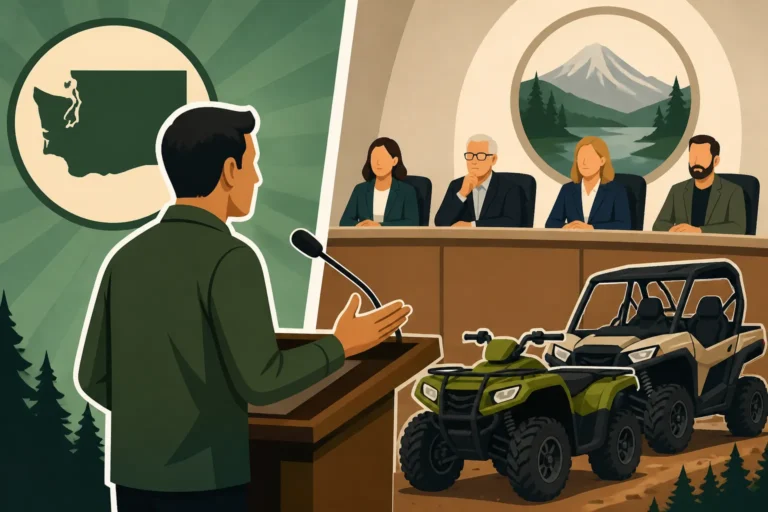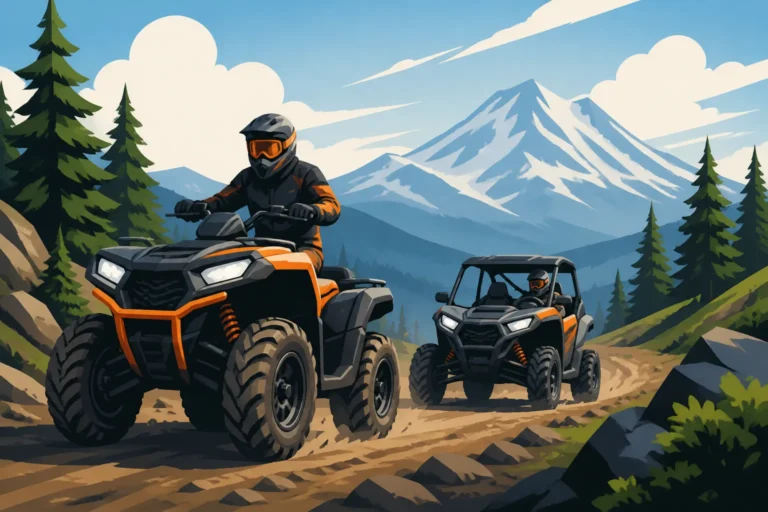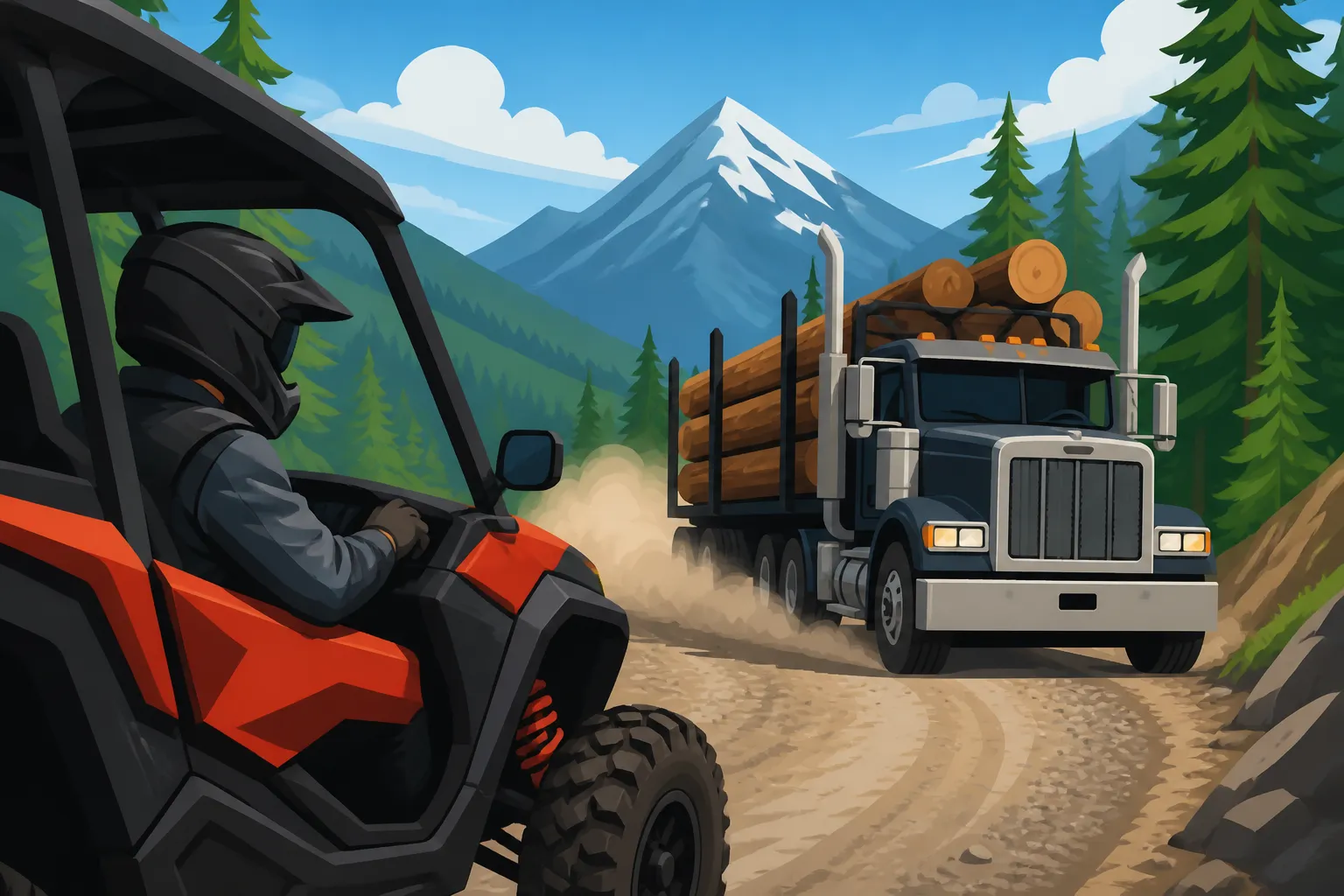
Meeting a Log Truck on a Gravel Road
Hitting the gravel roads in Washington's wild backcountry on your ATV or UTV is an incredible experience, but it comes with a unique set of challenges. One moment you're enjoying the scenery, and the next, the ground vibrates with the unmistakable sound of a massive log truck. These encounters can be genuinely startling, even dangerous, if you're not ready. This guide will walk you through exactly how to safely and confidently share these vital roads with heavy timber traffic, keeping your adventure fun and accident-free.
The Reality of Shared-Use Roads in Washington's Backcountry
Washington State is a paradise for off-road enthusiasts, with vast stretches of forest, mountains, and diverse terrain waiting to be explored. Many of these incredible riding opportunities are accessed via a network of gravel roads, often managed by the Department of Natural Resources (DNR), the Forest Service, or private timber companies. While these roads offer breathtaking views and lead to fantastic trails, they are not always built with recreational riders in mind. They are, first and foremost, working roads, integral to the timber industry, and understanding this fundamental difference is key to your safety.
What Makes These Roads Unique and Dangerous
It's easy to forget how remote and rugged some of these roads are until you're face-to-face with a rig that outweighs your machine by a thousand times. Unlike paved public highways, these gravel thoroughfares are rarely maintained to the same standards. You'll encounter loose gravel, washboards, unexpected potholes, and often, blind corners that hide hazards until the last second. Steep grades, both up and down, are common, adding another layer of complexity to vehicle control. And let's not forget the dust – a thick cloud can hang in the air for minutes after a large vehicle passes, completely obscuring vision for everyone.
The primary users of these roads are not fellow recreationalists; they are industrial vehicles. Log trucks are the most obvious, but you'll also encounter graders, excavators, water tenders, crew cabs, and other heavy equipment. These vehicles are enormous, often wide, and have significantly longer stopping distances, especially when loaded and traveling downhill. Many log truck drivers operate on tight schedules, and while they are generally professional and safety-conscious, they may not be expecting a small ATV or UTV around every bend. These aren't just scenic routes; they're working arteries of the state's natural resource economy. It's crucial to remember that you are a visitor in their workspace. If you're planning a trip, it's always wise to check for active logging operations and potential [Washington Trail Closures to Check First].
Understanding the "Rules of the Road" Beyond Pavement
When you leave the pavement and venture onto a forest or logging road, many of the unspoken rules change. While official traffic laws still apply to some extent, practical etiquette and a strong sense of self-preservation become even more important. The cardinal rule on these shared-use roads is simple: Yield to all commercial traffic. This means log trucks, timber company pickups, and any other heavy equipment get the right-of-way, always. They are heavier, less maneuverable, and often on a schedule. Your smaller, more agile machine is far better equipped to pull over safely.
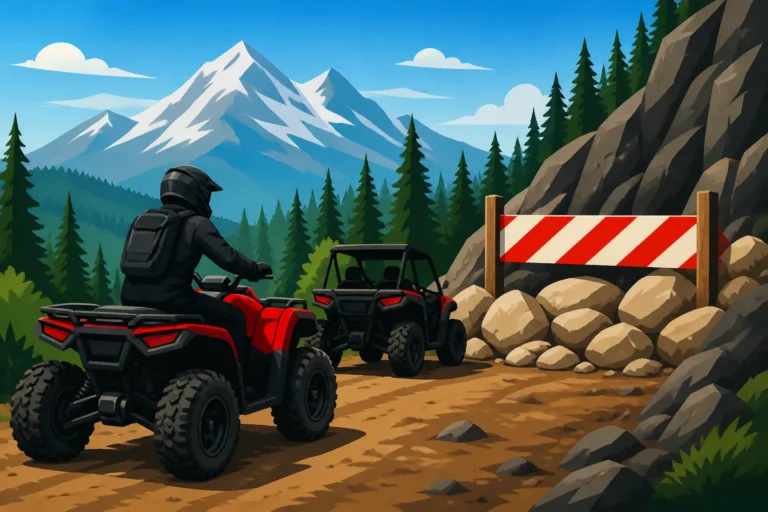
Beyond simply yielding, there are other considerations. On steep grades, it's generally good practice for downhill traffic to yield to uphill traffic, especially if pulling over is difficult for the uphill vehicle. Always anticipate that a vehicle might be coming, even if you haven't seen or heard anything for a while. In some active logging areas, timber companies use specific CB radio channels for drivers to call out their location and direction. While recreational riders aren't typically required to monitor these, it can be a valuable safety measure if you have the equipment and know the frequency. Understanding these unwritten rules and prioritizing safety helps ensure positive interactions for everyone sharing these vital routes. Sometimes you might even encounter a [Locked Timber Company Gate], requiring prior arrangements for access.
Preparing for Encounters: Your Machine and Your Mindset
Navigating these challenging roads safely is a two-part equation: ensuring your machine is up to the task and making sure you, the rider, are mentally ready for whatever comes your way. A well-maintained ATV or UTV and a sharp, defensive riding mindset are your best defenses against potential hazards, especially when a log truck appears out of nowhere.
Machine Readiness: Visibility, Brakes, and Tires
Before you even leave your driveway, a thorough check of your machine is essential. On dusty, winding forest roads, visibility is paramount. Make sure your headlights and taillights are clean and functioning properly, even if you're riding during the day. Consider adding auxiliary lighting, like an LED light bar or brighter floodlights from a reputable brand like SuperATV, to increase your presence, especially in shaded areas or when riding into the setting sun. Wearing bright-colored gear and even adding a tall safety flag to your machine can make a significant difference in how quickly commercial drivers spot you. Remember, the bigger the machine, the harder it is for them to see smaller vehicles. Ensure your [Washington ORV Decal Placement] is correct, as clear identification is always a good idea.
Next, focus on your brakes. Gravel roads demand more from your braking system than smooth trails. Ensure your brake pads have plenty of life, your brake fluid is at the correct level, and there are no spongy levers or pedals. You need reliable stopping power to slow down quickly or come to a complete halt when a truck appears. Your tires are also crucial. Are they appropriate for the terrain? Knobby tires designed for mud might be overkill for gravel and can actually reduce stability. Ensure they're in good condition with no significant wear or damage, and inflate them to the manufacturer's recommended pressure for the load you're carrying. Finally, a functioning, loud horn is not just a legal requirement in some cases, but a critical communication tool. A quick, sharp blast can alert a driver to your presence much faster than waving. Make sure it's loud enough; you can learn more about [How Loud a Road-Legal WATV Horn Must Be] for reference. Adhering to [Washington Spark Arrester Requirement] and [Washington Muffler Requirements for an ORV] ensures not only legality but also minimizes environmental impact and allows you to better hear approaching vehicles.
Mental Preparedness: Expecting the Unexpected
Beyond your machine, your mental state as a rider is perhaps the most critical component of safe riding on shared-use roads. This isn't a relaxed cruise on a deserted trail; it requires constant situational awareness. Always be scanning the road ahead for signs of activity – dust plumes in the distance, fresh tire tracks, or even the subtle sound of an engine echoing through the trees. Listen actively. Can you hear a distant engine rumble? The air brakes of a large truck? Assume something is coming around every blind corner, over every hill crest, and out of every side road. This mindset is called defensive riding.
Your speed control should always be dictated by your sight lines. If you can't see around a bend, slow down to a crawl. Don't "drift" wide on corners; always stay as far to your side of the road as possible. Dust is a significant hazard; if you're following another vehicle, leave plenty of space to allow the dust to settle, or pull over if it's too thick to see. Remember, a truck driver might be driving into your dust cloud just as you're driving into theirs. Finally, fatigue can severely impair your judgment and reaction time. Plan your rides to avoid excessive exhaustion, especially if you know you'll be on busy logging roads. Staying fresh and focused ensures you can react appropriately the moment you hear the distinct sound of [Log Trucks on a Weekday]. Make sure you have your [Keeping Paperwork Dry in the Rain] strategy figured out, because a sudden downpour can complicate things fast.
Executing a Safe Encounter: When You See Them Coming
The moment of truth arrives: you hear that telltale rumble, or a plume of dust rounds a distant corner, signaling an approaching log truck. This is where all your preparation pays off. Your immediate, decisive actions can make all the difference in ensuring a safe pass for everyone.
Immediate Actions: Slowing Down and Finding Space
The instant you become aware of an approaching log truck – whether you see it, hear it, or even feel the ground vibrating – your first and most critical action is to slow down immediately and significantly. Do not wait to see how close it gets or if it will slow down for you. Begin decelerating, covering your brakes, and scanning the immediate environment for a safe place to pull over.
Look for a wide spot, a pull-out, a ditch line that allows you to get completely off the main travel lane, or any area where you can stop your machine completely out of the truck's path. Prioritize getting as far to the right as safely possible. If there's no obvious wide spot, simply pull as far to the right shoulder as you can and stop. Never, ever try to squeeze past a truck, especially on a narrow road or blind curve. This is an invitation for disaster. Similarly, avoid stopping on a blind corner, at the crest of a hill, or anywhere visibility is compromised. For example, if you're halfway up a steep grade and a truck is descending, your best bet is often to stop where you are, pull over as much as possible, and wait. The truck driver, with their heavy load, will have a much harder time stopping or maneuvering than you will. Patience is paramount here; it's always better to wait an extra minute than to take an unnecessary risk.
Communication and Etiquette: Making Your Presence Known
Once you've safely pulled over, effective communication with the truck driver, even if non-verbal, is vital. If possible and safe, try to make eye contact with the driver as they approach. This simple act confirms to them that you've seen them, are aware of their presence, and are yielding the road. A friendly wave once they've clearly seen you can also be a reassuring signal. It's a way of saying, "I see you, I'm stopped, thank you." If you happen to have turn signals on your ATV or UTV (perhaps because you've installed a street legal kit from SuperATV), you could even use your right turn signal to indicate you're pulling over.
Remember the vast difference in size and weight. A fully loaded log truck cannot stop on a dime, especially on a downhill grade or loose gravel. Give them ample room and time to pass. Do not re-enter the road or start moving until the truck has passed completely and you can clearly see the road ahead. If there's a dust cloud, wait for it to settle. This also helps ensure that if there's a second truck following closely behind the first (which isn't uncommon), you won't pull out into its path. A polite and patient approach ensures safety for all, and reinforces the positive image of ORV riders as responsible users of public lands. Always ride in single file on narrow roads; [Washington Rules for Riding Two Abreast] should generally be avoided in these situations.
After the Log Truck Passes: Regaining Your Rhythm Safely
The roar fades, the ground stops rumbling, and the log truck disappears down the road. But the encounter isn't over yet. There are a few crucial steps to take before you simply pull back onto the road and continue your adventure. Taking a moment to assess the situation helps ensure your ride remains smooth and safe.
Checking Conditions and Continuing Your Ride
First and foremost, wait for the dust cloud to settle. A thick cloud of dust can obscure vision for several minutes, and pulling back into it is akin to driving blind. Be patient. Once the dust has cleared, take a moment to inspect the road conditions where the truck just passed. Heavy trucks can churn up gravel, create new ruts, or even drop small amounts of debris. Look for any new hazards that weren't there before you pulled over. A quick scan of your immediate surroundings for anything out of the ordinary is always a good practice.
Before you engage gear and pull back onto the road, listen again for other traffic. Was that the only truck, or is there a convoy of them? It's not uncommon for multiple trucks to be running the same route, especially during peak logging hours. If you hear another one, simply repeat the safe encounter protocol. Once you're certain the road is clear and safe, take a deep breath, regain your focus, and then slowly and deliberately pull back onto the road. Resume your ride at a safe, controlled speed, maintaining that defensive riding mindset that will serve you well for the rest of your trip. Active logging often leads to temporary closures, so always check [Washington Trail Closures to Check First] before heading out.
Reporting Issues or Hazards
While most encounters with commercial traffic on forest roads are uneventful when proper precautions are taken, sometimes things go awry. If a log truck leaves behind significant debris – large chunks of wood, spilled gravel that creates a hazard, or anything that could damage your machine or injure another rider – it's important to report it. Note the location as accurately as possible (mile marker, nearest intersection, distinguishing landmarks) and contact the relevant authority. This might be the local DNR office, the Forest Service, or even the timber company itself if you can identify it (look for company names on the truck).
In rare instances, you might encounter aggressive or reckless driving from a commercial vehicle. While your primary goal is always to prioritize your own safety and avoid confrontation, if you witness genuinely dangerous behavior that puts others at risk, make a note of the company name, truck number, and time/location. You can then report this information to the same authorities. Furthermore, if you observe general road conditions that pose a significant hazard – new washouts, fallen trees, or impassable sections – reporting these to the DNR or Forest Service helps ensure the safety of all future users of the road. Your observations can contribute to better maintenance and safer access for everyone. For general assistance or to report issues, the [Washington ORV Registration Help Line] can often point you in the right direction.
Safe Encounter Checklist
To help you stay safe when riding Washington's shared-use gravel roads, here's a quick checklist to keep in mind:
| Category | Action Before Encounter | Action During Encounter | Action After Encounter |
|---|---|---|---|
| Visibility | Ensure bright lights, flag. | Signal presence if needed. | Confirm clear visibility. |
| Sound | Check muffler. Listen for trucks. | Use horn if necessary. | Listen for follow-up trucks. |
| Speed | Ride within sight lines. | Decelerate immediately. | Resume safe speed gradually. |
| Positioning | Anticipate pull-outs. | Pull completely to the right, stop. | Wait for dust to settle. |
| Awareness | Scan ahead, check mirrors. | Make eye contact with driver. | Check for debris/road changes. |
| Communication | Inform riding partners. | Offer a friendly wave. | Report significant hazards. |
Remember, sharing the road safely with log trucks and other heavy equipment is about respect, preparedness, and a strong commitment to defensive riding. By understanding the unique nature of Washington's backcountry roads and following these guidelines, you can ensure your ATV or UTV adventures remain thrilling, memorable, and above all, safe.
Disclaimer
This article is for general informational purposes only and does not constitute professional advice. Laws, prices and regulations vary by location and change over time. Consult a qualified professional for guidance on your specific situation.