Washington Rules for Riding to a Trailhead
It’s a common daydream for any Washington ATV or UTV owner: rolling right out of your driveway, or maybe from your campsite, and directly onto a gravel road that leads straight to your favorite trails. The thought of skipping the trailer, the hitching, and the parking hassle is incredibly appealing. However, Washington State has specific, often complex, rules about where and how you can ride your off-road machine on public roads. This guide is here to untangle that complexity, helping you understand precisely what it takes to legally ride your WATV to a trailhead.
The Core Challenge: Road Access for Off-Road Vehicles in Washington
Let’s be honest, the biggest hurdle for us off-road enthusiasts is that our machines aren't inherently designed or intended for public road use. Most ATVs and UTVs are built for dirt, rocks, and mud, not asphalt. Because of this, Washington State, like many others, has had to carve out specific exceptions to allow limited road access, particularly for getting to those prime riding areas. It's not a free-for-all, and understanding the "why" behind the rules can help you better navigate the "how."
The state legislature recognized the need for riders to connect the dots between their homes, campsites, and trail networks. They understood that not everyone wants to load their machine onto a trailer just to move it a quarter-mile down a quiet county road. This led to the creation of the wheeled all-terrain vehicle (WATV) designation, which provides a pathway for limited road use. It's a pragmatic approach, attempting to balance recreational access with public safety on roadways shared with traditional vehicles.
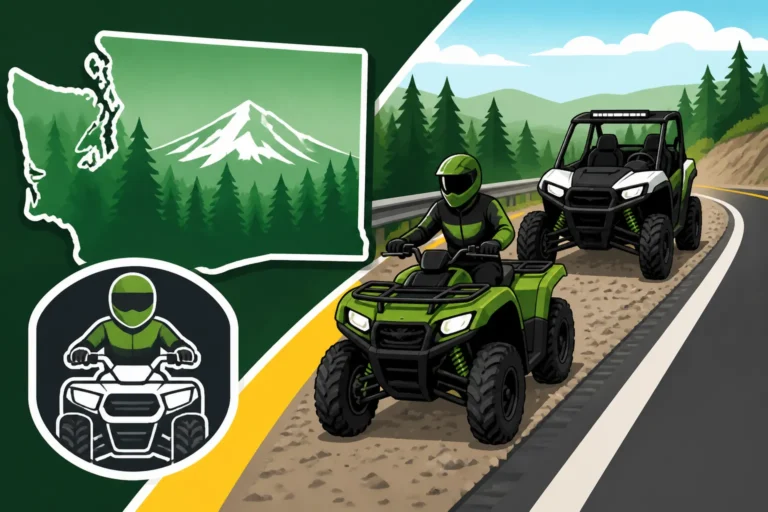
This distinction is crucial. Your machine isn't just an "ATV" in the eyes of Washington law when you want to take it on a road; it becomes a "WATV," requiring specific steps and equipment. The most visible aspect of this is the dual registration system: you'll need the standard off-road tab, which signifies you're legal for designated trails, but you’ll also need to add an additional on-road tab specifically for public road access. Think of it as earning your stripes for pavement access. Without both, even a short jaunt on a quiet road can land you in hot water. It’s definitely more involved than just slapping on a sticker, but the freedom it grants can be well worth the effort. [Washington's Two-Tab System] outlines this registration process in more detail.
Understanding Washington's WATV Road Rules
Navigating Washington’s roads with your WATV requires a deep understanding of the specific regulations governing where, when, and how you can operate. It's not enough to simply have the right stickers; you need to be aware of the legal framework that dictates your journey from pavement to trail.
The 35 MPH Rule and County/City Ordinances
The bedrock of Washington’s WATV road access is the 35 mph speed limit. This isn't just a suggestion; it's a hard limit. If a road segment has a posted speed limit higher than 35 mph, your WATV is generally not allowed on it, even if the county has opened other roads. This rule often causes frustration because many rural roads, while seemingly perfect for a short WATV ride, have speed limits of 40 or 45 mph, immediately making them off-limits.
Beyond the speed limit, the authority to open roads for WATV use primarily rests with individual counties and cities. The state law provides the framework, but local jurisdictions make the actual decisions. Washington counties with a population under 15,000 are often considered "open by default," meaning all their roads (under 35 mph) are open to WATVs unless they specifically pass an ordinance to close them. Conversely, larger counties (those with over 15,000 residents) must actively "opt-in" by passing ordinances to designate specific roads as open. This creates a patchwork of rules across the state. What’s perfectly legal in one county, like riding down a certain rural road, might be strictly prohibited just across the county line. [Washington Counties Over Fifteen Thousand Must Opt In] dives deeper into how these population thresholds affect road access.
Cities also have their own ordinances, and you’ll find some cities that have thoughtfully opened specific streets to WATVs, often to allow access to businesses or connect to county roads. Others, however, may prohibit WATV use entirely within their city limits. This means your route planning needs to be meticulous. You can't just assume a road is open because it's gravel and quiet. It's imperative to check the local county and city websites, often looking for their specific ordinances or published lists of approved roads. Ignorance of these local rules isn't a valid defense if you're stopped by law enforcement. [Washington Cities That Allow WATVs on Streets] provides examples of municipalities that have opened their streets. Trust me, the time spent researching beforehand saves a lot of headaches, and potential fines, on your ride. [Finding a County's Approved Road List] is your first step here.
Equipment Requirements for Road Use
Once you’ve identified the legal roads, your WATV needs to be equipped to meet state safety standards for road use. This isn’t just about making your machine visible; it’s about making it conform to specific requirements designed to ensure safety when sharing the road with other vehicles. Many of these requirements go beyond what's typically needed for just off-road riding.
First and foremost, you and any passengers must wear a helmet. This is a non-negotiable safety item for all WATV riders and passengers on public roads in Washington. It's about protecting yourself in an environment that presents different risks than a muddy trail. Beyond personal protective gear, your WATV itself needs to be outfitted with several key components. This includes at least one rearview mirror, a working horn that can be heard from a reasonable distance, and most critically, turn signals for both the front and rear of the machine. These are essential for communicating your intentions to other drivers on the road.
Furthermore, your WATV must have functioning headlights, tail lights, and brake lights. If you're going to be riding after dusk, or even during inclement weather, adequate lighting is not just a legal requirement but a common-sense safety measure. For utility vehicles (UTVs) specifically, seatbelts are mandatory for all occupants, mirroring the safety standards of cars. These are the basic requirements, but often, riders choose to go above and beyond for enhanced safety and visibility. Many riders turn to aftermarket specialists like SuperATV for their turn signal kits, mirrors, or horn setups, ensuring compliance while often gaining improved durability and performance over stock options. These enhancements can make your road sections much less stressful, knowing you’re clearly visible and able to signal effectively.
Driver Licensing, Age, and Insurance
Beyond the machine itself, the operator and the administrative side of things have their own set of rules that must be strictly followed when taking your WATV on public roads. These are critical for both legal compliance and financial protection.
First, anyone operating a WATV on a public road in Washington must possess a valid driver’s license. This isn’t a junior license or a learner's permit; it needs to be a full, unrestricted driver’s license. The state wants to ensure that anyone operating a vehicle on its roads has demonstrated basic driving competence. This means if you're typically an off-road warrior who doesn't hold a standard driver's license, you cannot legally operate your WATV on paved or approved gravel roads to reach a trailhead. [Washington Driver License Rules for WATVs] spells out these requirements clearly.
Age restrictions also apply. While there are rules for younger riders on trails under supervision, for actual road use, the minimum age to operate a WATV is 16, and even then, specific conditions may apply for those under 18. This ties back into the driver's license requirement; if you’re too young to get a driver’s license, you’re too young to legally pilot a WATV on public roads. Always check the current regulations regarding minors and road use to avoid any legal issues. [Washington Minimum Age to Ride a Road] offers more specifics on this.
Finally, and this is a big one, you absolutely must carry liability insurance for your WATV when operating it on public roads. Just like a car, if you’re involved in an accident, this insurance protects you from financial ruin for damages or injuries you might cause to others. It’s not an optional extra; it's a mandatory requirement. Most standard off-road vehicle insurance policies might cover trail use, but you need to specifically ensure your policy extends to, or includes, coverage for road-legal WATV use. Always confirm with your insurance provider that your policy covers on-road operation in Washington State before you venture out. Getting caught without it can lead to hefty fines and, more importantly, leave you completely exposed in the event of an incident. [Washington WATV Insurance Requirements] details the minimum coverage needed.
The Practical Steps to Get Your WATV Road-Ready
Alright, so you understand the rules, the equipment, and the legalities. Now, let’s talk about the practical side of actually making it happen. Getting your WATV road-ready isn't just about slapping on some lights; it's a multi-step process that ensures your machine is compliant and you're prepared for the journey.
Registering for On-Road Use
The journey to legal road use begins at the Department of Licensing (DOL) or one of its authorized subagents. First, your WATV needs to be titled in your name. This is a foundational step; the state needs to know who owns the machine before it can be registered for any kind of road use. If you bought your machine used and the previous owner never properly transferred the title, you'll need to rectify that before proceeding. [Why Washington Wants a Title First] explains the importance of this step.
Once titled, your WATV will require a safety inspection. This isn't just a cursory glance; a qualified inspector will meticulously check that your machine meets all the required equipment standards for road use, including those mirrors, turn signals, horn, lights, and any other specific components. This inspection ensures that your WATV is genuinely safe to share the road. There's a cap on how much an inspection can cost, but it's important to find an authorized inspection location. [Where to Get a Washington WATV Inspection] lists where you can go for this. Once your WATV passes inspection, you’ll receive a certificate that you'll take with your title and other required paperwork to the licensing agent.
At the licensing office, you'll pay the necessary fees to get your off-road tab and, crucially, the additional on-road tab. These tabs are typically decals that are affixed to your machine in a visible location. Remember, the on-road tab is what signals to law enforcement that your WATV has met the criteria for limited public road use. This means carrying your registration card, proving you’ve paid all the fees and completed the process. The process might seem like a lot of hoops to jump through, but each step is designed to ensure safety and accountability. [Adding the $12 On-Road Tab on Top] details the cost and process for this specific tab, and [Washington WATV Registration Paperwork] helps you gather all the necessary documents.
Planning Your Route to the Trailhead
Once your WATV is legally equipped and registered for road use, the real fun — or the real challenge, depending on your perspective — begins: planning your actual route. You can’t just point your machine towards the nearest trailhead and go. Effective route planning is crucial to stay legal and avoid unnecessary citations.
This step requires a good map, whether it’s a physical one or a reliable GPS app. You’ll need to meticulously identify the specific county or city roads that have been designated as open for WATV use. As mentioned earlier, this usually means consulting the official websites of the local jurisdictions. Many counties publish maps or lists of their open roads, which are invaluable resources. You might find that a short stretch of road is open, but the connecting road is not, forcing a detour or a trailer move.
You also need to pay close attention to highway crossings. While riding on highways is generally prohibited (especially those over 35 mph), state law does allow for crossing certain highways to access another approved road or trail. However, even these crossings often come with specific rules, such as speed limits for the highway segment and requirements to cross at a 90-degree angle. [Crossing a Washington Highway Posted Between 35 and 60] provides insight into these nuances. Never assume you can simply cross any highway; always verify. Investing in a good GPS or an accessory mount for your phone from companies like SuperATV can make navigating these approved routes much safer and easier, allowing you to focus on the road ahead rather than fumbling with maps. It's about being prepared and knowing your path before your tires ever hit the pavement.
Riding Responsibly and Safely
Finally, with all the legalities squared away and your route planned, it’s time to hit the road. But remember, operating a WATV on a public road demands a heightened level of responsibility and safety awareness. You are now sharing the road with cars, trucks, and other vehicles, and their drivers may not be expecting to see an ATV or UTV.
First and foremost, adhere strictly to the posted speed limits – and definitely stay under the 35 mph WATV limit. Even if the road feels empty, maintaining a safe speed is paramount. Visibility is your best friend. Your machine, even with its new lights and turn signals, is smaller than most cars. Ride defensively, anticipate the actions of other drivers, and make yourself as visible as possible. This means using your turn signals well in advance of a turn and ensuring your lights are always functioning, especially at dusk or dawn. Beyond the legal requirements, many riders enhance their safety with additional accessories, perhaps even upgrading their lighting with offerings from SuperATV, ensuring maximum visibility for those crucial rides on designated roads.
Yield to other traffic, especially on narrow rural roads. Be mindful of dust, especially on gravel roads, which can impair visibility for drivers behind you. Avoid riding two abreast; Washington law specifically prohibits this on public roads, as it takes up too much of the lane and makes it difficult for other vehicles to pass safely. [Why Two Washington WATVs May Not Ride Abreast] explains this rule in detail. And, always, always carry your registration card, proof of insurance, and your driver’s license with you. Law enforcement can, and will, ask for these documents during a roadside stop. Keeping them in a waterproof pouch on your machine is a smart move. [Carrying the Registration in the Machine] is a good read for how to keep these vital papers safe and dry. It's all about being a courteous and responsible road user, ensuring you preserve the privilege of riding your WATV to the trailhead.
Common Pitfalls and Misconceptions
Even with the best intentions, it's easy to fall into common traps or misunderstand certain aspects of Washington's WATV laws. Being aware of these pitfalls can save you from inconvenient detours, unexpected fines, and even legal trouble.
Assuming All Forest Roads Are Open
One of the biggest misconceptions riders have is that all gravel or dirt roads, especially those in state forests or national forests, are automatically open to WATVs. While many forest roads are open for off-road vehicle use, it's not a universal truth, and distinguishing between different types of land ownership and management is critical.
Washington has a mix of Department of Natural Resources (DNR) lands, National Forest lands, Bureau of Land Management (BLM) lands, and vast tracts of private timberland. Each of these entities has its own rules, and not all of them align. For example, some DNR forest roads are part of a designated motorized trail system, while others are administrative roads closed to recreational WATV use. National Forests operate under federal regulations, which may differ from state law, and you might need a Northwest Forest Pass for some areas. [Washington Rules for Riding a Forest Road] helps clarify some of these distinctions.
Then there are private timber companies. Many of these companies allow public access on their roads, but they can revoke that permission at any time, or require specific permits or gate keys. A road that was open last year might be closed this year due to logging operations, fire danger, or simply a change in company policy. Just because a road looks like a forest road doesn't mean it's fair game. Always check with the managing agency or landowner, look for signage, and don't assume. Ignorance can lead to trespassing charges, which are far more serious than a simple traffic ticket.
The "Quick Dash" Illusion
This is a temptation that nearly every WATV owner has faced: that short, seemingly harmless "quick dash" across a closed road, or a brief ride on a non-approved section, just to connect two open segments or to get back to camp a little faster. It’s often rationalized as "no one will see me" or "it's only a hundred yards."
However, this "quick dash" illusion is a significant pitfall. Law enforcement officers, especially in rural areas, are often well-aware of these common shortcuts and may specifically patrol them. A brief moment of convenience is absolutely not worth the consequences. A citation for riding on an unauthorized road can result in substantial fines, and depending on the circumstances, it could even lead to your machine being impounded. [What a Washington Citation for No Tabs Costs] gives you an idea of the financial implications of non-compliance.
It’s simply not worth the risk to your wallet, your time, or your peace of mind. The integrity of the entire WATV road access program in Washington relies on riders adhering to the rules. When riders flaunt the regulations, it makes it harder for everyone else and can even lead to further restrictions on where WATVs are allowed. Stick to your planned, legal route, even if it means a longer journey. The goal is to enjoy your ride legally and responsibly, not to cut corners and risk legal repercussions.
Washington WATV Road-Use Requirements Comparison
Understanding the difference between off-road only and road-legal WATV requirements is critical for compliance. This table summarizes the key distinctions for riding in Washington.
| Feature | Off-Road Only (Trail Use) | Road-Legal WATV (Approved Roads) |
|---|---|---|
| Registration | Off-road tab required | Both off-road and on-road tabs required |
| Title | Required | Required (must be in your name) |
| Safety Inspection | Not typically required for off-road use | Mandatory (ensures equipment compliance) |
| Speed Limit | Varies by trail/area; no state-wide road speed limit applies | Max 35 mph on approved roads |
| Driver's License | Not required for supervised minors; licensed adult for others | Valid driver's license required for all operators |
| Insurance | Not state-mandated (though highly recommended) | Mandatory liability insurance required |
| Helmet | Required for all riders/passengers | Required for all riders/passengers |
| Mirrors | Not required | At least one rearview mirror required |
| Horn | Not required | Required |
| Turn Signals | Not required | Required (front and rear) |
| Headlights | Required for night riding | Required (must be functional at all times on roads) |
| Tail Lights | Required for night riding | Required (must be functional at all times on roads) |
| Brake Lights | Not strictly required for off-road | Required |
| Seatbelts (UTV) | Often present, but not state-mandated for off-road use | Required for all occupants |
| Road Access | Designated trails and non-highway roads only | Designated county/city roads (under 35 mph) and certain crossings |
In Washington, the dream of riding your WATV from your front door to the trailhead is absolutely achievable, but it's not a given. It requires understanding the specific rules, properly outfitting your machine, and meticulously planning your route. By following these guidelines, taking the necessary steps for registration and inspection, and always riding with a commitment to safety and responsibility, you can enjoy the unparalleled freedom of legally connecting your home base to the incredible network of trails Washington has to offer. Safe riding out there!
Disclaimer
This article is for general informational purposes only and does not constitute professional advice. Laws, prices and regulations vary by location and change over time. Consult a qualified professional for guidance on your specific situation.