Riding Unincorporated Pierce County
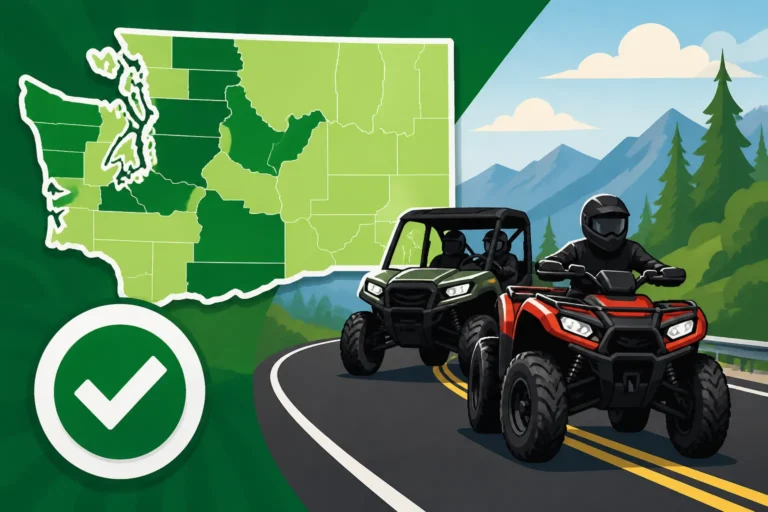
It can be incredibly frustrating trying to figure out where you can legally and safely ride your ATV or UTV on roads in Washington, especially when local rules add another layer of complexity to the state laws. Many riders in Pierce County dream of using their machines to connect trails or simply get to a local store without having to trailer up every single time. This guide will help clarify the specific rules and requirements for riding your wheeled all-terrain vehicle (WATV) on roads within unincorporated Pierce County, offering practical advice to help you stay legal and enjoy your ride.
Understanding Washington's Statewide WATV Road Laws
Before we dive into the specifics of Pierce County, it’s essential to understand the overarching state laws that govern WATV use on public roads in Washington. The state legislature laid the groundwork for allowing these machines on certain public roadways, but they also gave local jurisdictions, like counties and cities, the power to either open their roads or keep them closed. This creates a patchwork of rules across the state, which is why it feels so confusing.
The Statewide Framework for WATV Road Access
Washington State law generally permits WATVs to operate on roads with a speed limit of 35 miles per hour or less, provided the local jurisdiction has officially opened those roads. There's also a provision for crossing higher-speed highways, but even that has strict conditions. This isn't a free-for-all; it's a carefully crafted framework designed to balance recreational access with public safety. To be legally on any public road, your WATV needs to be properly registered with an on-road tab, meet specific equipment requirements, and you, as the rider, need to meet certain licensing and safety standards. Many riders often start by securing both the off-road and on-road portions of [Washington's Two-Tab System] to ensure they're covered for various riding scenarios.
The key takeaway here is that state law provides the permission slip for local governments to open roads, but it doesn't automatically open them. It's up to each county or city to pass an ordinance allowing WATV use on their specific roads. This means that even if a road looks like it should be open – it's gravel, low-speed, and goes to a popular trail – it's not legal for WATV use unless the local authorities have explicitly said so. This is where a lot of riders get tripped up; they assume rural roads are fair game, only to find out they’re riding illegally. Getting the [Washington's On-Road Tab Explained] is a critical first step, but it's only one piece of the puzzle.
The Role of Counties in Opening Roads
Counties play a pivotal role in determining where you can ride. Washington state law differentiates between counties based on population. Counties with populations of less than 15,000 are generally "open by default," meaning all county roads with a speed limit of 35 mph or less are open to WATVs unless the county specifically closes them. However, for counties with populations greater than 15,000, like Pierce County, the opposite is true: all county roads are closed by default unless the county specifically opens them through an ordinance. This distinction is vital for Pierce County riders.
This means that in a larger county, you can't assume any road is open. You have to actively seek out the county's official ordinance and any accompanying list of approved roads. It's not enough to simply have your machine registered for road use; you must know if the specific road you want to ride has been designated as open. Without that local designation, you're looking at potential citations and fines. This is a common source of frustration, as finding these specific ordinances and road lists can sometimes feel like a treasure hunt.
Pierce County's Specific Ordinances for Unincorporated Areas
Now, let's zero in on Pierce County. As one of Washington's more populous counties, it falls under the "closed by default, open by ordinance" rule. This means that if you're planning to ride your WATV on a county road within an unincorporated area of Pierce County, you need to confirm that the county has passed an ordinance specifically allowing it and, importantly, that the road you intend to use is on their approved list.
What "Unincorporated" Means for WATV Riders
"Unincorporated Pierce County" refers to all areas within the county boundaries that are not part of an incorporated city or town, such as Tacoma, Puyallup, Gig Harbor, or Lakewood. In these unincorporated areas, the Pierce County Council is the governing body that sets the rules for county roads. This means that if you're riding outside of city limits, you're dealing with county-level regulations. It's a common misconception that rural areas automatically mean open riding, but in large counties, it simply means you need to look at the county's specific ordinances rather than a city's.
For example, a gravel road running between two small communities, or leading to a popular trailhead, might seem like a prime candidate for WATV access. However, if that road is maintained by Pierce County and lies outside of any city's jurisdiction, its status for WATV use depends entirely on what the Pierce County Council has legislated. This is why you can’t just rely on how a road looks or feels; you have to rely on the letter of the law. Riders often find themselves needing to confirm [Pierce County's Unincorporated Roads] status before heading out.
Specific Roads or Areas That May Be Open
I can tell you how to find this information. Pierce County's ordinances typically specify certain roads or road segments that are open. These often include roads that connect trails, provide access to recreational areas, or serve as essential links in more rural communities. It's rare for all roads below the 35 mph limit to be opened; typically, a county will designate specific routes to minimize conflicts and enhance safety.
When the Pierce County Council considers opening roads, they often take into account factors like traffic volume, pedestrian activity, school zones, and the overall character of the road. So, while you might hope to cruise down your favorite country lane, the county might only open very specific, low-traffic routes. It's not uncommon for counties to open up specific sections of roads that lead to recreational trailheads, allowing riders to transition from their trailer to the dirt legally, without having to ride longer stretches of pavement. This is where you might find opportunities to use your WATV to bridge gaps between off-road areas.
Checking Official Sources for Current Information
This is arguably the most crucial step for any WATV rider in Pierce County. Because road designations can change, and interpretations can vary, always consult the official source: the Pierce County Code or the Public Works Department's website. You'll want to look for ordinances specifically related to "Wheeled All-Terrain Vehicles" or "WATVs" and any attached maps or lists of designated roads. If you're struggling to find it online, a call to the Pierce County Clerk's office or Public Works department can often point you in the right direction. Remember, ignorance of the law is not an excuse, and relying on outdated information or rumors can lead to trouble. [Finding a County's Approved Road List] should be your top priority before planning any road-based WATV trip.
It's also a good practice to check for any recent amendments or updates to these ordinances. Local governments review and update their laws periodically, and what was true last year might have changed this year. Keeping up-to-date ensures you're always riding legally. Always double-check before you load up and head out for a ride that involves road use.
Essential Equipment and Rider Requirements for Road Use
Just because a road might be open doesn't mean you can just hop on your WATV and go. Washington State law, and often local ordinances, dictate specific equipment your machine must have and requirements you as a rider must meet to be street-legal. Ignoring these can lead to fines, even on an approved road.
Making Your Machine Road-Ready
To ride legally on any public road in Washington, even in unincorporated Pierce County, your WATV must meet a specific set of equipment requirements. This isn't optional; it's about safety for you and other road users. Here's a quick rundown of what's typically required:
- Headlights and Taillights: Your WATV must have at least one headlight and one taillight, both operational, especially if you plan to ride after dark or in low visibility.
- Turn Signals: Functional turn signals, both front and rear, are a must. Many stock ATVs and UTVs don't come with these, so you'll likely need to add an aftermarket kit. Companies like SuperATV offer conversion kits that include everything you need to meet these specifications. [Washington Turn Signal Requirements] are pretty clear on this.
- Mirrors: You need at least one rearview mirror, and ideally two (one on each side) to give you adequate visibility of traffic behind you. Again, this is a common aftermarket addition, and brands like SuperATV provide a range of durable options. [Washington Mirror Requirements for Road Use] specify what's needed.
- Horn: A working horn is necessary to alert other drivers or pedestrians.
- Brakes: Your braking system must be in good working order.
- Windshield or Eye Protection: If your WATV doesn't have a windshield, you must wear eye protection.
- Spark Arrester and Muffler: Your exhaust must have a U.S. Forest Service-approved spark arrester and a muffler that keeps noise within legal limits.
These are the core [Washington WATV Road Requirements]. It's a comprehensive list designed to bring your off-road machine up to a standard acceptable for shared public roadways. If you're looking to convert your machine, researching a good "street legal kit" from a reputable vendor like SuperATV can save you a lot of headache, as these kits often package all the necessary components.
Driver Licensing, Helmets, and Insurance
Beyond the machine itself, you, the rider, have responsibilities too. You can't just throw on a helmet and go; there are specific rules about who can ride and what protection they need.
- Driver's License: Any person operating a WATV on a public road must possess a valid driver's license. This means a full, unrestricted license, not just a learner's permit. [Washington Driver License Rules for WATVs] are strict on this point.
- Helmet Use: Washington's helmet law requires all WATV riders and passengers, regardless of age, to wear a U.S. DOT-approved helmet when riding on public roads. This applies even if your utility vehicle has a roll cage and seatbelts. The rules are clear: put a helmet on. You can learn more about [Washington Helmet Law for WATV Riders].
- Insurance: While not required for purely off-road use, if you're riding your WATV on public roads, you must have liability insurance. This is a non-negotiable requirement, similar to what's needed for a car. You should carry proof of insurance with you while riding. Understanding [Washington WATV Insurance Requirement] is key to avoiding legal trouble.
- Passenger Rules: Passengers are generally allowed if the machine is designed for more than one person, with a designated seat and handholds. However, specific rules apply to minors, including supervision requirements for riders under 16.
Always carry your valid driver's license, proof of registration (with the on-road tab), and insurance documentation with you while riding. A Washington State Trooper will definitely check for these if you're pulled over on a county road, so having them readily accessible is crucial. [What a Washington Trooper Checks Roadside] often starts with these documents.
Navigating the Landscape and Staying Legal
Successfully riding your WATV on designated roads in unincorporated Pierce County isn't just about having the right machine and paperwork; it's also about smart navigation and understanding the nuances of the law.
Identifying Open Roads and Avoidance Zones
Once you've done your homework and found the official list of open roads from Pierce County, the next step is to accurately identify them on the ground. This often means consulting maps and paying close attention to signage. While some open roads might have specific WATV signage, many might not, so relying solely on signs isn't enough. It's your responsibility to know the rules for the specific road you're on.
Pay particular attention to the designated speed limits. Even if a road is open, if you venture onto a section where the speed limit suddenly jumps above 35 mph, you're likely in an illegal zone. Always be aware of your surroundings, look for posted speed limits, and know when you need to transition back to off-road trails or avoid certain segments. Also, remember that state highways, even those with low speed limits, are generally off-limits unless specifically opened by the Washington State Department of Transportation (WSDOT), which is a much rarer occurrence. So, stick to county roads that have been explicitly opened by Pierce County.
Consequences of Illegal Road Use
Riding a WATV illegally on a closed road in Pierce County can lead to several unpleasant consequences. The most immediate is a traffic citation, which can carry a significant fine. Beyond that, if you're involved in an accident while riding illegally, your insurance company might deny coverage, leaving you personally liable for damages and injuries. This could lead to a financial catastrophe, especially if another vehicle or person is involved.
Furthermore, repeated illegal use can harm the perception of WATV riders in the community and may even lead to local governments re-evaluating or closing previously open roads. It's a collective responsibility to adhere to the rules. By riding responsibly and legally, you not only protect yourself but also help preserve access for all WATV enthusiasts in Washington. Always double-check [Washington Fines for Illegal WATV Road Use] to understand the potential penalties.
Disclaimer
This article is for general informational purposes only and does not constitute professional advice. Laws, prices and regulations vary by location and change over time. Consult a qualified professional for guidance on your specific situation.