Riding Northport on the River
It’s a common scenario: you’re dreaming of a peaceful ride through a charming small town like Northport, with its scenic views along the Columbia River, but you’re completely unsure if your quad or side-by-side can even legally touch the pavement. The confusion around Washington’s WATV laws, especially in rural areas, can be incredibly frustrating. This guide is here to clear up that confusion, explaining exactly what you need to know and do to enjoy riding your WATV legally on the roads in and around Northport.
Navigating Washington's WATV Laws in Northport
Exploring Northport, Washington, on your all-terrain vehicle (ATV) or utility terrain vehicle (UTV), often referred to as a Wheeled All-Terrain Vehicle (WATV) in Washington, presents a unique set of challenges and opportunities. The first hurdle for many riders is understanding whether they can even ride on public roads in a specific area. Northport, being a small, picturesque town located "on the river" (the Columbia, that is) in Stevens County, falls under a particular part of Washington state law that can be a real game-changer for WATV enthusiasts.
Northport's Default Open Status
One of the most significant pieces of legislation for rural WATV riders in Washington is the state law concerning counties with smaller populations. In Washington, counties with a population of less than 15,000 are, by default, considered "open" for WATV use on county roads. This means that unless Stevens County, where Northport is located, has specifically passed an ordinance to close certain roads or to opt out of this provision, you can generally expect its county roads to be open to properly equipped and registered WATVs. This is a huge relief for many who struggle to keep up with varying rules across different regions. Imagine the frustration of planning a trip only to find out at the last minute that your chosen county has a blanket ban on WATVs on its roads. Fortunately, for places like Northport, the default is usually in your favor. [Washington Counties Under 15,000 Open by Default] provides more insight into this statewide regulation.
This "open by default" rule is designed to simplify things for smaller communities that might not have the resources to conduct extensive studies and pass numerous ordinances. For you, the rider, it means less guesswork when planning to ride county roads. However, it's always prudent to do a quick check on the Stevens County website for any specific ordinances or road closures that might apply. While the default is open, counties can still designate specific roads as unsuitable for WATV use due to safety concerns, traffic volume, or road geometry. This is where local diligence on your part pays off.
City Streets Versus County Roads
While county roads in Stevens County might be open by default, the rules for riding on city streets within Northport itself can be different. Cities have the authority to pass their own ordinances regarding WATV access on streets within their municipal boundaries. This distinction between county roads and city streets is crucial and often a source of confusion for riders. You might be legally riding down a county road, only to enter city limits and suddenly be in violation of a local ordinance if you continue on city streets without explicit permission.
Northport, like many small towns, might have embraced the spirit of the state law, but it's essential to confirm. It's not uncommon for smaller towns to either adopt the county's rules or to create specific lists of approved streets. The best approach is to look for official city council resolutions or check with the Northport city clerk's office. You want to avoid that awful feeling of being pulled over just because you didn't know the invisible line between county and city jurisdiction. Understanding [Washington Cities That Allow WATVs on Streets] can give you a broader context for how various municipalities handle WATV access, even if Northport isn't explicitly listed there. Always remember, just because a county road gets you to the edge of town doesn't automatically mean you can ride through it.
Gearing Up Your WATV for Northport's Roads
Once you've confirmed that the roads you wish to ride in and around Northport are indeed open to WATVs, your next step is to ensure your machine is legally equipped for road use in Washington. This isn't just about avoiding a ticket; it's about safety for yourself and others on the road. Washington state has clear guidelines for what makes a WATV street legal, and these apply uniformly across all open roads, whether they're in Stevens County or anywhere else in the state. Getting your machine ready can feel like a chore, but it's a critical part of being a responsible rider.
Essential Road-Legal Equipment
To ride on any approved public road in Washington, your WATV needs to meet a specific set of equipment requirements. This isn't just a suggestion; it's the law. Skipping these requirements can lead to fines and, more importantly, put you at risk.
Here's a breakdown of the mandatory items:
- Headlights and Taillights: Your WATV must have at least one headlight and one taillight. These need to be operational, visible from a certain distance, and used appropriately, especially during low-light conditions or after dusk. [Washington Lighting Requirements for WATVs] delves deeper into these specifics.
- Brake Lights: A functional brake light, visible when you apply the brakes, is non-negotiable. It's crucial for alerting drivers behind you that you're slowing down or stopping.
- Turn Signals: You must have working turn signals, both front and rear. Hand signals are generally not a legal substitute for mechanical turn signals when operating a WATV on a public road. Many riders find that aftermarket solutions like those offered by SuperATV are excellent for adding robust, compliant turn signals to their machine if it didn't come with them from the factory.
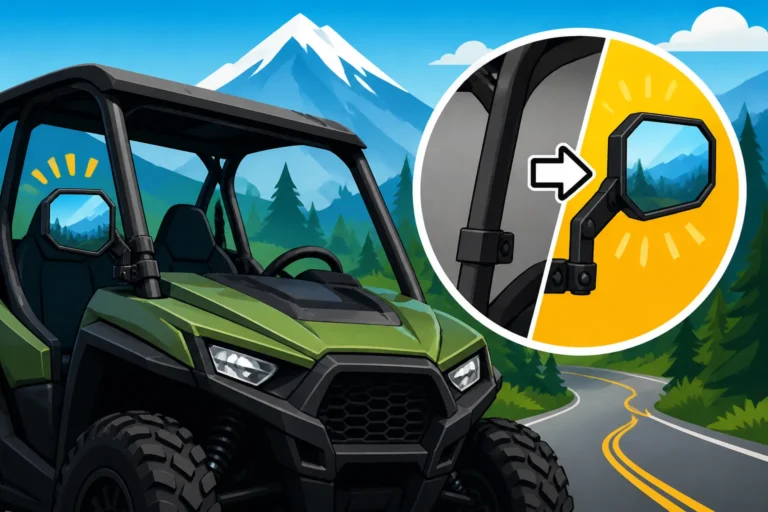
- Mirrors: Your WATV needs at least one rearview mirror, properly mounted to provide a clear view of the road behind you. While many machines come with one, adding a second for enhanced visibility is a smart move. Check out accessory catalogs for quality mirror options from brands like SuperATV that are designed for the rigors of off-road use but fully road-legal. [Washington Mirror Requirements for Road Use] explains more.
- Horn: A working horn, audible from a reasonable distance, is required. This is a vital safety feature for warning other drivers or pedestrians.
- Spark Arrester: Even for road use, your machine needs a U.S. Forest Service-approved spark arrester. This is a standard requirement for virtually all off-road vehicles to prevent wildfires, a major concern in many parts of Washington.
- Muffler: Your WATV must be equipped with an adequate muffler to limit engine noise. Excessive noise can draw unwanted attention and is often regulated by local ordinances.
- Windshield or Eye Protection: Riders and passengers must have either a windshield or wear eye protection like goggles or a face shield. This protects against debris, insects, and wind, ensuring clear vision and safety. [Washington Windshield or Goggle Rule] clarifies this important safety measure.
- Seat Belts (for UTVs): If your WATV is designed with seat belts (as most UTVs are), they must be worn by all occupants while on public roads.
It’s easy to get overwhelmed by this list, but remember, each item is there to keep you and others safe. A table can help summarize these requirements visually.
| Equipment Item | Requirement | Notes |
|---|---|---|
| Headlight(s) | At least one, operational & visible | Use during low light, always on when required |
| Taillight(s) | At least one, operational & visible | |
| Brake Light | Operational, visible when braking | |
| Turn Signals | Front and rear, operational | Aftermarket kits (e.g., from SuperATV) are common upgrades |
| Rearview Mirror(s) | At least one, provides clear view to rear | Many riders add a second for enhanced safety |
| Horn | Audible from a reasonable distance | |
| Spark Arrester | U.S. Forest Service approved | Essential for fire prevention |
| Muffler | Limits engine noise, adequate | Avoids excessive noise citations |
| Eye Protection/Windshield | Goggles/face shield or windshield required | Protects against debris, wind, and insects |
| Seat Belts | If equipped, must be worn (UTVs) | Applies to all occupants |
Registration, Tabs, and Licenses
Beyond the physical equipment, you'll need the proper paperwork to legally operate your WATV on Northport's roads. This includes having your WATV properly registered with the Washington State Department of Licensing (DOL) and displaying the required tabs and metal tag. Think of it like registering your car; it’s a necessary step to prove ownership and legal operation. [Washington WATV Registration Cost] outlines the fees involved.
You'll need both an off-road tab and an on-road tab. The off-road tab allows you to ride on designated trails and non-highway roads, while the on-road tab specifically permits legal road access where allowed. Many riders get both because it offers maximum flexibility. You’ll also receive a metal tag that needs to be permanently affixed to your machine. This tag, similar to a license plate, identifies your WATV. For more information, check out [Washington WATV Metal Tag Cost].
Finally, you, as the operator, must possess a valid driver's license. This isn't a suggestion; it's a firm requirement for anyone operating a WATV on public roads in Washington. The state views it as operating a motor vehicle on public thoroughfares, and therefore, a license is necessary. [Washington Driver License Rules for WATVs] further elaborates on this point. Make sure all your passengers, if applicable, also understand the [Washington Helmet Law for WATV Riders] as helmets are required for all riders and passengers on public roads.
Beyond Northport's Pavement: Nearby Riding Opportunities
While riding through Northport and on its surrounding county roads can be a pleasant experience, many WATV riders are also looking for opportunities to hit the trails and explore more rugged terrain. Northport's location on the Columbia River, nestled in Stevens County, puts it in proximity to some fantastic, albeit sometimes dispersed, off-road riding experiences. Understanding how to transition from pavement to trail, and what rules apply, is key to a full day of adventure.
Accessing Forest Roads and Trails
One of the great advantages of having a street-legal WATV in an area like Northport is the ability to connect to forest roads and designated trail systems without having to trailer your machine everywhere. The Colville National Forest, for example, stretches across much of northeastern Washington, including parts of Stevens County. Many of these forest roads are open to WATVs and can provide incredible access to scenic overlooks, fishing spots, and more remote areas.
However, "forest road" doesn't automatically mean "anything goes." It’s crucial to understand that federal lands, like those managed by the U.S. Forest Service, have their own specific regulations that operate in conjunction with state laws. Some forest roads might be designated for street-legal vehicles only, while others might be part of a non-highway vehicle (NHV) trail system requiring an off-road tab. Always consult local forest service maps and regulations for the specific area you plan to explore. What a great feeling to cruise down a county road, then seamlessly turn onto a gravel forest road, leaving the pavement behind. For more details on rules specific to federal lands, refer to [Washington Rules for Riding a National Forest].
When venturing into these areas, accessories like a winch from SuperATV can be incredibly useful. While you might not need one for cruising pavement, hitting muddy forest roads or navigating unexpected obstacles makes a good winch an essential piece of recovery gear. Similarly, good quality cargo racks can help you carry essentials like spare fuel, recovery gear, and camping equipment.
Respecting Land Designations and Closures
The landscape around Northport is a mix of public lands (federal, state, and county), private timberlands, and other private properties. Knowing where you are allowed to ride is just as important as knowing how to prepare your machine. Riding on private timberland or other private property without explicit permission is trespassing and can lead to severe penalties. Sometimes, an old logging road might look inviting, but if it crosses private land, you need to be certain you have permission.
Furthermore, public lands often have specific rules regarding designated trails, seasonal closures, or sensitive areas. For instance, some areas might be closed seasonally for wildlife protection or during fire season to prevent wildfires. It's your responsibility to check for these closures before you ride. Nothing is more deflating than planning an epic trip only to arrive and find your intended trails are closed. Many land management agencies publish maps and alerts online, and local ranger stations are excellent resources. Always respect gates, signs, and designated boundaries to ensure these riding opportunities remain open for everyone.
For those planning routes that involve crossing rivers or significant waterways, understanding rules like [Washington Rules for Riding a Bridge] can be very helpful. Knowing which bridges are open to WATVs is important for planning safe and legal routes in a river valley environment.
Essential Paperwork and Local Riding Etiquette
Beyond the mechanical aspects of making your WATV road-legal and understanding the nuances of local ordinances, a crucial part of riding in Northport and similar small towns is ensuring you have all your necessary paperwork in order and that you practice respectful riding etiquette. No one wants to be "that rider" who gives all WATV enthusiasts a bad name, especially in close-knit communities.
Carrying Your Documents
When riding your WATV on public roads, you must carry proof of registration and your valid driver's license at all times. This is no different than operating any other motor vehicle. Law enforcement may request these documents during a stop, and not having them can lead to citations. Imagine the frustration of having your machine perfectly equipped and legally allowed, only to get a ticket because your registration card was left on the kitchen counter.
It's a good practice to keep these documents (or copies thereof) in a waterproof bag or container securely stashed on your WATV. Given Washington's often damp weather, protecting your paperwork from the elements is a practical consideration. A small, dry box or a zippered, waterproof pouch is a smart investment. Always make sure your current tabs are affixed to your WATV and visible. An expired tab is an easy way to attract unwanted attention from law enforcement. Renewing your registration annually, as detailed in [Washington WATV Registration Renewal], is a key part of maintaining legal status.
Practicing Respectful Riding
Riding through small communities like Northport comes with an added responsibility: being a good neighbor. While the law might permit you to ride on certain roads, common courtesy goes a long way in ensuring WATVs continue to be welcome.
Here are some tips for respectful riding:
- Mind Your Speed: Even if the speed limit is 35 mph, riding slowly and cautiously through residential areas or near businesses is always appreciated. Excessive speed can kick up dust, create noise, and make residents feel unsafe.
- Keep the Noise Down: While your muffler must meet legal requirements, avoid unnecessary revving or modifications that make your machine excessively loud. Noise is a common complaint from residents about off-road vehicles.
- Stay on Designated Roads/Trails: Never veer off the legal road or trail onto private property, fields, or non-designated areas. This is not only illegal but also disrespectful to landowners and can damage sensitive ecosystems.
- Wave and Be Friendly: A simple wave to pedestrians or other drivers can do wonders for public perception. Showing that WATV riders are friendly, responsible members of the community helps build positive relationships.
- Protect the Environment: Pack out everything you pack in. Avoid littering, and be mindful of your machine's impact on the natural environment, especially near waterways like the Columbia River.
- Yield to Others: Be courteous to pedestrians, cyclists, and equestrians. On trails, slow down and give them the right-of-way.
By adhering to both the letter of the law and the spirit of community respect, you can help ensure that riding opportunities in places like Northport remain open and enjoyable for everyone. It's about being an ambassador for the sport, showing that WATV riders are responsible and considerate.
Disclaimer
This article is for general informational purposes only and does not constitute professional advice. Laws, prices and regulations vary by location and change over time. Consult a qualified professional for guidance on your specific situation.