Riding Old Owen Road
Riding your Off-Road Vehicle (ORV) on designated public roads in Washington state can be a fantastic way to link trails or simply enjoy a scenic drive, but navigating the specific rules and local ordinances can feel like tackling a particularly gnarly section of single track. Many riders get frustrated trying to figure out if that one specific road, like Old Owen Road, is actually open to their WATV. This guide is here to untangle the complexities of riding Old Owen Road in Snohomish County, providing you with all the details you need to ride legally and safely.
Understanding Old Owen Road and Its Context
Old Owen Road, nestled in Washington's beautiful Snohomish County, represents a fantastic opportunity for WATV riders seeking to connect with nature or access various points in the area. However, accessing and riding county roads with your quad or side-by-side isn't as simple as just hitting the pavement. It requires a clear understanding of both state law and specific local ordinances that govern such use. Many riders, eager to explore, often find themselves confused by the patchwork of rules, worried they might inadvertently break the law.
Where is Old Owen Road and Why is it Special?
Old Owen Road is located in Snohomish County, Washington, and is often mentioned as one of the key routes where WATV access has been specifically addressed by local government. For many years, the idea of taking a dirt bike or side-by-side onto a paved road felt like a pipe dream, something only allowed in specific, limited circumstances. But places like Old Owen Road have become symbols of progress for the WATV community, demonstrating how thoughtful local planning can open up new recreational possibilities. It serves as a vital artery for residents and visitors alike, cutting through picturesque landscapes, connecting communities, and often acting as a gateway to further off-road adventures on gravel or forest service roads. Its unique status as an "open" road makes it a specific point of interest for riders looking to legally extend their journey beyond pure trail riding.
The sheer frustration of not knowing where you can and cannot legally ride on pavement is a common complaint among WATV owners. Many have stories of being pulled over, or narrowly avoiding it, simply because the rules for a particular road were unclear. Old Owen Road stands out precisely because Snohomish County has taken steps to clarify its status. This clarity is a breath of fresh air for riders who are tired of guessing and just want to enjoy their machines responsibly.
The Legal Framework for WATV Access
Washington state law, specifically RCW 46.09, provides the overarching framework for WATV use, including provisions for riding on public roads. However, this law doesn't automatically open every county or city street to ORVs. Instead, it establishes conditions under which counties and cities can choose to allow WATVs on certain roads. This is where the complexity comes in: it's a mix of state permission and local decision-making. The state outlines the vehicle requirements, such as proper lighting, mirrors, and turn signals, for any WATV to be considered "road legal." It also sets speed limits and dictates what types of roads can be opened. For instance, roads posted 35 mph or less are generally prime candidates, while highways over 60 mph are typically off-limits except for crossing. Understanding [Washington WATV Road Requirements] is crucial before you even think about putting tires on pavement.
The state also requires a specific registration process, including paying for both an off-road and an on-road tab. Many riders find the two-tab system confusing, often asking if they really need both. The short answer for riding any public road is usually yes, you do. The on-road tab signifies that your machine has met the additional state-mandated requirements for street-legal operation, including an inspection to confirm all safety equipment is present and functional. Without this, even if a road is designated open, you're not legal to ride it.
Local Ordinances and Their Impact
While state law sets the stage, it's the local ordinances that truly determine whether a specific county or city road is open to WATVs. For Old Owen Road, the critical piece of legislation is Snohomish County Ordinance 17-032. This ordinance specifically designates certain county roads as open for WATV use, provided the machines meet all state road-legal requirements. This means that Old Owen Road isn't just "open" by default; it's open because Snohomish County actively chose to make it so through a legislative process. Many counties in Washington have had to go through a similar process, often with public hearings and extensive debate, to identify and approve specific road segments.
The frustration often stems from the fact that not all counties have adopted similar ordinances, or they have different lists of approved roads. This can lead to a bewildering experience where a rider might cross from one county where a certain road is open, into another where an identical road is strictly forbidden. It's a key reason why checking local county websites or contacting local law enforcement agencies is always a smart move before you venture out. [Snohomish County Ordinance 17-032] is the document that brings clarity to your riding experience on Old Owen Road, providing the explicit legal permission you need. Riders often share stories of printing out these ordinances to carry with them, just in case they encounter someone who isn't aware of the specific rules.
Practicalities of Riding Old Owen Road
Riding Old Owen Road, or any designated county road in Washington, isn't just about having the right paperwork; it's also about having the right gear, understanding the local environment, and practicing safe riding habits. Many enthusiastic riders overlook these practical considerations, only to find themselves unprepared for unexpected situations or drawing unwanted attention from locals and law enforcement. The pavement introduces a whole new set of challenges and responsibilities compared to ripping through trails.
Essential Equipment for Road-Legal Use
To legally ride on Old Owen Road, your WATV must be equipped with specific features that meet Washington state requirements for on-road use. This isn't just about avoiding a ticket; it's about your safety and the safety of others sharing the road. First and foremost, you'll need working headlights, taillights, and brake lights. These are crucial for visibility, especially during dawn, dusk, or in inclement weather. Next up are turn signals – both front and rear. These are non-negotiable for communicating your intentions to other drivers, just like on a car. Brands like SuperATV offer a variety of universal turn signal kits that can be adapted to most WATV models, making the upgrade process relatively straightforward.
Mirrors are another key component, specifically at least one mirror that allows you to see at least 200 feet to the rear. Many riders opt for two, one on each side, for maximum visibility. A working horn, audible from a reasonable distance, is also required to alert pedestrians or other vehicles to your presence, particularly around blind corners or in parking areas. Finally, a windshield or eye protection (like goggles or safety glasses) is mandatory. While some side-by-sides come with full windshields, many quads or modified utility vehicles will require the rider to wear appropriate eye protection. Ensuring you have all this equipment in good working order is not just a checkbox for legality but a fundamental aspect of safe road riding. Don't forget [Washington Lighting Requirements for WATVs] are there to keep everyone safe.
Navigating the Road and Surrounding Areas
Old Owen Road, while open to WATVs, is still a public road shared with cars, trucks, and potentially cyclists or pedestrians. This means adopting a defensive riding style is paramount. Expect to encounter varying road conditions, from smooth asphalt to rough patches, and even gravel sections depending on how far you venture. Speed limits on these roads are typically 35 mph or less for WATVs, and it's essential to adhere to them strictly. Riding too fast not only risks a citation but also increases your stopping distance and reduces your reaction time if a hazard appears. Always be mindful of driveways, cross streets, and merging traffic.
Mapping out your route in advance, especially if you plan to link up with trails, is a smart strategy. Know where the pavement ends and where designated off-road areas begin. While Old Owen Road itself is permitted, straying onto an adjacent road that is not designated for WATV use could land you in trouble. Familiarize yourself with the area and carry a reliable map or GPS device, as cell service can be spotty in some rural parts of Snohomish County. The goal is to seamlessly transition between on-road and off-road sections without accidentally trespassing or violating any local rules. Many riders appreciate apps that show approved ORV routes.
Safety Considerations and Best Practices
Safety should always be your top priority, whether you're on a trail or a public road. Washington state law requires all WATV riders, including passengers, to wear an approved helmet when operating on public roads. This isn't just for minors; it applies to adults too. [Washington Helmet Law for WATV Riders] is a serious regulation designed to protect you in case of a mishap. Beyond helmets, appropriate riding gear—gloves, long pants, a long-sleeved shirt or jacket, and sturdy over-the-ankle boots—is highly recommended for both protection and comfort. While not legally mandated for road use beyond the helmet, this gear provides invaluable protection against scrapes, impacts, and road rash.
Furthermore, maintain a safe following distance from other vehicles, use your turn signals consistently, and always assume other drivers may not see you. Many drivers aren't accustomed to seeing WATVs on public roads and may not anticipate your presence. Consider adding bright reflective tape to your machine or wearing high-visibility clothing, especially if you're riding during low-light conditions. Never ride impaired; Washington's DUI laws apply just as strictly to WATV operators on public roads as they do to car drivers. Riding defensively, predictably, and with clear communication is the best way to ensure a safe and enjoyable experience on Old Owen Road.
Preparing Your WATV for Old Owen Road
Before you even think about putting a wheel on Old Owen Road, a significant amount of preparation goes into making sure your WATV is not only compliant with Washington state laws but also mechanically sound for road use. This stage is often where riders encounter the most headaches, trying to decipher complex regulations and ensuring their beloved machine meets every specific detail required for pavement. It's more than just bolting on a few accessories; it's about a complete safety and legal check-up.
Ensuring Your Machine Meets Washington Requirements
The first and most critical step is to ensure your WATV is legally registered for road use in Washington. This involves obtaining the necessary on-road tab in addition to your off-road tab. The process usually requires a road use declaration form and proof that your machine has passed a safety inspection conducted by a qualified professional. This inspection verifies that your WATV has all the required safety equipment, such as proper headlights, taillights, brake lights, turn signals, at least one mirror, and an audible horn. If your machine doesn't have these components from the factory, you'll need to install them. Many riders turn to aftermarket kits from trusted suppliers like SuperATV for these upgrades, ensuring they meet legal specifications. Don't forget to review [Washington WATV Road Requirements] for a comprehensive checklist.
Beyond the physical equipment, your WATV's tires are also an important consideration. While knobby off-road tires are great for mud and rocks, they can wear quickly and handle poorly on pavement. While not strictly illegal, it's wise to consider a tire designed for mixed-terrain use if you plan on doing a lot of road riding. Also, check your VIN (Vehicle Identification Number) to ensure it's clearly visible and matches your registration paperwork. A discrepancy here can lead to delays and frustration, especially during an inspection or a roadside stop.
Maintenance Checks Before You Head Out
A WATV that's regularly maintained for trail use might still need some specific checks before it's truly road-ready. Before every ride on Old Owen Road, perform a thorough pre-ride inspection. Check your tire pressure; road riding typically benefits from slightly higher pressure than trail riding for better handling and tire longevity. Inspect your brakes—front and rear—to ensure they are fully functional and provide strong stopping power. Road conditions demand reliable brakes, as you'll be sharing the asphalt with faster, heavier vehicles. Test all your lights: headlights (high and low beam), taillights, brake lights, and turn signals. Make sure your horn works, and your mirrors are clean and properly adjusted to give you a clear view of traffic behind you.
Check your fluid levels: engine oil, coolant, and brake fluid. Road riding can be harder on your engine due to sustained higher speeds compared to trail crawling, so ensuring everything is topped off is crucial. Also, inspect your chain or drive belt for proper tension and wear. A breakdown on a public road is not only inconvenient but can also be dangerous. This routine maintenance helps prevent unexpected issues and ensures your machine operates safely and reliably throughout your journey on Old Owen Road.
What to Carry On Your Ride
When riding on Old Owen Road, you need to carry specific documents and potentially some emergency items. Legally, you must have your WATV's current registration and proof of liability insurance (if riding on roads). This information should be readily accessible, but protected from the elements. Many riders keep these documents in a waterproof bag or container stored in a storage compartment or saddlebag. Your driver's license, which is a requirement for [Washington Driver License Rules for WATVs], must also be carried.
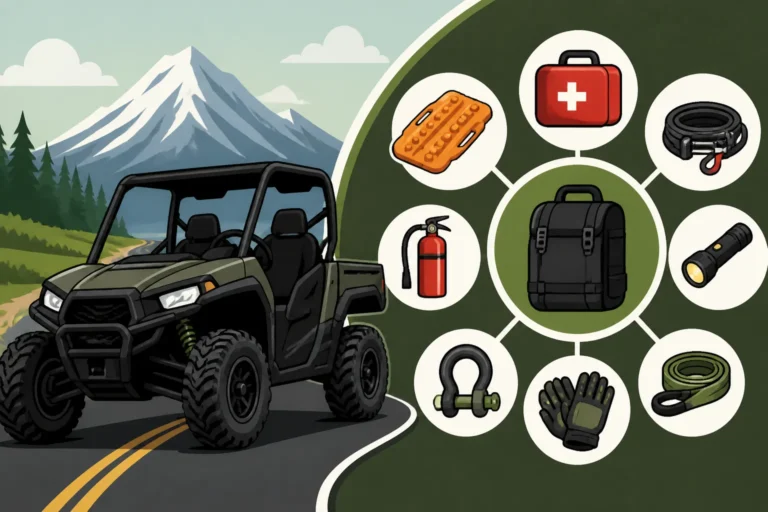
Beyond the legal documents, consider carrying a small toolkit with basic items like wrenches, a tire repair kit (with a small air compressor or CO2 cartridges), and perhaps a spare spark plug. Even a small issue like a flat tire or a loose bolt can leave you stranded. A first-aid kit is always a good idea, as are snacks and water, especially if you plan an extended ride. While Old Owen Road isn't deep wilderness, it's always better to be prepared. Some riders also carry a small fire extinguisher, especially if their machine has modifications or if they're riding in dry conditions near brush.
The Riding Experience on Old Owen Road
Finally, you've done all the preparation: your WATV is compliant, registered, and mechanically sound, and you've got all your paperwork in order. Now it's time to actually experience riding on Old Owen Road. This section delves into what you can expect during your ride, emphasizing respect for the local community and environment, and highlighting common pitfalls to avoid to ensure a positive experience for everyone.
What to Expect While Riding
Riding Old Owen Road can be a surprisingly peaceful and enjoyable experience, offering unique perspectives of the Snohomish County landscape you might miss from a car. You'll likely encounter a mix of residential areas, open fields, and forested sections. The road itself is typically paved, but expect varying surface conditions. Some sections might be smooth, while others could have potholes or gravel shoulders. Always be vigilant for other vehicles, including cars, trucks, and even farm equipment, especially around blind curves or hills. Keep your speed within the posted limits and those specifically for WATVs, which is typically 35 mph or less on these types of county roads.
Wildlife encounters are also a possibility, particularly in the more rural stretches. Deer, elk, and smaller critters can dart out unexpectedly, so maintain situational awareness. You might also encounter pedestrians or cyclists, especially on warmer days or weekends. Always give them ample space and slow down as you pass. The goal is to blend in respectfully with other road users, demonstrating that WATVs can be responsible and safe on public thoroughfares. It's a privilege to ride these roads, and treating it as such will help ensure continued access.
Respecting the Community and Environment
A crucial aspect of riding Old Owen Road is maintaining a respectful attitude towards the local community and the environment. Noise is often a significant concern for residents living along WATV-accessible roads. Ensure your machine has a properly functioning muffler and spark arrester. Excessive engine noise or loud exhausts can quickly create animosity and lead to calls for stricter regulations or even road closures. Be mindful of your throttle usage in residential areas; unnecessary revving or speeding through neighborhoods can be disruptive. [Washington Muffler Requirements for an ORV] are in place for a reason.
Beyond noise, practice Leave No Trace principles. Do not litter, and if you stop for a break, ensure you leave the area cleaner than you found it. Avoid riding off the designated road onto private property or sensitive ecological areas. Stick to the paved surface unless you are explicitly transitioning to a legal off-road trail. Remember that your actions reflect on the entire WATV community. Positive interactions and responsible riding help build good relationships with residents and local authorities, fostering a more inclusive environment for off-road recreation.
Potential Pitfalls and How to Avoid Them
Even with the best intentions, riders can encounter pitfalls. One common issue is accidentally straying onto an unapproved road. Always carry a current map of approved WATV routes for Snohomish County or rely on up-to-date GPS information. If you're unsure whether a connecting road is open, err on the side of caution and turn back. Another pitfall is forgetting essential equipment or paperwork. A quick roadside check by law enforcement could result in a citation if you're missing your driver's license, registration, insurance, or mandatory safety equipment like mirrors or working turn signals. The penalty for [Washington Fines for an Unregistered WATV] can be significant.
Weather can also be a factor. While Old Owen Road is paved, rain can make the surface slippery, especially with off-road tires. Be extra cautious in wet conditions. Visibility can also be reduced in fog or heavy rain, making your proper lighting even more critical. Finally, avoid forming large, noisy groups that might overwhelm the road or draw negative attention. A smaller, well-behaved group is less likely to cause issues. By being prepared, respectful, and mindful of your surroundings, your ride on Old Owen Road can be a truly rewarding part of your Washington WATV experience.
Disclaimer
This article is for general informational purposes only and does not constitute professional advice. Laws, prices and regulations vary by location and change over time. Consult a qualified professional for guidance on your specific situation.